
Compression Underwear Manufacturer
Compression boxer briefs, shorts and base layers in high-elastane performance knits — engineered for support, moisture movement and recovery under repeated wear.
Compression is a fabric specification first
Compression garments are defined by their fabric behaviour, not their cut. The knit has to deliver a measured level of support at a given circumference and recover after stretching — and it has to keep doing it after fifty washes. A garment that starts tight and ends loose has failed regardless of how it looked on the hanger.
We build compression programmes around an elastane percentage and a modulus target, then sample and test recovery rather than relying on how the first sample feels.
- 16–24% elastane knits for genuine compression and recovery
- Flatlock and bonded seam options to remove chafe points
- Moisture-management and anti-odour finishes
- Grading that follows compression zones rather than standard body grading
- Wash-recovery testing on the bulk fabric before cutting
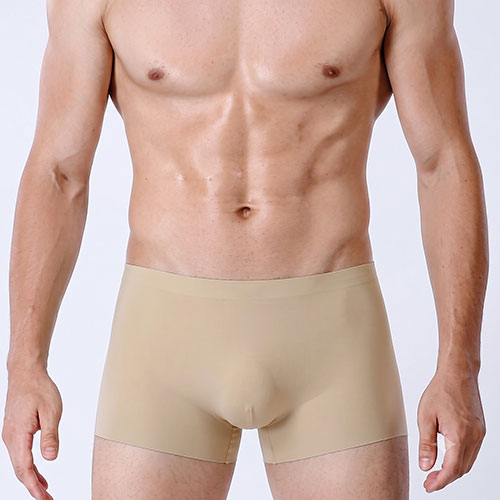
The four parameters that define a compression programme
Elastane percentage
16%, 20% and 24% produce different support levels; the specification is set by the required modulus, not by feel.
Modulus and recovery
We measure the force needed to stretch a 5 cm strip to a set extension, and the length it returns to after cycling.
Moisture movement
Wicking finishes and knit structure both matter; a compression knit that holds sweat defeats its own purpose.
Seam construction
Flatlock or bonded seams remove the friction points that turn a compression garment into a chafing problem.
Compression questions
What is your minimum order quantity (MOQ)?
Our standard MOQ is 300–1,000 pieces per style, mixed sizes. Styles using stock fabric can start from 300 pieces; a fully custom knit or dye lot usually starts at 1,000 pieces per colour. Tell us your target quantity and we will confirm what is achievable.
How long does sampling take?
A development sample takes 5–7 working days after artwork and fabric are confirmed. A full size set takes 10–12 working days. Sample cost is credited against the bulk order.
What is the lead time for bulk production?
Bulk production runs 15–45 days from deposit and approved pre-production sample, depending on quantity, fabric availability and trim lead times. We confirm the schedule in writing before you pay the deposit.
Which payment terms do you accept?
T/T (30% deposit, 70% against the copy of the bill of lading), L/C at sight, and PayPal for samples. Terms are confirmed in the proforma invoice.
Can you handle fabric, labels and packaging as well?
Yes. Fabric knitting, dyeing, cutting, sewing, printing, embroidery, labels, hangtags and retail packaging all sit inside our own supply chain, so a single purchase order covers the finished, retail-ready product.
How do you control quality?
Every order passes an incoming fabric inspection, an in-line check at 30% and 70% of the run, a final AQL 2.5 inspection before packing, and a shipment check against the approved sample and packing list.
How do you test compression performance?
On the bulk fabric rather than the sample: extension force at a set stretch, recovery after repeated cycling, and shrinkage after three washes. A compression garment that loses 8% of its recovery in the first month is a product that will be returned.
Compression is engineering, not tightness
Two garments can fit the same body and behave completely differently. Compression is defined by the force the fabric exerts at a given circumference and how much of that force it retains after stretching. The number that matters is the fabric’s modulus, and it is measurable.
Why we test fabric rather than sample
A compression sample feels convincing after five minutes of wear. The questions that decide the product’s commercial life are what happens at the twentieth wash and whether the garment still holds its recovery at the end of a season. Those are answered on the bulk fabric, before cutting, with the numbers recorded in the order file.
Grading for compression garments
Standard body grading increases circumference by a fixed step per size. Compression garments often need a nonlinear step, because the support level is specified per zone. That is a pattern decision and needs to be settled before the size set is made, not corrected afterwards.
Where compression crosses into underwear
Many programmes sit between the two: a supportive boxer brief sold to a general audience rather than an athletic one. Those usually land at 12–16% elastane with a contour pouch and flatlock seams — enough support to feel different, not so much that the garment reads as sportswear.
Request a sample & pricing information
Send us your tech pack, target price or a reference sample — we reply with a quotation, a realistic lead time and a fabric recommendation within one working day.
- Free sampling plan & cost breakdown
- MOQ from 300 pcs per style
- Reply within 1 working day