
Product Programmes
Everything we manufacture for men's knitwear programmes: underwear, undershirts, T-shirts, tank tops, polos, sweatshirts and hoodies — with the fabric, MOQ and lead time for each.
Six programmes we run every week
Each line has its own fabric library, block patterns and quality checkpoints.
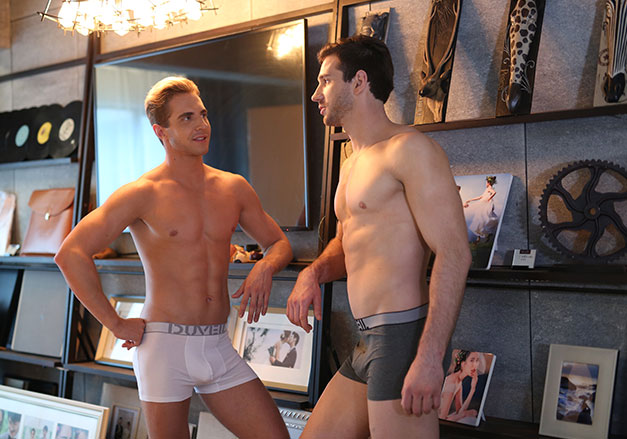
Men's underwear
Boxer briefs, trunks, briefs, jockstraps and thongs in cotton, modal, bamboo, nylon and performance blends.
- MOQ 300 pcs
- S–3XL
- Branded waistbands
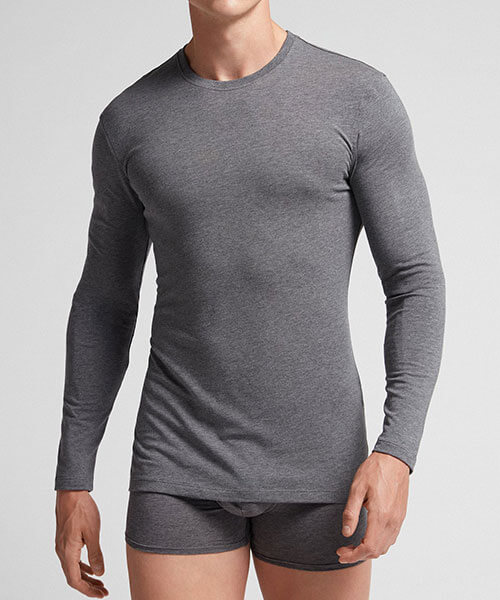
Undershirts
Crew neck, V-neck, long sleeve, tank and moisture-wicking undershirts for retail and uniform programmes.
- 120–220 gsm
- Retail multipacks
- Neck rib control

T-shirts
Classic, fitted, oversized and boxy T-shirts with printing, embroidery and washed finishes.
- 140–420 gsm
- Screen · DTG · DTF
- Organic cotton options

Tank tops & polos
Ribbed and jersey tanks, plus seamless polos for underwear and layering ranges.
- Rib or jersey
- Multipack ready
- Print & embroidery

Sweatshirts
Crewneck sweatshirts in French terry and fleece, plain or washed, with print and embroidery.
- 240–420 gsm
- Washed finishes
- Drop shoulder

Hoodies
Pullover and zip hoodies, brushed fleece and French terry, with drawcords and kangaroo pockets.
- 280–500 gsm
- Acid & vintage wash
- Custom hardware
Programme parameters at a glance
| Minimum order | 300 pieces per style on stock fabric |
|---|---|
| Sampling | 5–7 days development sample, 10–12 days size set |
| Bulk production | 15–45 days from deposit and pre-production approval |
| Fabric weight range | 120 gsm to 420 gsm |
| Size range | XS to 4XL with custom grading |
| Branding | Woven labels, screen print, sublimation, embroidery, heat transfer |
| Packing | Polybag, multipack, retail box, hanger packing |
Product questions
What is your minimum order quantity (MOQ)?
Our standard MOQ is 300–1,000 pieces per style, mixed sizes. Styles using stock fabric can start from 300 pieces; a fully custom knit or dye lot usually starts at 1,000 pieces per colour. Tell us your target quantity and we will confirm what is achievable.
How long does sampling take?
A development sample takes 5–7 working days after artwork and fabric are confirmed. A full size set takes 10–12 working days. Sample cost is credited against the bulk order.
What is the lead time for bulk production?
Bulk production runs 15–45 days from deposit and approved pre-production sample, depending on quantity, fabric availability and trim lead times. We confirm the schedule in writing before you pay the deposit.
Which payment terms do you accept?
T/T (30% deposit, 70% against the copy of the bill of lading), L/C at sight, and PayPal for samples. Terms are confirmed in the proforma invoice.
Can you handle fabric, labels and packaging as well?
Yes. Fabric knitting, dyeing, cutting, sewing, printing, embroidery, labels, hangtags and retail packaging all sit inside our own supply chain, so a single purchase order covers the finished, retail-ready product.
How do you control quality?
Every order passes an incoming fabric inspection, an in-line check at 30% and 70% of the run, a final AQL 2.5 inspection before packing, and a shipment check against the approved sample and packing list.
Can we mix products in one order?
Yes. A mixed order with three styles at 300–500 pieces each is common. Fabric is consolidated where the weights and colours match, which reduces the fabric minimum and usually improves the price.
Choosing the first product to manufacture
For a new brand, the product to start with is usually the one with the fewest variables. An undershirt or a classic T-shirt has one fabric, a simple construction and low tooling risk. A boxer brief with a contour pouch, a custom waistband and an all-over print has five variables, all of which can go wrong independently.
Start where the risk is low
A first order tests three things about a factory: specification discipline, sampling speed and communication. Those are easier to judge on a simple garment than a complex one, and cheaper to get wrong. Many of our customers start with a basic style, confirm the relationship works, then move to the product they actually wanted to make.
Product families that share components
Where a collection uses one fabric across several garments — a cotton/elastane knit for boxer briefs and trunks, or a 260 gsm French terry for a crewneck and a hoodie — the fabric minimum is shared and the collection becomes cheaper than the sum of its parts. Building ranges around shared fabric is the most reliable way to hit a lower price point without downgrading quality.
What changes at higher weights
Above 240 gsm the production changes: stronger seams, wider collars or waistbands to carry the weight, longer drying and pressing times, and a different drape. Heavyweight programmes are worth sampling properly, because a 300 gsm body with a 180 gsm collar construction will look and wear wrong even if every measurement is correct.
Request a sample & pricing information
Send us your tech pack, target price or a reference sample — we reply with a quotation, a realistic lead time and a fabric recommendation within one working day.
- Free sampling plan & cost breakdown
- MOQ from 300 pcs per style
- Reply within 1 working day