
Launching a Men’s Underwear Brand
Launch from the production plan, not the logo. The model, the price and the size curve decide survival.
For brands that have decided to make underwear and now have to choose a model, price a line and stock a size curve that survives its second order.
- Three routes cover all 26 articles in this cluster
- Four decisions separate a launch that repeats from one that stalls
- Every route ends in a number you can put in a plan
Three routes, and you only need one of them
Start from the model you are buying, the price you can defend, or the stock you have to carry.
Start from the production plan, not the logo
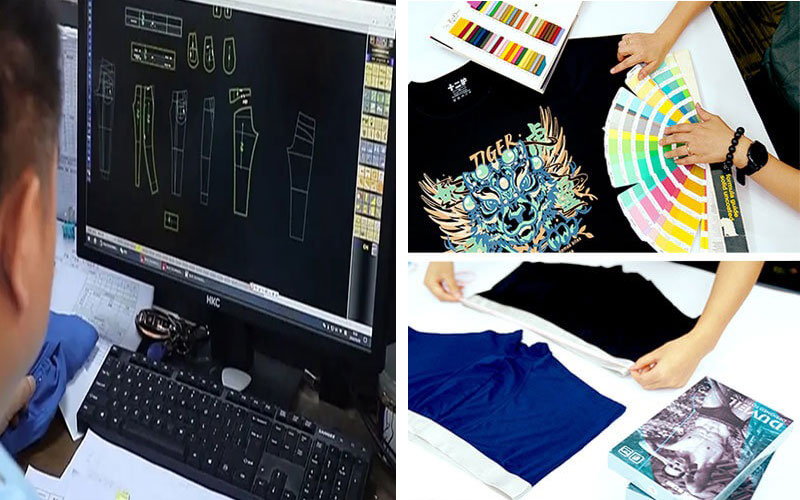
A launch plan that starts with a name and a colour palette has to be rebuilt once the factory quote arrives. Start with a single programme — one construction, one fabric, two colours, five sizes — produce it, sell it, then extend. The brands that scale have a second order that repeats the first with one change, not a redesign. The article below walks the production-first sequence in full.
Private label, white label, or your own pattern
White label is the fastest route to market and the least defensible: the product exists, you add branding, and anyone else can do the same. Private label moves some decisions to you. Your own pattern is the only version that is genuinely yours, and it costs a development round. The right answer depends on how fast you need to launch and how much equity you want in the product itself.
Price backwards from the retail price you can defend
A three-pack of cotton trunks retails in a band, and that band is set by the market rather than by your costs. Work backwards: retail, minus channel and payment fees, minus landed cost, minus returns and marketing. If the remainder is thin, the answer is a better product mix or a lower landed cost, not a higher price the market will not pay. Cotton, modal and micro modal sit at different price points for a reason,…
Build the size curve before the listing
Underwear sell-through is skewed differently from other apparel, and one wrong curve costs a season of cash.
Build the size curve before you build the listing
Track the first month’s sales by size before placing the reorder, then weight the second order toward what actually sold. Sizes convert differently across the US, EU and Asian markets, so if you sell into more than one, build the curve per market rather than averaging them. This decision usually has more effect on working capital in year one than any other. Then decide the reorder trigger before launch, and hold the cash for it.
Pick the first channel and pack for it deliberately
Amazon rewards prep discipline and punishes packaging that fails its own rules; your own store lets you spend the same money on presentation instead. Either way the packaging decision should be made before the first production run, because changing a bag, an insert or a barcode after the goods are packed costs more than the packaging did. Choose one channel as primary, size the first order to that channel’s economics, and treat the second channel as an extension rather than a parallel launch.
Four decisions decide a launch
The rest of the launch plan follows from these.
The model you buy
White label, private label or your own pattern. Each carries a different minimum, cost and answer on exclusivity.
Price set from retail
Work backwards from the band the market pays, not forwards from the factory quote.
One programme to start
One construction, two colours, five sizes. A range a factory can run and a customer can understand.
The reorder trigger
Decide the sell-through level that triggers the repeat order, and keep the cash for it, before launch.
Where to go from here
The guides that support a launch.
Launch questions
How much does it cost to launch an underwear brand?
Is private label better than white label for a new brand?
Which should I launch first, briefs or boxer briefs?
How many SKUs should a first range have?
Should I sell on Amazon first or my own store?
Talk about your launch
Tell us the model you are considering, the price point you have in mind and the market you are selling into, and we will come back with the programme, the minimum and a development timeline.
Start the conversation