
Men's Briefs Factory
Classic, low-rise and sports briefs in cotton, modal and bamboo — with multipack packing, fly options and branded waistbands. Produced to your size chart from 300 pieces per style.
A small garment with nowhere to hide
A brief uses less fabric than any other men's underwear style, which makes it the most visible test of a factory's cutting and sewing accuracy. There is no length to disguise a twisted seam and no looseness to hide a misaligned waistband.
We produce briefs on dedicated lines with pattern blocks for classic, low-rise, sports and bikini cuts. Leg elastic tension, front panel symmetry and waistband alignment are checked as separate operations rather than as one final inspection.
- Classic full-rise, low-rise, sports and bikini brief blocks
- Cotton 2×2 rib, single jersey, modal, micro modal and bamboo
- Elastic or self-fabric leg openings, with or without fly
- Contrast trim, side seam details and printed panels
- Multipack packing with mixed sizes and retail barcodes

Brief constructions
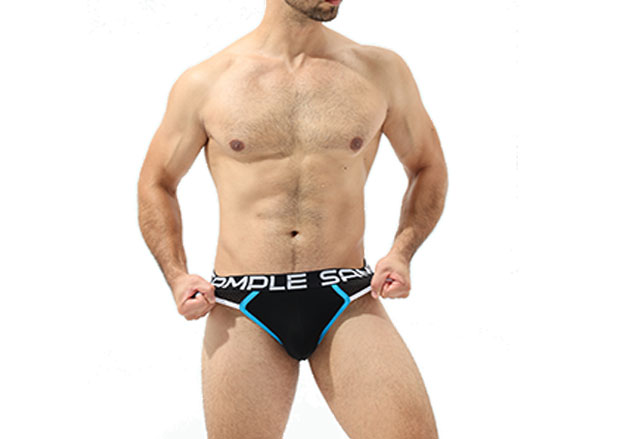
Classic brief
Full-rise brief with elastic leg openings and a traditional fly for volume retail programmes.
- Full rise
- Classic fly
- 2×2 rib
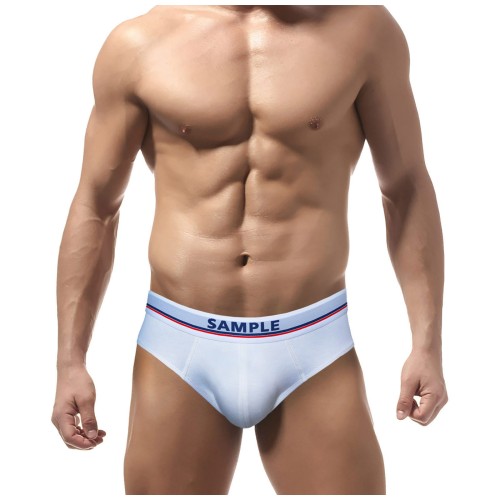
Cotton brief
100% combed cotton rib with high breathability for value and multipack channels.
- 100% cotton
- Combed yarn
- Multipack
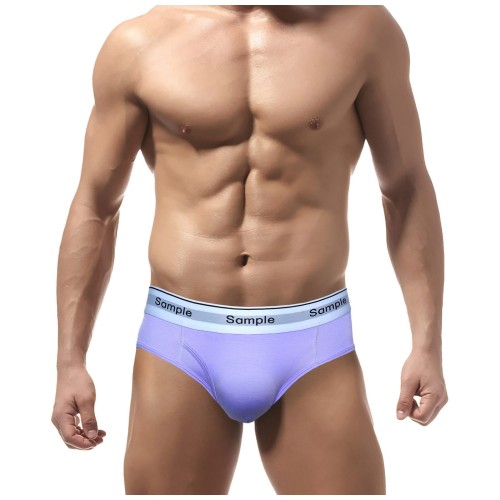
Bamboo brief
Bamboo viscose with natural moisture management and a cool hand feel.
- Bamboo viscose
- OEKO-TEX
- Fibre cert
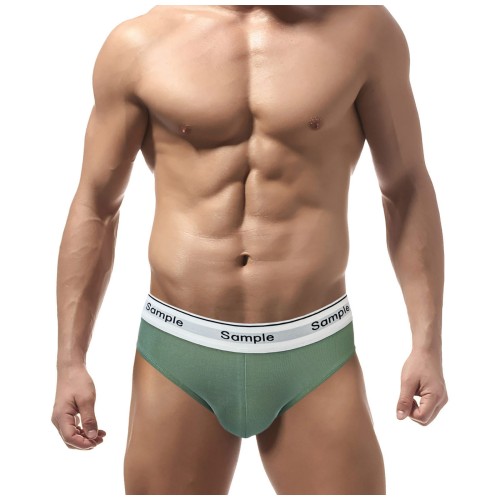
Micro modal brief
Fine-gauge modal for premium basics with a smooth, cool finish.
- Micro modal
- Anti-shrink
- Soft waistband
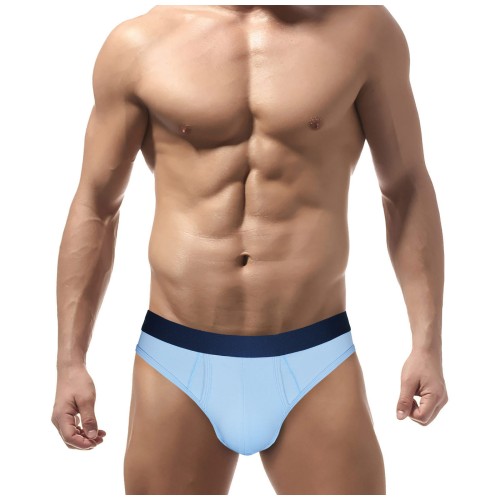
Modal cotton brief
Blended modal and cotton that keeps the cotton hand at a premium feel.
- Modal/cotton
- Colourfast
- Print ready
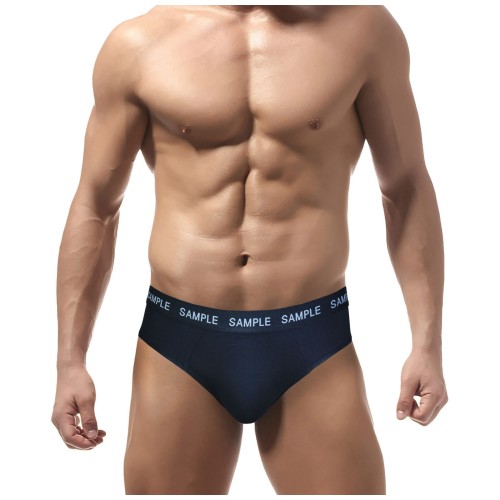
Viscose & rayon briefs
Silky viscose and rayon programmes for fashion-led and lingerie-adjacent ranges.
- Viscose/rayon
- Silky hand
- Contrast trim
What we do differently on briefs
Symmetry measured, not eyeballed
Front panel alignment and leg-opening height are measured on the first ten garments and again at the end of the run.
Leg elastic tension controlled
Leg opening tension is set per fabric, because the same elastic behaves differently on rib and on single jersey.
Multipack designed first
Packing format is agreed before production so the fold, size sticker and barcode work with your retail fixture.
Certified fibre options
Organic cotton, bamboo, TENCEL™ and recycled polyester with the supporting certificates for your marketing claims.
Print and trim branding
Sublimation panels, screen print, woven labels and heat-transfer branding to your artwork.
Fast reorders
Repeat brief orders on an approved block run in 15–20 days, which keeps a fast-moving basics line in stock.
Knit options for briefs
Brief programme parameters
| MOQ | 300 pcs per style on stock fabric; 1,000 pcs per colour for a custom knit |
|---|---|
| Sizes | S–3XL, custom grading available |
| Rise | Full rise, mid rise, low rise, bikini |
| Leg opening | Elastic trim or self-fabric bound; contrast options |
| Fly | Classic fly, pouch, or fly-free |
| Packing | Single polybag, 3-pack, 5-pack, retail box, mixed size packs |
| Sampling | 5–7 days development; 10–12 days size set |
| Production | 15–45 days from deposit and pre-production approval |
How a brief programme runs
Specification and quotation
We review your brief, suggest a fabric and cut, and quote with the fabric cost shown separately.
Fabric and trim approval
Lab dip, elastic and trim swatches approved together so nothing is left until the sample stage.
Fit sample
One sample in 5–7 days, photographed flat and on a form, with measurements against your chart.
Size set and PP sample
Grading confirmed across the size range before bulk fabric is cut.
Bulk and inspection
In-line checks plus an AQL 2.5 final audit with photo evidence.
Packing and shipping
Multipack assembly, cartons and export documents.
Certifications and testing that your importer will ask for
Certification is checked before the order is placed, not after. We hold the current reports and can arrange buyer-specific testing at the same time as the pre-production sample.
OEKO-TEX Standard 100
Fabric and trims tested for harmful substances against the current limit values, with the certificate renewed every year.
BSCI / Sedex audited factory
Social compliance audit reports available for your supplier onboarding file, covering wages, hours and safety.
Bamboo, modal and recycled fibre papers
Fibre composition and chain-of-custody documents for bamboo, Lenzing modal, TENCEL™ and recycled polyester claims.
Colour fastness and shrinkage reports
Wash, rub, perspiration and dimensional-stability tests run on the bulk fabric before cutting starts.
Country-of-origin and customs paperwork
Commercial invoice, packing list, HS codes and origin declaration prepared so your broker clears the shipment without a delay.
Buyer-specific testing programmes
We work directly with SGS, Intertek and Bureau Veritas for buyer protocols such as Walmart, Target or ISO 9001 programmes.
Brief manufacturing questions
What is your minimum order quantity (MOQ)?
Our standard MOQ is 300–1,000 pieces per style, mixed sizes. Styles using stock fabric can start from 300 pieces; a fully custom knit or dye lot usually starts at 1,000 pieces per colour. Tell us your target quantity and we will confirm what is achievable.
How long does sampling take?
A development sample takes 5–7 working days after artwork and fabric are confirmed. A full size set takes 10–12 working days. Sample cost is credited against the bulk order.
What is the lead time for bulk production?
Bulk production runs 15–45 days from deposit and approved pre-production sample, depending on quantity, fabric availability and trim lead times. We confirm the schedule in writing before you pay the deposit.
Which payment terms do you accept?
T/T (30% deposit, 70% against the copy of the bill of lading), L/C at sight, and PayPal for samples. Terms are confirmed in the proforma invoice.
Can you handle fabric, labels and packaging as well?
Yes. Fabric knitting, dyeing, cutting, sewing, printing, embroidery, labels, hangtags and retail packaging all sit inside our own supply chain, so a single purchase order covers the finished, retail-ready product.
How do you control quality?
Every order passes an incoming fabric inspection, an in-line check at 30% and 70% of the run, a final AQL 2.5 inspection before packing, and a shipment check against the approved sample and packing list.
Can you produce mixed-size multipacks?
Yes. Mixed-size packs are cut from a single dye lot so shade is consistent, and size stickers or printed pack bands identify each size. Tell us the pack ratio and we will confirm the carton configuration.
Do you make briefs with no fly?
Yes — fly-free and pouch constructions are common in sports and fashion ranges. The pattern changes slightly at the front panel, so it is worth deciding before sampling.
Why briefs are harder to make than boxer briefs
There is less fabric to absorb a mistake. On a brief, a 4 mm leg-opening deviation is immediately visible on the form, a twisted side seam is obvious in a flat-lay photograph, and front panel asymmetry shows up in the multipack as a mismatch between garments. Buyers who inspect briefs closely are not being difficult; the garment simply exposes the process.
The controls that matter are specific. Cut the front and back panels from a single spread so the grain line is identical. Set leg elastic tension separately for each fabric — rib needs less tension than jersey to achieve the same finished opening. Measure waistband alignment at the side seam rather than the centre front, because that is where a shift accumulates.
Rise is a market variable
Full-rise classic briefs still dominate European basics and much of Latin America. Low-rise and bikini cuts sell in fashion-led channels and with younger customers. The difference changes fabric consumption per garment by 10–15%, so it is worth fixing the rise before comparing quotations.
Multipacks and the retail fixture
Briefs are sold in packs more often than any other underwear style. Pack geometry decides the fold: a three-pack usually uses a flat fold inside a printed band, five-packs often use a box. We agree the format before production, because a pack that does not fit the fixture is a commercial problem no quality inspection will catch.
Fabric choice and wash life
A value-channel cotton brief has to survive hot washing and tumble drying without distorting; that points to a compact 2×2 rib with low residual shrinkage. A premium modal brief is usually washed cool and line-dried, which allows a finer knit and a softer hand. Matching the fabric to the customer’s laundry habit is more useful than matching it to the price point.
Send us your tech pack — get a costed quotation in one working day
Tell us the style, the fabric, the target quantity and the destination market. You will get a price breakdown, a sampling plan and a realistic lead time, not a range designed to be negotiated later.
- Free sampling plan & cost breakdown
- MOQ from 300 pcs per style
- Reply within 1 working day