
Men's Underwear Manufacturer
Boxer briefs, trunks, briefs, jockstraps and thongs developed, sampled and produced under one roof. OEM and ODM programmes for brands, importers and distributors, with MOQ 500 pcs per style.
A dedicated underwear line, not a side product
Men's underwear is unforgiving to manufacture. The garment is small, the fabric is usually elastic, and the construction has to survive hundreds of wash cycles without the waistband rolling, the leg opening losing recovery or the seams creeping. Our underwear division exists because that combination needs its own machines, its own operators and its own quality standard.
We run flatlock and cover-stitch machines set up specifically for knit underwear, with operators who rotate between the same four operations rather than across the whole factory. Waistband application is a dedicated station. That is how a 500-piece order and a 50,000-piece order end up with the same fit.
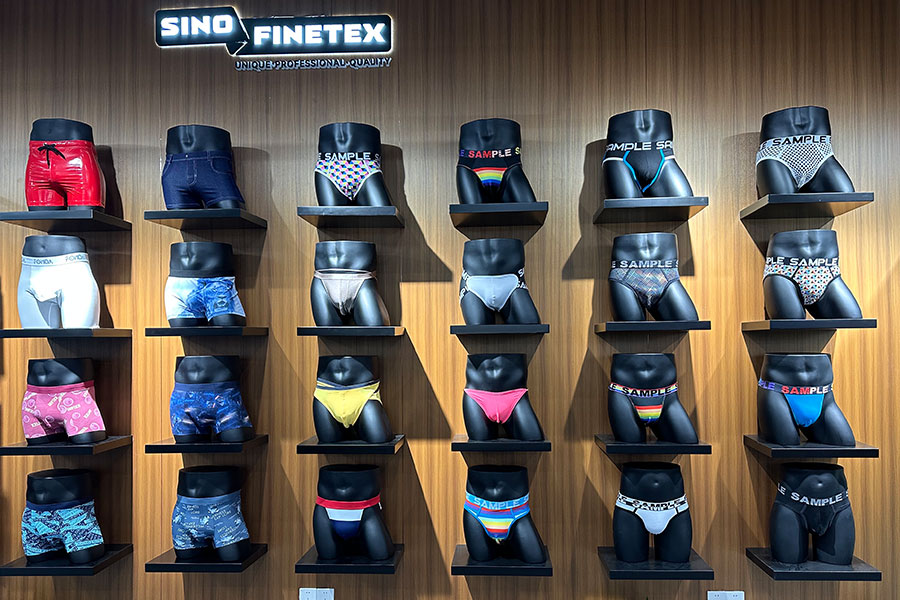
- Boxer briefs, trunks, briefs, thongs, jockstraps and harnesses
- Cotton, modal, micro-modal, bamboo, lyocell, viscose, nylon and polyester blends
- Contour pouch, fly, flatlock and bonded construction options
- Rolled, woven, jacquard and embossed waistbands
- Sublimation, screen print and embroidery for logo programmes
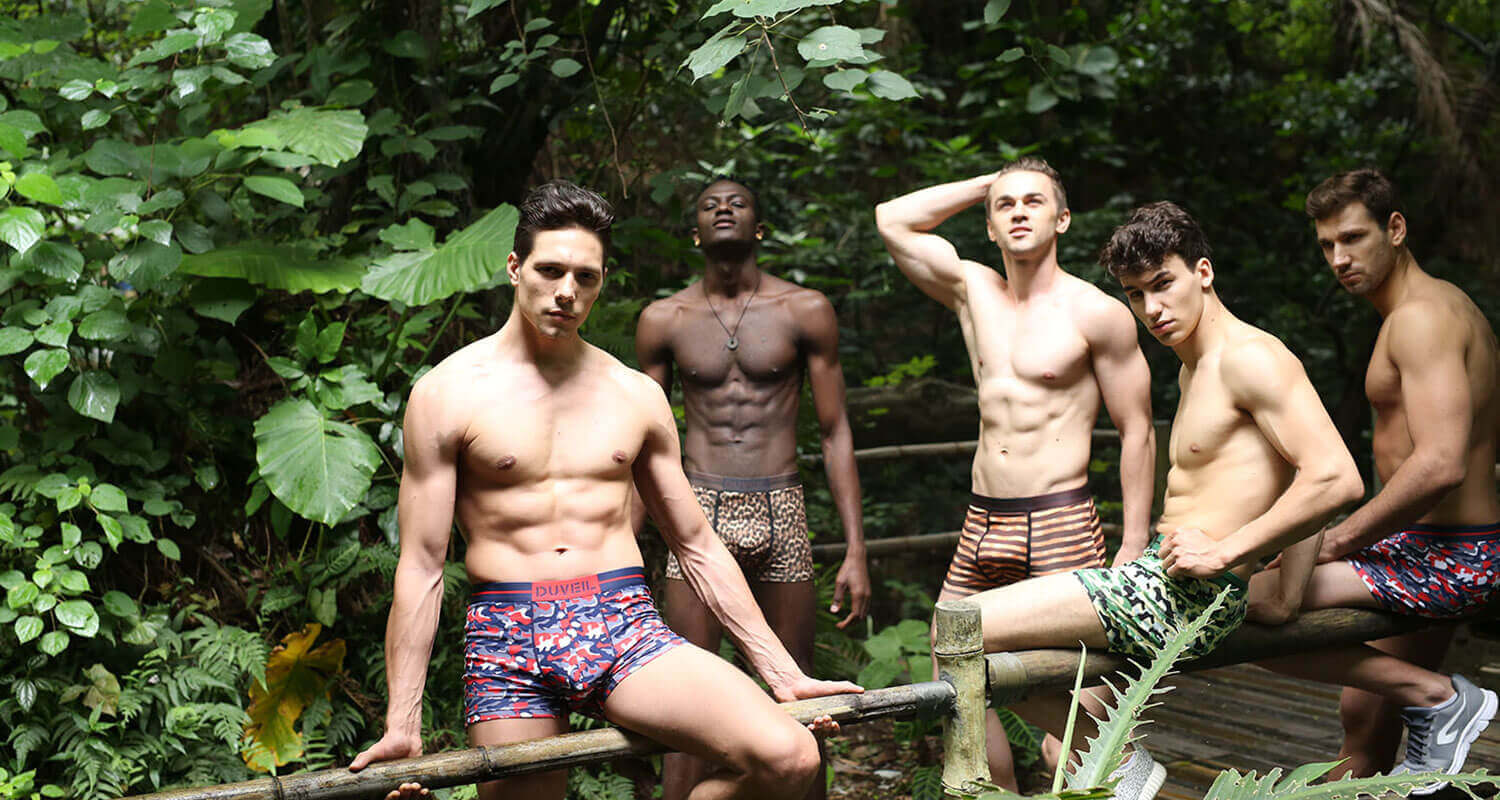
What we produce
Six construction families cover almost every men's underwear programme we quote.
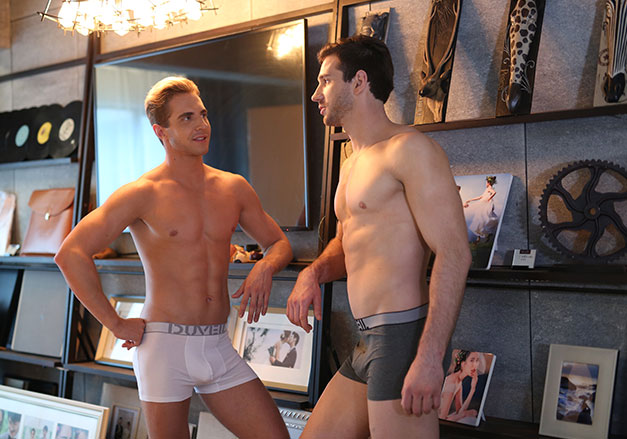
Boxer briefs
Contour or standard pouch, 3–8 inch inseam, with flatlock seams and a 30–38 mm waistband.
- Sizes S–3XL
- Cotton · modal · bamboo
- MOQ 300 pcs
Briefs & trunks
Classic brief, low-rise brief and trunk blocks for multipack and private label programmes.
- Multipack configurable
- 2×2 rib or single jersey
- Fly or no-fly
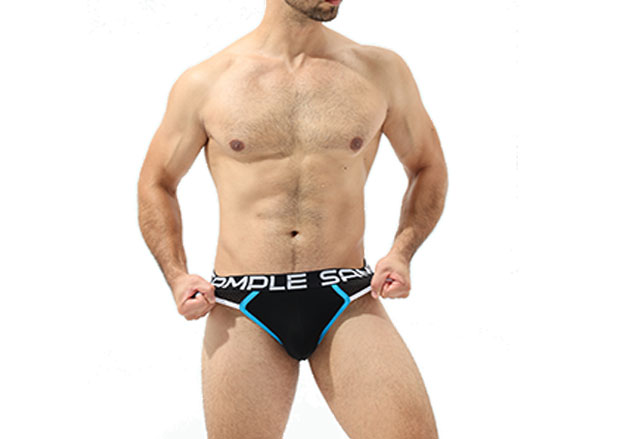
Jockstraps & thongs
Athletic and fashion jockstraps with elastic braid or plush waistbands, plus thong styles.
- Small-batch friendly
- Print and embroidery
- MOQ 300 pcs
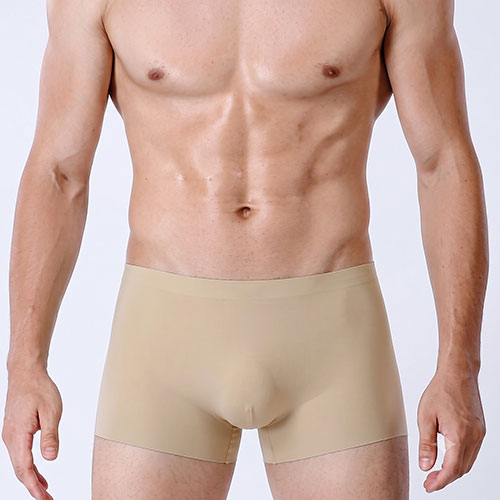
Seamless underwear
Circular-knit seamless bodies for bonded, tag-free programmes with a clean waistband transition.
- Bonded edges
- High stretch recovery
- Laser-cut panels
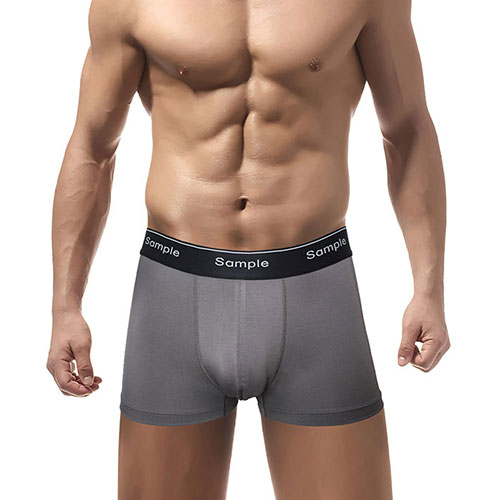
Bamboo & eco programmes
Bamboo viscose, organic cotton, Lenzing modal and recycled polyester for sustainability-led ranges.
- OEKO-TEX certified
- Fibre certificates
- Low-impact dyes
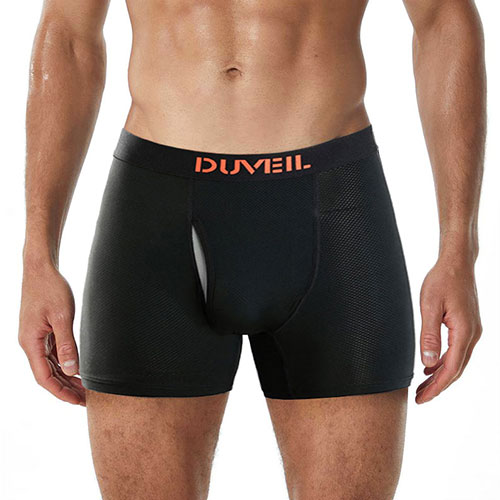
Performance & mesh
Nylon mesh, sports mesh and moisture-management knits for active and sportswear ranges.
- Fast dry
- High recovery
- Mesh panels
Six reasons underwear buyers stay with us
Fit consistency across batches
Patterns are graded once and locked. Every batch is measured against the same size chart, and the measurement report travels with the shipment.
Fabric controlled in-house
We knit and dye through mills we have used for over a decade, so shade continuity and recovery are managed before cutting rather than argued about afterwards.
Low MOQ, real costing
500 pieces per style on stock fabric. You get a cost breakdown by component so you can see exactly what a fabric upgrade or a bigger order would change.
Retail-ready packing
Multipacks, carton configuration, hangtags, size stickers and barcodes prepared to your retail requirement.
AQL 2.5 every shipment
Incoming fabric inspection, in-line checks and a final random inspection with photo evidence before the container closes.
15–45 day bulk lead time
Confirmed in writing at order stage, with a weekly production report so you can plan marketing around a real date.
Fabrics we run most often
Typical programme parameters
| MOQ | 500 pieces per style on stock fabric; 1,500–3,000 pieces per colour for a custom knit or dye lot |
|---|---|
| Sizes | S–3XL standard, custom grading from your measurement sheet |
| Fabric | Combed cotton, cotton/elastane, micro modal, bamboo viscose, lyocell, nylon, polyester blends |
| Waistband | Rolled elastic, woven jacquard, embossed, printed or self-fabric |
| Branding | Sublimation print, screen print, embroidery, woven label, heat transfer, hangtag |
| Packing | Polybag, single or multipack, retail box, custom carton marking |
| Sampling | 5–7 days development sample, 10–12 days full size set |
| Production | 15–45 days after deposit and approved pre-production sample |
| Payment | T/T 30/70, PayPal for samples |
How an Underwear Order Runs
Brief and Quotation
Send a reference sample or tech pack; we reply with fabric options, construction comments, and a costed quotation.
Fabric and Color Approval
For stock fabrics, select your preferred color from our color chart. For custom fabrics, we send lab dips for your color approval before bulk production.
Fit and Size-Set Sampling
Fit samples are developed within 5–7 working days, followed by a graded size set. We consolidate your feedback to help keep the schedule on track.
Bulk Cutting and Sewing
Bulk production follows the approved samples and specifications, with in-line checks and daily inspections to monitor workmanship.
Finishing and Final Inspection
Garments are trimmed, measured, and inspected before packing to ensure they meet the approved specifications.
Packing and Shipment
Garments are packed according to your requirements and shipped through our freight forwarder or your nominated forwarder.
Certifications and testing that your importer will ask for
Certification is checked before the order is placed, not after. We hold the current reports and can arrange buyer-specific testing at the same time as the pre-production sample.
OEKO-TEX Standard 100
Fabric and trims tested for harmful substances against the current limit values, with the certificate renewed every year.
BSCI / Sedex audited factory
Social compliance audit reports available for your supplier onboarding file, covering wages, hours and safety.
Bamboo, modal and recycled fibre papers
Fibre composition and chain-of-custody documents for bamboo, Lenzing modal, TENCEL™ and recycled polyester claims.
Colour fastness and shrinkage reports
Wash, rub, perspiration and dimensional-stability tests run on the bulk fabric before cutting starts.
Country-of-origin and customs paperwork
Commercial invoice, packing list, HS codes and origin declaration prepared so your broker clears the shipment without a delay.
Buyer-specific testing programmes
We work directly with SGS, Intertek and Bureau Veritas for buyer protocols such as Walmart, Target or ISO 9001 programmes.
Underwear manufacturing questions
What is the minimum order quantity (MOQ) for custom underwear?
Our standard MOQ for men's underwear is generally 500 pieces per color when using available fabrics. Custom fabric compositions, GSM, or Pantone colors may require a higher MOQ, typically 1,500-3,000 pieces per color. The exact MOQ depends on the style and material requirements.
What types of fabric can be used for custom underwear?
We work with a range of fabrics, including cotton, Modal, MicroModal, bamboo viscose, polyester, and nylon blends. Fabric selection depends on your target market, desired hand feel, stretch, breathability, and budget. We can discuss suitable options based on your product requirements.
Can I customize the underwear design, fit, and construction?
Yes. We can customize waistband design, leg openings, pouch construction, stitching, fabric composition, colors, and other garment details based on your tech pack or reference sample. You can also choose one of our existing styles and reproduce its construction and measurements, with adjustments if needed. The final specifications are confirmed before sampling.
Can I customize the waistband with my brand logo?
Yes. We can develop custom waistbands with woven or jacquard logos, depending on the design. Logo size, repeat pattern, waistband width, and artwork affect the final result. We recommend reviewing the waistband artwork and sample before bulk production.
How long does it take to develop an underwear sample?
A fit sample typically takes 5–7 working days, depending on material availability and design complexity. Custom fabric development or waistband production may require additional time. We confirm the estimated sampling schedule after reviewing your requirements.
Can I order different sizes in the same color?
Yes. Multiple sizes can generally be included in one color order. The size breakdown should be confirmed before production, and the applicable MOQ is normally calculated by color rather than by individual size.
Can you provide custom labels and packaging for underwear?
Yes. Options include brand labels, care labels, size stickers, printed polybags, multipacks, and custom boxes. Packaging specifications and any additional costs are confirmed before production.
What is the typical bulk production lead time for custom underwear?
Bulk production typically takes around 25–40 days after sample approval, deposit payment, and confirmation of materials and specifications. The actual lead time depends on order quantity, fabric availability, waistband production, and packaging requirements.
Can you manufacture underwear based on my existing sample?
Yes. You can send us a reference sample for evaluation. We can review its fabric, measurements, construction, and finishing to assess how the style can be reproduced. Any differences in materials or construction will be discussed before sampling.
What separates a good underwear order from a bad one
Underwear failures are rarely dramatic. They arrive as a slow trickle of returns: a waistband that goes slack after fifteen washes, a leg opening that loses recovery, a shade that does not match between the two colours of a three-pack, a size M that measures like an M in one batch and an L in the next. None of those are visible in a photograph of the first sample.
The controls that prevent them are unglamorous. Test elastic recovery on the bulk waistband rather than the sample. Heat-set at a documented temperature with a recorded dwell time. Cut one colour per marker, bundle by shade, and measure the first ten garments off each line against the size chart. Re-measure at the end of the run. It is a short list, and factories that follow it do not produce those returns.
Choosing fabric for a men’s underwear programme
Start from the end of the garment’s life: how many washes, at what temperature, with what drying method. A cotton brief sold through a value channel and a micro modal boxer brief sold at four times the price fail in different ways. Cotton needs dimensional stability and colour fastness; modal needs pilling resistance and careful finishing; bamboo needs a controlled drying curve or it will shrink unevenly.
The second decision is elastane content. Under 5% keeps a natural hand feel and works for briefs and loose-fit boxers. Between 5% and 10% gives the recovery a contour-pouch boxer brief needs to hold its shape. Above that the garment behaves like sportswear and needs different finishing entirely.
How MOQ is really calculated
A low MOQ is not a discount question; it is a question of what can be absorbed. Stock fabric, an existing block pattern and a standard waistband can be run at 500 pieces per colour. A custom knit requires a minimum fabric order from the mill, which typically puts the floor at 1,500–3,000 pieces per colour. Custom jacquard waistbands carry their own tooling minimum. When we quote a small order we tell you which components are already amortised and which are not, so you can see the cost of the decision.
Documentation and Compliance Support
Documentation requirements vary by customer and destination market. We can discuss the applicable requirements for your order and help coordinate relevant product information, such as fiber composition, care labeling, and measurement specifications. Where required, fabric certifications and third-party testing can be discussed and arranged subject to availability, testing scope, and additional costs.
Get a Custom Men's Underwear Quote Within 1 Working Day
Send us your tech pack or reference sample, along with your target quantity and sales market. We'll review your requirements and provide a tailored quotation, sample development plan, and estimated production lead time.
- Custom Pricing & Sampling Plan
- MOQ from 500 pcs per color with available fabrics
- Response Within 1 Working Day