
Seamless T-Shirt & Polo Manufacturer
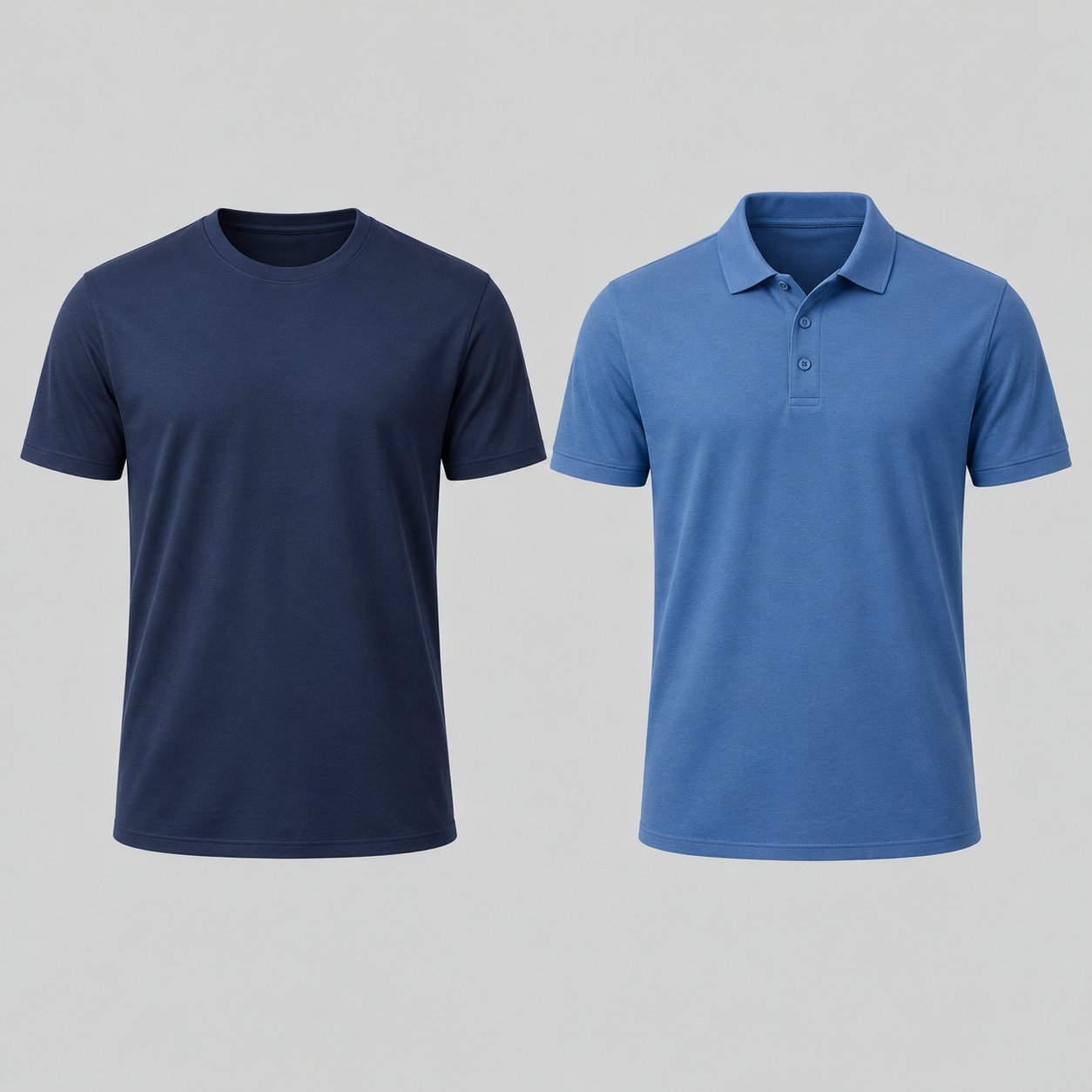
Circular-knit seamless bodies with bonded edges, tag-free finishing and modern fits — for basics ranges that need a smooth silhouette and fewer seam failures.
What seamless changes
No side seams
The body is knitted in a tube, which removes the side seam entirely and gives a smooth line under outerwear.
Bonded edges
Hem and sleeve edges are bonded rather than sewn, so there is no stitch line to rub or distort.
Tag-free finishing
Care and brand information is printed or bonded directly onto the fabric, removing the neck label.
Graded in the tube
Sizing is controlled by knit density and tube width, so grading works differently from cut-and-sew.
Print-ready surface
A flat, seam-free surface prints cleanly, which suits large-format graphics.
Longer development
Seamless development needs a knitting trial before sampling, so allow an extra 7–10 days on the first style.
When seamless is worth the development
Seamless makes commercial sense when the garment is worn close to the body and a seam would show or rub: undershirts, base layers, modern basics and premium polos. For a loose, printed T-shirt sold on graphics, a cut-and-sew body is cheaper and just as good.
- Undershirts and base layers where the seam would be visible
- Premium basics positioned on comfort
- Sport and compression-adjacent programmes
- Large-format all-over print where a flat surface matters
Seamless questions
What is your minimum order quantity (MOQ)?
Our standard MOQ is 300–1,000 pieces per style, mixed sizes. Styles using stock fabric can start from 300 pieces; a fully custom knit or dye lot usually starts at 1,000 pieces per colour. Tell us your target quantity and we will confirm what is achievable.
How long does sampling take?
A development sample takes 5–7 working days after artwork and fabric are confirmed. A full size set takes 10–12 working days. Sample cost is credited against the bulk order.
What is the lead time for bulk production?
Bulk production runs 15–45 days from deposit and approved pre-production sample, depending on quantity, fabric availability and trim lead times. We confirm the schedule in writing before you pay the deposit.
Which payment terms do you accept?
T/T (30% deposit, 70% against the copy of the bill of lading), L/C at sight, and PayPal for samples. Terms are confirmed in the proforma invoice.
Can you handle fabric, labels and packaging as well?
Yes. Fabric knitting, dyeing, cutting, sewing, printing, embroidery, labels, hangtags and retail packaging all sit inside our own supply chain, so a single purchase order covers the finished, retail-ready product.
How do you control quality?
Every order passes an incoming fabric inspection, an in-line check at 30% and 70% of the run, a final AQL 2.5 inspection before packing, and a shipment check against the approved sample and packing list.
Is seamless more expensive?
Yes, typically 15–30% above an equivalent cut-and-sew garment, because the knitting trial is charged into the first order and the tube knit costs more per kilogram than flat jersey. It becomes competitive at volume and where the comfort benefit supports the price.
What seamless construction actually is
A seamless garment is not made without any seams; it is knitted as a tube, so the body has no side seam, and the remaining edges are bonded or folded rather than stitched. The benefit is comfort and a clean line; the cost is a knitting process with less flexibility than cut-and-sew.
Development starts at the knitting machine
You cannot correct a seamless garment by adjusting a pattern. Tube diameter, knit density and elastane content determine the finished size, so the first step is a knitting trial rather than a sample. That adds a week to the front of the programme and is the main reason seamless styles are hard to launch quickly.
Bonded edges and wash durability
Bonding is a heat-and-pressure process, and its durability depends on the fabric blend and the tape used. We wash-test the bonded edge on the bulk fabric before production, because a bond that fails at the tenth wash turns a whole run into returns.
Request a sample & pricing information
Send us your tech pack, target price or a reference sample — we reply with a quotation, a realistic lead time and a fabric recommendation within one working day.
- Free sampling plan & cost breakdown
- MOQ from 300 pcs per style
- Reply within 1 working day