
Sportswear Manufacturer
Performance T-shirts, shorts, base layers and training wear in wicking knits, mesh and four-way stretch — produced to sport-specific specifications rather than as fashion basics.
Performance specifications, not fashion ones
Sportswear is bought for how it behaves during exercise, which puts fabric performance ahead of silhouette. Wicking rate, drying time, stretch and odour control are the specifications that decide whether a product is reordered.
We build sportswear programmes around those four properties, test the bulk fabric, and keep the construction simple enough that the performance is not undermined by the seams.
- Performance T-shirts and tanks in polyester and poly-blend wicking knits
- Training shorts with liners, pockets and bonded hems
- Base layers with zoned mesh and flatlock construction
- Anti-odour, UV and wicking finishes
- Reflective detailing, silicone grippers and bonded trim
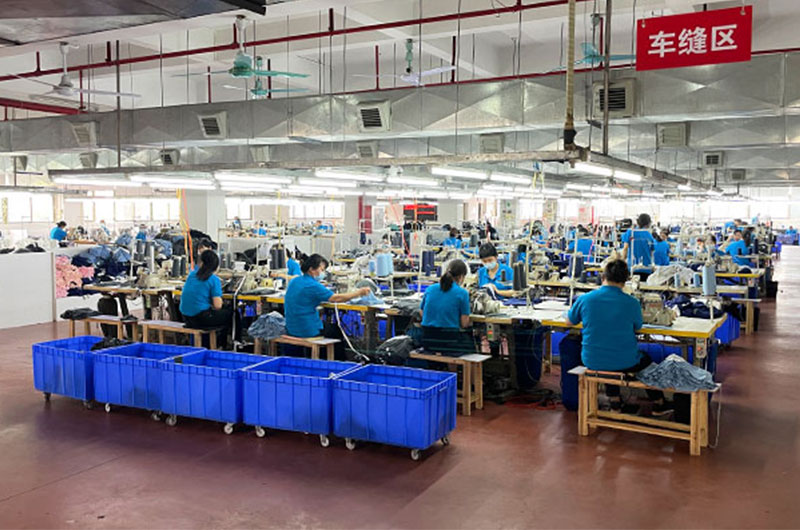
Performance knits
Sportswear questions
What is your minimum order quantity (MOQ)?
Our standard MOQ is 300–1,000 pieces per style, mixed sizes. Styles using stock fabric can start from 300 pieces; a fully custom knit or dye lot usually starts at 1,000 pieces per colour. Tell us your target quantity and we will confirm what is achievable.
How long does sampling take?
A development sample takes 5–7 working days after artwork and fabric are confirmed. A full size set takes 10–12 working days. Sample cost is credited against the bulk order.
What is the lead time for bulk production?
Bulk production runs 15–45 days from deposit and approved pre-production sample, depending on quantity, fabric availability and trim lead times. We confirm the schedule in writing before you pay the deposit.
Which payment terms do you accept?
T/T (30% deposit, 70% against the copy of the bill of lading), L/C at sight, and PayPal for samples. Terms are confirmed in the proforma invoice.
Can you handle fabric, labels and packaging as well?
Yes. Fabric knitting, dyeing, cutting, sewing, printing, embroidery, labels, hangtags and retail packaging all sit inside our own supply chain, so a single purchase order covers the finished, retail-ready product.
How do you control quality?
Every order passes an incoming fabric inspection, an in-line check at 30% and 70% of the run, a final AQL 2.5 inspection before packing, and a shipment check against the approved sample and packing list.
What wicking tests do you run?
We test vertical wicking rate, drying time and, where the buyer requires it, odour control after repeated wear cycles. Results are supplied with the order file, which allows you to make a performance claim with evidence behind it.
Performance is a specification, not a fabric name
Polyester is not automatically a performance fabric. A wicking finish on a poorly chosen knit performs worse than an untreated knit with the right structure. What matters is the finish, the knit structure and the weight working together, tested under a defined method.
The tests that predict whether a product sells again
Vertical wicking rate, drying time and odour development. All three are measured and repeatable. A garment that dries in half the time of its competitor is a product a customer notices, which is why the numbers are worth collecting even when no buyer asks for them.
Construction should not undo the fabric
A performance fabric joined with heavy seams loses the benefit: bulk, chafing and slower drying at the seam line. Flatlock or bonded construction is normally worth the extra cost on a product sold on comfort. Where print is involved, we select ink systems that do not seal the fabric surface and block moisture movement.
Recycled performance fibre
GRS-certified recycled polyester performs the same as virgin polyester for most apparel uses and carries the documentation needed for a recycled-content claim. The cost premium has narrowed to a few percent, which makes it a practical default for new sportswear programmes.
Request a sample & pricing information
Send us your tech pack, target price or a reference sample — we reply with a quotation, a realistic lead time and a fabric recommendation within one working day.
- Free sampling plan & cost breakdown
- MOQ from 300 pcs per style
- Reply within 1 working day