
Bamboo Underwear Manufacturing: Viscose, Lyocell and the Claim That Gets Challenged
Bamboo underwear is usually bamboo viscose, not bamboo fibre. Understand the process difference, the labelling rules that follow, and what to specify before you buy.
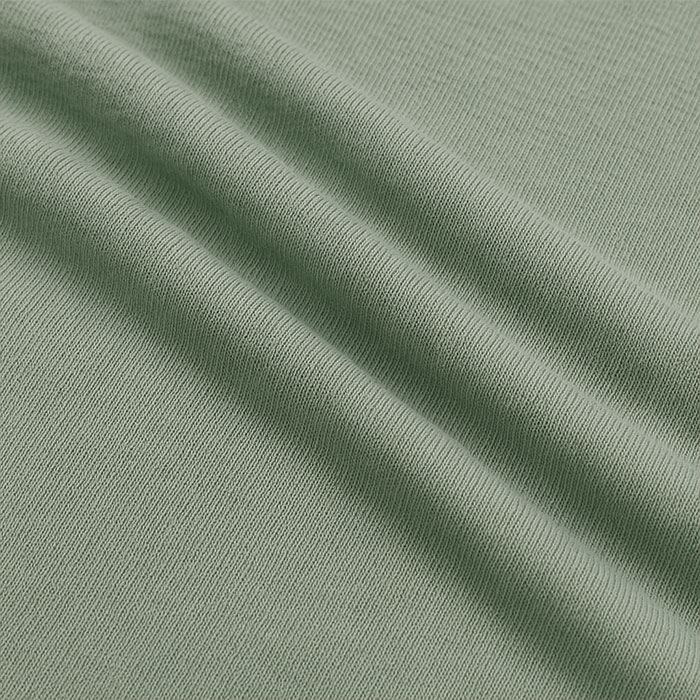
Most underwear sold as bamboo is made from bamboo viscose, a regenerated cellulose fibre, not from bamboo fibre in its natural form. That distinction matters because the label has to name the generic fibre accurately, and because the processing route determines how the fabric feels, how it wears and what can honestly be said about it. The product is good; the description is where brands get into difficulty.
What does “bamboo” actually mean on underwear?
Usually a regenerated cellulose fibre made from bamboo pulp.
The bamboo plant provides the cellulose, but the fibre is manufactured through a chemical process, which places it in the same family as viscose and lyocell rather than in the family of natural fibres.
| Route | How it is made | What that means commercially |
|---|---|---|
| Bamboo viscose | Cellulose dissolved and regenerated | Soft, drapey, lower cost |
| Bamboo lyocell | Regenerated in a closed-loop solvent process | Higher cost, stronger environmental story |
| Mechanically processed bamboo | Fibre extracted without regeneration | Rare in knitwear; linen-like handle |
Because the fibre is regenerated, the correct generic name belongs on the label rather than the plant name alone. That is a labelling requirement rather than a marketing preference, and it is the reason a garment described as bamboo in the product copy may still have to carry a different generic fibre name on the care label. Ask the factory what the declared composition is and how the fibre should be described in each place, so the label and the product page do not contradict each other.
How does bamboo viscose behave in underwear?
Soft, drapey and comfortable, with a weakness in pilling.
It produces excellent drape and a smooth surface, but can pill and lose definition more readily than cotton if the yarn and knitting are not controlled.
That combination explains both the popularity and the complaints. Customers like the feel immediately, and the risk appears after several washes in the form of surface pilling, particularly where the fabric rubs. Ask the factory how it knits bamboo qualities, what the yarn count is and how the fabric performs in a wash test. Where the fabric pills, increasing the yarn quality or adjusting the knit structure usually helps more than changing the fibre, and both should be tested before the range is committed.
Recovery is the second property to check. Bamboo knits drape well, which can mean they hold their shape less firmly than a cotton-rich quality, so the waistband and leg elastics carry more of the fit. Measuring recovery after washing on a finished garment is the practical way to confirm that the drape does not become a fit problem, and it takes the same test cycle as the pilling assessment.
When is bamboo lyocell worth the cost?
When the environmental story is part of the product.
The lyocell route regenerates the cellulose in a closed-loop process that recovers most of the solvent, which supports a stronger sustainability narrative at a higher cost per kilogram.
Whether that premium is worth paying depends on how the brand intends to use it. If the product page makes a fibre-based environmental claim, the better process route gives the claim something to stand on, and the cost is part of the product decision. If the brand is selling softness rather than process, standard bamboo viscose usually delivers the same hand feel at a lower price. Ask the factory for both options quoted on the same specification, and ask what documentation each route can supply, since the process claim has to be evidenced in the same way as any other.
The two routes also differ in feel, subtly. A closed-loop regenerated fibre tends to produce a slightly stronger, less pill-prone yarn, which shows up in the wash test rather than on the first wear. Where a brand intends to make a durability statement alongside the fibre statement, the better route supports both.
Why does the labelling rule matter so much?
The generic and brand names differ.
Textile labelling rules require the fibre composition to be stated accurately and generically, so the presence of a branded or plant-derived name does not replace the generic fibre name.
That means three descriptions can appear on the same product and each has a different job: the generic fibre name on the care label, the composition by percentage in the specification, and the marketing description on the product page. Keeping them consistent prevents the most common compliance failure in this category. Ask the factory to supply the exact fibre name for the care label and the composition by percentage, and check both against the fabric actually used rather than against the fabric originally intended.
How does bamboo blend with cotton and elastane?
It softens the handle and changes how the fabric ages.
A bamboo and cotton blend balances the drape of bamboo with the structure of cotton, while a small percentage of elastane provides the recovery that underwear requires.
The ratio matters as much as the presence of the fibres, because a blend that is mostly cotton behaves more like cotton and one that is mostly bamboo behaves more like bamboo. Ask for the composition by percentage and test a washed sample for the properties you care about: drape, opacity, pilling and recovery. Where a brand is launching a bamboo range alongside a cotton one, keeping the elastane percentage consistent between the two helps the fit feel coherent across the range.
Label content deserves the same attention, because a blend of three fibres produces a longer composition statement than a single-fibre garment, and the elastane percentage has to appear correctly. Checking the label text against the fabric actually used, before the print run rather than after, is the simplest way to avoid a mismatch that a marketplace listing would expose.
Which performance claims can be supported?
Softness and drape; not much beyond that without tests.
A bamboo viscose knit can be described accurately as soft and smooth, while claims about breathability, moisture management or antibacterial performance need evidence rather than an assumption from the fibre name.
This is where the category generates most of its trouble, because the fibre’s reputation as naturally antibacterial often appears in the product copy without any test behind it. Ask which claims the supplier will confirm in writing and what data exists for the specific fabric, then write the product description from that answer rather than from the fibre’s general reputation. Where a claim cannot be evidenced, the honest option is to omit it and to describe the garment’s feel, which is what customers actually experience.
Breathability deserves the same caution. A lightweight knit will feel cooler than a heavy one regardless of fibre, so a breathability claim is more often a statement about weight and structure than about bamboo. Describing the weight and the knit accurately gives the customer information they can rely on without implying a property the fibre does not confer on its own.
What should a wash test show?
Surface, recovery and colour.
Five checks cover the properties that decide whether a bamboo range reviews well, and they should be run on a finished, washed garment.
- Pilling assessment on the areas that rub against the body and clothing.
- Waistband and leg recovery, measured before and after washing.
- Surface smoothness, compared against a retained reference.
- Colour retention, particularly for darker shades.
- Shrinkage against the stated tolerance on the size chart.
Run the test on a finished garment rather than a swatch, because behaviour changes once the fabric has been cut and sewn.
Keeping a washed sample from each quality gives the production run a standard that reflects what the customer will own rather than what left the factory.
How does the cost compare with cotton and modal?
Usually between the two, depending on the route.
Standard bamboo viscose typically costs less than branded modal or lyocell qualities and more than a basic cotton, while the bamboo lyocell route moves towards the upper end of the range.
The comparison should be made at the same fabric weight and with the same finishing, because a light bamboo knit and a heavier cotton one are not comparable products. Ask for the same style priced in three qualities with the weight held constant, then decide based on how the fabric feels and how it washes rather than on price alone. Where the bamboo option is only marginally more expensive and the hand feel suits the brand, the difference is usually worth it; where it is substantially higher, the same money may deliver more through a better yarn in the existing fibre.
There is also a supply consideration. Bamboo viscose is produced by fewer mills than cotton, so the number of qualities available at a given weight is smaller, and a brand should confirm that the specific quality will still be available for the reorder. Where it is not, the range either changes fibre between seasons or moves to a weight the mill runs continuously, and both decisions are better taken before the first order is placed.

FAQ
Who manufactures bamboo underwear?
Knitwear manufacturers that run regenerated cellulose fibres, usually described by the factory as bamboo viscose. Ask which bamboo qualities are in production, what the composition by percentage is and how the fabric performs in a wash test, since pilling is the property that most affects how the range reviews.
Is bamboo underwear actually made from bamboo fibre?
In knitwear it is usually a regenerated cellulose fibre made from bamboo pulp, which is why the label generally carries the generic fibre name rather than the plant name alone. The distinction is a labelling requirement rather than a marketing choice, and the product page and care label should agree.
Does bamboo underwear pill?
It can, particularly where the fabric rubs, which is why the yarn quality and knit structure matter as much as the fibre. Ask for a washed sample and inspect the areas that rub against the body and clothing. Where pilling appears early, increasing the yarn quality usually helps more than changing the fibre.
How much more does bamboo underwear cost to manufacture?
Standard bamboo viscose usually sits between a basic cotton and a branded modal or lyocell quality, while the lyocell route costs more. Compare options at the same fabric weight and with the same finishing, because weight and construction affect the price as much as the fibre does.
Next step for your team: tell the Finetex Global team which bamboo route you are considering, and ask for the composition by percentage, the correct fibre name for the care label, the wash-test results and the claims the supplier will confirm in writing.
Sources: 16 CFR Part 303 textile labelling; OEKO-TEX STANDARD 100; Textile Exchange standards; Lenzing — TENCEL™ branded lyocell; ISO 9001 quality management.
More factory-floor notes for brand owners

Sample Revision Limits: How to Control Underwear Development Cost and Calendar
A sample revision limit should control scope, not block necessary correction. The buyer and factory need to distinguish…
Read more →
Lab Dips and Strike-Offs for Underwear: Approval Steps That Prevent Delays
A lab dip approves a dyed textile shade; a strike-off approves printed artwork on the intended substrate. They…
Read more →
Color MOQ Planning: How to Share Fabric Across Multiple Underwear Styles
Color MOQ planning works best when a brand treats dyed fabric as a shared material platform rather than…
Read more →
Underwear Fabric Utilization: How Marker Efficiency Changes Unit Cost
Fabric utilization converts a fabric quotation into a garment cost. The calculation must account for pattern area, fabric…
Read more →
Open Costing for Men’s Underwear: Reading Fabric, Trim, Labor and Overhead Lines
An open-cost sheet is useful only when every line is tied to a measurable specification, a purchasing unit…
Read more →Global Apparel Sourcing Outlook 2026: Cotton, Freight and Supply-Chain Risk
A data-led 2026 apparel sourcing outlook on cotton balances, freight volatility, supplier diversification, lead time, compliance and practical…
Read more →Request a sample & pricing information
Send us your tech pack, target price or a reference sample — we reply with a quotation, a realistic lead time and a fabric recommendation within one working day.
- Free sampling plan & cost breakdown
- MOQ from 300 pcs per style
- Reply within 1 working day