
Jockstraps vs Boxer Briefs for Athletic Brands: Choosing the Right Program
The jockstrap versus boxer brief decision for an athletic brand follows the sport: the support need decides the product, and the product decides the program. According…
The jockstrap versus boxer brief decision for an athletic brand follows the sport: the support need decides the product, and the product decides the program. According to Finetex’s published underwear program details, its line covers jockstraps, boxer briefs, trunks, and briefs with OEM and ODM support, which gives a sports brand one factory for the choice and the combination. This guide walks the decision chain from the sport to the product, the two-SKU program, the materials, the testing, and the factory brief.
Support Needs by Sport
The support need comes first, and the sport defines it. A ball-sport athlete needs explicit support that holds through high-impact movement, which points to the jockstrap. A runner or a gym-goer needs coverage and support that moves, which points to the athletic boxer brief. A recovery or lifestyle user needs comfort over long wear, which points to a soft-knit boxer.
The need should be written in the athlete’s language: “stays in place through a match,” “holds without digging,” “moves with the stride.” The language becomes the product brief, and the brief becomes the factory’s instruction. The sport’s demand is the only reason the product exists.
The need also sets the testing. A jockstrap tested for a match is tested differently from a boxer brief tested for a commute, and the testing should match the sport. The athlete’s session is the test, and the test is the product’s proof.
Jockstrap vs Boxer Brief: A Functional Comparison
The functional comparison is the decision tool, and the difference is the support mechanism.
| Dimension | Jockstrap | Athletic boxer brief |
|---|---|---|
| Support mechanism | Explicit pouch and straps | Fabric and waistband hold |
| Coverage | Minimal | Full |
| Best sports | Ball, contact, high-impact | Running, gym, everyday training |
| Construction | Straps and pouch | Fabric body with leg grip |
The comparison shows the two products serve different jobs, and the brand does not have to choose one for the whole line. The volume product follows the primary sport, and the second product covers the adjacent need.
Running Both: A Two-SKU Sports Program
The two-SKU program is the practical answer for an athletic brand: the jockstrap carries the ball-sport story, and the athletic boxer brief carries the training volume. The two products share the fabric family and the branding system, so the factory runs one setup and the retail story reads as one program.
The program should be staged. The volume product carries the depth and the data, and the second product tests the adjacent need before it earns a deeper order. The sell-through review decides which product the second season deepens.
The two SKUs should not share a size chart, because the jockstrap and the boxer brief grade differently. Each product gets its own size curve and its own fit notes, built from its own size-set measurements.
Materials and Construction for Sports
The materials follow the support job. The jockstrap needs a durable pouch fabric, elastic straps with consistent tension, and a waistband that stays put; the boxer brief needs a performance blend that manages sweat, moves with the body, and holds its shape through the wash.
According to Finetex’s published jockstrap program details, its production covers harness and jockstrap construction with quality control and trimming in-house, which is the integrated setup a sports program needs for consistent tension. The construction questions should be specific: how the straps are attached, how the tension is controlled, and how the edges are finished.
The materials should also carry the performance story with limits. Moisture management and quick-dry claims are supportable; recovery and circulation claims belong to regulated territory. The brand that keeps the claims in the athletic lane protects the program.
Sampling and Testing for Athletic Use
The sample and the test belong to the sport. Order the size set for each product, wash it in the athlete’s cycle, and wear-test it in the intended activity for a full session, not a quick try-on.
The wear-test feedback should name the specific element: the waistband, the strap, the leg grip, or the pouch. The jockstrap that shifts mid-match and the boxer brief that rides on a run are different corrections, and the specific feedback is what the factory can act on.
The testing record belongs in the approval file, because the athlete’s review is the category’s final inspection. The product that survives the session and the wash is the product that survives the season.
Program Brief for the Factory
The factory brief should carry the whole program: the sport map, the two products, the support requirements, the materials, the size curves, and the testing plan. The brief is what the factory quotes against, and the complete brief produces a program that matches the brand’s intent.
A team-sport merchandise buyer’s view on the program
A team-sport merchandise buyer who sources underwear for clubs warns against the full-range first launch. In their experience, a two-SKU program keeps the first season simple, with the volume product proving the fit and the category product testing the extension, and the reorder is promoted only when the sell-through data supports it. Their standard advice is to treat the second SKU as a test the first line funds.
Finetex’s men’s underwear manufacturing page covers the jockstraps, boxer briefs, trunks, and briefs available for private label programs, and its jockstrap factory page describes the custom options. Bring the sport map and the two-SKU plan, and the factory can sample the program and confirm the structure for the season.
The program should also plan the size distribution per sport. A team-sport order follows the roster, with the sizes weighted to the team; a running line follows the market curve, with the middle sizes carrying the depth. The two products in the program carry different quantity plans, and the plans belong in the order spec.
The packaging is part of the program story. A jockstrap sold to a team needs pack sizes and labeling that fit the roster order, while a boxer brief sold to the retail channel needs a retail presentation. The packaging should be confirmed in the sample round, because the box follows the garment and the channel follows the product.
The program review closes the season. The sell-through, the returns, and the wear-test notes from the first season feed the second order, and the review keeps the product, the testing, and the claim aligned with the sport’s demand. The program compounds when the athlete data and the factory relationship are reviewed together.
The decision chain also sets the claim language. The jockstrap sells the support story, and the boxer brief sells the coverage and the sweat story, and the two listings should not share the copy. The claim that matches the product’s support job is the claim the athlete believes.
The program brief should also name the volume split. The boxer brief carries the depth and the jockstrap tests the category, and the split belongs in the order spec with the size curves. The staged program protects the cash and produces the data the second season uses.
The program also benefits from the comparison against the alternative. A brand that samples both the jockstrap and the boxer brief in the same fabric family sees the support difference side by side, and the athlete feedback from both products decides the program split. The comparison is the evidence the decision needs.
The review after the first season should also check the claim performance. The athlete reviews, the returns, and the wear-test notes all feed the next claim language, and the brand that updates the story with the data keeps the athletic lane honest. The program compounds when the product and the claim move together.
The two-SKU program is the practical answer because it matches the customer’s real wardrobe. The athlete owns both products, the jockstrap for the match and the boxer brief for the training, and the brand that offers both serves the same customer twice. The program is a customer strategy, not a product strategy.
The program also needs the factory conversation to confirm the split. The jockstrap and the boxer brief may carry different minimums and different production setups, and the buyer should confirm both before the order. The program is only as real as the factory’s confirmation of the structure.
The jockstrap and boxer brief programs this comparison draws on are on the jockstrap factory page and the contact page.
Frequently Asked Questions
Should my athletic brand offer jockstraps or boxer briefs?
It depends on the sport. Ball and contact sports point to the jockstrap, while running and gym training point to the boxer brief. The volume product follows the primary sport.
Can I run both products?
Yes, and a two-SKU program is a practical first answer. The jockstrap carries the category story, and the boxer brief carries the volume.
What materials should sports underwear use?
The materials that match the support job: a durable pouch and consistent straps for the jockstrap, and a performance blend for the boxer brief. The construction questions should be specific.
How should I test sports underwear?
Wear-test in the intended sport for a full session and wash in the athlete’s cycle. The feedback should name the specific element that failed.
What claims can I make?
Moisture management and quick-dry claims are supportable; recovery and circulation claims are not. Keep the claims in the athletic lane.
What should the factory brief include?
The sport map, the products, the support requirements, the materials, the size curves, and the testing plan. The complete brief produces a program that matches the intent.
Sources
- Finetex Global — Men’s Underwear Manufacturing
- Finetex Global — Custom Jockstraps Manufacturer
- Finetex Global — Contact Us
For the surrounding decisions in the same programme, see the underwear fit and fabric specifications.
More factory-floor notes for brand owners

Sample Revision Limits: How to Control Underwear Development Cost and Calendar
A sample revision limit should control scope, not block necessary correction. The buyer and factory need to distinguish…
Read more →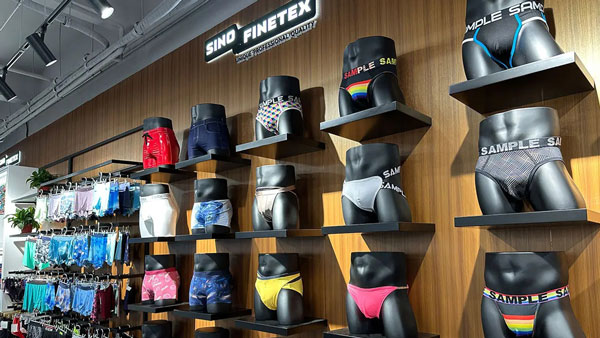
Lab Dips and Strike-Offs for Underwear: Approval Steps That Prevent Delays
A lab dip approves a dyed textile shade; a strike-off approves printed artwork on the intended substrate. They…
Read more →
Color MOQ Planning: How to Share Fabric Across Multiple Underwear Styles
Color MOQ planning works best when a brand treats dyed fabric as a shared material platform rather than…
Read more →
Underwear Fabric Utilization: How Marker Efficiency Changes Unit Cost
Fabric utilization converts a fabric quotation into a garment cost. The calculation must account for pattern area, fabric…
Read more →
Open Costing for Men’s Underwear: Reading Fabric, Trim, Labor and Overhead Lines
An open-cost sheet is useful only when every line is tied to a measurable specification, a purchasing unit…
Read more →Global Apparel Sourcing Outlook 2026: Cotton, Freight and Supply-Chain Risk
A data-led 2026 apparel sourcing outlook on cotton balances, freight volatility, supplier diversification, lead time, compliance and practical…
Read more →Request a sample & pricing information
Send us your tech pack, target price or a reference sample — we reply with a quotation, a realistic lead time and a fabric recommendation within one working day.
- Free sampling plan & cost breakdown
- MOQ from 300 pcs per style
- Reply within 1 working day