
EU GPSR for Apparel: Label, Listing and Responsible Person Requirements
What the EU General Product Safety Regulation asks of clothing brands: the EU responsible person, batch identification, label and listing fields, and documents.

Answer first: Since 13 December 2024, clothing sold to consumers in the EU falls under the General Product Safety Regulation (EU) 2023/988. In practice a brand needs an EU-established responsible person, a batch or type identifier on each product, its own and the responsible person’s contact details on the product or packaging, and the same information plus any warnings shown on every online listing.
The GPSR replaced the old General Product Safety Directive and applies to most non-food consumer products, including clothing and underwear. It does not add a new test for T-shirts or boxer briefs. What it changes is traceability and information: who in the EU answers for the product, how a garment can be identified if there is a problem, and what an online offer has to show before the customer buys. For a private-label brand manufacturing in China, the important point is that the listing now counts as much as the sewn-in label.
This guide summarises the provisions that matter for apparel, based on the regulation text checked on 11 November 2026 (consolidated version dated 29 May 2026). It is a practical reading of the rules, not legal advice; for your own product range, confirm with an EU compliance adviser or your responsible person.
What the GPSR covers for clothing
The regulation applies to products placed on the EU market that are intended for consumers or likely to be used by them, unless more specific EU safety legislation covers the same risk. For apparel there is no single harmonised “clothing safety” law, so the GPSR is the general safety net. It sits alongside rules that still apply separately:
- Regulation (EU) No 1007/2011 on textile fibre names, which governs fibre composition labelling.
- REACH chemical restrictions, which limit substances such as certain azo dyes in textiles that touch the skin.
- Product-specific standards that authorities use as a benchmark, for example the European standard on cords and drawstrings in children’s clothing.
The GPSR’s general safety requirement in Article 5 means a product must be safe under normal or reasonably foreseeable use. For adult basics such as tees and underwear the main practical risks are chemical content, and for children’s wear also cords, small parts and flammability. The rest of the regulation is about proving and communicating that.
The responsible person: who it can be
Article 16 says a product covered by the regulation cannot be placed on the EU market unless an economic operator established in the EU is responsible for it. That operator can be one of the types listed in Article 4 of Regulation (EU) 2019/1020: an EU-based manufacturer, an importer, an authorised representative appointed in writing, or a fulfilment service provider where no other is established in the EU.
The responsible person’s tasks include holding or accessing the technical documentation, cooperating with market surveillance authorities, and informing them when a product presents a risk. Under Article 16(2) they must also regularly check that the product matches its technical documentation and carries the identification, contact and safety information required by Article 9.
| Brand set-up | Typical responsible person |
|---|---|
| EU-registered brand importing its own goods | The brand itself, as importer |
| Non-EU brand selling through an EU importer or distributor | The importer |
| Non-EU brand shipping direct to EU consumers | An appointed authorised representative in the EU |
| Non-EU brand using an EU fulfilment centre with no other EU operator | Possibly the fulfilment service provider; confirm in writing |
A factory in China cannot be the responsible person, because it is not established in the EU. Finetex can print the responsible person’s details on labels and packaging, but the appointment itself is the brand’s decision and contract.
What has to appear on the garment or packaging
Article 9 sets the manufacturer’s information duties. For apparel, the brand selling under its own name is generally treated as the manufacturer.
- Identification (Article 9(5)). A type, batch or serial number or another element that identifies the product, easily visible and legible for consumers. Where the size or nature of the product does not allow it, the information can go on the packaging or an accompanying document.
- Manufacturer contact (Article 9(6)). Name, registered trade name or trade mark, postal address and electronic address, plus a single contact point if different. On the product, or where that is not possible, on the packaging or accompanying document.
- Instructions and safety information (Article 9(7)). Where needed for safe use, in a language easily understood by consumers in the Member State of sale.
- Responsible person (Article 16(3)). Name, trade name or trade mark and contact details, including postal and electronic address, on the product or its packaging, the parcel or an accompanying document.
For a T-shirt or boxer brief, the usual practical solution is a combination: style and batch code on the care label, and full addresses on the hangtag, packaging or insert card. Whether a sewn-in label has room depends on your label size and how many languages you print.
Where the fields usually go
The table below is a common layout, not a legal requirement. The regulation allows packaging or an accompanying document where the product itself cannot carry the information.
| Information | Care or side label | Hangtag, box or polybag insert | Online listing |
|---|---|---|---|
| Fibre composition (Reg. 1007/2011) | Yes, required on label or marking | Optional repeat | Required before purchase |
| Care symbols | Usual practice | Optional repeat | Recommended |
| Style and batch code | Recommended | Recommended | Product identifier and picture required |
| Manufacturer name and addresses | If space allows | Common location | Required |
| EU responsible person and addresses | If space allows | Common location | Required |
| Warnings or safety information | Where relevant | Where relevant | Required where they exist |
Online listings now carry part of the label
Article 19 is the change most sellers notice. For distance sales, including your own website, Amazon, Zalando or TikTok Shop, the offer must clearly and visibly show at least:
- the manufacturer’s name, registered trade name or trade mark, and postal and electronic address;
- where the manufacturer is not established in the EU, the name, postal and electronic address of the responsible person;
- information identifying the product, including a picture, its type and any other product identifier;
- any warning or safety information that must accompany the product, in a language consumers in that Member State easily understand.
Article 22(9) obliges online marketplaces to design their interfaces so traders can enter this information for each product, which is why marketplaces added GPSR fields to seller accounts. Separately, Article 16(1) of the textile labelling regulation requires the fibre composition to be clearly visible before purchase, including for online sales.
A practical rule: whatever is printed on the hangtag about the manufacturer, responsible person and warnings should be copied word-for-word into every EU listing for that style.
Batch traceability: making the code mean something
A batch code only helps if it links back to records. The aim is that if a complaint or authority request arrives, you can identify which production run, fabric lot and test reports apply.
A workable structure for a small brand:
- Assign a style number that stays the same across reorders.
- Add a batch or lot code per production run, for example year, month and run number.
- Print both on the care label or a size label.
- Keep a file per batch with the purchase order, fabric and trim lots, test reports, inspection report and shipping documents.
At Finetex, certificates and test reports are filed under the order number, and labels and packaging are produced in our own supply chain, so a batch code can be added to the care label proof at the specification stage.
Technical documentation and record keeping
Article 9(2) requires manufacturers to carry out an internal risk analysis and draw up technical documentation before placing a product on the market. The documentation must contain at least a general description of the product and its essential safety characteristics, and where appropriate, an analysis of possible risks, the solutions adopted, test reports and the standards applied. Article 9(3) requires it to be kept up to date and available to authorities for 10 years after the product is placed on the market.
For apparel, a proportionate file often includes:
- a tech pack or specification sheet with fabric, trims and construction;
- chemical test reports or certificates for fabric and trims, for example OEKO-TEX Standard 100;
- for children’s wear, the risk review for cords, small parts and fastenings;
- label and packaging artwork as approved;
- inspection reports per batch.
Article 9 also requires manufacturers to provide public channels for complaints and accident reports, to keep an internal register of complaints, recalls and corrective measures, and to notify authorities through the Safety Business Gateway if a product placed on the market is dangerous.
What the factory can and cannot do
| Task | Factory can help | Brand or responsible person owns it |
|---|---|---|
| Print batch codes on care labels | Yes | Decide the code format |
| Print manufacturer and responsible person details on hangtags or packaging | Yes, to your artwork | Supply the correct legal details |
| Fibre composition and care labels to EU requirements | Yes | Approve the proof and languages |
| Provide fabric certificates and test reports | Yes, where they exist | Decide what testing is needed |
| Appoint the EU responsible person | No | Yes |
| Fill GPSR fields in marketplace listings | No | Yes |
| Risk analysis and complaints register | Supply product information | Yes |
A pre-shipment GPSR checklist
- Responsible person appointed, with a written agreement and their address confirmed.
- Batch or type code format agreed and on the care label proof.
- Manufacturer and responsible person details on the hangtag, packaging or insert.
- Fibre composition and care labels approved in the required languages.
- Test reports or certificates in the order file.
- Listing fields completed on every EU channel with picture, identifier and contact details.
- Complaint contact published and a complaints register set up.
Our care label requirements for the US and EU and EU underwear compliance checklist for online sellers cover the label content in more detail, and the private label service explains how labels and packaging are produced with your branding. For the wider launch process, see our apparel manufacturing guides.
What is fact, what is advice and what is uncertain
Fact: the obligations quoted from Articles 9, 16, 19 and 22 of Regulation (EU) 2023/988 and Article 16 of Regulation (EU) No 1007/2011, read on 11 November 2026. The GPSR applies from 13 December 2024.
Advice: the label layout, batch code structure and checklist are practical recommendations.
Uncertain: how strictly individual Member States and marketplaces enforce placement and language details. Penalties are set nationally. Confirm the details for your markets with your responsible person or an EU compliance adviser.
Related reading
- Section 301 Tariffs on Chinese Apparel: HS Codes, Rates and Mitigation
- TikTok Shop Apparel: Compliance, Packaging and Returns
- Garment Measurement Points for Knit Tops: The 12 Numbers Buyers Argue About
Frequently asked questions
Does the GPSR apply to clothing?
Yes. Clothing and underwear sold to consumers in the EU are covered by Regulation (EU) 2023/988, which has applied since 13 December 2024, alongside the textile labelling regulation and REACH.
Who can be the EU responsible person for a clothing brand?
An economic operator established in the EU: an EU manufacturer, an importer, an authorised representative appointed in writing, or in some cases a fulfilment service provider. A non-EU factory cannot fill this role.
Does the responsible person’s address have to be on the garment?
It must be on the product or its packaging, the parcel or an accompanying document. Many apparel brands put it on the hangtag or packaging rather than on the sewn-in label.
What must an EU product listing show under the GPSR?
The manufacturer’s name and postal and electronic address, the responsible person’s details if the manufacturer is outside the EU, a picture and product identifier, and any required warnings or safety information.
Do I need a batch number on every T-shirt?
The product must bear a type, batch or serial number or other identifying element visible to consumers, or carry it on the packaging where the product cannot. A style and batch code on the care label is the common solution.
Can my factory handle GPSR compliance for me?
A factory can print codes and contact details, supply certificates and produce compliant labels. Appointing the responsible person, completing listings and keeping the complaints register remain the brand’s tasks.
Sources
- Regulation (EU) 2023/988 on general product safety (EUR-Lex)
- Regulation (EU) No 1007/2011 on textile fibre names and labelling (EUR-Lex)
- European Commission: Safety Gate portal
Get EU-ready labels with your first order
Send us your responsible person details, markets and label artwork. We will prepare care label, hangtag and packaging proofs with batch codes and contact information before production starts.
Request a quote or see our private label service.
More factory-floor notes for brand owners
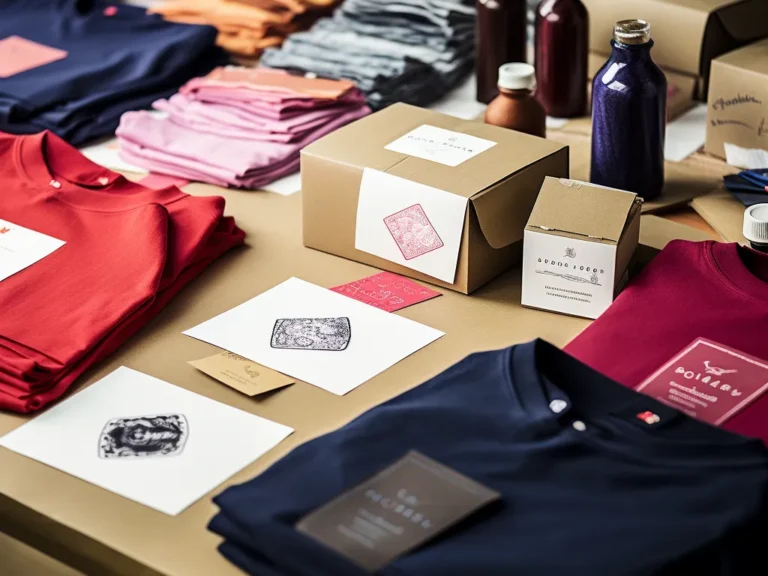
Selling Underwear in Germany: Textilkennzeichnung, LUCID and Packaging Law
German textile labelling, LUCID registration and packaging law for underwear brands after the PPWR and VerpackDG took effect…
Read more →
GSM to Ounce Converter and Fabric Weight Chart
Convert fabric weight between gsm and oz/yd² with the exact factor (1 oz/yd² = 33.906 g/m²), a T-shirt…
Read more →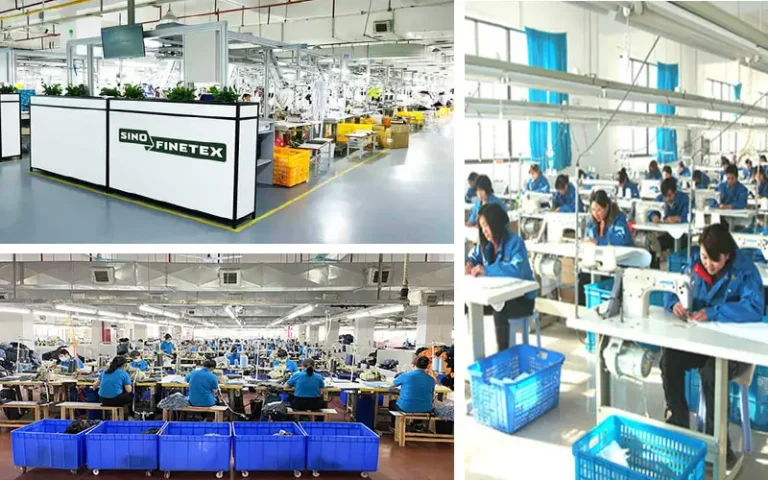
First-Output Check: The In-Line Inspection That Saves Bulk
What to check on the first garments off each line: measurements, seams, labels and print against the approved…
Read more →
A Fit Session Protocol for Knit Tops: 12 Wearers, 5 Measurements
A recommended fit session protocol for knit tops: recruit 12 wearers, take five measurements, run a movement checklist,…
Read more →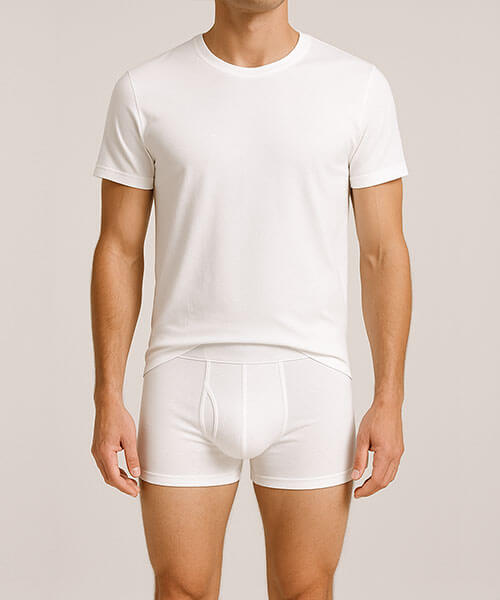
Corporate Uniform Programs: Tendering, Sizing and Reorders
How to run a corporate uniform program with a factory: tender documents, sizing a workforce, producing many sizes…
Read more →
Muscle Fit and Athletic Fit T-Shirts: Pattern Changes That Matter
How muscle fit and athletic fit T-shirts differ from a classic block: chest-to-waist drop, sleeve cap and bicep,…
Read more →Request a sample & pricing information
Send us your tech pack, target price or a reference sample — we reply with a quotation, a realistic lead time and a fabric recommendation within one working day.
- Free sampling plan & cost breakdown
- MOQ from 300 pcs per style
- Reply within 1 working day