
China vs Bangladesh: When the Lowest FOB Is the Wrong Number
Comparing China and Bangladesh for knit basics by landed cost, not FOB: verified US and UK duty differences, origin rules, lead time, reorders and a formula.
Answer first: A lower FOB price in Bangladesh does not by itself make an order cheaper. The right comparison is landed cost per sellable unit, which adds freight, duty, fees, lead-time cost and the price of a reorder. On the rates we verified on 12 November 2026, duty can favour Bangladesh: cotton T-shirts from Bangladesh can enter the UK at 0% under the DCTS if they meet origin rules, against 12% for China, and the US stack is lower for Bangladesh than for China. But duty is only one line, and the cheaper FOB can disappear if the fabric, the minimum order or the lead time does not fit your product.
Buyers of knitwear basics, such as T-shirts, underwear and fleece, usually collect quotes from several countries and sort them by FOB price. China and Bangladesh are the most common pair. This article does not claim one country is better. We are a Chinese factory and have an obvious interest, so we have limited the numbers to official duty rates and used formulas for everything else. We do not publish any FOB, wage or cost figures for either country, because we have no verified data to share. The aim is to show which questions to ask, so the price you compare is the one you will actually pay.
Why FOB is the wrong comparison
An FOB quote is a price at the origin port for a specific specification. It leaves out everything that happens afterwards, and it hides differences between the quotes themselves:
- Different scope. One quote includes trims, labels and packaging; another does not.
- Different specification. The same T-shirt name can mean different yarn count, gsm, shrinkage control and stitching.
- Different duty. The same garment can face different duty depending on origin.
- Different time. A longer production and shipping time ties up cash and adds risk of missing the selling season.
- Different order flexibility. A high minimum order locks in stock you may not sell.
Our guide to building a landed cost sheet lists the nine cost lines. This article applies that method to the China versus Bangladesh choice.
Duty: where the difference is real and verifiable
We checked the following on 12 November 2026. They apply to a cotton knit T-shirt, and your product may have a different classification.
United States
| Layer | China origin | Bangladesh origin |
|---|---|---|
| General (MFN) rate, HTS 6109.10.00 | 16.5% | 16.5% |
| Section 301, 2018–2019 action (List 4A, heading 9903.88.15) | +7.5% (6109.10.00 is on the USITC China Tariffs list) | Not applicable |
| Section 301 forced-labour action (July 2026) | +12.5% | +10% |
| Stack of these three layers | 36.5% | 26.5% |
The General rate is from the USITC HTS search. The List 4A mapping comes from the USITC China Tariffs list, last updated 28 July 2026. The 10% and 12.5% rates come from USTR’s notice of 28 July 2026 (91 FR 47318): Bangladesh is among the economies assigned 10%, and “all other investigated economies”, including China, are assigned 12.5%, with exemptions in the annexes. Duty is calculated on the customs value, so the percentages are not additive on freight. See our article on Section 301 tariffs on Chinese apparel for China’s layers in more detail.
The same notice says USTR will, when feasible, set up tariff-rate quotas for Bangladesh, Cambodia, Indonesia and Malaysia so that a certain volume of specific textiles and apparel, based on each economy’s imports of US cotton and textile inputs, can enter free of the new Section 301 tariff. Until those quotas are established, the 10% applies. We did not find a notice establishing them as of 12 November 2026, and the quota volumes and product scope are not known to us.
United Kingdom
| Item | China origin | Bangladesh origin |
|---|---|---|
| Third-country duty, commodity 6109 10 00 10 | 12.00% | Not applicable if the goods qualify for DCTS Comprehensive Preferences |
| DCTS preference | None found on the commodity | 0.00% for Comprehensive Preferences |
Bangladesh is on GOV.UK’s list of 47 countries receiving Comprehensive Preferences under the Developing Countries Trading Scheme (DCTS), which gives 0% import tariffs on 99.8% of products. To claim it, goods must meet the DCTS rules of origin and carry a proof of origin, either a Form A or an origin declaration on an invoice, packing list or consignment note. GOV.UK says the DCTS uses less restrictive product-specific rules for least developed countries, and that cumulation is allowed between listed Asian countries provided the processing goes beyond minimal levels.
Our guide to importing T-shirts into the UK explains the UK customs steps, including that UK customs value includes freight and insurance to the border.
What the duty gap means in practice
We can convert these rates into a break-even without inventing any price. Duty applies to the customs value, so a Bangladesh quote can be higher than a China quote by the ratio of the duty factors and still land at the same duty-inclusive product cost.
- UK: China duty factor 1.12, Bangladesh 1.00. A Bangladesh customs value up to about 12% above the China value gives the same duty-inclusive cost, if the Bangladesh goods qualify for 0%.
- US, on the three layers above: China 1.365, Bangladesh 1.265. A Bangladesh customs value up to about 7.9% above the China value gives the same duty-inclusive cost.
These ratios say nothing about whether either quote is realistic. They show that duty alone may justify a higher FOB in Bangladesh, which is the opposite of the “lowest FOB wins” shortcut. They also depend on the origin rules being met, which is the next issue.
Fabric dependence and origin
Duty advantages follow the rules of origin, not the factory’s address. Under the DCTS, GOV.UK explains that goods qualify through either wholly obtained production or sufficient processing under product-specific rules, and that proof of origin must be provided. In the US, the Section 301 tariffs apply by country of origin, and CBP uses specific textile origin rules.
This matters for knit basics because the cost of fabric is a large part of a T-shirt, and not every factory in either country makes its own fabric. Ask each factory these questions in writing:
- Which mill supplies the fabric for my style, and in which country is it knitted and dyed?
- Which country is the yarn from?
- Which stage of production happens in-house, and which is subcontracted?
- Which origin documents will you issue for each destination market?
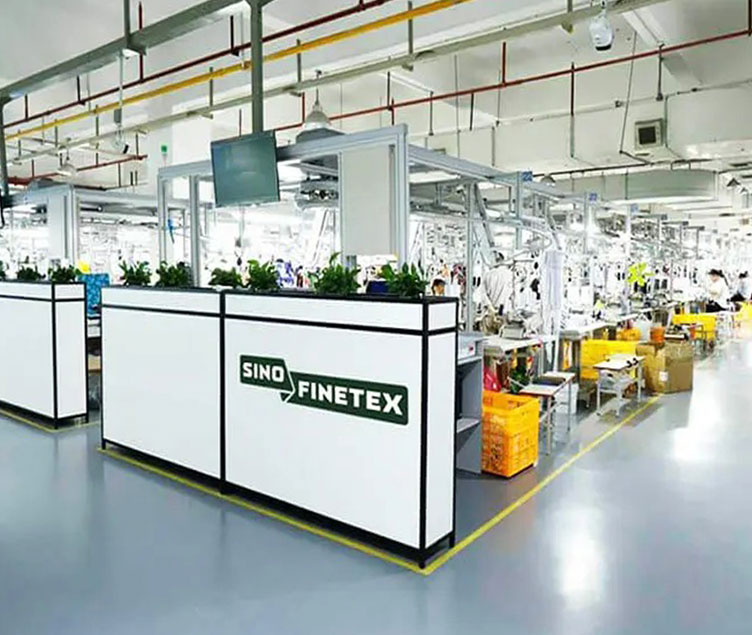
Finetex knits, dyes, cuts and sews inside its own supply chain, as stated on our site, so we can answer these questions for our own orders. For a Bangladesh factory, ask the same questions; we do not make claims about their supply chains.
Lead time and cash
Lead time has a price. A longer time from deposit to shelf ties up money, and a missed selling window can force markdowns. Ask each supplier for a written schedule covering sampling, bulk production and shipping. For reference, Finetex publishes a development sample time of 5–7 working days after artwork and fabric are confirmed, a full size set in 10–12 working days, and bulk production of 15–45 days from deposit and approved pre-production sample. Typical sea transit on our shipping page is 22–28 days to the US East Coast, 18–22 days to the US West Coast and 28–35 days to the UK. We have no verified lead-time figures for Bangladesh. Use quotes and your forwarder’s schedule rather than general claims.
Also ask what happens when a shipment runs late. Switching a late order to air freight can erase a small FOB advantage, so request the supplier’s written policy on delay, who pays for expedited freight, and what penalty or remedy applies. Put that policy next to the quote, because it decides which scenario in your comparison actually occurs.
MOQ and reorder cost
Finetex’s standard MOQ is 300–1,000 pieces per style, with styles on stock fabric starting from 300 pieces and a fully custom knit or dye lot usually starting at 1,000 pieces per colour. We do not have verified MOQs for Bangladesh, so we do not compare numbers. What you can do is price the MOQ itself:
- Unsold stock risk: MOQ × landed cost × the share you expect to remain unsold.
- Reorder cost: a reorder often needs new fabric dyeing and a new freight booking. Ask what the minimum is for a repeat, how long the fabric lot is held, and whether shade will match.
- Size and colour spread: a high MOQ per colour limits how many colours you can test.
Our article on volume tiering explains why price breaks change with quantity, which affects how you read each quote.
A comparison formula you can reuse
For each supplier, with the same specification, work out:
Effective landed cost per sellable unit = (FOB + inspection and testing + freight + insurance + duty + fees + broker and delivery + inbound costs + cost of carrying the stock for the lead time + expected reorder or air-freight premium) ÷ sellable units
Duty is the customs value times the destination’s duty factor, where the factor comes from the HTS or UK Trade Tariff for your exact commodity code and origin. Use a scenario table with three cases: base, late delivery and a reorder. Do not average them; choose the supplier that fits the case you can least afford.
How to compare two quotes in one afternoon
- Put both quotes on the same specification: fabric, gsm, trims, packing and Incoterm.
- Get each quote’s FOB port and freight to your destination from the same forwarder.
- Confirm the commodity code and the duty factor from the official tariff.
- Ask about origin: fabric country, proof of origin documents and any origin rule risk.
- Add lead time, MOQ and reorder terms.
- Calculate the break-even ratio between duty factors and compare it to the actual FOB difference.
- Pick a pilot order from each if the difference is close, and measure what happens, not what was promised.
What is fact, what is advice and what is uncertain
Fact (checked 12 November 2026): the US general rate, List 4A mapping, Section 301 forced-labour rates for China and Bangladesh and the status of the TRQ announcement come from the USITC and USTR documents above; the UK duty and DCTS information comes from the UK Trade Tariff and GOV.UK; Finetex’s sampling, MOQ, lead-time and transit figures are on our website.
Advice: the comparison formula, the questions and the break-even method are our recommendations.
Uncertain: US tariff measures have changed several times in 2025 and 2026, TRQs for Bangladesh may be established, and DCTS eligibility depends on proof of origin and on your exact product. We have no verified FOB, wage, MOQ or lead-time figures for Bangladesh and have not invented any. Confirm classification, origin and duty with a licensed customs broker before you decide. This article is general information, not customs advice.
Related reading
- Building a Landed Cost Sheet: FOB, Freight, Duty, Fees
- Importing T-Shirts into the UK: Post-Brexit Rules, UKCA and Textile Labelling
- Section 301 Tariffs on Chinese Apparel: HS Codes, Rates and Mitigation
- Volume Tiering: How Price Breaks Work at 500, 3,000 and 10,000 Pieces
Frequently asked questions
Is Bangladesh cheaper than China for T-shirts?
We cannot say, because we have no verified price data for either country and have not published any. What we can say is that duty differs: on 12 November 2026 cotton T-shirts from Bangladesh could enter the UK at 0% under the DCTS if they met origin rules, against 12% for China, and the US duty stack on the layers we checked was lower for Bangladesh than for China.
What are the US tariffs on China versus Bangladesh for cotton T-shirts?
For HTS 6109.10.00 we found a 16.5% general rate for both, plus 7.5% (List 4A) and 12.5% (July 2026 forced-labour action) for China, and 10% (forced-labour action) for Bangladesh. These can change quickly, so confirm with your broker.
Does Bangladesh get zero duty in the UK?
Bangladesh receives DCTS Comprehensive Preferences, which give 0% UK import tariffs on 99.8% of products. The goods must meet the rules of origin and have a proof of origin to claim it.
Why compare landed cost instead of FOB?
FOB leaves out freight, duty, fees, lead-time cost and reorder cost, and quotes often differ in scope and specification. Landed cost per sellable unit puts them on one basis.
What is the Section 301 tariff-rate quota for Bangladesh?
USTR’s July 2026 notice says it will, when feasible, create quotas allowing certain volumes of textiles and apparel, based on US cotton and textile inputs, to enter free of the new Section 301 tariff. We did not find a notice establishing them on 12 November 2026.
Sources
- USTR: Notice of Actions in Section 301 investigations of forced-labour import prohibitions, 91 FR 47318
- USITC: Harmonized Tariff Schedule
- USITC: China Tariffs reference list
- GOV.UK: DCTS preference tiers
- GOV.UK: Use the Developing Countries Trading Scheme to import goods
- GOV.UK: Understanding rules of origin under the DCTS
- HMRC: Valuing imported goods using Method 1 (transaction value)
- GOV.UK: Import goods into the UK, step by step
Compare China and Bangladesh on landed cost, not FOB
Send us your style, fibre, quantity and destination. We will quote FOB and DDP options with the scope stated in writing, plus MOQ and lead time, so you can put them next to any other quote on one basis.
Request a quote or explore our clothing factory sourcing guide.
More factory-floor notes for brand owners
Selling Underwear in Germany: Textilkennzeichnung, LUCID and Packaging Law
German textile labelling, LUCID registration and packaging law for underwear brands after the PPWR and VerpackDG took effect…
Read more →
GSM to Ounce Converter and Fabric Weight Chart
Convert fabric weight between gsm and oz/yd² with the exact factor (1 oz/yd² = 33.906 g/m²), a T-shirt…
Read more →
First-Output Check: The In-Line Inspection That Saves Bulk
What to check on the first garments off each line: measurements, seams, labels and print against the approved…
Read more →
A Fit Session Protocol for Knit Tops: 12 Wearers, 5 Measurements
A recommended fit session protocol for knit tops: recruit 12 wearers, take five measurements, run a movement checklist,…
Read more →
Corporate Uniform Programs: Tendering, Sizing and Reorders
How to run a corporate uniform program with a factory: tender documents, sizing a workforce, producing many sizes…
Read more →
Muscle Fit and Athletic Fit T-Shirts: Pattern Changes That Matter
How muscle fit and athletic fit T-shirts differ from a classic block: chest-to-waist drop, sleeve cap and bicep,…
Read more →Request a sample & pricing information
Send us your tech pack, target price or a reference sample — we reply with a quotation, a realistic lead time and a fabric recommendation within one working day.
- Free sampling plan & cost breakdown
- MOQ from 300 pcs per style
- Reply within 1 working day