
Custom Men’s Underwear Manufacturing: The Six Specs That Decide Your Price
Custom men's underwear is priced by six specs: fabric, gusset, waistband, rise, trims and decoration. Learn what to fix, what to leave open, and what to…
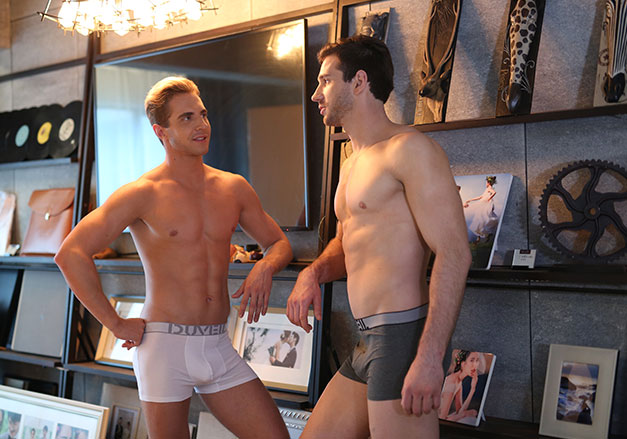
A custom men’s underwear quotation usually arrives as a single number, which makes it impossible to tell whether you are paying for the fabric, the waistband, the fit work or the packing. Six specifications drive nearly all of the variation — fabric, gusset, waistband, rise, trims and decoration — and deciding which of them are fixed and which are open is the difference between a quotation you can compare and one you can only accept.
What are the six specs that move a custom underwear quote?
Fabric, gusset, waistband, rise, trims and decoration.
Three of them sit on the body and define comfort and fit, while three are materials and processes that carry tooling, minimums and lead time, so a change in either group changes the price for a different reason.
| Spec | What it decides | What it costs |
|---|---|---|
| Fabric | Hand-feel, stretch, durability, price floor | Fibre choice, weight, dyeing method |
| Gusset | Comfort, breathability, perceived quality | Second fabric, extra operation |
| Waistband | Fit retention and brand visibility | Construction, width, tooling |
| Rise and leg opening | Fit block and size grading | Pattern development, size set |
| Trims | Compliance and finish | Labels, tags, size marks |
| Decoration | Visual identity, wash durability | Method, placements, setup |
Fabric and gusset: where comfort and cost are decided together
The gusset is the smallest panel and the one customers judge first.
Most men’s underwear is built on a stretch knit — modal, bamboo, combed cotton, viscose or a nylon blend with spandex — and the gusset often uses a second fabric for breathability, which adds a material and an operation.
Choosing a fabric with a published composition and a repeatable source is more valuable than choosing an unusual one. A quality the factory already runs removes development from the schedule and gives you a realistic reorder, while an exclusive development adds a minimum of its own and can disappear between seasons. On the gusset specifically, ask whether it is a separate panel or a folded extension, which fabric it uses, and how it is finished at the seams; those three answers explain most of the difference between two underwear samples that look identical in a photograph. Finetex Global publishes its running blends with exact ratios, from 95% modal / 5% spandex to 87% nylon / 13% spandex, which gives you a starting point for that conversation.
Waistband construction, width and branding
Ask for the construction before the logo.
A waistband can be plain elastic, woven, jacquard, printed or heat transfer branded, and the construction determines how the band behaves after repeated washing as much as how the brand looks.
Width affects both appearance and comfort: a wider band distributes pressure and reads as a premium product, while a narrow band is lighter and less visible under clothing. Tooling follows the choice — jacquard bands need a weaving programme, printed bands need artwork and a print run — which is why the branding decision should be made before sampling rather than after pricing. Ask how the band is tested for recovery, whether the supplier weaves it or buys it, and what the minimum is for your chosen construction. Woven waistbands, heat-transfer labels, printed logos, woven tags and hangtags all sit inside the customisation scope Finetex Global lists, so the conversation can stay at specification level rather than moving to a new supplier.
Rise, leg opening and the fit block you should not copy
Copy the reference, not the measurements.
Rise, leg opening and pouch construction define how a pair of underwear sits, and they interact: a higher rise changes where the waistband lands, which changes how the leg opening cuts across the thigh.
Buyers often send a competitor’s garment as a reference and ask for it to be reproduced exactly, which is both a design-rights risk and a practical one, because you are building your range on a block you do not control and cannot easily modify later. The better instruction is to send the reference together with a note on what should change: more room at the thigh, a lower waist under the stomach, a longer inseam. That gives the pattern maker a direction rather than a target, and it produces a block you can adjust across seasons. Ask for the measurement chart in writing before the sample is cut, so the fit conversation starts from numbers rather than from opinions about the finished pair.
Trims, labels and heat transfer: small parts, real lead time
Trims are cheap per unit and expensive per delay.
Neck and waist labels, care marks, size identifiers and heat-transfer branding are individually minor costs, but each has its own supplier lead time, and a late label stops a finished order from shipping.
Consolidate where you can: use one care label format across the range, keep the size mark method consistent, and avoid a bespoke woven label on a style you may discontinue after one season. Where a heat-transfer logo is used, ask how it is applied and how it performs after repeated washing, because application temperature and pressure decide whether the mark stays flat. It also helps to specify the label content at the same time as the style, particularly if you sell into more than one market, so the factory is not guessing at fibre content or care text after the garments are made.
Decoration on underwear: what survives wash and wear
Decoration must survive stretching, not just washing.
Underwear fabric moves with the body, so a print or transfer that performs well on a flat cotton panel can crack along the stretch lines of a knit brief within a few wears.
Screen printing, DTG, heat transfer and embroidery each behave differently on stretch knits, and the practical way to choose is to test rather than assume: ask for a decorated sample and put it through at least ten wash cycles before you approve the method. Placement matters too, because a print across the seat or the thigh sits directly on the largest stretch zone. Where the decoration is small and brand-led, a waistband or heat-transfer mark is usually more durable than a surface print; where it is the product’s visual idea, the method decision belongs in the specification, not in the artwork file.
What should you send for a first custom sample?
Send a reference, a direction and the limits.
Eight items make the brief complete: a reference garment with the changes you want, fabric direction, waistband construction, gusset treatment, trim and label detail, decoration, the size curve and packing.
- A physical or photographic reference for the block, plus what you want changed.
- Fabric direction: composition, weight and stretch expectation.
- Waistband construction, width and branding method.
- Gusset construction and the second fabric if used.
- Trim list, label content and size-mark method.
- Decoration artwork with placement and size.
- Size curve and the measurements you need confirmed.
- Packing format and destination market.
A sample brief with these eight items takes longer to assemble and shortens the sampling cycle, because the factory is building to a specification rather than interpreting a picture. Where you do not have the technical language, describe the change in fit terms and ask the factory to propose the construction; that is a normal starting point for a brand without a design team.

How should you read a custom underwear sample?
Check fit at the points that move, then measure everything.
Wear the sample for a working day before judging it, then measure the waistband, rise, leg opening, gusset and inseam against the approved chart rather than against the garment you had in mind.
The four fit points that generate most returns are the waistband position under the stomach, the leg opening cut across the thigh, the rise at the back, and the amount of room through the pouch. Note what changes after a wash as well as before, because a brief that fits at the factory and sags after two cycles will be judged by the customer, not by your approval note. Anything you approve should be recorded with measurements and a retained reference pair, so the bulk order has a written standard rather than a shared memory of a sample that has since been worn.
Where does custom add cost and time?
Custom adds time at three points and cost at two.
The time sits in pattern development, fabric sourcing and sampling; the cost sits in tooling for the waistband or decoration and in the smaller fabric and trim lots a custom specification requires.
Planning around those five points is straightforward once they are named. Keep fabric to a running quality, make the branded waistband the single bespoke element if budget is limited, approve the size set in one round, and schedule the order so the sampling stage is not competing with a peak production period. If you need the speed rather than the exclusivity, the same factory can usually deliver a custom-branded build on a stock block in a shorter cycle, which is often the right first order for a brand that has not yet tested the fit with customers.
FAQ
Where can I find custom-made underwear for men in bulk?
Look for a knitwear factory that already runs the style and fabric you need and offers cut-and-sew with branded waistbands and labels. Ask for published fabric compositions, the styles in production, the waistband options and the composition of the minimum. A factory with a live pattern library and a working size-set process is a better partner than one offering the widest style list.
Is it expensive to create custom underwear?
The premium comes from four places: a bespoke pattern, a non-stocked fabric, a branded waistband and custom decoration. Each can be added separately, so a first order can carry one bespoke element — usually the waistband — and remain close to a stock price. The cheapest route to a custom range is one running fabric, one style and one colourway.
What is the minimum order for custom men’s underwear?
The minimum is set by the components rather than by a single policy: the fabric lot, the dye lot, the waistband and trim minimums and the line changeover. Because those vary with the fabric and colour you choose, ask which of your specifications sets the minimum and what would change if you reduced the colour count or used a quality the factory already runs.
How long does custom underwear sampling take?
Sampling time depends on the fabric, the trim set and how complete your brief is, so the factory should quote it per style rather than as a standard figure. The reliable way to shorten it is to fix the fabric and waistband before the first sample and to send a reference garment with written fit changes, which avoids a second round caused by an unclear instruction.
Next step for your team: send the Finetex Global team your reference garment, the fit changes you want and the waistband direction, and ask for the six-spec breakdown of the quotation before the first sample is cut.
Sources: 16 CFR Part 303 textile labelling; OEKO-TEX STANDARD 100; ISO 9001 quality management; Supima — extra-long staple cotton; Lenzing — TENCEL™ branded lyocell; Better Work (ILO/IFC).
More factory-floor notes for brand owners

Sample Revision Limits: How to Control Underwear Development Cost and Calendar
A sample revision limit should control scope, not block necessary correction. The buyer and factory need to distinguish…
Read more →
Lab Dips and Strike-Offs for Underwear: Approval Steps That Prevent Delays
A lab dip approves a dyed textile shade; a strike-off approves printed artwork on the intended substrate. They…
Read more →
Color MOQ Planning: How to Share Fabric Across Multiple Underwear Styles
Color MOQ planning works best when a brand treats dyed fabric as a shared material platform rather than…
Read more →
Underwear Fabric Utilization: How Marker Efficiency Changes Unit Cost
Fabric utilization converts a fabric quotation into a garment cost. The calculation must account for pattern area, fabric…
Read more →
Open Costing for Men’s Underwear: Reading Fabric, Trim, Labor and Overhead Lines
An open-cost sheet is useful only when every line is tied to a measurable specification, a purchasing unit…
Read more →Global Apparel Sourcing Outlook 2026: Cotton, Freight and Supply-Chain Risk
A data-led 2026 apparel sourcing outlook on cotton balances, freight volatility, supplier diversification, lead time, compliance and practical…
Read more →Request a sample & pricing information
Send us your tech pack, target price or a reference sample — we reply with a quotation, a realistic lead time and a fabric recommendation within one working day.
- Free sampling plan & cost breakdown
- MOQ from 300 pcs per style
- Reply within 1 working day