
Private Label Undershirts: Pack Architecture and the Branding Layers That Pay
Private label undershirts carry thin margins, so branding has to be chosen carefully. See which layers add perceived value, which add only cost, and what MOQ…
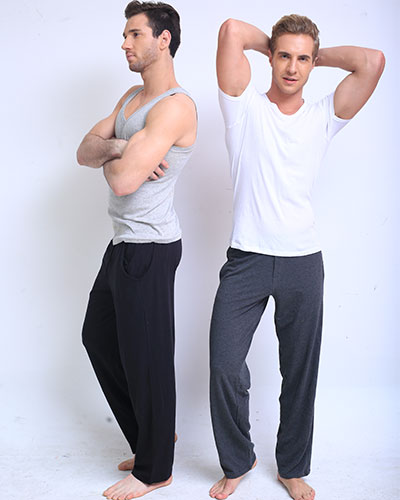
Undershirts are a basket filler, which means the commercial decision is not the price of one garment but the price and configuration of the pack. That changes which branding layers are worth paying for: the ones a customer sees when choosing between two packs on a screen, and not the ones that only become visible once the garment is worn.
Why does the pack matter more than the piece?
Because customers buy undershirts in multiples.
A shopper comparing two products is comparing two prices per pack, and the pack size, the packaging and the visible branding all influence that comparison.
This is the opposite of how most apparel is judged. A T-shirt is bought on its own merits; an undershirt is usually bought as a quantity of a staple, so the decision is closer to a grocery purchase than a fashion one. That has two practical consequences. First, the unit economics have to work at the pack price rather than at a notional single-unit price, which makes packaging and fulfilment costs material. Second, the most valuable branding is whatever appears in the listing photograph: the pack itself, the label visible on the front and the consistency of the range.
| Branding layer | Seen at purchase | Priority for a pack product |
|---|---|---|
| Packaging and pack band | Yes, in the listing image | High |
| Visible label or print on the pack | Yes | High |
| Neck label | After opening | Medium |
| Body decoration | Only when worn alone | Low |
Which branding layers earn their cost?
Those visible before the pack is opened.
Pack art, a printed band and a consistent label set do more commercial work on an undershirt than any decoration on the garment itself, and they cost less.
The reasoning is straightforward: a customer selects the pack, opens the pack, and then wears the garment under something else. Branding that appears at the moment of choice influences the purchase; branding that appears later influences only the unboxing. That does not make the neck label worthless — it reinforces the decision and is seen every time the garment is worn — but it should not consume the tooling budget first. Start with the pack, then the neck label, and treat body decoration as optional for ranges where the garment is worn alone.
Which fabric and weight justify a premium?
The ones the customer can feel and measure.
A heavier or denser knit, a better fibre and controlled whitening produce a difference a customer notices immediately, which is what supports a premium price in a category that is otherwise price-driven.
The premium argument for an undershirt is rarely about style; it is about opacity, softness and whether the garment survives washing without losing its shape. Those are exactly the properties you can specify and test. Ask for the composition and the weight in grams per square metre, and test opacity and neck recovery after washing before approving. Where a brand wants a mid-market and a premium version of the same range, the difference should be a specification the customer can describe — a denser knit, a longer staple cotton, a heavier body — rather than a different label on the same garment.
How should pack architecture be decided?
By matching the pack to how the customer buys.
A two-pack suits trial, a three-pack is the standard for a staple, and a single unit works when the garment is part of a broader set or is sold as a premium piece.
Pack size also drives the unit economics: larger packs reduce packaging cost per garment and increase the order value, while smaller packs lower the commitment for a first-time customer. The trade is real, and the answer usually depends on the channel. Marketplaces tend to favour a strong price-per-unit figure on the listing, which supports larger packs, while direct-to-consumer stores often benefit from a mixed offer that lets customers choose. Ask the factory how the sizes are packed within a pack, because a pack containing one size must be labelled by that size, while a mixed-size pack changes the labelling, the carton logic and the size curve.
Where a brand is unsure, the useful test is to offer two configurations for one season and compare the sell-through rather than the revenue. A two-pack and a three-pack of the same garment produce different buying patterns, and the data from one season is usually enough to decide the permanent structure.
What compliance text belongs on a private label undershirt?
Fibre content, care instructions and origin marking.
The neck label and any packaging that carries product information must state the composition accurately and provide the care instructions the garment requires for its market.
Because the label is a compliance document as well as a brand element, its text should be confirmed before artwork is released rather than after production. Ask for the content per destination market and keep the approved version with the approved sample. Where the same pack is sold in several markets, check whether a single label version can carry all the required text; where it cannot, plan separate labels rather than printing one version and hoping. A mismatch between the composition on the label and the composition in the product is one of the simplest failures for a marketplace to detect, and it is entirely avoidable at the specification stage.
How does pack architecture affect the minimum?
It consolidates the order rather than multiplying it.
A pack programme is produced as garments and then assembled, so the garment minimum follows the usual component logic while the packaging carries its own minimum per format.
The practical advantage of packing in multiples is that a modest quantity of garments becomes a larger, more valuable order without requiring more production. That makes the pack the most efficient way to reach a supplier’s threshold with a limited budget, provided the packaging minimum is also achievable. Ask what the minimum is for each packaging format, and ask how the packs are assembled and labelled, because a pack that has to be hand-assembled adds cost that does not appear in the garment quotation. It also helps to ask how the packs are counted and cartoned, since a carton specification that holds an exact number of packs simplifies warehouse counting and makes the freight calculation predictable across reorders.
What should be tested before a private label run?
Neck recovery, opacity and shrinkage.
Three tests cover the complaints that generate returns on undershirts, and each is inexpensive to run on a finished sample after repeated washing.
Measure the neckline circumference before and after washing, compare opacity against the approved standard under consistent lighting, and measure the body length and chest to check shrinkage against the stated tolerances. Record the results with the approved sample, because they become the standard for the production run and the basis for the care instructions. Where the sample fails, adjusting the fabric weight, the knit density or the finishing route is a better answer than qualifying the product description, particularly on a pack product where a small dissatisfaction repeats across every unit sold.

How should a staple SKU be replenished?
On a fixed cycle, with the size curve reviewed each time.
A staple undershirt sells predictably, so the reorder point is set by production and transit time rather than by a guess about demand.
Because the product is predictable, the useful discipline is to keep the cycle stable and to review the size curve rather than the total quantity. Sizes that sell out before the next production run indicate a curve that needs rebalancing rather than a larger order; sizes that remain unsold indicate an opportunity to narrow the range. Confirm before each order that the fabric, the neck rib and the packaging are still available, since a staple programme is only stable if its components are. Where the fabric is one the factory runs continuously, the reorder cycle tends to hold; where it is a one-off lot, the second order will either differ or disappear.
Where do private label undershirt ranges fail at launch?
In sizing, packaging assumptions and replenishment.
Five failure patterns account for most first-year problems, and all five come from assumptions made before the first production run.
- A size chart that does not match the garments shipped, which produces avoidable returns.
- A packaging format that looks good on screen but does not survive fulfilment handling.
- A pack configuration that does not match how the target customer buys.
- A fabric that cannot be repeated, leaving the second order different or impossible.
- A label printed for the wrong market, discovered when the goods arrive.
Each is a specification decision rather than a manufacturing one, and each can be resolved before the first production run.
The common thread is assumption: that the chart will be close enough, that the pack will be easy to ship, that the fabric will still exist. Asking the five questions behind these items takes one email and saves a launch, and the answers stay useful for every following order in the range.
FAQ
How do I find a private label undershirt manufacturer?
Look for a knitwear factory that runs undershirts as a core product and can describe its fabric weights, neckline options and packaging formats. Ask which qualities are in production, how the label content is confirmed per market, and what the minimum is for each packaging format, since the pack is part of the product.
How much does a private label undershirt programme cost?
Cost sits in three places: the garment specification, the pack format and the branding elements. A pack programme increases the order value per garment produced, so it is often the most efficient way to meet a supplier threshold with a limited budget. Ask for the packaging minimum separately from the garment minimum so both are visible.
How many undershirts should a pack contain?
It depends on the channel and the customer. A two-pack suits trial, a three-pack is standard for a staple, and single units work for premium or part-of-a-set positioning. Larger packs reduce packaging cost per garment and raise order value, while smaller packs lower the commitment for a first-time buyer.
What fabric weight justifies a premium price on undershirts?
The property customers can feel and test: opacity, softness and shape retention after washing. A denser knit, a longer staple cotton or a heavier body all support a premium when they are specified and verified. The premium should come from a difference the customer can describe, not from a different label on the same garment.
Next step for your team: send the Finetex Global team your pack format, target market and intended positioning, and ask for the fabric options, the label requirements and the packaging minimums before you commit to a first run.
Sources: 16 CFR Part 303 textile labelling; 19 CFR Part 134 country of origin marking; OEKO-TEX STANDARD 100; ISO 9001 quality management; Supima — extra-long staple cotton.
More factory-floor notes for brand owners

Sample Revision Limits: How to Control Underwear Development Cost and Calendar
A sample revision limit should control scope, not block necessary correction. The buyer and factory need to distinguish…
Read more →
Lab Dips and Strike-Offs for Underwear: Approval Steps That Prevent Delays
A lab dip approves a dyed textile shade; a strike-off approves printed artwork on the intended substrate. They…
Read more →
Color MOQ Planning: How to Share Fabric Across Multiple Underwear Styles
Color MOQ planning works best when a brand treats dyed fabric as a shared material platform rather than…
Read more →
Underwear Fabric Utilization: How Marker Efficiency Changes Unit Cost
Fabric utilization converts a fabric quotation into a garment cost. The calculation must account for pattern area, fabric…
Read more →
Open Costing for Men’s Underwear: Reading Fabric, Trim, Labor and Overhead Lines
An open-cost sheet is useful only when every line is tied to a measurable specification, a purchasing unit…
Read more →Global Apparel Sourcing Outlook 2026: Cotton, Freight and Supply-Chain Risk
A data-led 2026 apparel sourcing outlook on cotton balances, freight volatility, supplier diversification, lead time, compliance and practical…
Read more →Request a sample & pricing information
Send us your tech pack, target price or a reference sample — we reply with a quotation, a realistic lead time and a fabric recommendation within one working day.
- Free sampling plan & cost breakdown
- MOQ from 300 pcs per style
- Reply within 1 working day