
Sports Underwear Programs: Jockstraps, Compression Briefs, and Athletic Boxers
A sports underwear program is built by mapping the sport to the product: running and ball sports need support that moves, the gym needs coverage that…
A sports underwear program is built by mapping the sport to the product: running and ball sports need support that moves, the gym needs coverage that stays put, and compression styles need a claim the brand can stand behind. According to Finetex’s published underwear program details, its line covers jockstraps, boxer briefs, trunks, and briefs with OEM and ODM support, which gives a sports brand a single factory for the whole program. This guide maps the sports to the products, builds a three-SKU line, and positions it for retail without crossing into medical claims.
Mapping Sports to Underwear Products
The sport decides the product, and the mapping is the first decision in the program. Running and court sports demand support that moves with the body, which points to athletic boxer briefs with a secure waistband and leg grip. Ball and contact sports point to jockstraps, where the support job is explicit and the construction is the product. The gym and functional training point to compression briefs or athletic boxers, where coverage and sweat management matter.
| Sport | Primary product | What the customer needs |
|---|---|---|
| Running and court | Athletic boxer briefs | Support that moves, no riding |
| Ball and contact | Jockstrap | Explicit support, durable construction |
| Gym and training | Compression briefs or athletic boxers | Coverage, sweat management |
| Recovery and lifestyle | Seamless or soft-knit boxers | Comfort over long wear |
The mapping is a starting point, not a cage. A brand can cross the categories, but the first program should follow the map so the product, the fabric, and the claim are consistent with the sport’s real demand.
The mapping also drives the size distribution. A running line and a team-sport line serve different body profiles and different roster sizes, so the size curve should be built per sport rather than copied across the program. The team order follows the roster, the running order follows the market curve, and the two are different quantity plans even when the fabric is the same.
Compression Briefs: Claims and Limits
Compression briefs carry a performance story, and the story has limits. The honest claims are about support, coverage, and moisture management: the garment holds, it does not ride, and the fabric manages sweat. The claims that cross the line are medical: recovery, circulation, and performance enhancement belong to regulated territory, and the brand that touches them takes on evidence and classification duties it does not need.
The claim boundary should be written into the brief and the listing. Describe what the product does in training, and let the athlete’s own experience supply the praise. According to Finetex’s published program details, its finishes include odor control, moisture management, and anti-bacterial coating, so a performance story is available; the language should stay limited and the finish behavior verified across washes.
The listing language should be reviewed by someone other than the copywriter, because performance categories invite superlatives that the evidence cannot support. A review pass that catches “recovery” or “enhances performance” before publication is cheaper than a marketplace complaint after it. The claim review belongs in the launch checklist alongside the label review.
Building a Three-SKU Sports Underwear Line
The three-SKU line is the practical first program: one volume product, one category product, and one differentiator. The volume product is the athletic boxer brief, which carries the everyday training customer; the category product is the jockstrap, which carries the ball-sport story; the differentiator is the compression brief, which carries the performance price point.
The line should share the fabric family and the branding system so the factory can produce it efficiently and the retail story reads as one program. Each SKU gets its own size curve and its own fit notes, because the three products grade differently and the chart for one does not serve the others.
The shared branding also simplifies the reorder. One waistband logo, one label system, and one packaging family across the three SKUs mean the factory runs one branding setup and the buyer approves one reference. The efficiency compounds with every reorder, which is why the branding decision belongs to the program, not to each style.
Fabric Performance for Sweat and Movement
The fabric performance has three jobs in sports underwear: manage sweat, move with the body, and survive the wash. The moisture job points to performance blends and quick-dry finishes; the movement job points to stretch and recovery; the wash job points to durability across the athlete’s harsher cycle.
The fabric spec should name the blend, the weight, and the recovery behavior, and the sample should be worn in the intended sport before approval. A fabric that manages moisture in the lab and fails in a real training session is a claim without evidence, and the wear test is the evidence the category demands.
The wear test should run for a full session, not a quick try-on, and the testers should cover the size range of the program. Record the waistband behavior, the leg grip, and the moisture feel during the session, and feed the notes into the revision. The sport program is only as good as its wear-test record, because the athlete’s review is the category’s final inspection.
Sampling and Bulk for the Program
The program sample is a set, not a single style. Order the size set for each SKU, wash and wear-test each one in the sport it serves, and approve the three products against separate measurement records. The revision discipline is the same as any garment: specific corrections, documented changes, and a pre-production sample for each style.
The order structure follows the underwear MOQ framework: confirm the minimum per design with mixed sizes, and structure the program with the underwear MOQ guide. According to Finetex’s current underwear page, the full-customization MOQ is 1,000-3,000 pieces per design with mixed sizes, so the three-SKU program should be planned inside that structure with the volume SKU carrying the depth.
The calendar is part of the structure. A sports line has a season, and the sample, PP, bulk, and freight windows should be mapped backward from the launch date with a buffer for the wear-test round. The program that reserves the production slot early avoids the two failures that end sports seasons: the late delivery and the rushed sample.
Positioning the Line for Retail
The retail positioning should name the customer and the sport, not the technology. “Built for the gym” sells better than “high-performance compression”; “stays in place through a match” sells better than “advanced elastic system”. The positioning also sets the price: the volume SKU carries the accessible price, the category SKU carries the team story, and the differentiator carries the premium.
A sports merchandise buyer’s view on the program
A sports merchandise buyer who sources underwear for fitness retailers describes the three-SKU program as the right size for a first season. In their experience, brands that launch a full range before proving the volume product spend the season managing slow movers, while brands that lead with one volume SKU and two testers learn faster and reorder with evidence. Their standard advice is to let the volume product prove the line, then let the sell-through data promote the second and third SKUs.
Finetex’s men’s underwear manufacturing page covers the jockstraps, boxer briefs, trunks, and briefs available for private label programs, and its contact page accepts sample and pricing requests. Bring the sport map and the three-SKU plan, and the factory can sample the program as a set and confirm the structure for the season. The program sample should include the size sets for all three styles, because the approval record and the size charts depend on having the full set measured and recorded.
Frequently Asked Questions
How do I choose the first sports underwear SKUs?
Map the sport to the product first, then build a three-SKU line: one volume product, one category product, and one differentiator. The volume SKU carries the depth, the data decides the rest, and the line shares one fabric family and one branding system.
Can I make claims about compression underwear?
Yes, within limits. Support, coverage, and moisture management are honest claims; recovery, circulation, and performance enhancement are medical claims that belong to regulated territory. Keep the listing language to what the product does in training, and have the copy reviewed before publication.
What fabric should sports underwear use?
A blend that manages sweat, moves with the body, and survives the athlete’s wash cycle. Name the blend, the weight, and the recovery behavior in the spec, and wear-test in the sport before approval, because the athlete’s review is the category’s final inspection.
What is the MOQ for a sports underwear program?
Confirm the minimum per design with mixed sizes. According to Finetex’s current underwear page, the full-customization MOQ is 1,000-3,000 pieces per design, so plan the program inside that structure with the volume SKU carrying the depth and the testers sized as small runs.
How do I position the line for retail?
Name the customer and the sport, not the technology. The volume SKU carries the accessible price, the category SKU carries the team story, and the differentiator carries the premium. The positioning also sets the pack sizes for wholesale accounts, because the retail buyer orders by pack, not by unit.
Should the three SKUs share a size chart?
No. The three products grade differently, so each SKU needs its own size curve and fit notes built from its own size-set measurements, and the three charts should be approved together in the sample round.
Sources
- Finetex Global — Men’s Underwear Manufacturing
- Finetex Global — Custom Jockstraps Manufacturer
- Finetex Global — Contact Us
It sits inside the wider underwear fit and fabric specifications, where the rest of the sequence is set out.
More factory-floor notes for brand owners

Sample Revision Limits: How to Control Underwear Development Cost and Calendar
A sample revision limit should control scope, not block necessary correction. The buyer and factory need to distinguish…
Read more →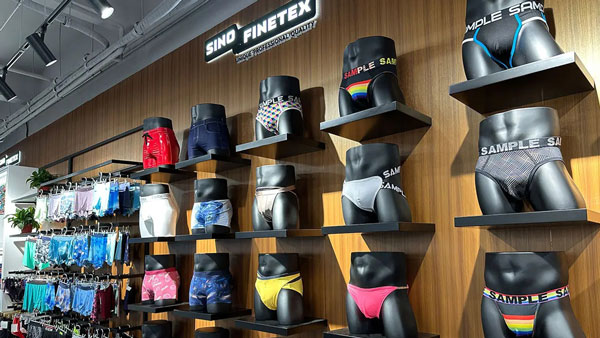
Lab Dips and Strike-Offs for Underwear: Approval Steps That Prevent Delays
A lab dip approves a dyed textile shade; a strike-off approves printed artwork on the intended substrate. They…
Read more →
Color MOQ Planning: How to Share Fabric Across Multiple Underwear Styles
Color MOQ planning works best when a brand treats dyed fabric as a shared material platform rather than…
Read more →
Underwear Fabric Utilization: How Marker Efficiency Changes Unit Cost
Fabric utilization converts a fabric quotation into a garment cost. The calculation must account for pattern area, fabric…
Read more →
Open Costing for Men’s Underwear: Reading Fabric, Trim, Labor and Overhead Lines
An open-cost sheet is useful only when every line is tied to a measurable specification, a purchasing unit…
Read more →Global Apparel Sourcing Outlook 2026: Cotton, Freight and Supply-Chain Risk
A data-led 2026 apparel sourcing outlook on cotton balances, freight volatility, supplier diversification, lead time, compliance and practical…
Read more →Request a sample & pricing information
Send us your tech pack, target price or a reference sample — we reply with a quotation, a realistic lead time and a fabric recommendation within one working day.
- Free sampling plan & cost breakdown
- MOQ from 300 pcs per style
- Reply within 1 working day