
Custom Men’s Briefs: Building a Block You Can Reorder for Years
A custom brief programme is only as good as its second order. Here is how to lock the block, colour references, elastic spec and documentation so…
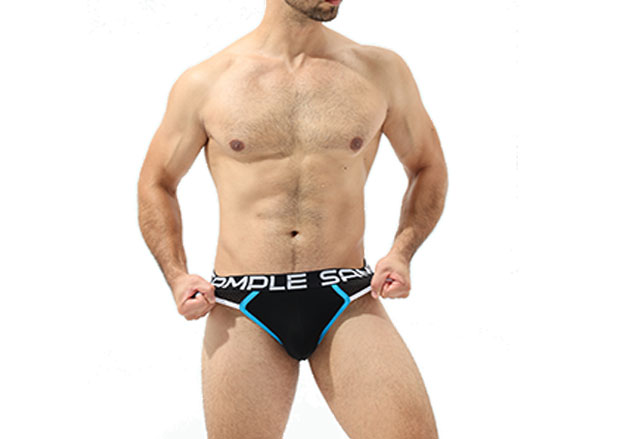
A custom brief is not a sample you approved once; it is a set of measurements, elastic specifications and colour references that have to survive staff changes, season breaks and a switch of production line. Brands that treat the approved sample as the record eventually discover that the sample has been worn, the pattern maker has left and the second order measures differently. The block survives only if it is written down.
Why is a custom brief a document rather than a sample?
Because a sample degrades and a document does not.
The approved garment is a reference, but it is worn, washed and eventually lost, while the measurement chart, construction specification and elastic record stay readable for years.
This distinction decides whether a brief programme can be repeated. When a specification exists, a new pattern maker, a new line or even a new supplier can reproduce the garment from the file; when it does not, the product is recreated from impressions, and the drift shows up as fit complaints two seasons later. The documents that matter are few: a measurement chart with tolerances, a construction specification naming seams and components, an elastic specification with supplier and construction, and a colour reference with retained standards. Together they take an afternoon to assemble at the sampling stage and save a full development cycle later.
| Document | What it records | What it prevents |
|---|---|---|
| Measurement chart | Values and tolerances by size | Grading drift between lots |
| Construction specification | Seams, gusset, fly, hem treatment | Silent simplification on the line |
| Elastic record | Supplier, construction, width, recovery | Substitution after sampling |
| Colour standard | Retained physical reference | Shade movement between dye lots |
How should measurements be locked so they survive staff changes?
Record measured values, not nominal ones, with tolerances.
A chart that lists target measurements without tolerances invites interpretation, and interpretation changes with the person reading it.
The practical approach is to measure the approved size set, record what the garments actually measured, and state a tolerance for each point. That gives a production manager something to check against rather than something to aim at, and it makes a dispute about fit resolvable by measurement. Keep the chart in your own file as well as the factory’s, because the version that matters at the next sampling round is the one you can produce. Where a change is agreed later, issue a revised chart with a version number and a date rather than editing the original, so the history of the block remains visible if a problem appears in a batch produced under an older version.
How do you control colour across brief reorders?
With a retained physical standard and a dye-lot plan.
Shade variation between dye lots is the most common cause of a reorder looking different from the original, and it is invisible when you approve a lot in isolation.
Ask the factory to retain a physical standard and to compare each new lot against it under the same lighting, and keep your own reference swatch as a cross-check. Where a reorder will consume more than one dye lot, ask for the lots to be allocated across colourways rather than split within one, so no customer receives two shades of the same product. Colour is also the specification most likely to be affected by a fabric change, so any substitution should be treated as a colour decision as well as a material one, with a new standard approved before production rather than after.
What does an elastic specification need to contain?
Supplier, construction, width, elasticity and recovery.
Elastic is the component that fails first on a brief and the one most often replaced, so its specification has to be specific enough that a substitute is obvious rather than arguable.
Recording the supplier and the construction means a change can be detected without measuring anything, and recording the recovery expectation gives you something to test. Ask how the elastic is checked after washing — a factory with a defined check can describe the method, while one without will describe an intention. Because the leg opening moves more than any other part of the garment, the leg elastic deserves the same treatment as the waistband, and testing the finished garment after several wash cycles is the only reliable way to confirm that the specification is being met.
Which decoration methods hold up on briefs?
Those that respect stretch, and placements that avoid it.
A print or transfer that performs on a flat cotton panel can crack where the fabric moves, so the method and the placement matter more on a brief than on almost any other garment.
The practical test is a decorated sample put through repeated washing before approval, with attention to where the mark sits: a design across the seat or thigh is on the largest stretch zone, while a mark on the waistband or a small logo on the leg is far more durable. Where the decoration is a brand element rather than the product’s visual idea, a heat-transfer or woven mark on the band delivers the identity with far less risk. Where it is the product’s idea, decide the method during specification, because some routes require a particular fibre composition and would otherwise force a fabric change later in the process.
What does each sample in the sequence prove?
Four gates, each answering a different question.
A fit sample proves the block, a size set proves the grading, a pre-production sample proves that the line can reproduce the approved garment, and the bulk inspection confirms it did.
On briefs the size set is the gate buyers most often skip, and it is the one that matters most because the garment is small: a block that is correct at medium can pull at the smallest size and cut in at the largest, and neither error is visible on a single sample. Produce the set, measure every size, and record the values in the chart. Approving the pre-production sample then becomes a confirmation of the specification rather than a fresh evaluation, which keeps the approval cycle short and leaves the bulk order with a written standard.
Which records should you keep rather than the factory?
The ones that let you brief another supplier.
- Measurement chart with tolerances, in a format you can edit.
- Construction specification naming seams, gusset and hem treatment.
- Elastic specification with supplier and construction.
- Colour standard, retained physically.
- Approved label content and packaging specification.
- Retained approved sample, stored unworn.
Keeping these does not signal distrust; it is what allows a brand to move production, add a second supplier or recover from a disruption without rebuilding the product.
Ask who owns the pattern and the graded nest when the brand pays for development, and request the files in a usable format. A factory that treats the specification as the buyer’s property hands it over without prompting, and that answer tells you a great deal about how the rest of the relationship will be documented.

How does a custom block amortise?
Across seasons, not across units.
Pattern work, grading and the size set are one-off costs, so their contribution per garment falls only as the block is reused for reorders and additional styles.
That is the commercial argument for treating a custom block as a multi-season asset rather than a first-order expense. A block developed for one shipment is expensive; the same block used for three reorders and extended into a second colourway becomes part of the product’s identity at a negligible cost per unit. Ask the factory what it would charge to adjust the block in a later season — a rise change, a longer leg, a different gusset — so you know the cost of evolving the product rather than replacing it. Where that answer is a small increment on the original development, the block is genuinely yours and worth maintaining, and the next style in the range can be built from it rather than developed again.
What belongs on the handover checklist?
Six items whenever production moves.
The checklist applies equally to a second supplier, a new production line or a brand bringing manufacturing in-house.
A handover is the moment when an undocumented block becomes an unrecoverable one, so the checklist should be completed before the first order with the new partner.
Include the measurement chart with tolerances, the construction specification, the elastic record, the colour standard, the label and packaging specification, and a retained approved sample. Confirm in the same document which items the new supplier will treat as fixed and which it is free to propose alternatives for, because some flexibility is useful and unmanaged change is not. Where the new supplier proposes a change, ask for it in writing with a sample before it enters production, and add the approved change to the specification with a version number so the file remains the single source of truth.
FAQ
How do I order custom men’s briefs under my own brand?
Start from a reference garment and a written list of what should change, then ask the factory for a measurement chart and a fit sample. Approve a produced size set rather than a single sample, and record the measured values in your own file. The chart, the elastic specification and the colour standard are what let the programme be reordered later.
What should a brief specification sheet contain?
A measurement chart with tolerances, a construction specification covering seams, gusset, fly and hem treatment, an elastic record naming supplier and construction, a colour standard, and the label and packaging specification. Together these let a different line or supplier reproduce the garment without rebuilding it from samples.
How do I keep brief colours consistent between reorders?
Ask the factory to retain a physical colour standard and to check each dye lot against it, and keep your own reference swatch as a cross-check. Where a reorder needs more than one lot, ask for the lots to be allocated across colourways rather than split within one, so no customer receives two shades of the same product.
How much does custom brief manufacturing cost?
Development cost concentrates in the pattern, grading and size set, which are incurred once and amortise across reorders. Per-unit cost is driven by the fabric, the elastics and the decoration. Ask what a later block adjustment would cost, because a block that can be updated cheaply is worth maintaining across seasons.
Next step for your team: send the Finetex Global team your brief reference and the changes you want, and ask for the measurement chart, the elastic specification, the size-set process and the document set you will receive.
Sources: OEKO-TEX STANDARD 100; 16 CFR Part 303 textile labelling; 19 CFR Part 134 country of origin marking; ISO 9001 quality management; Textile Exchange standards; Supima — extra-long staple cotton.
More factory-floor notes for brand owners

Sample Revision Limits: How to Control Underwear Development Cost and Calendar
A sample revision limit should control scope, not block necessary correction. The buyer and factory need to distinguish…
Read more →
Lab Dips and Strike-Offs for Underwear: Approval Steps That Prevent Delays
A lab dip approves a dyed textile shade; a strike-off approves printed artwork on the intended substrate. They…
Read more →
Color MOQ Planning: How to Share Fabric Across Multiple Underwear Styles
Color MOQ planning works best when a brand treats dyed fabric as a shared material platform rather than…
Read more →
Underwear Fabric Utilization: How Marker Efficiency Changes Unit Cost
Fabric utilization converts a fabric quotation into a garment cost. The calculation must account for pattern area, fabric…
Read more →
Open Costing for Men’s Underwear: Reading Fabric, Trim, Labor and Overhead Lines
An open-cost sheet is useful only when every line is tied to a measurable specification, a purchasing unit…
Read more →Global Apparel Sourcing Outlook 2026: Cotton, Freight and Supply-Chain Risk
A data-led 2026 apparel sourcing outlook on cotton balances, freight volatility, supplier diversification, lead time, compliance and practical…
Read more →Request a sample & pricing information
Send us your tech pack, target price or a reference sample — we reply with a quotation, a realistic lead time and a fabric recommendation within one working day.
- Free sampling plan & cost breakdown
- MOQ from 300 pcs per style
- Reply within 1 working day