
Men’s Briefs Manufacturing in China: Pattern, Coverage and the Cost of Getting It Wrong
Men's briefs live or die on three pattern decisions: rise, side seam and leg opening. See how Chinese factories build briefs, what MOQ applies, and what…
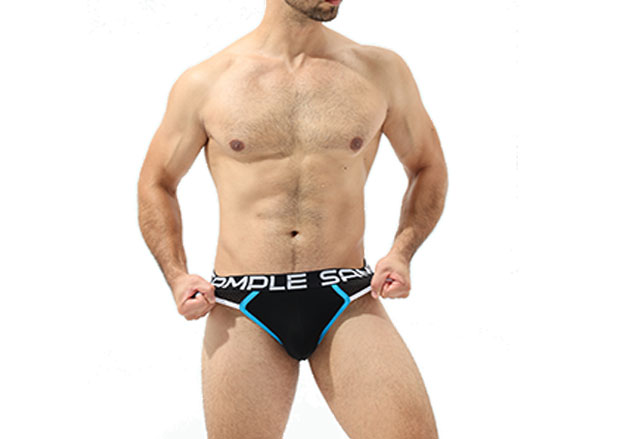
Briefs have the least fabric and the least room for error of any men’s underwear style. Three pattern decisions — rise, side seam and leg opening — determine whether the garment stays in place, and two components, the leg elastic and the waistband, decide whether it survives a season. A brief programme that gets those five things right is inexpensive to repeat; one that does not generates returns at a higher rate than any other style in the range.
Which pattern decisions define a brief block?
Rise, side seam and leg opening.
These three measurements control where the garment sits, how much coverage it provides and how the elastic behaves across the thigh, and they interact rather than operating independently.
| Decision | What it controls | Failure mode |
|---|---|---|
| Rise | Waist position and back coverage | Riding down or sitting too high |
| Side seam | Coverage across the hip | Cutting in or feeling loose |
| Leg opening | How the elastic sits on the thigh | Rolling or pinching |
Because the garment is small, a change to one of these has a proportionally larger effect than the same change would have on a boxer brief. Raising the rise by a centimetre changes where the waistband lands on the body; narrowing the leg opening by half a centimetre changes how the elastic grips the thigh. Lock the measurements in writing with tolerances and confirm them on a produced size set, because a brief block that fits correctly at medium can pull at the smallest size and cut in at the largest. Where the pattern is being adjusted from a reference garment rather than developed from scratch, ask which of the three measurements is changing, since adjusting all three at once usually produces a block that is difficult to correct afterwards.
Which coverage option should you choose?
The one your market already buys.
Briefs come in full coverage, low-rise and high-leg variants, each with a different rise and leg-opening geometry, and each addressing a different customer expectation.
Full coverage is the traditional block, comfortable under most clothing and the safest choice for a brand selling to a broad age range. Low-rise sits lower on the hips and is sold on how it looks rather than how it wears, which makes fit complaints more likely and returns more dependent on the size chart being explicit. High-leg raises the leg opening to free the thigh, and it changes the elastic behaviour enough that the block should be treated as a separate style rather than a variation. Where a range includes more than one, share the fabric, the waistband and the packaging so the additional cost is limited to pattern work and the size sets.
How does fabric weight affect leg-opening behaviour?
Light fabric rolls; heavy fabric holds.
A lightweight knit returns less support to the leg elastic, which is why very light briefs tend to roll at the opening, while a heavier weight holds its position but feels warmer.
The weight decision therefore shows up as a fit complaint rather than a fabric complaint. Ask for the composition and the weight in writing, and test the sample at the leg opening rather than only at the waist: wear it through a working day and check whether the hem has crept up or folded. A balanced approach for a general-market brief is a mid-weight knit with enough recovery in the elastic to keep the opening in place, rather than the lightest fabric the factory can supply. Where a brand wants a lightweight summer brief, the elastic specification has to compensate, which means testing rather than assuming.
Which components fail first on a brief?
Leg elastic, then the waistband.
The leg opening experiences more movement relative to its size than any other component, which is why it is usually the first thing to lose recovery, followed by the waistband after repeated washing.
Elastic quality is the specification most often changed quietly, because a visually similar band from another supplier looks identical in a photograph. Name the supplier and the construction in the approved sample, and require written approval with a photograph before any substitution. Ask how both elastics are tested for recovery after washing, and specify the width: a wider leg elastic distributes pressure and holds position better, while a narrow band is lighter and more visible. Testing the finished garment after several washes will surface most elastic problems while they still cost a sample rather than a container.
Should the brief keep a front fly?
Keep it for traditional markets.
A front fly adds a construction step and a small amount of fabric, and it is expected by many customers in classic briefs, particularly in older demographics.
Removing it simplifies production and slightly improves fit consistency because there is one less seam, which is why many modern brief designs omit the fly altogether. The decision is not technically difficult but it is commercially visible: a brief without a fly reads as a contemporary basic, while one with a fly reads as traditional. Ask which construction the factory runs most often, because the more common option usually has a better-established pattern and a lower risk of a first-sample correction. Whichever you choose, keep the decision consistent across sizes, since a fly that behaves differently at the extremes of the range creates a fit inconsistency customers notice.
What should you expect on minimums, size sets and colour?
A component-based minimum and a produced size set.
The minimum is set by the fabric lot, the dye lot, the elastics and the line changeover, confirmed per design and per colour rather than as one company-wide figure.
Briefs are a compact garment, so the fabric consumed per unit is lower than for a boxer brief, and the minimum is correspondingly more likely to be driven by the elastic and the colour count than by the fabric itself. That makes briefs a reasonable style to launch first if the budget is limited, provided the colour count stays small. Ask for a measured size set rather than a single sample, and keep the recorded values with the approved garment, because the same numbers belong in the size guidance on your product page and in the comparison you run against the next production lot.
How should a brief sample be wear-tested?
Through a working day, then through repeated washing.
The first test answers whether the block stays in place under normal movement, and the second answers whether the elastics and the fabric hold their dimensions.
Wear the sample under the type of trousers your customers will wear it with, and note three things specifically: whether the waistband stays where it was placed, whether the leg opening rolls or pinches, and whether the back rise keeps its coverage when sitting. Then wash it several times and re-measure the waist, the rise and the leg opening against the approved chart. Recording the post-wash measurements is what allows you to write an accurate size and care guide and to set a realistic tolerance for production, and it takes a morning per style.

Which defects are specific to briefs?
Elastic faults, seam puckering and measurement drift.
Five defect patterns account for most brief quality problems, and all of them are process issues rather than fabric issues.
- Leg elastic attached with inconsistent tension, producing a wavy hem.
- Waistband joining marks that sit on the front rather than the back.
- Puckered side seams caused by stitching without differential feed.
- Measurement drift in one size, indicating a grading rather than a sewing problem.
- Colour variation between panels cut from different fabric lots.
None of these are visible in a photograph of a finished sample.
That is why the inspection plan should include in-process checks at the sewing stage as well as a final inspection. Asking the factory to describe how it checks elastic tension is a quick way to establish whether the control exists: a specific answer about tension settings or a check at the sewing station indicates a real process, while a general assurance about quality does not.
How should briefs be positioned alongside boxer briefs?
As a different fit, not a cheaper option.
Briefs and boxer briefs sell to overlapping audiences for different reasons: coverage, warmth, movement and how the garment sits under tailoring.
Positioning them as a lower-priced alternative to a boxer brief reduces both, because the price difference then becomes the only message and the customer learns that one product is inferior. Treated as parallel styles with different strengths, the brief can carry the same fabric, waistband and branding at a similar price point, and the range reads as deliberate rather than as a discount structure. Share the components between the two styles so the tooling is amortised, and describe each on its own terms: coverage and traditional fit for the brief, support and thigh separation for the boxer brief.
FAQ
What are the differences between briefs, trunks and boxer briefs?
The main variable is leg length and coverage. A brief has the highest leg opening and the least coverage, a trunk has a short leg that finishes high on the thigh, and a boxer brief covers more of the leg. Because the difference changes the pattern, each should be specified as its own reference even when they share fabric and waistband.
Which elastic should a brief waistband and leg opening use?
Specify by construction, width and supplier rather than by appearance. The leg opening needs enough recovery to stay in place through movement, and the waistband needs to return to its original circumference after washing. Ask for recovery test results on the finished garment and name the supplier in the approved sample so substitutions require written approval.
What MOQ applies to custom men’s briefs?
The threshold is set by the fabric lot, the dye lot, the elastics and the line changeover, confirmed per design and per colour. Briefs use less fabric per unit than boxer briefs, so the elastic range and the colour count are more likely to set the minimum. Ask which of your choices controls the threshold.
How do I reduce returns on a men’s brief range?
Publish measurements that match the garments shipped, and test the leg opening on a worn sample rather than on a flat one. Most brief returns trace back to the size chart or to the elastic specification rather than to the fabric. Measuring a post-wash sample and recording the values gives you both a chart and a production tolerance.
Next step for your team: send the Finetex Global team your brief reference and target market, and ask for the rise and leg-opening options, the elastic specifications, the measurement chart and the size-set process before you commit to bulk.
Sources: OEKO-TEX STANDARD 100; 16 CFR Part 303 textile labelling; ISO 9001 quality management; Supima — extra-long staple cotton; Textile Exchange standards.
More factory-floor notes for brand owners

Sample Revision Limits: How to Control Underwear Development Cost and Calendar
A sample revision limit should control scope, not block necessary correction. The buyer and factory need to distinguish…
Read more →
Lab Dips and Strike-Offs for Underwear: Approval Steps That Prevent Delays
A lab dip approves a dyed textile shade; a strike-off approves printed artwork on the intended substrate. They…
Read more →
Color MOQ Planning: How to Share Fabric Across Multiple Underwear Styles
Color MOQ planning works best when a brand treats dyed fabric as a shared material platform rather than…
Read more →
Underwear Fabric Utilization: How Marker Efficiency Changes Unit Cost
Fabric utilization converts a fabric quotation into a garment cost. The calculation must account for pattern area, fabric…
Read more →
Open Costing for Men’s Underwear: Reading Fabric, Trim, Labor and Overhead Lines
An open-cost sheet is useful only when every line is tied to a measurable specification, a purchasing unit…
Read more →Global Apparel Sourcing Outlook 2026: Cotton, Freight and Supply-Chain Risk
A data-led 2026 apparel sourcing outlook on cotton balances, freight volatility, supplier diversification, lead time, compliance and practical…
Read more →Request a sample & pricing information
Send us your tech pack, target price or a reference sample — we reply with a quotation, a realistic lead time and a fabric recommendation within one working day.
- Free sampling plan & cost breakdown
- MOQ from 300 pcs per style
- Reply within 1 working day