
Clothing MOQ Arithmetic: How Fabric, Dye, Trim and Decoration Minimums Add Up
A clothing MOQ is the sum of several minimums - fabric, dyeing, knitting, trims, decoration and packing. See how each one is calculated and which you…
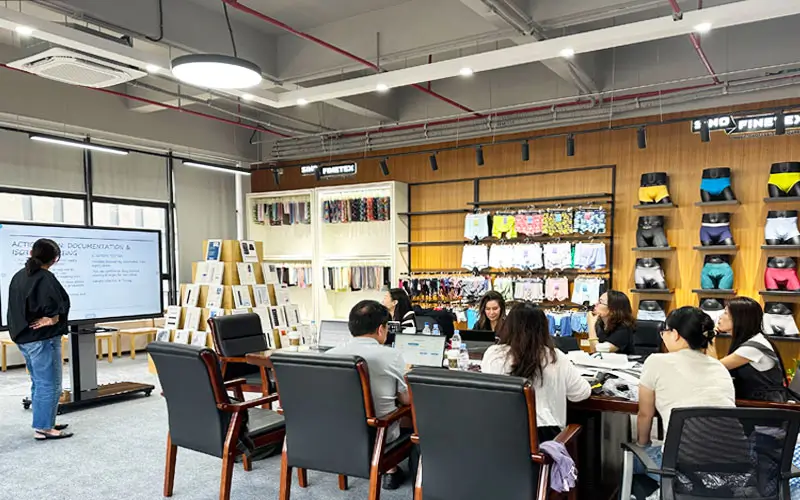
A clothing minimum order quantity is not a single decision made by the factory. It is the sum of several separate minimums, each belonging to a different part of the process, and each set by a different cost driver. Once you can see which component is producing the number, you can see which ones are genuinely negotiable and which ones only look like they are.
MOQ is a sum of minimums, not one number
The number you receive is a total, not a decision.
Fabric, dyeing, trims, decoration and line time each carry their own minimum, and the order quantity has to clear all of them at once, which is why two styles in the same factory can quote very different minimums.
When a buyer asks a supplier for the minimum, the answer usually arrives as one figure. That figure is a summary: it is the quantity at which every component minimum is satisfied simultaneously. A style in a fabric the factory holds in stock may have an attractive minimum, while the same style in a custom dye lot may not, and the difference is not the garment at all but the dyeing minimum underneath it. Understanding the arithmetic changes the negotiation, because it moves the conversation from arguing about a number to identifying which component is producing it. Ask the factory to break the minimum down by component, and the answer will tell you where the flexibility sits.
Fabric minimums: knitting and dyeing lots
Fabric has to be knitted or dyed in a lot.
Knitting machines and dyeing vessels both run in fixed loads, so the practical minimum for a fabric is the smallest lot that can be produced economically rather than a quantity the factory chooses at will.
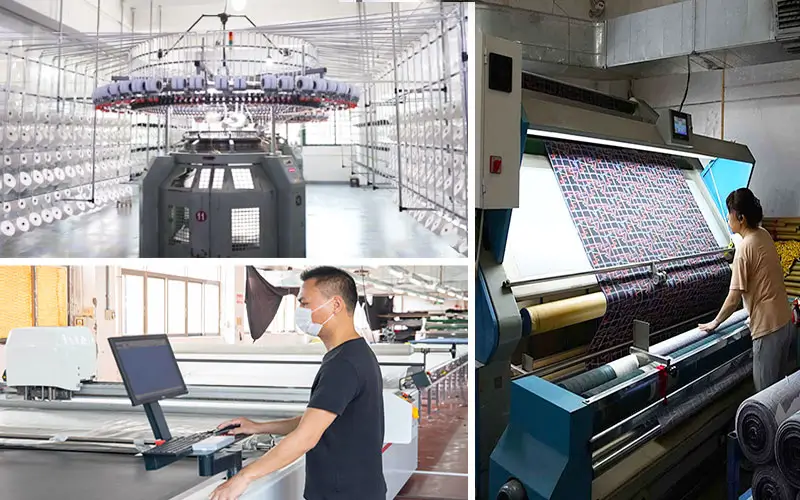
A knitting machine produces fabric at a given width and weight, and a full run on that machine may produce far more than one style requires. Dyeing is the more common constraint, because a dye vessel holds a fixed volume and the shade has to be matched across the whole bath. Where the fabric is a stock quality the factory already runs, the minimum is effectively the length of a normal production run and can often be absorbed across several styles in the same colour. Where the fabric is custom, the minimum belongs to the fabric mill, and the factory is passing it through. Asking whether the fabric is stocked or custom, and whether the colour already exists in the mill’s range, is the fastest way to find out which of the two situations applies. Where chemistry is restricted for the destination market, the dyeing route also has to be checked against the relevant input standard, a subject covered by OEKO-TEX ECO PASSPORT.
Trim minimums: elastic, labels and packaging
Trims are bought in supplier minimums.
Elastic, woven labels, care labels, hangtags and poly bags are each supplied at a minimum, and a small trim minimum can quietly set a floor under the whole order.
On underwear, elastic is often the trim that produces the number, because a custom waistband width and jacquard pattern has to be woven or knitted to order and the supplier will only set up for a run of a certain length. Woven labels behave the same way: a custom logo label is woven in a run, and the run is longer than a first order needs. Custom printed packaging is the other frequent culprit, since a printed box or bag carries a plate or a die. The practical point is that trim minimums are frequently the reason a small order cannot be accepted, and they are also the ones a buyer can work around by choosing a stock trim, standardising a label across styles, or using a printed sticker on a plain bag instead of a printed bag.
Decoration minimums: screens, plates and setups
Decoration charges a setup before it charges a print.
Screen printing carries a screen per colour, transfers require a plate or a die, and embroidery requires a digitised file, so the setup is a fixed cost spread across the order.
This is the clearest case in the whole calculation, because the arithmetic is visible: a fixed setup spread across a larger quantity produces a lower cost per piece, and the same setup spread across a very small quantity produces an unattractive one. The minimum quoted for a decorated style is therefore often a pricing decision rather than a physical constraint. Ask separately what the setup cost is and what the print cost per piece is, then calculate the quantity at which the two are acceptable to you. Where the artwork is simple, choosing a method with a lower setup can reduce the minimum without touching the garment, and where the brand can accept a stock blank with a printed tag, the decoration minimum disappears entirely.
Labour minimums: line allocation and changeover time
A production line has to be filled to be worth running.
A sewing line allocated to a style carries a changeover and a learning curve, and the order has to be large enough for that cost to be recovered over the run.
Changeover covers everything that happens between the last garment of the previous style and the first good garment of the next: the machines are re-set, the work is re-distributed, the operators relearn their operation and the first pieces off the line are slower and less consistent. On a simple T-shirt the changeover is short. On a constructed underwear style with elastic attachment, a gusset and a multi-piece waistband, it is longer, and the line minimum rises with it. This is the component that buyers most often miss, because it produces a minimum that seems arbitrary until the changeover is explained. It is also the component most genuinely negotiable, usually by accepting a longer production window so the style can share a line with something similar in construction and colour.
How per-style and per-colour minimums differ
Per-colour minimums are usually the harder constraint.
A per-style minimum can be met across several colours, while a per-colour minimum applies to each colour on its own, so a five-colour order can face five separate minimums rather than one.
This is the single most common misunderstanding in a first order. A buyer who has been quoted a per-style minimum plans a range of five colours at one fifth of the quantity each, and then discovers that the fabric for each colour has to be dyed in its own lot and that each lot carries the dyeing minimum. The result is either a much larger order than planned or a reduced colour range. Where the colours are stock shades the factory already dyes, the per-colour constraint softens considerably, because the fabric can be drawn from a lot produced for other customers. Where the brand needs an exact shade for a colour story, the per-colour minimum is real and should be planned around from the beginning.
Which minimums can genuinely be reduced
Stock materials, shared line time and standardised trims.
The minimums that reduce are the ones where the fixed cost is being shared rather than removed, and the ones that do not are those tied to a physical process the factory cannot shrink.
| Component | What drives it | Can it reduce? |
|---|---|---|
| Stock fabric | Normal production run length | Often, by sharing across styles |
| Custom dyed fabric | Dye vessel load and shade matching | Rarely, unless the shade is shared |
| Custom elastic or labels | Supplier setup for a woven or knitted run | Yes, by using a stock trim |
| Decoration | Screens, dies or digitising | Yes, at a higher unit cost |
| Line allocation | Changeover and learning curve | Yes, with schedule flexibility |
| Per-colour dyeing | One lot per colour | By reducing the colour range |
Reading the table in order of effort is the practical approach. Changing a trim or a decoration method is usually within the buyer’s control and costs nothing but a design decision, and the design stage is where those substitutions are cheapest to make. Reducing the colour range is a commercial decision that a brand can make deliberately. Changing the fabric from custom to stock is the largest lever and also the one that most affects the product, so it should be considered last rather than first. What should be avoided is asking for a lower number without knowing which component is producing it, because the factory can only remove cost by weakening something, and it will choose whatever is least visible to the buyer.
MOQ and unit price: the relationship buyers misread
Lower quantity raises unit price, and not proportionally.
The relationship between order size and unit cost is not linear, because the fixed costs are concentrated at the small end, so the penalty for a small order is a step rather than a slope.
A buyer comparing a small order against a large one sometimes assumes the unit price will fall by a percentage that reflects the volume difference. In practice, the fixed components – the setup, the line changeover, the minimum lot that has to be bought regardless – do not shrink with the order, so the unit price at a small quantity can be considerably higher than a linear reading predicts. The useful comparison is not price per piece at two quantities but total cost at each, including the cost of the stock that remains unsold. A larger order at a lower unit price is only cheaper if the additional units sell, and the arithmetic that matters is the total cash outlay against the expected sell-through, not the unit rate.
Negotiating MOQ without damaging quality
Trade specification for quantity, never quality for quantity.
The negotiations that hold are the ones where the buyer gives up something the factory values, such as schedule flexibility or colour range, rather than something the customer will notice in the product.
Start by asking which component is setting the minimum, then offer something in that component’s neighbourhood. If dyeing is the constraint, ask whether the shade could be matched to a colour the mill already runs. If the trim is the constraint, ask whether a stock elastic or a standard label would change the number. If the line is the constraint, ask whether a later delivery window would allow the style to share a line. What should not be traded is the fabric quality, the elastic specification or the inspection: a lower minimum achieved by substituting a weaker elastic or dropping the wash test is a saving that reappears as returns. Ask for any change to be recorded against the approved sample, so the product that arrives is the product that was agreed.
MOQ by product type: underwear, undershirts and T-shirts
The construction decides which minimum dominates.
A simple cut-and-sew T-shirt in a stock fabric is usually the most flexible, a constructed underwear style in a custom fabric the least, and the difference is the number of custom components in the bill of materials.
On a T-shirt programme, the fabric is often a stock quality and the decoration is the main custom element, so the minimum is frequently driven by the print setup and the colour range. On an undershirt the picture is similar but the fabric blend is more likely to be specific, which moves some of the constraint into dyeing. On underwear, several custom elements can appear at once: a specific elastic width and pattern, a gusset fabric, a waistband construction and a printed tag. Each adds its own supplier minimum, and a buyer who understands that can usually find one element to standardise and unlock a smaller first order. The most effective question to ask is which component would have to change for the quantity to be halved, because the answer identifies the true constraint. Where the minimum still lands above the first-order budget, the low-minimum article covers how small programmes are structured around commitment rather than quantity.
A worksheet for estimating your own MOQ
Build the number from the components before you ask for a quote.
Estimating the arithmetic in advance turns the first conversation into a discussion of the components rather than a negotiation about a number the buyer does not understand.
Write four lines. First, the lowest fabric quantity the mill would produce in this quality and colour, expressed as length rather than as garments, and converted using the consumption per piece. Second, the lowest quantity of each custom trim, taken from the supplier rather than assumed. Third, the decoration setup and the quantity at which it becomes acceptable. Fourth, the smallest line allocation the construction can support given the changeover. The highest of those four numbers is your working minimum, and the component that produced it is the one to negotiate first. Record the assumptions next to each line, because a minimum that moves without an explanation is a minimum that was never derived from the components at all.
FAQ
How is MOQ calculated in garment manufacturing?
It is the highest of several component minimums: the fabric lot the mill will produce, the quantity each custom trim supplier will set up for, the decoration setup, and the smallest line allocation the construction can support. The order has to clear all of them at once.
Can MOQ be negotiated?
Yes, in the components where the cost is being shared rather than removed. Substituting a stock trim, standardising a label, choosing a lower-setup decoration or accepting a later delivery window can all reduce the number. Changing a physical process such as dyeing a custom shade cannot.
Why is per-colour MOQ higher than per-style MOQ?
Because each colour has to be dyed in its own lot, so a per-colour minimum applies to every colour separately rather than to the order as a whole. A five-colour range can face five minimums unless the shades are stock colours the mill already runs.
Does a lower MOQ always cost more per piece?
The unit rate is usually higher because fixed costs are spread across fewer pieces, and the increase is often a step rather than a smooth slope. What matters for a decision is total outlay against expected sell-through, not the unit rate on its own.
Next step for your team: send the Finetex Global team your style, colour range and target quantity, and ask which component would set the minimum for your order and what would have to change to reduce it.
Sources: OEKO-TEX STANDARD 100; 16 CFR Part 303 textile labelling; Textile Exchange standards; ISO 9001 quality management.
More factory-floor notes for brand owners

Sample Revision Limits: How to Control Underwear Development Cost and Calendar
A sample revision limit should control scope, not block necessary correction. The buyer and factory need to distinguish…
Read more →
Lab Dips and Strike-Offs for Underwear: Approval Steps That Prevent Delays
A lab dip approves a dyed textile shade; a strike-off approves printed artwork on the intended substrate. They…
Read more →
Color MOQ Planning: How to Share Fabric Across Multiple Underwear Styles
Color MOQ planning works best when a brand treats dyed fabric as a shared material platform rather than…
Read more →
Underwear Fabric Utilization: How Marker Efficiency Changes Unit Cost
Fabric utilization converts a fabric quotation into a garment cost. The calculation must account for pattern area, fabric…
Read more →
Open Costing for Men’s Underwear: Reading Fabric, Trim, Labor and Overhead Lines
An open-cost sheet is useful only when every line is tied to a measurable specification, a purchasing unit…
Read more →Global Apparel Sourcing Outlook 2026: Cotton, Freight and Supply-Chain Risk
A data-led 2026 apparel sourcing outlook on cotton balances, freight volatility, supplier diversification, lead time, compliance and practical…
Read more →Request a sample & pricing information
Send us your tech pack, target price or a reference sample — we reply with a quotation, a realistic lead time and a fabric recommendation within one working day.
- Free sampling plan & cost breakdown
- MOQ from 300 pcs per style
- Reply within 1 working day