
Men’s Underwear Trends for Online Sellers: What to Stock in 2026-2027
Underwear trends become stocking decisions when the seller reads them as customer evidence: the functional fabric story, the silhouette shift, and the color season all have…
Underwear trends become stocking decisions when the seller reads them as customer evidence: the functional fabric story, the silhouette shift, and the color season all have to show up in sales data before they earn an order. According to Finetex’s published underwear program details, its line covers boxer briefs, trunks, briefs, and jockstraps with a fabric range that includes performance blends, which gives an online seller the product base to test a trend. This guide turns trends into a three-step decision: find the signal, check the evidence, and place a test order.
Where Trend Signals Come From in E-Commerce
The e-commerce trend signal lives in the data, not the runway. The seller’s own listings show what converts and what returns, the category’s best sellers show what the market is buying, and the review language shows what customers actually value. The three sources together are stronger than any trend report, because they are the market’s behavior, not its opinion.
| Signal source | What it shows | When it becomes an order |
|---|---|---|
| The seller’s own listings | Conversion and return behavior | After the data repeats |
| Category best sellers | What the market buys | After the movement persists |
| Review language | What customers value | When the words shift |
| Social saves and searches | Emerging interest | Only with sales confirmation |
The signal should be separated from the noise. A best seller that runs on a price promotion is not a trend; a category shift that appears across multiple sellers and multiple weeks is. The seller should define the evidence threshold before the review, so the trend decision is a filter, not a reaction.
The evidence threshold should be written down, because a threshold written before the review survives the review. A seller who defines the signal as three weeks of sustained growth across multiple SKUs is protected from the one-week spike that looks like a trend and sells like a fad. The written threshold turns the trend review into a checklist, and the checklist is what keeps the seller from ordering the noise.
The timing matters as much as the signal. Underwear trends move slower than fashion trends, because the category is a replenishment buy, and the seller who orders at the first signal is early, not wrong. The trend should be watched for a season before it earns a real quantity.
Functional Fabrics: From Running Niche to Mainstream
The functional fabric story is the strongest trend signal in the category. Moisture-wicking, quick-dry, and odor-management blends have moved from the running niche into the everyday boxer brief, and the customer is now asking for the performance story in the daily product, not just the gym product.
The functional trend should be verified against the customer’s behavior. The seller should confirm that the performance claim converts, that the finish survives the wash, and that the price premium holds. According to Finetex’s published program details, its finishes include odor control, moisture management, and anti-bacterial coating, so the performance story is available to test; the test is whether the customer buys it twice.
The listing language should match the fabric’s behavior. “Quick-dry for the daily commute” is a claim the customer can verify; “performance engineered” is a label the customer skips. The functional trend earns the listing when the claim names the moment the fabric helps.
Silhouette Shifts: What’s Moving in Sales Data
The silhouette data shows the trunks shift and the boxer brief dominance. The trunks cut has grown with the fashion-forward customer, and the sales data across sellers shows the shift; the boxer brief remains the volume cut, and the shift is incremental, not a replacement.
The seller should read the silhouette data at the SKU level. A category report that says “trunks are growing” does not tell the seller whether the growth is in the slim fit, the relaxed fit, or the premium tier. The SKU-level view is what converts the trend into an order.
The silhouette decision should respect the volume product. The boxer brief stays the foundation; the trunks become the test SKU, sized as a smaller run that measures the shift before it earns a deeper order.
Color and Seasonality for Replenishment
The color story follows the season and the channel. The neutrals carry the year-round volume, the seasonal colors carry the windows, and the trend colors carry the test. The seller should keep the neutral depth and test the seasonal color at a smaller quantity.
The seasonality also sets the order calendar. The holiday window favors the gift colors and the pack sizes; the spring window favors the lighter colors and the lighter weights; the fall window favors the deeper tones. Each window has an ordering date, mapped backward from the season.
The color decision should be tested against the return data. A color that converts but returns at a high rate is a fit or fabric problem wearing a color label, and the seller should fix the cause before reordering the color.
Turning a Trend Into a Test Order
The test order is the bridge between the trend and the business. The test should be small, measured, and repeatable: one style, one color, a quantity that fits the MOQ structure, and a sell-through threshold that decides the reorder.
The test should be designed to produce clean data. The listing, the price, and the traffic should be controlled, so the sell-through can be attributed to the trend rather than to a promotion. The seller who tests with controlled variables gets a signal; the seller who tests with a discount gets noise.
The test order should also carry the supply-chain facts. The MOQ structure, the lead time, and the landed cost should be confirmed with the factory before the test, so the test order is a real option, not a hope. According to Finetex’s current underwear page, the full-customization MOQ is 1,000-3,000 pieces per design with mixed sizes, so the test quantity should fit inside the structure the seller can actually fund.
Trends to Ignore: The Overhyped List
Some trends deserve to be ignored, and the list is predictable: the style that requires a fabric the customer will not pay for, the novelty that reviews praise once and never rebuy, and the “innovation” that is a label without a test. Each one costs the same margin and produces no reorder.
The overhyped trend usually shares one feature: it cannot be verified in the customer’s behavior. The seller should apply the same evidence threshold to the hype as to the trend, and the trend that cannot show up in the sales data does not earn an order.
The discipline is the point. The seller who treats trends as hypotheses, tests them small, and lets the data decide, compounds the advantage; the seller who treats trends as certainties orders the hype and warehouses the regret. The same discipline applies to the reorder: a trend that converts once earns a second look, and a trend that converts twice earns the volume. The test-and-scale loop is the whole business of selling trends, and the seller who runs it well gets the advantage the category rewards.
A category analyst’s view on underwear trends
A category analyst who tracks men’s underwear for marketplace sellers describes the trend as a hypothesis that the data has to confirm twice: once at the listing and once at the reorder. In their experience, the functional fabric story is the durable trend, while the novelty styles are the distraction, and the sellers who win are the ones who test the durable story small and scale it with evidence.
Finetex’s men’s underwear manufacturing page covers the boxer briefs, trunks, briefs, and jockstraps programs a trend-driven test order runs on, and its contact page accepts trend briefs with the hypothesis and the test quantity. Bring the trend hypothesis and the test quantity, and the factory can confirm the fabric, the MOQ, and the lead time for the test order. The trend becomes an order when the evidence, the supply chain, and the test design all line up.
Frequently Asked Questions
Where do I find underwear trend signals?
In the sales data: your own listings, the category best sellers, and the review language. The three sources together show what customers actually buy and value.
Is the functional fabric trend real?
Yes, and it is the durable trend. Moisture-wicking and quick-dry stories have moved into the everyday product, but the claim should convert and the finish should survive the wash before the trend earns a real quantity. Test the claim in the listing and the finish in the wash.
Which silhouette should I stock?
Keep the boxer brief as the volume foundation and test the trunks as the shift SKU. Read the silhouette data at the SKU level before ordering, because a category report does not tell you which fit or tier is moving.
How do I test a trend?
Order one style, one color, a quantity that fits the MOQ, and set a sell-through threshold that decides the reorder. Control the listing, the price, and the traffic so the data is clean, and let the threshold, not the enthusiasm, decide the second order.
What trends should I ignore?
The styles that cannot be verified in customer behavior: the fabric customers will not pay for, the novelty that never rebuys, and the innovation that is a label without a test. Apply the same evidence threshold to the hype as to the trend.
When should I order for the season?
Map the season’s window backward through the production and freight lead times. The holiday, spring, and fall windows each have an ordering date, and the calendar should be updated before every season.
Sources
For the surrounding decisions in the same programme, see the launching a men’s underwear brand.
More factory-floor notes for brand owners

Sample Revision Limits: How to Control Underwear Development Cost and Calendar
A sample revision limit should control scope, not block necessary correction. The buyer and factory need to distinguish…
Read more →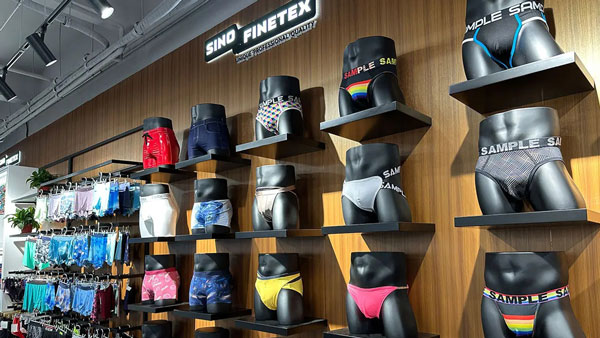
Lab Dips and Strike-Offs for Underwear: Approval Steps That Prevent Delays
A lab dip approves a dyed textile shade; a strike-off approves printed artwork on the intended substrate. They…
Read more →
Color MOQ Planning: How to Share Fabric Across Multiple Underwear Styles
Color MOQ planning works best when a brand treats dyed fabric as a shared material platform rather than…
Read more →
Underwear Fabric Utilization: How Marker Efficiency Changes Unit Cost
Fabric utilization converts a fabric quotation into a garment cost. The calculation must account for pattern area, fabric…
Read more →
Open Costing for Men’s Underwear: Reading Fabric, Trim, Labor and Overhead Lines
An open-cost sheet is useful only when every line is tied to a measurable specification, a purchasing unit…
Read more →Global Apparel Sourcing Outlook 2026: Cotton, Freight and Supply-Chain Risk
A data-led 2026 apparel sourcing outlook on cotton balances, freight volatility, supplier diversification, lead time, compliance and practical…
Read more →Request a sample & pricing information
Send us your tech pack, target price or a reference sample — we reply with a quotation, a realistic lead time and a fabric recommendation within one working day.
- Free sampling plan & cost breakdown
- MOQ from 300 pcs per style
- Reply within 1 working day