
How is MOQ split across colours and sizes?
How underwear MOQ is split across colours and sizes: why factories set minimums per colour, how fabric, elastic and packaging minimums drive the split, and how…
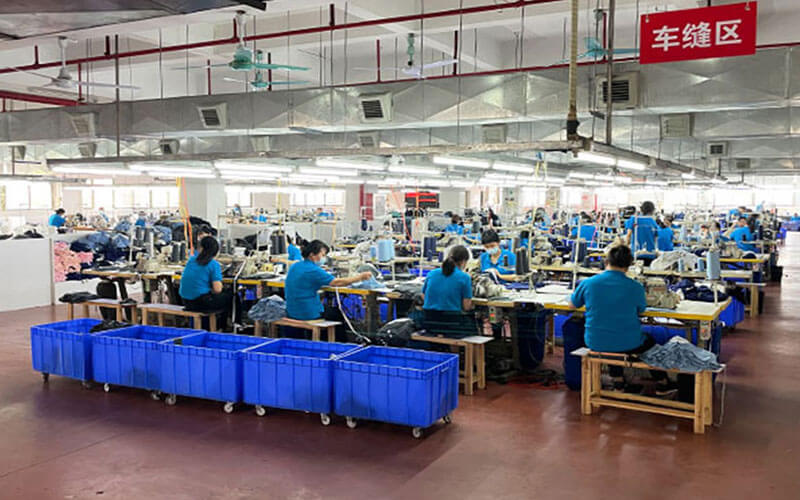
Part of Sampling, Orders, Quality & Shipping in Finetex Talk — buyer questions answered by the Finetex editorial team.
A brand is quoted an MOQ per style for boxer briefs and plans to split it across five colours and six sizes. The factory then says each colour needs its own minimum, and the brand is unsure how the numbers fit together.
Short answer: Underwear MOQs usually work at several levels at once. There is often a minimum per style, set by the cost of setting up cutting and sewing, and a minimum per colour, set by fabric dyeing, elastic and sometimes printed or jacquard waistbands. Sizes then divide each colour, and some factories also set a minimum per size so that cutting stays efficient. The colour minimum is often the hardest constraint: if fabric is dyed to order, the dye house has its own minimum lot, and a custom-colour waistband may have a minimum length that covers far more pieces than one small colour needs. Stock fabrics and stock elastics in standard colours usually allow smaller splits. Packaging adds another level, since printed boxes or bags can have their own minimums per design. Each colour and size combination also becomes a separate stock unit; GS1 guidance is that each size and colour variant needs its own GTIN, which matters for retail and marketplace listings. To plan, ask the factory for minimums at style, colour and size level, plus fabric, elastic and packaging minimums, and ask which colours are stock. Then choose fewer colours at proper depth, or use stock colours to widen the range, and agree how size quantities may be adjusted within each colour.
Levels of MOQ
- Per style.
- Per colour.
- Per size within each colour.
- Per packaging design.
What drives the colour minimum
- Fabric dye lot minimums.
- Custom elastic or waistband minimums.
- Thread and trim matching.
Ways to fit the MOQ
- Use stock fabric and elastic colours.
- Share one waistband across colours.
- Start with core colours.
- Use neutral packaging across colours.
A worked example
As an illustration, a brand could launch two core colours on custom fabric at full depth, add two stock-fabric colours at the lower stock minimum, and use a black waistband shared by all four.
Size splits
A factory may accept uneven size quantities within a colour as long as the colour total is met. Ask whether a small minimum per size applies, since very small runs of edge sizes can still be costly.
Reorders and colour minimums
The colour minimum usually applies again on reorders, especially for custom-dyed fabric. A colour that sells out may need to be reordered at the full colour minimum, so ask in advance whether fabric or elastic can be held in stock, or dyed from greige, to shorten the reorder.
Limits
Minimums differ by factory, mill and material. Confirm them in the quotation for each order rather than assuming they repeat.
Facts, recommendations and uncertainty
Established: MOQs often apply per style, colour and size, with colour driven by fabric and elastic minimums. Recommendation: ask for minimums at each level and plan colour depth first. Uncertain: which colours will sell best in a first launch.
Sources and further reading
Standards and regulations are referenced by their published scope. Test parameters, cycles and pass levels should be agreed with your laboratory for the specific product; legal requirements should be confirmed for each destination market.
Three more perspectives
Ask the factory to list which fabric and elastic colours are stock and how long they stay available. Request quotes for different colour splits to see the price effect of each extra colour. Check who pays for leftover custom elastic or fabric. Confirm the minimum for a single-colour reorder before you launch. Ask whether stock colours carry a different price from custom colours.
Choose waistband designs that work across colours, such as a neutral or contrast band, to avoid separate elastic minimums. Keep the first range small and add colours once sales show demand. Check that colour names and codes are consistent across fabric, elastic and packaging. Plan seasonal colours as limited runs on stock fabric. Review whether each extra colour adds enough sales to justify its minimum and approvals.
Check that each colour and size is packed and labelled with the correct barcode and stock code. Count pieces per colour and size against the order before packing, since small splits are easy to short-ship. Record fabric and elastic lot numbers per colour, so reorders can be matched to the original shade. Check shade consistency within each colour across all sizes, since different sizes may be cut from different rolls of the same lot.
Related products
← More in Sampling, Orders, Quality & Shipping · All Talk topics · Ask us about your programme
More factory-floor notes for brand owners
Why did my reorder price go up?
Why an apparel reorder price can go up: fabric and trim costs, smaller quantities, specification changes, labour and…
Read more →
How do I read an underwear quotation line by line?
How to read an underwear quotation line by line: fabric, elastic and trims, labour, packaging, testing, overheads and…
Read more →
How do peak seasons affect apparel factory capacity?
How peak seasons and holidays affect apparel factory capacity and lead times, why fabric and shipping are also…
Read more →
Should I split one style across two factories?
Whether to split one apparel style across two factories: the benefits for capacity and risk, the risks for…
Read more →
What are the biggest risks on a small brand’s first order?
The biggest risks on a small brand's first apparel order, from unclear specifications and sample approval to payment,…
Read more →
What changes should a factory notify before production?
Which changes a factory should notify the buyer about before production, such as fabric, dye, trims, subcontracting or…
Read more →Request a sample & pricing information
Send us your tech pack, target price or a reference sample — we reply with a quotation, a realistic lead time and a fabric recommendation within one working day.
- Free sampling plan & cost breakdown
- MOQ from 300 pcs per style
- Reply within 1 working day