
Men’s Polo Shirt Manufacturing: Pique, Interlock and Collar Construction
How a men's cut-and-sew polo is built: pique vs interlock fabric, flat-knit vs self-fabric collars, placket construction and the points to fix at sampling.
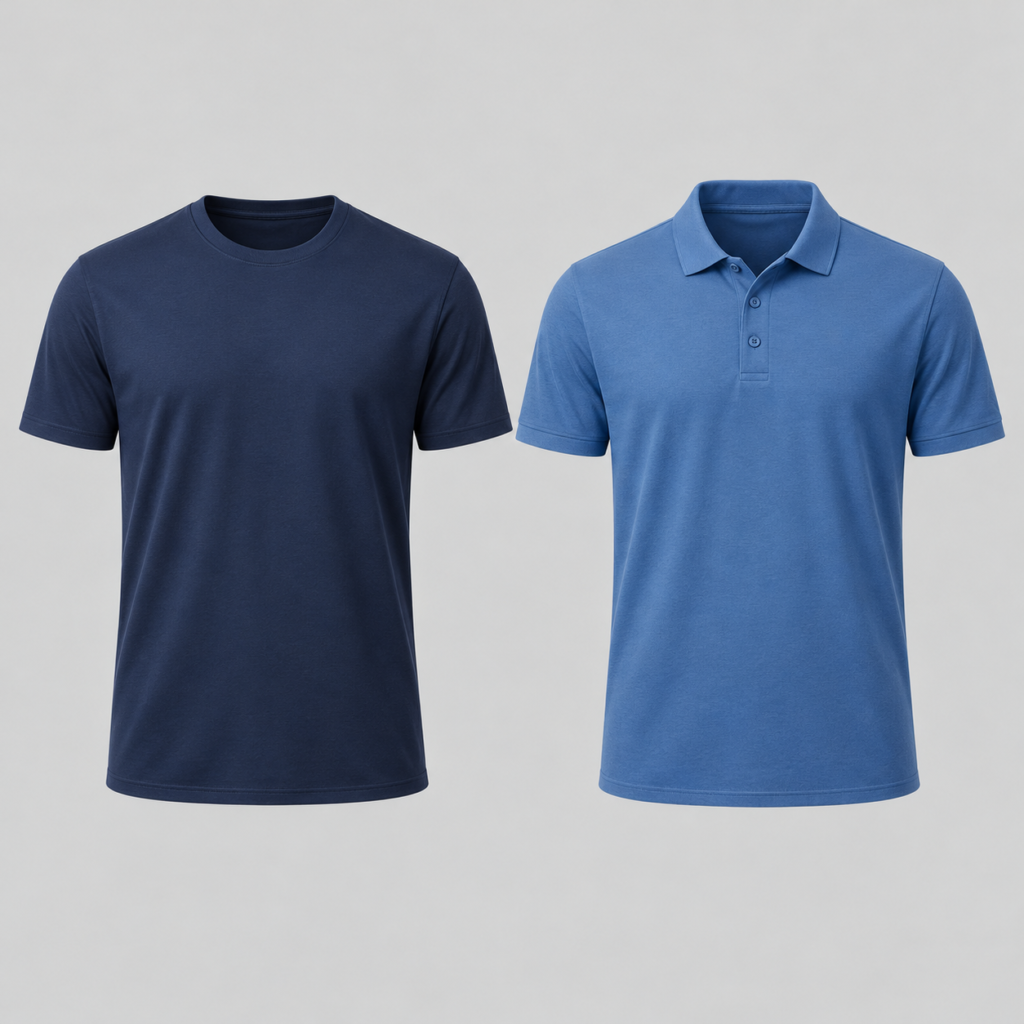
Answer first: A men’s polo is a T-shirt body with three extra components that decide its quality: the fabric (usually pique or interlock), the collar (flat-knit or self-fabric with a stand) and the placket. Specify the fabric weight and shrinkage, the collar type and how it is matched to the body colour, and the placket construction in writing, then test the collar and placket after washing before approving bulk.
A polo looks simple, but it has more parts and more approval points than a T-shirt. The collar is often made separately from the body, the placket needs interlining and accurate sewing, and pique fabric behaves differently from jersey in washing. This guide covers cut-and-sew polos. If you are considering a knitted, seamless body, see our seamless T-shirt and polo manufacturing page, which explains when seamless makes sense.
Pique vs interlock vs jersey
The fabric sets the look, the hand feel and much of the price.
| Fabric | Structure | Look and feel | Typical use |
|---|---|---|---|
| Pique | Knit with a raised, textured surface | Classic polo texture, breathable, holds shape | Classic, sport and corporate polos |
| Interlock | Double knit, smooth on both faces | Smooth, soft, slightly heavier drape | Premium and smart-casual polos |
| Jersey | Single knit, flat face | Light, T-shirt-like | Casual and fashion polos |
Pique comes in several variants, such as single pique and double pique, with different textures. Interlock gives a smooth face that suits printing and a more refined look. Jersey polos are cheaper and lighter but lose some of the structure customers expect.
Fabric weight. Heavier fabric drapes better and resists see-through, but costs more and is warmer. Our knit bodies range from 140 to 420 gsm across T-shirt and knit programmes; the right polo weight depends on the use and climate, so compare two weights at sampling rather than choosing from a sheet.
Composition. Cotton gives a natural hand; cotton/polyester blends reduce shrinkage and wrinkling; polyester pique with a moisture-wicking finish suits sport and uniform programmes. If you want an organic claim, the fabric needs certification; see GOTS vs OCS for T-shirts.
Shrinkage and twist. Textured knits can shrink and twist more than you expect if the fabric is not properly finished. Ask the mill for shrinkage results after washing and specify the maximum you accept in the tech pack.
Collar construction: flat-knit or self-fabric
The collar is the most visible part of a polo and the most common source of complaints.
| Collar type | How it is made | Strengths | Watch points |
|---|---|---|---|
| Flat-knit collar | Knitted to shape on a flat-knitting machine, often with a finished edge | Classic look, holds its shape, can include tipping stripes | Must be colour-matched to the body; separate lead time |
| Self-fabric collar | Cut from the body fabric, usually fused with interlining | Perfect colour match, softer look | Can curl or wave if interlining or grain is wrong |
| Collar with stand | Separate band between collar and neckline | Sits higher and crisper, shirt-like | More sewing steps and cost |
Colour matching. A flat-knit collar is usually knitted and dyed separately from the body fabric. That means a separate lab dip and shade approval, and a risk that body and collar look different under different light. Approve the collar shade against the body fabric, not against a colour card alone.
Curling. Collar points that curl up after washing are a classic polo complaint. Causes include the collar’s knit structure and tension, interlining choice, and how the collar is attached. Our post on why polo shirt collars curl explains the causes and fixes. As a rule, wash-test the collar at sampling and approve only after the points lie flat.
Collar size. The collar length must match the neckline. A collar that is too long or too short is eased or stretched in sewing and will wave. Record the collar point length, collar height and neck opening in the measurement chart.
Placket construction
The placket is the button opening at the front neck. It needs careful construction because it is the area under most stress when the polo is put on.
- Length and buttons. Two- and three-button plackets are common. Specify the placket length, the number of buttons and the button size.
- Interlining. Plackets are usually fused with interlining so they stay flat and support the buttonholes. Too heavy an interlining makes the placket stiff; too light makes it ripple.
- Construction type. A classic placket is sewn on top of the body with visible stitching; a concealed or hidden placket covers the buttons. Each looks different and has different sewing steps.
- Buttonholes. Specify the buttonhole direction, size relative to the button and the stitch density, and check that they do not fray after washing.
- Neck tape. A tape across the back neck covers the seam and adds comfort. Specify its width and material.
The three construction points that cause most polo complaints
We do not publish a return-rate statistic. These three points are where polo construction most often goes wrong, so fix them at sampling, not after bulk.
- Collar shape after washing. Curling points, wavy edges or a collar that shrinks differently from the body. Fix with collar structure, interlining and wash testing.
- Placket puckering or twisting. The placket ripples, leans or the bottom corner pulls. Fix with interlining choice, accurate cutting on grain and consistent sewing tension.
- Body shrinkage and twist. The polo shrinks or the side seams move to the front after washing. Fix with finished fabric, shrinkage limits in the tech pack and pre-production wash tests.
Other common points include buttons that are not securely attached, side vents that are uneven, and a longer back hem (often called a tennis tail) that is not specified clearly.
Decoration: embroidery, prints and labels
Polos are often decorated with a chest logo. Embroidery is the classic choice and suits pique. On thin or textured fabric, specify the backing and stitch density so the logo does not pucker. Prints work well on interlock and jersey. Heat transfers suit small logos and technical fabrics.
For labels, decide on a sewn-in neck label or a printed label, and position size and care labels so they do not irritate. Our T-shirt printing and decoration guide covers decoration methods in more depth.
Developing a polo: the steps
- Tech pack. Fabric type, weight and composition; collar type and tipping; placket type and size; buttons; measurements including collar and placket; decoration and labels.
- Fabric and collar lab dips. Approve the body colour and collar shade together.
- Development sample. Check fit, collar shape and placket construction.
- Wash test. Wash the sample and check collar flatness, placket, shrinkage and twist.
- Size set. Check grading across sizes, especially collar length and placket position.
- Pre-production sample. Approve with the bulk fabric, collar, buttons and labels.
- Bulk production and inspection. In-line and final inspection, with measurement reports.
Finetex’s published lead times are 5–7 working days for a development sample after artwork and fabric are confirmed, 10–12 working days for a size set and 15–45 days for bulk depending on quantity, fabric availability and trims. Flat-knit collars with tipping are a separate trim, so build their lead time into the schedule. Our standard MOQ is 300–1,000 pieces per style, mixed sizes: from 300 pieces on stock fabric and around 1,000 pieces per colour for a custom knit or dye lot.
Quality checks during bulk production
Polo-specific points should be written into the inspection checklist, not left to a general garment check. Finetex’s quality process has five gates: incoming fabric inspection, a cutting check, in-line inspection at 30% and 70% of production, and an AQL 2.5 final audit, with a measurement report and photo documentation for every shipment. For polos, ask for these points to be recorded at each stage:
- Fabric inspection: body fabric and collar shade checked against the approved standard under the agreed light source.
- Cutting: body panels and self-fabric collars cut on grain; placket parts fused consistently.
- In-line: collar attachment symmetry, placket straightness, buttonhole quality and button security.
- Final audit: collar point length and height, placket length, chest and body length against tolerance, plus a visual check of collar shape and logo position.
Our quality control page describes each gate.
What to put in a polo tech pack
| Item | What to specify |
|---|---|
| Fabric | Type (pique, interlock, jersey), weight, composition, finish, shrinkage limit |
| Collar | Flat-knit or self-fabric, height, point length, tipping, shade standard |
| Placket | Length, width, button count, button size, interlining, construction type |
| Body | Fit, measurements, side vents, hem type, back hem length |
| Sleeve | Hem or rib cuff, length, opening |
| Decoration | Method, size, position, colours |
| Labels and packaging | Neck label, care label, hangtag, fold and polybag |
| Testing | Wash test points: collar, placket, shrinkage, twist, colour fastness |
Our custom T-shirt manufacturing guide explains how to build the base tech pack, and the T-shirt manufacturing service lists the knit bodies and constructions we produce.
What is fact, what is advice and what is uncertain
Fact: Finetex’s lead times, MOQs and fabric weight range from Finetex’s published pages.
Advice: the fabric comparison, collar and placket guidance, development steps and tech pack checklist are manufacturing recommendations.
Uncertain: the right fabric weight, shrinkage limit and collar construction for your polo depend on your fabric and use. Confirm them by sampling and wash testing.
Related reading
- GOTS vs OCS: Which Organic Claim Fits Your T-Shirt
- Garment Measurement Points for Knit Tops: The 12 Numbers Buyers Argue About
- Chinese New Year Production Calendar: 2027 Cut-Off Dates
Frequently asked questions
What is the difference between pique and interlock polos?
Pique has a raised, textured surface and is the classic polo fabric. Interlock is a smooth double knit that feels softer and looks more refined. Both hold shape better than single jersey.
What is a flat-knit collar?
A collar knitted to shape on a flat-knitting machine, often with a finished edge and optional tipping stripes. It is made separately from the body, so its colour must be matched to the body fabric.
Why do polo collars curl?
Curling usually comes from the collar’s knit structure and tension, the interlining, or how the collar is attached. Wash-test the collar at sampling and approve only when the points stay flat.
What is the minimum order for custom polo shirts?
Finetex’s standard MOQ is 300–1,000 pieces per style, mixed sizes: from 300 pieces on stock fabric and around 1,000 pieces per colour for a custom knit or dye lot.
How long does polo shirt production take?
At Finetex, a development sample takes 5–7 working days after fabric and artwork are confirmed, a size set 10–12 working days, and bulk 15–45 days depending on quantity, fabric and trims such as flat-knit collars.
Sources
- Finetex Global: T-shirt manufacturing (fabric weights, MOQ and lead times)
- Finetex Global: Quality control process
Sample your polo before you commit
Send your polo tech pack or a reference garment. We will propose fabric and collar options, make a development sample and wash-test the collar and placket before bulk.
Request a sample or see our seamless T-shirt and polo page.
More factory-floor notes for brand owners
Selling Underwear in Germany: Textilkennzeichnung, LUCID and Packaging Law
German textile labelling, LUCID registration and packaging law for underwear brands after the PPWR and VerpackDG took effect…
Read more →
GSM to Ounce Converter and Fabric Weight Chart
Convert fabric weight between gsm and oz/yd² with the exact factor (1 oz/yd² = 33.906 g/m²), a T-shirt…
Read more →
First-Output Check: The In-Line Inspection That Saves Bulk
What to check on the first garments off each line: measurements, seams, labels and print against the approved…
Read more →
A Fit Session Protocol for Knit Tops: 12 Wearers, 5 Measurements
A recommended fit session protocol for knit tops: recruit 12 wearers, take five measurements, run a movement checklist,…
Read more →
Corporate Uniform Programs: Tendering, Sizing and Reorders
How to run a corporate uniform program with a factory: tender documents, sizing a workforce, producing many sizes…
Read more →
Muscle Fit and Athletic Fit T-Shirts: Pattern Changes That Matter
How muscle fit and athletic fit T-shirts differ from a classic block: chest-to-waist drop, sleeve cap and bicep,…
Read more →Request a sample & pricing information
Send us your tech pack, target price or a reference sample — we reply with a quotation, a realistic lead time and a fabric recommendation within one working day.
- Free sampling plan & cost breakdown
- MOQ from 300 pcs per style
- Reply within 1 working day