
Volume Tiering: How Price Breaks Work at 500, 3,000 and 10,000 Pieces
Why apparel unit prices fall most from 500 to 3,000 pieces and flatten after, how style, colour and fabric changes affect tiers, and how to read…
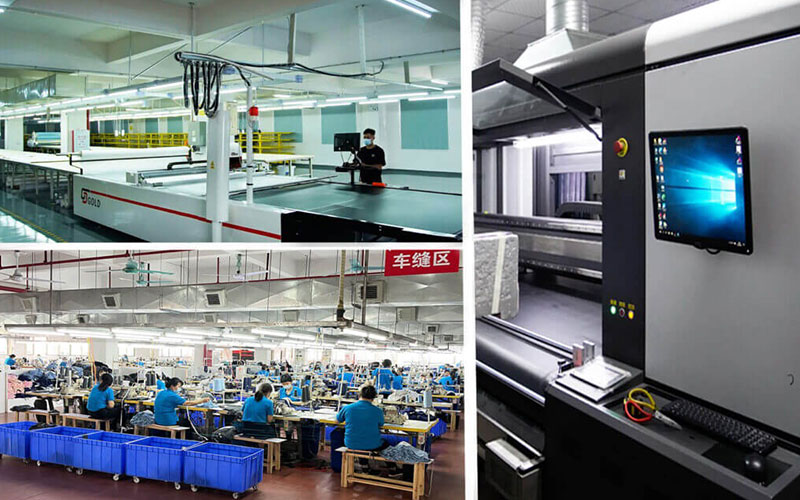
Answer first: Apparel price breaks follow a simple pattern: some costs are paid once per order, style, colour or fabric lot, and some are paid per piece. As quantity rises, the once-per-lot costs are spread over more pieces, so the unit price falls quickly at first and then flattens. That is why the step from 500 to 3,000 pieces is usually larger than the step from 3,000 to 10,000. This article explains the logic with illustrative numbers, shows three scenarios and gives a method for reading a tiered quotation. It publishes no Finetex prices.
If you have ever asked why 500 pieces feels expensive, the answer is rarely that the factory is protecting a margin. It is that a small order carries the same set-up work as a larger one. Understanding which costs are fixed per lot and which are per piece lets you decide what to change (fewer colours, a stock fabric, a single style) to move down the curve without increasing quantity. For the cost blocks that sit behind a unit price, see our apparel cost breakdown.
Fixed per lot and variable per piece
Split any quote into two kinds of cost.
| Cost type | Examples | How it behaves as quantity rises |
|---|---|---|
| Paid once per lot (fixed) | Pattern making and grading for the style, cutting-table and line set-up, dye-lab dip and colour approval, printing screens or embroidery files, a mill’s minimum charge for a custom colour, first-bundle checks | The total stays the same, so the cost per piece falls as quantity rises |
| Paid per piece (variable) | Fabric used by each garment, sewing labour per piece, trims and labels per piece, polybag and carton per piece, inspection sampling per piece | The cost per piece stays roughly the same at any quantity, apart from small efficiencies |
Two formulas follow:
Unit price ≈ variable cost per piece + (fixed cost per lot ÷ quantity)
Total price = unit price × quantity
The fixed part divided by quantity produces a curve that falls steeply at low quantities and levels off at high quantities. The curve is a feature of the arithmetic, not a marketing choice.
Why 500 to 3,000 is the big step, and 3,000 to 10,000 is flat
All numbers in this section are illustrative and are not Finetex prices, quotes or market data. Take a made-up style with a variable cost of 3.00 per piece and a fixed cost of 1,500 per lot, in an arbitrary currency.
| Quantity | Fixed cost per piece (1,500 ÷ quantity) | Illustrative unit price (3.00 + fixed share) | Change from previous tier |
|---|---|---|---|
| 500 | 3.00 | 6.00 | n/a |
| 3,000 | 0.50 | 3.50 | −2.50, about −42% |
| 10,000 | 0.15 | 3.15 | −0.35, about −10% |
Quantity went up six times from 500 to 3,000 and the fixed share fell from 3.00 to 0.50. It went up only 3.3 times from 3,000 to 10,000, and the fixed share was already small, so the fall is 0.35. The variable 3.00 never moves in this example. That is the whole mechanism.
Real quotes will not look exactly like this. They contain mill minimums that jump at certain quantities, fabric price breaks at certain roll counts, and efficiency effects on the sewing line. They also carry negotiation. But the shape holds: the first tiers give the largest relief, and later tiers give less, because there is less fixed cost left to spread.
A practical consequence: the value of ordering more depends on how much of your price is fixed per lot. If your style is a simple stock-fabric basic, the fixed part may already be small at 500 pieces, and the price break to 3,000 will be smaller than in a custom-fabric, multi-colour style.
Three scenarios: changing style, colour or fabric
The tiers depend on what a “lot” is. A lot is usually one style in one colour in one fabric. Change any of the three and you may start a new lot. Here is how each change plays out, with the same illustrative approach.
Scenario 1: Change the style
A new style needs its own pattern, grading, sample and line set-up. The fixed cost per lot is incurred again. If you split 3,000 pieces across three styles of 1,000 each, you pay the per-lot fixed cost three times, so the unit price moves back up the curve towards the 1,000-piece position, not the 3,000-piece position.
Scenario 2: Change the colour
A new colour usually means a new dye lot, a new lab dip, and a new bundle at cutting. If the fabric is custom-dyed, the mill may apply a minimum per colour. The same total quantity split across more colours therefore behaves like several smaller orders. Finetex quotes minimum quantities that start at 300 to 1,000 pieces, depending on the product and customisation, and the minimum can apply to each colour when custom fabrics or colours are used. Stock colours on stock fabric are the exception. Ask which colours are available from stock.
Scenario 3: Change the fabric
Fabric is usually the largest variable cost and also the one with the highest minimums. A custom fabric (new yarn, new weight or new structure) has a mill minimum that can be larger than your order for one style. A stock fabric has no such minimum, so small orders can be priced closer to the large-order position. Our article on apparel cost breakdown shows how fabric consumption sets the fabric block.
| What you change | What happens to the lot | Effect on tier benefit |
|---|---|---|
| Add a style | New pattern and set-up | Fixed cost repeated; tier benefit lost across styles |
| Add a colour | New dye lot, possible per-colour minimum | Quantity per colour falls; may drop below mill minimum |
| Switch to custom fabric | Mill minimum applies | Can raise the minimum order and the price at low quantity |
| Keep a stock fabric and stock colours | No mill minimum | Closest to the pure arithmetic of the curve |
How to read a tiered quotation
A tiered quotation lists unit prices at several quantities. Read it in five steps:
- Check the definition of the quantity. Is the tier per style, per colour, or total across the order? This is the most common source of misunderstanding. Ask in writing.
- Check what is the same across tiers. The specification, fabric, packing and Incoterm should be identical at every tier. If something differs, you are not comparing like with like.
- Calculate the change between tiers. Subtract and divide: how much did the price fall from one tier to the next, in percent? A large fall means a large fixed share at the lower tier.
- Back-solve the fixed and variable parts. With two tiers you can estimate both. If unit price at quantity A is P1 and at quantity B is P2, then fixed cost per lot ≈ (P1 − P2) ÷ (1/A − 1/B), and variable cost ≈ P2 − fixed ÷ B. This is an estimate, because real tiers contain step changes, but it shows how much of the price is fixed. Treat it as a diagnostic, not a quotation.
- Compare the cash outlay, not only the unit price. A lower unit price at 10,000 pieces still means paying for 10,000 pieces, holding stock, and carrying the risk that a style does not sell.
Using the illustrative figures: with P1 = 6.00 at 500 and P2 = 3.50 at 3,000, fixed ≈ (6.00 − 3.50) ÷ (1/500 − 1/3,000) = 2.50 ÷ 0.001667 = 1,500, and variable ≈ 3.50 − 1,500 ÷ 3,000 = 3.00. The method recovers the assumptions.
Decisions that tier logic suggests
- Concentrate quantity. One style in few colours gets more of the tier benefit than many styles in small numbers.
- Use stock fabric and stock colours for tests. This moves a small order closer to the large-order price curve without adding units.
- Plan reorders. The second order of a proven style has no development cost, so the same quantity may price lower than the first. Ask whether the sample and set-up cost is credited or not repeated.
- Do not chase the lowest tier blindly. The unit price at 10,000 pieces can be attractive, but a slow-selling style can cost more in unsold stock than the saving on the unit price.
- Compare landed cost, not unit price. Larger orders may need different shipping and a larger deposit; see building a landed cost sheet and the six-input landed cost method.
What this means for a first order
For many brands, the first order sits at the low end of the curve because the brand is testing demand. That is a sensible reason to accept a higher unit price. What you can control is how much of the fixed cost you carry: fewer colours, one core style, stock fabric where the design allows, and complete tech packs that avoid repeat sampling. Our underwear manufacturer page and private label page describe the starting points and the minimum quantities Finetex works with.
At Finetex, a development sample takes 5 to 7 working days after artwork and fabric are confirmed, and bulk production takes 15 to 45 days from deposit and approved pre-production sample, depending on quantity, fabric availability and trim lead times. The schedule is confirmed in writing before you pay the deposit.
Fact, advice and uncertainty
Fact (checked 12 November 2026): US customs value is generally the price actually paid or payable, including the effect of discounts (19 CFR 152.103), which is why a volume discount shown on the invoice changes the customs value and the duty. Finetex minimum order quantities, per-colour minimums for custom fabrics or colours, sample times and bulk lead times come from our published pages.
Advice: the fixed and variable split, the scenarios and the five-step reading method are recommendations. The back-solve formula is an estimate for understanding a quote, not a way to dispute one.
Uncertainty: the example numbers are illustrative. Real tiers depend on the fabric, the mill, the style and the factory’s schedule, and they can include step changes that this simple curve does not show. Ask for a written quotation for your own specification and quantities, and confirm duty with a licensed customs broker.
Related reading
- Apparel Cost Breakdown: Fabric, CMT, Trims, Packing and Overhead
- Building a Landed Cost Sheet: FOB, Freight, Duty, Fees
- Landed Cost Calculator: FOB to Door in Six Inputs
Frequently asked questions
Why is 500 pieces so expensive per unit?
Because costs that are paid once per style, colour or fabric lot, such as pattern work, set-up, dye approval and any mill minimum, are spread over only 500 pieces. At higher quantities the same cost is spread over more pieces and the unit price falls.
Why does the price fall less between 3,000 and 10,000 pieces?
By 3,000 pieces most of the fixed cost per lot is already spread thinly, so there is little left to remove. The remaining price is mostly fabric, labour and trims, which are paid per piece.
Do all my colours count towards the same quantity?
Not necessarily. Minimums can apply separately to each colour, particularly with custom fabrics or colours. Ask the factory in writing whether the tier is counted per style, per colour or across the whole order.
Can I get a lower price without ordering more?
Often partly. Fewer colours, one style rather than several, a stock fabric and complete tech packs reduce the fixed cost per lot. Each of those moves the price without changing your quantity.
Does a volume discount change the import duty?
In US customs practice, duty is applied to the transaction value, the price actually paid or payable, so a discount that is reflected in the price you pay is reflected in the customs value. Confirm with your customs broker.
Sources
- eCFR: 19 CFR 152.103, Transaction value (price actually paid or payable)
- US Customs and Border Protection: Customs brokers
Ask for a tiered quote for your style
Send your tech pack, the number of colours and the quantities you are considering, for example 500, 3,000 and 10,000 pieces. Tell us whether the tier should be counted per style, per colour or in total, and we will review the specification and reply with a quotation, estimated lead time and sampling details.
Request a quote or see our underwear manufacturer page.
More factory-floor notes for brand owners
Selling Underwear in Germany: Textilkennzeichnung, LUCID and Packaging Law
German textile labelling, LUCID registration and packaging law for underwear brands after the PPWR and VerpackDG took effect…
Read more →
GSM to Ounce Converter and Fabric Weight Chart
Convert fabric weight between gsm and oz/yd² with the exact factor (1 oz/yd² = 33.906 g/m²), a T-shirt…
Read more →
First-Output Check: The In-Line Inspection That Saves Bulk
What to check on the first garments off each line: measurements, seams, labels and print against the approved…
Read more →
A Fit Session Protocol for Knit Tops: 12 Wearers, 5 Measurements
A recommended fit session protocol for knit tops: recruit 12 wearers, take five measurements, run a movement checklist,…
Read more →
Corporate Uniform Programs: Tendering, Sizing and Reorders
How to run a corporate uniform program with a factory: tender documents, sizing a workforce, producing many sizes…
Read more →
Muscle Fit and Athletic Fit T-Shirts: Pattern Changes That Matter
How muscle fit and athletic fit T-shirts differ from a classic block: chest-to-waist drop, sleeve cap and bicep,…
Read more →Request a sample & pricing information
Send us your tech pack, target price or a reference sample — we reply with a quotation, a realistic lead time and a fabric recommendation within one working day.
- Free sampling plan & cost breakdown
- MOQ from 300 pcs per style
- Reply within 1 working day