
Selling Wholesale to Retailers: Line Sheets and Vendor Setup
How a clothing brand moves from DTC to wholesale: what goes on a line sheet, how to build a wholesale price structure, vendor setup forms and…
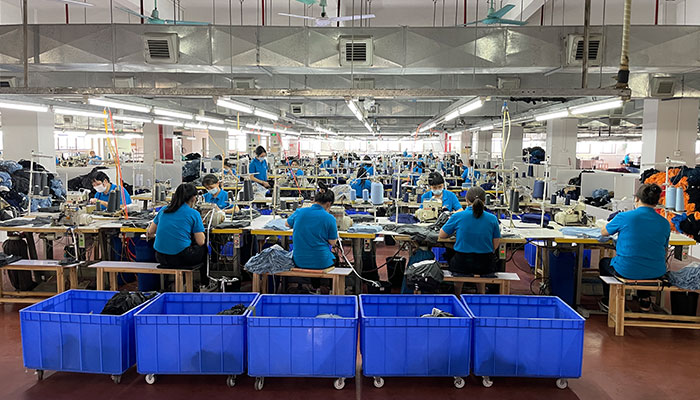
Answer first: To sell wholesale to retailers you need four things: a line sheet that lists every style with its specification, wholesale price, minimums and delivery window; a price structure that works backwards from the retail price; the retailer’s vendor setup paperwork; and clear first-order terms for payment, delivery and returns. Your factory can supply much of the product information the first two need, including measurements, fibre content, carton data and inspection reports.
Moving from selling direct to consumers to selling through retailers is a different business. A retailer buys on a schedule, asks for data in a set format, expects products to arrive in a fixed window, and expects the invoice to match the purchase order exactly. This guide covers what a small apparel brand needs to prepare. It is a practical checklist, not legal or financial advice, and it does not quote any retailer’s own terms: each retailer publishes or provides its own vendor requirements, and those always take priority over a general guide.
If you are still building the brand, our underwear brand launch guide covers the earlier steps. If you are planning production for a wholesale season, the clothing factory sourcing guide explains how to choose and brief a factory.
What a line sheet is and what goes on it
A line sheet is a one- or two-page-per-collection document that a buyer uses to decide what to order. It is shorter and more factual than a catalogue. Each style needs a row or a block with the same fields.
| Field | What to show | Where the data comes from |
|---|---|---|
| Style number and name | A unique code used on every document | Your tech pack |
| Image | Front photo on a plain background, plus a detail if needed | Your photography |
| Description | Fabric, fibre content, fit, key features | Tech pack and fabric specification |
| Colours | Colour names and codes you will actually stock | Approved lab dips or colour references |
| Sizes and size run | Size range and any pack ratio | Size chart and grading |
| Wholesale price | Per unit, in the currency and Incoterm you sell on | Your price structure (below) |
| Suggested retail price (MSRP) | The price you expect the retailer to charge | Your pricing |
| Order minimums | Per style, per colour, per order | Your policy, and your factory’s minimums |
| Delivery window | Ship dates or delivery months | Production and shipping schedule |
| Packaging and barcode | Unit pack, inner pack, carton quantity, barcode number | Packaging spec |
Keep the line sheet to what you can actually deliver. A buyer who orders a colour you cannot supply will not order again.
Practical tips
- One style code, everywhere. The same style and colour code should appear on the line sheet, purchase order, invoice, packing list and label.
- Show the size run and pack ratio. If you sell in packs (for example, a set ratio of sizes), say so on the sheet.
- State what is not included. Freight, duty, labelling to retailer specification and returns policy should be explicit.
- Date the sheet. Prices and availability change.
Building a wholesale price structure
Retail pricing and wholesale pricing are linked by margin. Most brands work backwards from the retail price they believe the customer will pay.
- Set the target retail price (MSRP) from your brand positioning and your market.
- Decide the retailer’s margin. A retailer needs room to cover its costs and profit. The share that retailers expect varies by channel and category, so ask buyers and check your own market, rather than relying on a general rule.
- Derive the wholesale price. Wholesale price = retail price × (1 − retailer’s margin share). For example, using illustrative numbers only, if the MSRP is 40.00 and the retailer needs 50% of it, the wholesale price is 20.00.
- Check your landed cost. Your landed cost per piece (factory price, freight, duty and fees) must sit below the wholesale price with room for your own overhead, marketing and returns. Use the landed cost method and the apparel cost breakdown to calculate it.
- Decide your minimums and any price tiers. If you offer lower prices at larger quantities, base them on how your own costs fall; see volume tiering for the logic.
The example numbers above are illustrative and are not a recommended margin or price. If the wholesale price does not cover your landed cost and overheads, change the product specification, quantity or retail price before you show the line to a buyer, not after you have taken orders.
Vendor setup: the forms and data a retailer will ask for
Larger retailers and marketplaces do not simply place an order; they register you as a vendor first. Requirements differ by retailer, so ask for the vendor guide at the start. Typical categories of information are:
- Business details: legal name, address, tax registration, contact, and bank details for payment.
- Insurance and compliance: some retailers require proof of liability insurance or a signed code of conduct.
- Product data: style, colour and size data, fibre content, country of origin, barcodes, images and dimensions in a template they provide.
- Logistics data: carton size and weight, units per carton, and ship-from address.
- Labelling and ticketing: retailer-specific hangtags, price tickets, barcode labels or carton marks.
- Electronic data interchange or portal access: larger retailers may require invoices and shipping notices in a specific electronic format, with chargebacks for errors.
- Compliance testing and certificates: a retailer may ask for test reports or certificates for the product; ask which are needed before production, not after.
Tell your factory the retailer’s requirements before cutting begins. Labels, barcodes, hangtags and carton marks are applied during production and packing, and fixing them afterwards costs time and money. Finetex can discuss care labels, size labels, brand labels, barcode stickers, polybags and other packaging requirements, and the final details should be confirmed before production and packing to match your specification and the destination market. See our private label page and private packaging page.
Labels you must get right regardless of retailer
For goods sold in the United States, each textile garment label has to carry fibre content by generic name and percentage, the identity of the manufacturer or marketer (name or an FTC registered identification number), and the country where the product was processed or manufactured. Care instructions are required under a separate rule. These are set out in the FTC’s textile rules and the Care Labeling Rule (see sources). Retailers will often add their own requirements on top. Other markets have different rules, so check the destination.
First-order terms to agree in writing
The first order sets the pattern for the relationship. Agree and document:
| Term | What to agree |
|---|---|
| Payment | Net terms, deposit, or payment on shipment; accepted payment method |
| Delivery | Ship-by date, delivery window, and what happens if goods are late |
| Incoterm | Who pays freight and duty (FOB, DAP or DDP) and who is importer of record |
| Quantities | Minimum per style and colour, and tolerance on shipped quantity |
| Quality | What standard applies (for example an inspection report) and what happens with defects |
| Returns and markdowns | Whether the retailer can return unsold goods or claim markdown allowances |
| Cancellation | When a purchase order can be cancelled and the cost if it is |
| Chargebacks | The list of retailer charges for late, short or incorrectly labelled shipments |
Small brands often accept a retailer’s standard terms without reading the chargeback schedule. Read it before you accept the first purchase order.
What a factory can supply for wholesale
Your factory is the main source of product data and production evidence. Ask for:
- Specification and measurements: the approved sample’s measurement chart and a measurement report on bulk. Finetex supplies a measurement report with ten garments measured at the start and end of the run against your size chart.
- Fibre content and fabric details: confirmed against fabric test reports, so the label and the line sheet match.
- Inspection report: the final audit result with defect classification, sample size and outcome. Finetex works to an AQL 2.5 final audit, with in-line checks at 30% and 70%, described on our quality control page.
- Photographs: photo documentation at each quality gate, and packing photographs that you can show a buyer.
- Packing data: carton count, carton configuration and a packing list that matches your purchase orders.
- Labelling and packaging: care, size and brand labels, barcode stickers, polybags and multipacks under your brand.
- Test reports: fabric and garment test reports (shrinkage, colour fastness, fibre composition, buyer-specific protocols) can be arranged on request; additional cost and lead time may apply.
- Lead times: a written schedule. For Finetex, a sample takes 5 to 7 working days, a full size set 10 to 12 working days, and bulk production 15 to 45 days from deposit and approved pre-production sample.
- Minimums: Finetex starts at 300 to 1,000 pieces, depending on product and customisation, so the number of styles and colours in your wholesale line must fit within them.
A factory cannot supply the retailer’s own commercial terms, your tax registration, your insurance, or your customs filings. It also cannot guarantee that a retailer will accept a style. Those stay with you.
Planning production for a wholesale season
Wholesale works on a calendar. A buyer typically orders before the selling season, so you need a plan from sample to delivery:
- Finalise the line and pricing before showing it.
- Take orders and set a cut-off date.
- Combine orders into a production plan by style and colour, within factory minimums.
- Confirm the schedule backwards from the delivery window, including sampling, bulk production and transit. Our shipping solution page lists transit times by region.
- Leave buffer for fabric delays, retailer labelling changes and inspection.
Avoid taking orders for styles or colours that depend on a fabric you have not confirmed with the factory.
Fact, advice and uncertainty
Fact (checked 12 November 2026): the US textile label content requirements in 16 CFR 303.16 (fibre content, manufacturer or RN, country of origin) and the existence of the separate Care Labeling Rule in 16 CFR Part 423. Finetex’s inspection, measurement report, photo documentation, sample times, lead time, minimums and label and packaging services are taken from our published pages.
Advice: the line sheet fields, the pricing method, the vendor setup checklist and the first-order terms are recommendations based on common practice, not rules.
Uncertainty: each retailer sets its own vendor requirements, margins and chargebacks, and they change. The price example is illustrative. Check duty and customs entry with a licensed customs broker and legal and tax questions with your own advisers.
Related reading
- Apparel Cost Breakdown: Fabric, CMT, Trims, Packing and Overhead
- Volume Tiering: How Price Breaks Work at 500, 3,000 and 10,000 Pieces
- Joggers and Sweatpants: Fabric, Fit and Trims
Frequently asked questions
What is a line sheet?
A line sheet is a concise document that lists each style in a collection with its image, description, colours, sizes, wholesale price, suggested retail price, order minimums and delivery window. Buyers use it to choose what to order.
How do I set a wholesale price?
Start from the retail price, subtract the retailer’s margin to get the wholesale price, and then check that your landed cost per piece leaves room for your overhead and profit. The margin retailers expect varies, so confirm it with buyers in your category.
What is vendor setup?
Vendor setup is the registration process many retailers require before they place an order. It collects business, tax, banking, product and logistics data, and may require insurance, labelling to the retailer’s format and electronic invoicing.
What can my factory give me for a wholesale buyer?
Measurement reports, fibre content confirmation, inspection reports, photographs, carton and packing data, labels and barcodes, test reports on request, and a written lead time. Finetex provides these through its quality gates and packing process.
What minimum order does Finetex need for a wholesale line?
Minimum order quantities start at 300 to 1,000 pieces, depending on the product and customisation, and may apply per colour for custom fabrics or colours. Share your styles and colours to confirm the figure for your project.
Sources
- eCFR: 16 CFR Part 303, Textile Fiber Products Identification Act rules
- eCFR: 16 CFR Part 423, Care Labeling Rule
- FTC: Registered Identification Number (RN) database
Plan your wholesale line with a factory
Send your styles, colours, target quantities and the retailer’s labelling and packing requirements. We will review the specification and reply with a quotation, estimated lead time and sampling details, and confirm the labels and packaging you need.
Request a quote or see our private label service and quality control process.
More factory-floor notes for brand owners
Selling Underwear in Germany: Textilkennzeichnung, LUCID and Packaging Law
German textile labelling, LUCID registration and packaging law for underwear brands after the PPWR and VerpackDG took effect…
Read more →
GSM to Ounce Converter and Fabric Weight Chart
Convert fabric weight between gsm and oz/yd² with the exact factor (1 oz/yd² = 33.906 g/m²), a T-shirt…
Read more →
First-Output Check: The In-Line Inspection That Saves Bulk
What to check on the first garments off each line: measurements, seams, labels and print against the approved…
Read more →
A Fit Session Protocol for Knit Tops: 12 Wearers, 5 Measurements
A recommended fit session protocol for knit tops: recruit 12 wearers, take five measurements, run a movement checklist,…
Read more →
Corporate Uniform Programs: Tendering, Sizing and Reorders
How to run a corporate uniform program with a factory: tender documents, sizing a workforce, producing many sizes…
Read more →
Muscle Fit and Athletic Fit T-Shirts: Pattern Changes That Matter
How muscle fit and athletic fit T-shirts differ from a classic block: chest-to-waist drop, sleeve cap and bicep,…
Read more →Request a sample & pricing information
Send us your tech pack, target price or a reference sample — we reply with a quotation, a realistic lead time and a fabric recommendation within one working day.
- Free sampling plan & cost breakdown
- MOQ from 300 pcs per style
- Reply within 1 working day