
Retail Vendor Compliance: Chargebacks, ASN and EDI for Apparel
How to read a retail apparel vendor manual: ASN and EDI, labels and packing, chargeback categories, and factory-side prevention, without invented fee schedules.
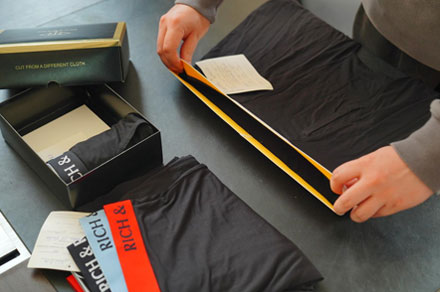
Answer first: Retail vendor compliance is the set of packing, labelling, data and delivery rules in a retailer’s vendor manual. An advance ship notice (ASN) sent through electronic data interchange (EDI), accurate carton labels and a packing method that matches the manual are how those rules are executed. Chargebacks are the retailer’s contractual remedy when the execution is wrong. This article explains how to read the manual, what ASN and EDI are for, which chargeback categories appear most often on apparel programmes, and what a factory can prevent. It does not publish dollar amounts or any retailer’s current fee schedule, because those figures belong in that retailer’s current manual and change without notice.
Most compliance failures on apparel shipments are packing and data failures, not fabric defects. A carton that does not match the ASN, a barcode that will not scan, a missing size sticker or a polybag without a required warning can create a deduction even when the garment itself passed inspection. Finetex’s private packaging page states this directly: a missing care label, a size sticker on the wrong face, a carton that does not match the advance ship notice, or a polybag without the suffocation warning is a packing failure. The quality gates on our quality control page still matter, because a retailer manual often treats quality and compliance as one onboarding file. They are not the same test.
How to read a vendor manual
A vendor manual is a buyer-specific rule book. It is not a customs regulation and not a quality standard such as AQL. It sits alongside the purchase order, the routing guide and, for many retailers, an EDI implementation guide. Read them as one pack. If two documents disagree, ask merchandising or vendor operations which document controls the shipment you are packing; do not guess.
When a new style is accepted, extract at least the following from the current manual and date the version you used:
- Item identification. How the retailer wants each size and colour identified (often a GTIN or a retailer item number), and how that number must appear on tickets, polybags and cartons.
- Packing method. Flat, hanging, boxed, inner packs, ratio packs or solid-size cartons; pieces per inner and per carton; maximum carton weight and dimensions; pallet rules if the goods are palletised.
- Carton marks and labels. What must be printed or applied on which face, including ship-to, carton count, purchase-order number and any logistic-unit code.
- ASN and EDI timing. Which electronic documents are required, when the ASN must be sent relative to physical departure or arrival, and what happens if the data arrive late or do not match the cartons.
- Ticketing and packaging artwork. Hangtag, joker ticket, price sticker, care and fibre labels, and any language or warning the channel requires.
- Delivery window and routing. When the goods may arrive, which carrier or consolidator to use, and whether a prepaid or collect routing is mandated.
- Chargeback and claim process. How deductions are notified, how they can be disputed, and how long you have to respond.
Do not rely on a manual from a previous season, or on a different retailer’s rules. A warehouse that is accurate for one customer can still be non-compliant for another. If you sell both wholesale to a retailer and direct-to-consumer, keep the packing specifications separate; a web-order polybag is not a retail floor-ready pack.
ASN and EDI: the data has to match the carton
EDI is the structured exchange of business documents between computers. GS1 maintains EDI standards used in retail supply chains, including the long-standing EANCOM language, so that purchase orders, invoices and shipment notices can be sent in a consistent format. Each retailer then publishes its own implementation guide: the same document type can require different segments, different timing and a different pack hierarchy (for example pick-and-pack versus standard pack). The implementation guide, not a generic blog post, is the rule for that account.
An advance ship notice (also called a ship notice or despatch advice, depending on the document language) is the electronic description of a shipment sent before, or in a tightly defined window around, the goods’ arrival. Its job is to tell the retailer’s system what is coming, in which cartons, against which purchase order, so the warehouse can receive it without opening every box to discover the contents. If the notice is late, incomplete, or different from the physical cartons, receiving is slower and the retailer will often deduct a chargeback.
Two GS1 identification keys are the usual backbone of that notice and of the labels that have to match it:
- A GTIN (Global Trade Item Number) uniquely identifies a trade item — in GS1’s definition, a product or service that is priced, ordered or invoiced at any point in the supply chain. In apparel, that almost always means one GTIN per style, colour and size, not one GTIN for the whole style.
- An SSCC (Serial Shipping Container Code) identifies a logistic unit: a case, pallet or parcel, meaning a combination of trade items packaged together for storage or transport. Each carton that the ASN describes should carry a unique SSCC that the notice also carries, so a scan at the door can be matched to a line in the file.
The prevention rule is simple to state and easy to miss in a hurried packing room: the GTIN on the ticket, the contents of the carton, the SSCC on the carton, and the ASN lines must describe the same goods. A correctly sewn garment in the wrong carton, or a correct carton with an ASN sent under yesterday’s purchase-order number, is still a compliance failure.
Factories do not need to become EDI vendors, but they do need to supply the data the EDI file is built from: carton counts, weights and dimensions, SSCC assignment, pack assortment, and a packing list that matches the cartons. Finetex’s private-packaging page states that carton marks, weights and dimensions are supplied for the customer’s ASN, and that a pre-shipment carton audit is run against the packing list. That is the factory’s side of the file. The brand or its EDI provider still has to transmit the notice in the format and time window the retailer requires.
Labels, tickets and packing: where apparel programmes usually break
Apparel has more identification points than many other consumer goods: a sewn-in label, a hangtag, a size sticker, a barcode on a polybag or header card, and a carton label. The vendor manual specifies which of these the retailer will scan and where it must sit. A barcode that is under a fold, on the bottom of a stack, or printed at a contrast the scanner will not read is a compliance defect even if the number itself is right.
Build a packing specification before bulk, not after the first carton is sealed:
- Unit pack. Polybag or box, fold method, warning copy, humidity or tissue requirements, and whether a hook or header is required. If the channel requires a suffocation warning, it is part of the pack, not an optional extra.
- Tickets. Which ticket, which data, which face, and whether the ticket is applied in the factory or at a consolidator. Changing a retailer’s price ticket after packing is how size and barcode errors are introduced.
- Inner and outer cartons. Solid size versus ratio pack, pieces per carton, carton quality, tape, and the exact mark layout. Carton size also affects freight, so a packing method that is cheap in the factory can be expensive in the container.
- Assortment control. Retailers that order pre-packs will charge for a carton packed in the wrong ratio. The packing list and the ASN must show the same assortment the carton actually contains.
Floor-ready and marketplace packing are not interchangeable. A department-store pack may require a specific hanger and ticket. A marketplace pack may require a channel-specific label (for example an FNSKU applied to a polybag). Finetex can prepare FNSKU labelling, polybagging with the required warning, carton records and shipment labels supplied by the customer, as already described on the private-packaging page. What we cannot do is invent the retailer’s current label placement from a previous order.
Chargeback types, described as categories, not as a price list
A chargeback, in this context, is a deduction the retailer takes against an invoice when a vendor-manual rule is missed. The dollar amount, the minimum deduction, and whether a single error is billed per carton, per shipment or per item are set by that retailer and must be read in the current manual. They are not reproduced here.
The categories that appear repeatedly on apparel programmes are these:
| Category | What usually went wrong | What to lock before shipment |
|---|---|---|
| ASN timing or completeness | Notice late, missing, or sent against the wrong purchase order | Who sends the ASN, in which window, and who confirms transmission |
| ASN-to-carton mismatch | Contents, counts, SSCC or weights do not match the file | Carton audit against the packing list and against the ASN data |
| Item identification | Wrong or duplicate GTIN, unscanable barcode, ticket on the wrong size | One GTIN per size and colour; ticket audit on the pack line |
| Packing and carton | Wrong carton size or weight, wrong marks, wrong inner pack, damaged carton | Packing spec signed off with the pre-production sample |
| Assortment | Ratio pack built incorrectly, mixed sizes in a solid-size order | Assortment check as part of the carton audit |
| Ticketing and packaging copy | Missing warning, wrong language, price or season code out of date | Artwork and ticket bill of materials in the tech pack |
| Routing and delivery window | Shipped on the wrong carrier, arrived outside the window, wrong ship-to | Routing guide read against the actual ex-factory date |
| Documentation | Invoice, packing list or packing-list totals do not agree | Document check before the truck leaves, not after arrival |
| Quality claims handled as compliance | Defects found at the retailer’s inspection, sometimes billed through the same deduction process | In-line and final inspection against the approved sample, as on our quality-control page |
Two cautions belong next to this table. First, a category is not a diagnosis. The same deduction description can hide a data error, a packing error or a late ship, and the dispute path is different in each case. Second, some of the largest costs are not the deduction itself but the unsaleable week: goods that sit in a claim cage during a launch. Prevention is cheaper than argument, even when the manual would have allowed a dispute.
Factory-side prevention: a checklist that can be audited
These steps are our practical method. They are not a substitute for the retailer’s manual.
- Freeze the manual version. Save the vendor manual, routing guide and EDI implementation guide that apply to the purchase order, with the date. If the retailer updates the rules mid-production, get the change in writing before you alter tickets or cartons.
- Put compliance fields into the tech pack. Identification numbers, ticket placements, polybag copy, carton marks, pack assortment and test or inspection requirements should be in the pack, not in a side email. Our tech pack minimum for underwear article covers the product side of that file; the 14-page factory checklist in this series extends it to packing and testing pages.
- Approve a packed sample. A folded, ticketed, bagged, carton-marked sample is the approval that matters for retail. An unbagged fit sample does not prove compliance.
- Allocate identifiers before packing. GTINs (or retailer item numbers) must exist for every size and colour that will be packed. SSCC ranges must be assigned so that two cartons never share a code.
- Build the ASN data from the audited cartons. Weights, dimensions, counts and SSCC values should come from the carton audit, not from a plan that was written before packing.
- Inspect packing as well as garments. Finetex’s published gates are incoming fabric inspection, in-line checks at 30% and 70% of the run, a final AQL 2.5 inspection before packing, and a shipment check against the approved sample and packing list. For a retail account, treat carton marks and tickets as part of that shipment check.
- Protect the calendar. An accurate carton that misses the ASN window or the delivery appointment can still be deducted. Book the ex-factory date against the routing guide, not only against the sewing line.
- Keep the evidence. Photographs of carton marks, a signed packing list, the ASN transmission record and the inspection report are what you will need if a deduction arrives. Without them, a dispute is a conversation about memories.
Wholesale onboarding, line sheets and vendor set-up are covered separately in our guide to selling wholesale to retailers. Compliance is what happens after that set-up, on every shipment.
What is fact, what is advice and what is uncertain
Fact (checked 13 November 2026): GTIN and SSCC definitions come from GS1’s official identification-key pages; GS1’s EDI page confirms that GS1 maintains EDI standards used to exchange these documents. Finetex packing and inspection practices cited here are as published on the private-packaging and quality-control pages.
Advice: the manual-reading list, the chargeback categories and the eight prevention steps are our practical method. They are not any retailer’s rules.
Uncertain: every retailer writes a different manual, and the amounts and time windows change. No fee, fine or “typical industry” dollar figure is stated in this article. Read the current manual for the account you are shipping to.
Related reading
- De Minimis Reform: What It Means for Small Apparel Importers
- Selling Wholesale to Retailers: Line Sheets and Vendor Setup
- Importing Men’s Underwear into the US: Duty, Labels and Customs Entry
- UFLPA and Cotton: Documents a Chinese Factory Must Supply
Frequently asked questions
What is an ASN in apparel retail?
It is an electronic advance ship notice that describes a shipment — usually by purchase order, carton and item — before or around the time the goods arrive. The cartons and labels must match the notice. Retailers often deduct a chargeback when the notice is late or does not match the physical shipment.
Do I need a GTIN for every size?
In practice, yes, when the retailer orders and receives by size. GS1 defines a GTIN as the identifier for a trade item that is priced, ordered or invoiced. A small, a medium and a large of the same colour are different trade items for that purpose.
Can the factory send the EDI file for me?
Some brands transmit EDI themselves or through a provider; some ask a supplier to supply only the carton data. The retailer’s implementation guide decides which documents are required and in which format. The factory’s unavoidable job is to make the physical pack and the data agree.
Why does this article not list chargeback amounts?
Because those amounts are set in each retailer’s current vendor manual and are not a public, stable schedule we can cite here. Inventing a “typical” fee would be misleading. Use the categories to prevent the error, and read the manual for the deduction.
When should packing be approved?
With the pre-production sample, as a packed, ticketed unit and a marked carton, not after bulk has started. Changes to tickets or carton marks mid-run are a common source of ASN mismatches.
Sources
- GS1: Electronic Data Interchange (EDI)
- GS1: Global Trade Item Number (GTIN)
- GS1: Serial Shipping Container Code (SSCC)
Build a retail-ready packing file before the first carton is sealed
Send us the vendor manual requirements you can share, the style and the pack method. We will confirm how we will ticket, pack, mark cartons and supply ASN data for that order.
Request a quote or read about our private packaging options.
More factory-floor notes for brand owners

Selling Underwear in Germany: Textilkennzeichnung, LUCID and Packaging Law
German textile labelling, LUCID registration and packaging law for underwear brands after the PPWR and VerpackDG took effect…
Read more →
GSM to Ounce Converter and Fabric Weight Chart
Convert fabric weight between gsm and oz/yd² with the exact factor (1 oz/yd² = 33.906 g/m²), a T-shirt…
Read more →
First-Output Check: The In-Line Inspection That Saves Bulk
What to check on the first garments off each line: measurements, seams, labels and print against the approved…
Read more →
A Fit Session Protocol for Knit Tops: 12 Wearers, 5 Measurements
A recommended fit session protocol for knit tops: recruit 12 wearers, take five measurements, run a movement checklist,…
Read more →
Corporate Uniform Programs: Tendering, Sizing and Reorders
How to run a corporate uniform program with a factory: tender documents, sizing a workforce, producing many sizes…
Read more →
Muscle Fit and Athletic Fit T-Shirts: Pattern Changes That Matter
How muscle fit and athletic fit T-shirts differ from a classic block: chest-to-waist drop, sleeve cap and bicep,…
Read more →Request a sample & pricing information
Send us your tech pack, target price or a reference sample — we reply with a quotation, a realistic lead time and a fabric recommendation within one working day.
- Free sampling plan & cost breakdown
- MOQ from 300 pcs per style
- Reply within 1 working day