
Line Balancing and SMV: Why Your Order Takes 35 Days
How standard minute value, line balancing, changeover losses and scheduling decide garment lead time, and why the same 5,000 pieces can take 20 or 45 days.
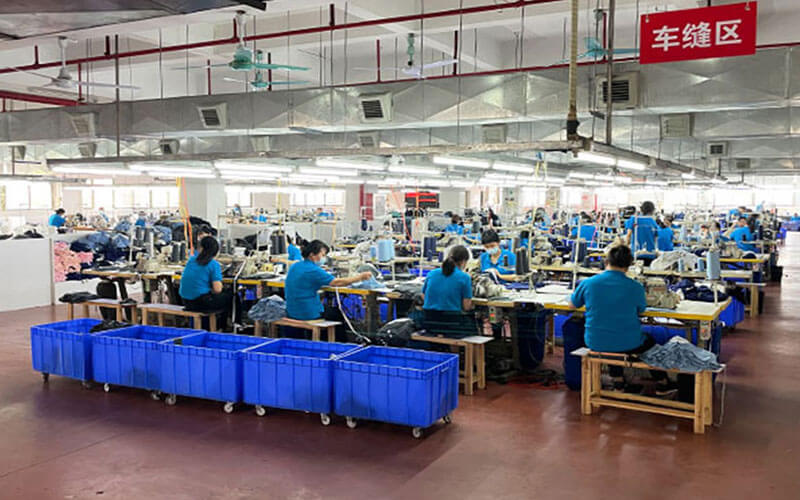
Answer first: The sewing time for a garment is measured in standard minutes. A standard minute value (SMV) is the time a trained operator needs to complete an operation at a normal pace, with allowances; add the operations together and you have the garment’s SMV. From there, a line’s daily output is roughly the operators on the line, times the minutes they work, times the line’s efficiency, divided by the garment SMV. Line balancing is the work of dividing those operations between operators so no single station becomes the bottleneck. But sewing is only part of the calendar. The same 5,000 pieces can take 20 days or 45 days because of what happens around the line: whether fabric and trims are ready, how many lines the order is given, how often the line changes style, how long it takes the operators to reach full speed, and when inspection and shipping are booked. When a factory quotes 35 days, most of that time is usually not stitching.
This article explains the arithmetic, with variables and clearly labelled illustrations only. It does not publish Finetex SMVs or efficiency figures. Finetex’s published facts are twelve production lines, 500+ trained operators, a separate sampling department, a rolling three-month plan with roughly 20% of line time kept for new programmes and reorders, and lines set up per programme rather than per style family, as described on the capabilities page. Bulk production runs 15–45 days from deposit and approved pre-production sample. For the wider picture, read our Talk answer on what drives production lead time.
SMV: measuring the work in a garment
Every garment is a sequence of operations: join shoulders, attach neck rib, set sleeves, close side seams, hem body, hem sleeves, attach labels, trim threads, and so on. Each operation is timed or taken from a standard time database, with allowances for fatigue and personal needs, and expressed in minutes. The sum is the garment SMV.
Three things raise SMV on knit basics:
- More operations. A plain crew T-shirt has fewer operations than a henley with a placket or a polo with a collar and buttons.
- Harder operations. Taped necks, contrast binding, coverstitch details and matching stripes take longer per piece.
- Specialised machines. An operation that needs a specific machine can only be done at the station that has it, which affects balancing.
SMV is a planning number, not a promise. It assumes trained operators working the method that was timed. A new style, a new fabric that handles differently, or a method change will push actual minutes above standard until the line learns.
Line balancing: the slowest station sets the pace
A sewing line is a chain. Garments move from station to station, and the line can only produce as fast as its slowest station. Line balancing assigns operations to operators so each station’s workload is as even as possible.
The arithmetic, with variables
- N = operators on the line.
- M = working minutes per operator per day.
- E = line efficiency (actual output as a share of standard).
- SMV = standard minutes per garment.
- Daily output ≈ (N × M × E) ÷ SMV
Balancing affects E. If one station carries more minutes than the others, the rest of the line waits, and the effective efficiency falls. The fix may be splitting an operation, adding a second operator to the bottleneck, or moving a small task to an under-loaded station.
An illustration only
The table below is a made-up example to show how balance changes output. The minutes are not Finetex data and not a standard for any garment.
| Station (illustrative) | Minutes per piece, unbalanced | Minutes per piece, balanced |
|---|---|---|
| A: shoulders and neck rib | 0.9 | 0.8 |
| B: sleeves set | 1.4 | 0.9 |
| C: side seams | 0.6 | 0.8 |
| D: hems and labels | 0.7 | 0.9 |
| Bottleneck | 1.4 (station B) | 0.9 |
Total work is the same in both columns (3.6 minutes). In the unbalanced line, every piece waits for station B at 1.4 minutes; in the balanced line, the slowest station takes 0.9 minutes. Same garment, same operators, different output. That is why two factories with similar headcounts can quote different times.
Changeover losses: the cost of a new style
When a line switches from one style to another, output drops. Machines may need different attachments or settings, operators learn new operations, and the first pieces are checked more carefully. The line climbs back to its normal pace over several days. This is often called the learning curve, and it applies to every new style and, to a lesser extent, to each colour change that affects handling.
The consequence for buyers:
- Small orders spend a larger share of their time on the learning curve. A short run may finish before the line ever reaches full speed.
- Many styles in one order means many changeovers. Five styles of 1,000 pieces is not the same workload as one style of 5,000.
- Reorders on an approved block are faster. The method, patterns and approvals already exist. Finetex’s boxer briefs page publishes repeat orders in 15–20 days for that reason.
Scheduling: where the rest of the 35 days goes
A lead time quotation is a schedule, and sewing is one segment. The Talk answer on lead time lists the main drivers: sample and pre-production approvals, fabric knitting, dyeing and finishing, trims and packaging, bulk fabric testing, sewing capacity and season, and inspection and shipping. A simplified view:
- Materials. Bulk fabric must be knitted, dyed, finished and tested before cutting. Custom elastics, labels and printed packaging have their own production times. One late trim holds the whole order.
- Approvals. Bulk starts after a signed pre-production sample. Late comments move the start date.
- Cutting. Fabric is relaxed where necessary, spread and cut, then bundled for the line.
- Sewing. Line days = order quantity ÷ daily output, plus changeover and learning time.
- Finishing and packing. Trimming, pressing where needed, folding, labelling and packing to the approved specification.
- Inspection. In-line checks at 30% and 70% of the run and a final AQL 2.5 inspection, as set out on the quality control page. Rework adds days.
- Shipping booking. The container or air booking has to align with completion.
How a factory decides which line runs your order
Line allocation is a planning decision made against everything else in the plan, not a fixed property of your order. A few published points show how this works at Finetex, and what to ask any factory:
- Lines are configured by product. The capabilities page describes twelve sewing lines configured for knit underwear, jersey tops and fleece, with dedicated waistband and elastic stations rather than one general-purpose setup. An underwear order and a hoodie order do not compete for exactly the same stations.
- Lines are set up per programme. The same page says lines are set up per programme rather than per style family, so different customers’ products can run in the same week without mixing patterns or fabric.
- Sampling does not use bulk lines. A separate sampling room with its own operators and machines means development does not wait for a bulk line to become free.
- Some capacity is kept free. Finetex holds a rolling three-month plan and keeps roughly 20% of line time for new programmes and reorders, which is what allows a reorder to move forward or a failed fabric lot to be re-knitted without delaying shipment.
A monthly capacity figure, such as Finetex’s published 600,000 pieces across twelve lines, describes the whole factory across its product mix. It is not the output any single style will achieve, because each style has its own SMV and changeover. When you compare factories, ask how many lines your order will run on, from which date, and what else shares those lines that month.
Why the same 5,000 pieces can take 20 or 45 days
With the arithmetic above, the range is easy to explain without any assumed data:
| Factor | Faster case | Slower case |
|---|---|---|
| Materials | Stock fabric and stock trims ready at approval | Custom knit and dye, custom elastic, printed boxes still in production |
| Approvals | PP sample signed on time | Comments arrive late or in pieces |
| Lines allocated | Order split across more than one line | One line, shared with other programmes |
| Styles and colours | One style, few colours | Several styles, each with its own changeover |
| Block | Reorder on an approved block | New style, new method, full learning curve |
| Inspection | First final inspection passes | Re-inspection after rework |
| Season | Off-peak capacity | Peak season, or near holiday shutdowns |
Our article on the Chinese New Year production calendar covers the largest seasonal disruption, and our guide to weekly WIP reports shows how to spot slippage while there is still time to act.
What a buyer can change
- Use stock fabric and colours for fast-replenishment styles.
- Send packaging and label artwork with the order so trims are made in parallel.
- Consolidate comments and approve the pre-production sample on time.
- Reduce styles per order, or stagger them so the line is not constantly changing over.
- Ask for the lead time to be broken into stages, so you can see which parts depend on you.
What is fact, what is advice and what is uncertain
Fact: Finetex publishes twelve production lines, 500+ trained operators, a separate sampling department, a rolling three-month plan with roughly 20% of line time kept for new programmes and reorders, lines set up per programme, bulk in 15–45 days from deposit and approved pre-production sample, and repeat orders in 15–20 days on an approved block.
Advice: read a lead time as a schedule, ask for its stages, reduce changeovers and approve on time.
Uncertain: the SMV and efficiency of your specific garment on a specific line. Those depend on the style, fabric and method, and the illustrative minutes in this article are not data.
Related reading
- Chinese New Year Production Calendar: 2027 Cut-Off Dates
- Weekly WIP Reports: Five Numbers That Predict a Late Shipment
- First-Output Check: The In-Line Inspection That Saves Bulk
- Factory Audit Types: BSCI, Sedex, WRAP and What Each Proves
Frequently asked questions
What is SMV in garment production?
Standard minute value: the time a trained operator needs to complete an operation at normal pace, including allowances. The garment SMV is the sum of its operations and is used to plan line output.
How is daily line output calculated?
Roughly operators × working minutes × line efficiency ÷ garment SMV. Line balancing improves efficiency by keeping any single station from becoming the bottleneck.
Why does my order take 35 days if sewing only takes a few days?
Because the lead time includes materials, approvals, cutting, learning time on a new style, finishing, inspection and shipping booking. Finetex’s published bulk lead time is 15–45 days from deposit and approved pre-production sample.
Are reorders faster?
Usually. Patterns, methods and approvals already exist. Finetex’s boxer briefs page publishes repeat orders in 15–20 days on an approved block.
Can a factory share its SMV for my garment?
Ask for the operation breakdown during costing. Finetex’s quotations show labour operations as a separate component, alongside fabric, trims and packing.
Sources
- Finetex: Manufacturing capabilities
- Finetex Talk: What actually drives production lead time for basics?
- Finetex: About Finetex Global
- Finetex: Quality control
Ask for your lead time in stages
Send us the style, quantity, colours and target ship date. We will quote a lead time broken into materials, approvals, sewing and inspection, so you can see which dates depend on each side.
Request a quote or read about our manufacturing capabilities and quality control.
More factory-floor notes for brand owners
Selling Underwear in Germany: Textilkennzeichnung, LUCID and Packaging Law
German textile labelling, LUCID registration and packaging law for underwear brands after the PPWR and VerpackDG took effect…
Read more →
GSM to Ounce Converter and Fabric Weight Chart
Convert fabric weight between gsm and oz/yd² with the exact factor (1 oz/yd² = 33.906 g/m²), a T-shirt…
Read more →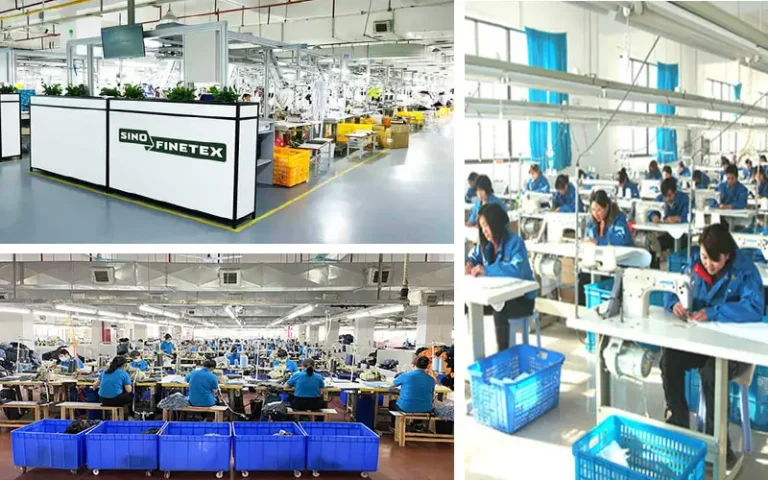
First-Output Check: The In-Line Inspection That Saves Bulk
What to check on the first garments off each line: measurements, seams, labels and print against the approved…
Read more →
A Fit Session Protocol for Knit Tops: 12 Wearers, 5 Measurements
A recommended fit session protocol for knit tops: recruit 12 wearers, take five measurements, run a movement checklist,…
Read more →
Corporate Uniform Programs: Tendering, Sizing and Reorders
How to run a corporate uniform program with a factory: tender documents, sizing a workforce, producing many sizes…
Read more →
Muscle Fit and Athletic Fit T-Shirts: Pattern Changes That Matter
How muscle fit and athletic fit T-shirts differ from a classic block: chest-to-waist drop, sleeve cap and bicep,…
Read more →Request a sample & pricing information
Send us your tech pack, target price or a reference sample — we reply with a quotation, a realistic lead time and a fabric recommendation within one working day.
- Free sampling plan & cost breakdown
- MOQ from 300 pcs per style
- Reply within 1 working day