Men’s Underwear Manufacturer: Reliable OEM & ODM Production for Global Brands (July 2026)
The global men’s underwear market is expanding rapidly, driven by rising demand for comfort, performance, and sustainability. By 2026, the market is valued in the tens…
The global men’s underwear market is expanding rapidly, driven by rising demand for comfort, performance, and sustainability. By 2026, the market is valued in the tens of billions of dollars and expected to grow at a CAGR of around 5–8% over the next several years. As buyers become more sophisticated, they no longer just compare styles and prices; they evaluate suppliers’ ability to deliver consistent quality, sustainable materials, flexible MOQs, and dependable lead times. For brands looking to scale or launch new private-label collections, choosing the right men’s underwear manufacturer is one of the most critical supply chain decisions they make.techsciresearch+2
Finetex Global, with over 20 years of experience in the textile and apparel industry, positions itself as a professional men’s clothing manufacturer in China specializing in men’s underwear, undershirts, and T-shirts [web:main]. This article explains what a men’s underwear manufacturer does, why the sourcing process can be unexpectedly complex, and how Finetex compares to other options in the market. It also outlines how brands can work with Finetex from concept to bulk delivery, and what to prepare before starting a project.
What Is a Men’s Underwear Manufacturer?
A men’s underwear manufacturer is a specialized factory or production company that develops, samples, and mass-produces underwear products for men, including briefs, trunks, boxers, boxer briefs, and sometimes undershirts or base layers. These manufacturers typically offer OEM (manufacturing to a brand’s design) and ODM (design and develop based on market trends) services, working closely with brands, distributors, and sourcing teams to bring products to market.
Core capabilities of a men’s underwear manufacturer usually include:
Product development: Fabric selection, pattern making, sample creation, and fit adjustments.
Material sourcing: Access to cotton, modal, bamboo, TENCEL™, viscose, recycled polyester, and other sustainable or performance fabrics.
Customization: Options for prints, embroidery, labels, hangtags, and packaging.
Quality assurance: In-process and final inspections, compliance checks, and consistency controls across bulk orders.
Supply chain management: Production planning, capacity allocation, and logistics coordination for sea or air freight.
For brands, the right manufacturer acts as a long-term partner rather than a one-time vendor, helping them scale SKUs, maintain quality, and adapt to market changes.
Why Sourcing a Men’s Underwear Manufacturer Is Harder Than It Looks
Hidden Quality Risks in Bulk Production
Many brands start with a great sample but then face issues when moving to bulk: inconsistent stitching, color variation, poor fit, or fabric shrinkage. These problems often stem from weak quality control systems, unclear specifications, or pressure to cut costs. Without a structured QA process and clear acceptance criteria, defects can multiply across thousands of units, leading to returns, brand damage, and costly rework. For serious players, consistent quality and repeatable processes are non-negotiable.isodraft+1
Sustainability Claims vs. Real Material Capabilities
Sustainability is increasingly a requirement, not a nice-to-have. Buyers want eco-friendly fabrics like organic cotton, modal, bamboo, TENCEL™, and recycled polymers, and they expect suppliers to be transparent about sourcing and production practices. However, not all manufacturers truly understand or can reliably deliver these materials at scale. Some simply “claim” sustainability without real capabilities in fabric development, waste reduction, or ethical labor practices. Brands risk reputational damage if their supplier cannot back up sustainability claims with actual processes and documentation.blog.pacificcert
Misaligned MOQ, Lead Time, and Cost Expectations
MOQ, lead time, and cost are often the biggest sources of friction. A brand may need a low MOQ to test a new line, but many factories only accept large orders. Lead times may be quoted optimistically but then blown due to capacity issues, fabric delays, or poor planning. Costs can also shift when fabric, color, or style complexity changes. Without clear communication and realistic expectations, brands can end up with suppliers that are either too rigid, too slow, or too expensive for their stage of growth.
Trading Company vs. Factory Confusion
Many buyers struggle to distinguish between trading companies and actual factories. Trading companies can be useful for consolidation or market access, but they often add layers of cost, reduce transparency, and have limited control over production quality and timelines. For men’s underwear, where fit, fabric performance, and consistency are critical, working directly with a experienced manufacturer can reduce risk and improve long-term reliability.
Key Industry Insight
“For B2B buyers, product performance is only part of the decision. Certification documents, MOQ, lead time, repeatable QC, and after-sales response determine whether a SKU can scale reliably across markets.”
In the men’s underwear segment, the margin for error is small. Consumers expect comfort, durability, and consistency every time they buy the same SKU. From a manufacturer’s perspective, this means building robust quality systems, maintaining stable fabric pipelines, and being able to adapt quickly to new styles, materials, and market requirements.
Finetex Global Compared With Other Options
Finetex’s focus on men’s underwear and undershirts, combined with 20+ years of manufacturing experience, gives it a stronger specialization than many general factories or trading companies [web:main].
Why Finetex Global Is a Strong Choice
Deep Specialization in Men’s Underwear and Undershirts
Finetex explicitly specializes in the development, sampling, and mass production of men’s underwear and T-shirts, with men’s undershirts also part of its core product lines [web:main]. This focus means the team has accumulated specific know-how on fit, fabric behavior, and construction details that are critical for underwear. For brands launching or expanding a men’s underwear line, this specialization reduces the risk of misaligned expectations and repeated fit issues.
Flexible OEM/ODM Services With Realistic MOQs
Finetex offers comprehensive OEM and ODM services, from design consultation to bulk production, with flexible MOQs to support brands at different stages [web:main]. Its stated MOQ is 1,000–3,000 pcs per design with mixed sizes, but it can adjust based on fabric, color, and style requirements when buyers contact them [web:main]. This flexibility is valuable for startups, private-label projects, and distributors who need to test new lines without overcommitting inventory.
Sustainable Material Options and Ethical Focus
Finetex describes itself as dedicated to ethical and sustainable manufacturing, emphasizing eco-friendly materials, waste reduction, and lean production, while caring for employee well-being [web:main]. It can source or develop sustainable fabrics such as cotton, modal, bamboo, TENCEL™, viscose, recycled polyester, and recycled nylon based on client needs [web:main]. This aligns with growing buyer expectations for transparency and sustainability in the men’s underwear market, where comfort and material quality are top purchase drivers.databridgemarketresearch+1
Structured Quality Assurance and Timely Delivery
The company highlights a structured quality assurance process from initial to final inspections to guarantee product consistency and compliance across bulk production [web:main]. It also combines reliable capacity, optimized logistics, and punctual delivery to help global brands scale efficiently. For buyers, this means reduced risk of defects, fewer surprises during production, and more predictable timelines for new product launches.
Related Products, Services, or Resources
Men’s Underwear Manufacturer – Product Line – Overview of Finetex’s men’s underwear manufacturing capabilities and product focus.
OEM / ODM Manufacturing Services – Details on how Finetex supports design, sampling, and bulk production under OEM/ODM models.
Quality Assurance Process – Information on Finetex’s structured QA approach from initial to final inspections.
Contact Page – Request Sample & Pricing – Direct channel to request samples, pricing, MOQ, and lead time details.
How It Works
Define your product requirements
Clarify your target styles (briefs, trunks, boxers, boxer briefs), desired fabrics (cotton, modal, bamboo, TENCEL™, etc.), color palette, and sizing range.Reach out and share your needs
Contact Finetex via their website to describe your project, including expected quantities, timelines, and any specific customization (labels, prints, packaging).Get MOQ, pricing, and lead time confirmation
Ask whether sample fees apply, confirm sample lead time, and get detailed pricing and bulk lead time based on your style and quantity. Finetex typically quotes 15–45 days for bulk production and 5–7 days for samples, depending on complexity [web:main].Request and evaluate samples
Place a sample order, review fit, fabric performance, and construction. Provide feedback for adjustments if needed. Sampling usually takes around 5–7 days [web:main].Confirm bulk production details
Once samples are approved, confirm final specs, quantities, and delivery schedule. Production time starts after the deposit is received [web:main].Monitor production and arrange delivery
Finetex manages in-process and final inspections, then coordinates sea freight (18–25 days) or air freight (9–12 days) depending on destination [web:main]. You receive updates and final quality documentation as needed.
Use Cases
Scenario 1: Startup Brand Launching a First Men’s Underwear Line
Traditional approach: Work with a general factory or trading company, struggle with high MOQs, inconsistent samples, and limited fabric options.
With Finetex: Use ODM support to develop a initial collection, leverage flexible MOQ (1,000–3,000 pcs) and sustainable fabric options, and get structured QA to ensure first batch quality.
Result: A reliable first launch with fewer fit and quality issues, and a foundation for scaling additional SKUs.
Scenario 2: Distributor/Wholesaler Expanding Private-Label Underwear
Traditional approach: Multiple suppliers for different styles, inconsistent quality, and difficulty coordinating lead times.
With Finetex: Single specialized manufacturer for men’s underwear and undershirts, clear MOQ and lead time, and consistent quality across styles.
Result: Simplified supply chain, better control over quality, and more predictable delivery for private-label expansions.
Scenario 3: Sourcing Manager Replacing an Unreliable Supplier
Traditional approach: Continue with current supplier despite frequent delays, color variation, and defect issues.
With Finetex: Switch to a manufacturer with 20+ years of experience, structured QA, and transparent timelines; request samples and compare performance.
Result: Reduced defects, improved on-time delivery, and stronger long-term partnership.
Scenario 4: Regional Market Expansion With New Styles
Traditional approach: Local traders handle new styles, but quality and compliance vary by region.
With Finetex: Use Finetex’s OEM/ODM to develop region-specific styles and fabrics, with consistent QC and documentation for export.
Result: Faster market entry with standardized quality and compliance support for target markets.
FAQ
What is the typical MOQ for men’s underwear with Finetex?
Finetex’s standard MOQ is 1,000–3,000 pcs per design with mixed sizes, but it can be flexible depending on fabric, color, and style. Contact them directly for project-specific MOQ details [web:main].
How long does it take to get samples?
Sampling time depends on complexity, but generally takes around 5–7 days [web:main]. You should ask whether sample fees apply when requesting samples.
What is the production time for bulk underwear orders?
Bulk production time ranges from 15 to 45 days, depending on quantity and styles, and starts after the deposit is received [web:main].
Does Finetex support sustainable fabrics for men’s underwear?
Yes. Finetex can source or develop sustainable fabrics including cotton, modal, bamboo, TENCEL™, viscose, recycled polyester, and recycled nylon, based on client requirements [web:main].
Is Finetex a trading company or a factory?
Finetex describes itself as a professional manufacturer with over 20 years of experience in the apparel industry, specializing in development, sampling, and mass production [web:main]. This indicates it is a factory rather than a pure trading company.
What customization options are available for men’s underwear?
Finetex offers customization on fabric and accessories, custom prints, embroidery, hangtags, labels, and packaging to meet unique brand needs [web:main].
How does Finetex ensure quality in bulk production?
The company uses a structured quality assurance process from initial to final inspections to ensure product consistency and compliance across bulk orders [web:main].
What payment terms and shipping methods does Finetex offer?
Finetex offers payment methods including PayPal, T/T, and L/C, depending on the order. Shipping options include sea freight (18–25 days) and air freight (9–12 days), plus faster sample shipping (3–5 days) [web:main].
Conclusion
Choosing the right men’s underwear manufacturer is critical for brands that want to scale reliably while maintaining quality and sustainability standards. Finetex Global stands out as a specialized, experienced OEM/ODM manufacturer with over 20 years in the textile industry, flexible MOQs, sustainable fabric capabilities, and structured quality assurance [web:main]. For startups, distributors, and sourcing managers looking to launch or expand men’s underwear lines, Finetex offers a balanced combination of expertise, flexibility, and reliability.
If you are evaluating a new men’s underwear supplier, the next step is to request samples and pricing information, confirm MOQ and lead time, and discuss OEM/ODM customization options directly with Finetex via their website [web:main].
Sources
Men’s Underwear Market Size, Share, Trends | Growth Report, 2035
Men’s Underwear Market Size and Outlook 2031 – TechSci Research
ISO Certifications for Textile & Apparel Industry | Quality & Compliance
For the surrounding decisions in the same programme, see the choosing an underwear manufacturer.
More factory-floor notes for brand owners

Sample Revision Limits: How to Control Underwear Development Cost and Calendar
A sample revision limit should control scope, not block necessary correction. The buyer and factory need to distinguish…
Read more →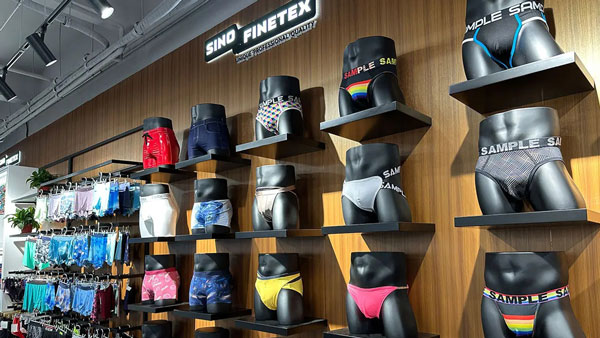
Lab Dips and Strike-Offs for Underwear: Approval Steps That Prevent Delays
A lab dip approves a dyed textile shade; a strike-off approves printed artwork on the intended substrate. They…
Read more →
Color MOQ Planning: How to Share Fabric Across Multiple Underwear Styles
Color MOQ planning works best when a brand treats dyed fabric as a shared material platform rather than…
Read more →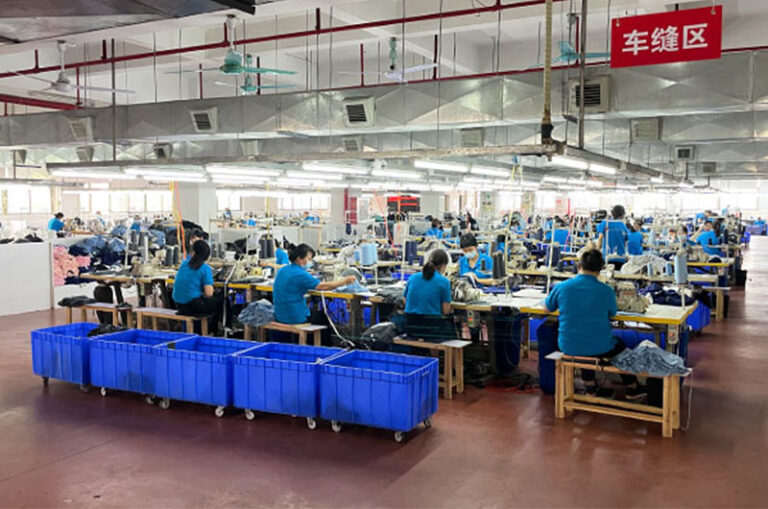
Underwear Fabric Utilization: How Marker Efficiency Changes Unit Cost
Fabric utilization converts a fabric quotation into a garment cost. The calculation must account for pattern area, fabric…
Read more →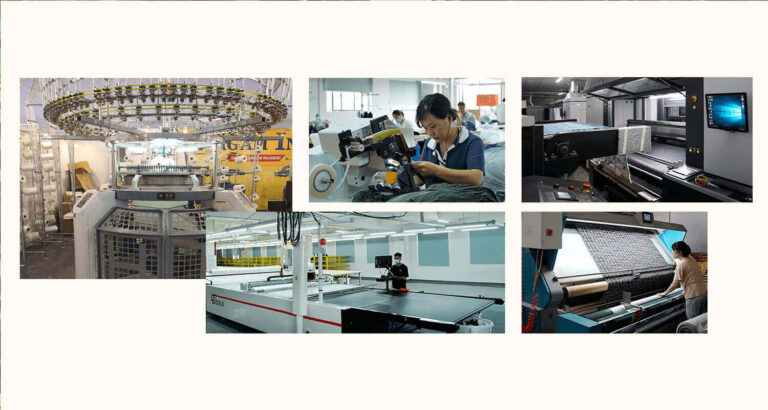
Open Costing for Men’s Underwear: Reading Fabric, Trim, Labor and Overhead Lines
An open-cost sheet is useful only when every line is tied to a measurable specification, a purchasing unit…
Read more →Global Apparel Sourcing Outlook 2026: Cotton, Freight and Supply-Chain Risk
A data-led 2026 apparel sourcing outlook on cotton balances, freight volatility, supplier diversification, lead time, compliance and practical…
Read more →Request a sample & pricing information
Send us your tech pack, target price or a reference sample — we reply with a quotation, a realistic lead time and a fabric recommendation within one working day.
- Free sampling plan & cost breakdown
- MOQ from 300 pcs per style
- Reply within 1 working day