
ODM Men’s Clothing Manufacturer: Buying a Design You Can Legally Own
ODM gives you a ready-made men's knitwear design with your branding. Here is how to check exclusivity, design rights, MOQ per style and the path from…
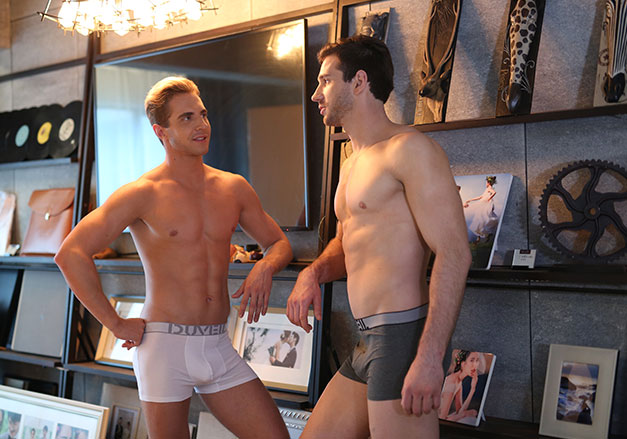
An ODM programme can put a sellable men’s basic in front of customers within a season, which is exactly why it is worth examining closely. The design already exists, the pattern is already graded and the fabric is already running — but so is the same design for whichever other brand the ODM men’s clothing manufacturer sold it to last quarter. The commercial question is not whether the design is attractive. It is what you are entitled to do with it.
What are you actually buying in an ODM programme?
You buy production rights, not the design.
An ODM manufacturer owns the design, the pattern and the graded nest, and sells you the right to have that style produced with your branding; you are buying speed and a proven fit rather than intellectual property.
That is a legitimate trade. A factory that has sold a boxer brief design several hundred thousand times knows where the seams stretch and how the waistband behaves after twenty washes, and that knowledge is not something a first-time brand can buy from a pattern maker in a fortnight. The risk sits in the word “rights”. Without an exclusivity clause, the identical garment can appear under a competing label, in the same market, at a price you cannot match, because the other brand did not pay for development either. Understanding what is included — and what is licensed rather than transferred — is the first piece of due diligence in any ODM conversation.
There is also a cost dimension that buyers discover later. Because the factory amortises its development across every brand that buys the style, an ODM unit price carries a small development recovery that never falls away, and a competitor buying the same reference pays the same recovery. That is not a defect in the model; it is the reason ODM is cheap to start and difficult to differentiate with. The brands that get the most from it treat the first season as a market test and budget for the second, proprietary build from the outset.
| Element | Typically included in ODM | Typically not included |
|---|---|---|
| Style and fit block | Factory-owned, already graded | Any change to the block |
| Fabric | From the factory’s running library | New development or exclusive dyeing |
| Branding | Labels, tags and packing as agreed | Ownership of the design itself |
| Market rights | Defined by the exclusivity clause | Automatic global exclusivity |
| Development cost | Avoided | No amortisation into unit price |
Which clauses decide whether the design is exclusively yours?
Exclusivity, territory, duration and change rights.
Read the agreement for exclusivity, the territory it covers, how long it lasts and who may alter the design, because a design can be exclusive in one market and open everywhere else.
Exclusivity that is not defined is not exclusivity. Ask which other buyers currently purchase the style, in which markets, and whether the fabric or colourway you are branding is also running for them. Territory matters more than buyers usually assume: a design exclusive to you in Germany can legitimately be sold to a competitor in the United States, and if you sell cross-border on marketplaces, that protection is thinner than it appears. Duration determines whether you are protected for one order or for the life of the programme. Change rights decide something subtler — whether the factory may adapt the design after your order, potentially resetting the fit you have just approved in your listings.
How deep should an ODM library be in men’s basics?
Deep in the category you sell, not broad across everything.
A useful library in this segment covers underwear, undershirts and T-shirts with enough styles, fabrics and weight variants that a range can be assembled from stock references rather than developed from scratch.
Depth is visible in two places. The first is the reference list itself: styles with item numbers, materials and applications, rather than a gallery of photographs. Established men’s knitwear programmes publish references such as boxer briefs in modal air, bamboo, Pima cotton and lyocell, briefs in micro modal, combed cotton, viscose and seamless nylon, undershirts in cotton, viscose, bamboo, TENCEL™ and moisture-wicking constructions, and T-shirt styles built for print, colour and fit development. The second is fabric depth. A library that offers eight running blends with exact compositions is worth more to a brand than one with thirty styles built on two fabrics, because it lets you differentiate the range without opening a development project.
How does the minimum change when the factory owns the pattern?
Fabric and trim still carry minimums.
With no development to amortise, the threshold is usually set by the fabric lot, the trim supplier and the colour count rather than by the style itself.
This is where ODM’s advantage is real but often overstated. A buyer may hear that a ready pattern removes the need for a minimum and then discover that a specific jacquard waistband still has its own threshold, or that a colour they want requires a dye lot larger than they planned. The productive question is not “what is your minimum” but “which components of this style set the minimum, and what happens if I choose a different waistband or stay within the running colour range”. The answer usually reveals three or four ways to reduce the order without weakening the product.
How much branding can you apply to an ODM design?
Much more than most buyers expect.
Branding depth ranges from labels and hangtags through a custom waistband and heat-transfer logo to retail-ready packaging, with each layer adding visibility at a known cost rather than a design project.
For men’s underwear specifically, the waistband is the most visible element of the garment and the one most associated with a brand’s identity on shelf and in listing photography. Woven waistbands, heat-transfer labels, printed logos, woven tags and hangtags are all standard branding instruments, and Finetex Global lists style and fit customisation, full size grading, ergonomic patterns, woven waistbands, heat-transfer labels, printed logos, woven tags, hangtags, embroidery, screen printing and DTG within its customisation scope. The practical sequence is to fix the functional specification first, then spend the branding budget where customers actually look — waistband, neck label, packaging — rather than spreading it thinly across elements no one inspects.
How do you test an ODM style with a first order?
Test it as a product, in one colourway, at reorder speed.
Because the pattern and fabric are running, a test order can be small: one or two styles, one colourway, and a scheduled reorder decision rather than an open commitment.
Treat the first order as an information purchase. Wear-test the sample through at least ten wash cycles before you list the product, verify that the waistband recovers, check colourfastness against the reference and confirm that the size chart matches the graded measurements you were given. Then watch one number: the percentage of customers who buy the same style again. An ODM style that reorders well is a candidate for an upgraded build; one that returns badly should be dropped before it consumes marketing budget. Finetex Global’s own guidance on white label and private label underwear explains where the boundary between the two models sits.
When should you move from ODM to your own pattern?
Move when the style reorders reliably.
The upgrade is justified once a style reorders reliably, or once a competing listing appears in the same design.
At that point a proprietary block costs less than the margin you are losing, and the transition is less disruptive than it sounds because the fabric, trims and size curve usually carry over; only the pattern, the graded nest and the fit specification move into your ownership.
The transition is less dramatic than it sounds because the fabric, the trims and the size curve can usually carry over. What changes is the pattern, the graded nest and the fit specification, which move from the factory’s library into your ownership. Plan it as a development project rather than a switch: produce a new fit sample, approve the size set, then run the proprietary block in parallel with the ODM style for one cycle so that the transition does not interrupt availability. Buyers who build the upgrade into the second or third order typically keep their listing history intact instead of resetting it.
What should an ODM quote itemise?
Every element you have added to the base style.
A quotation should separate the base garment, the fabric and colour choice, each branding element, the packing format, sampling charges and the order terms.
Opacity is the usual problem. A quote that presents one price for “custom underwear, private label” conceals the choices that will resurface as variations after approval: whether the waistband is jacquard or printed, whether the label is woven or heat transfer, whether the bag is a polybag or a retail box, whether the size set is included, and whether sampling is credited against bulk. Request the itemisation before you compare suppliers, and request it in the same format from each, so that the cheapest-looking reply cannot win on ambiguity.
A useful test is to ask each supplier to re-quote the same style with one variable changed — a printed waistband instead of a woven one, or a retail box instead of a polybag. Suppliers who can produce that comparison immediately are working from a real cost model. Suppliers who return a new total with no explanation of what moved are estimating, and their first quote should be read the same way.
What compliance work does an ODM design still require?
All of it: compliance follows product and market.
Even in ODM the brand is responsible for the labelling and care content of the finished garment.
That includes fibre content claims and any market-specific labelling requirement, and it includes the accuracy of whatever is printed on the label. Because you did not develop the design, you also have less visibility of the material chain behind it, so the questions below belong in your due-diligence file even when the answers are satisfactory.
Because you did not develop the design, you have less visibility of the material chain behind it. Ask which fibres are declared on the composition label and whether those declarations can be evidenced, which testing has been carried out on the fabric, and which claims the supplier is willing to support in writing. Where a market requires origin marking or specific textile labelling content, the obligation rests with the party placing the goods on the market, so the questions belong in your due-diligence file even when the answer is satisfactory. If a supplier cannot support a claim, the right response is to remove the claim, not to soften it.
What belongs on an ODM buyer checklist?
Confirm rights, composition and scope before signing.
Exclusivity and territory, the fabrics and colours running on the style, branding elements with their costs, the composition of the minimum, sampling terms and the itemised quotation.
- Exclusivity, territory and duration stated in writing, with current buyers of the style disclosed in general terms.
- Fabric composition and weight for every colourway you intend to sell, with the source confirmed.
- Branding elements itemised, including waistband construction and the label method.
- The minimum explained by component, and the effect of reducing colours.
- Sampling terms, approval documentation and who signs the pre-production sample.
- Wash and wear test results for the exact fabric and colour you are ordering.
- The upgrade path to a proprietary pattern, priced before you need it.
FAQ
What is ODM manufacturing?
ODM stands for original design manufacturer: the factory owns the design, the pattern and the fabric selection, and sells you the right to produce that style with your own branding. You gain speed and a proven fit, and you avoid development cost, but you do not own the design unless the contract transfers it. Exclusivity, territory and duration must be negotiated explicitly.
Which is better, ODM or OEM?
ODM suits a brand that needs a proven product quickly and has no design team; OEM suits a brand that owns a design and wants the fit, the pattern and the artwork to be its own. Many brands start with ODM to test demand and move to OEM once a style sells, keeping the fabric, trims and size curve and replacing only the pattern and fit specification.
How can I find a manufacturer for my clothing line?
Look for category depth rather than breadth. A factory with a documented men’s knitwear library, published fabric compositions and multiple style references in underwear, undershirts or T-shirts can support a range from stock references. Ask to see the actual reference list with item numbers rather than a gallery of images, and ask which fabrics are running now.
Can I make an ODM design exclusive to my brand?
Yes, but it has to be negotiated. Exclusivity is a contractual clause, not a property of the design. Define the market, the duration and whether the restriction covers one style, one colourway or the whole fabric. Expect exclusive arrangements to be reflected in price or volume commitments, because the factory is giving up other buyers for that period.
Next step for your team: ask the Finetex Global team which men’s underwear, undershirt or T-shirt references are running in your target market, what the exclusivity position is for each, and what the upgrade to a proprietary pattern would cost before you commit to a seasonal range.
Sources: WIPO — industrial designs; USPTO — patent and design protection basics; 16 CFR Part 303 textile labelling; 19 CFR Part 134 country of origin marking; OEKO-TEX STANDARD 100; Textile Exchange standards; ISO 9001 quality management.
More factory-floor notes for brand owners

Sample Revision Limits: How to Control Underwear Development Cost and Calendar
A sample revision limit should control scope, not block necessary correction. The buyer and factory need to distinguish…
Read more →
Lab Dips and Strike-Offs for Underwear: Approval Steps That Prevent Delays
A lab dip approves a dyed textile shade; a strike-off approves printed artwork on the intended substrate. They…
Read more →
Color MOQ Planning: How to Share Fabric Across Multiple Underwear Styles
Color MOQ planning works best when a brand treats dyed fabric as a shared material platform rather than…
Read more →
Underwear Fabric Utilization: How Marker Efficiency Changes Unit Cost
Fabric utilization converts a fabric quotation into a garment cost. The calculation must account for pattern area, fabric…
Read more →
Open Costing for Men’s Underwear: Reading Fabric, Trim, Labor and Overhead Lines
An open-cost sheet is useful only when every line is tied to a measurable specification, a purchasing unit…
Read more →Global Apparel Sourcing Outlook 2026: Cotton, Freight and Supply-Chain Risk
A data-led 2026 apparel sourcing outlook on cotton balances, freight volatility, supplier diversification, lead time, compliance and practical…
Read more →Request a sample & pricing information
Send us your tech pack, target price or a reference sample — we reply with a quotation, a realistic lead time and a fabric recommendation within one working day.
- Free sampling plan & cost breakdown
- MOQ from 300 pcs per style
- Reply within 1 working day