
Wholesale Men’s Underwear: How to Buy Direct From the Factory
Buying men’s underwear wholesale from a factory starts with the quantity structure, not the price: the tiers, the color and size mixing, and the reorder agreement…
Buying men’s underwear wholesale from a factory starts with the quantity structure, not the price: the tiers, the color and size mixing, and the reorder agreement decide what the deal actually costs. According to Finetex’s current underwear page, its full-customization MOQ is 1,000-3,000 pieces per design with mixed sizes, which gives a wholesale buyer a concrete structure to plan against. This guide walks the wholesale order from the quantity math to the reorder agreement, with the inspection and the checklist that protect the buy.
Wholesale Buying Starts With the Quantity Structure
Wholesale is a quantity conversation, and the structure comes before the price. The buyer needs to know the minimum per design, whether sizes can be mixed inside the minimum, whether the minimum changes per color, and what quantity triggers the next price tier. The four answers define the order before any number is negotiated.
The quantity structure also decides the cash plan. A wholesale order that spreads the minimum across too many colors creates dead stock in the slow colors; one that concentrates the depth in the proven colors sells through and earns the reorder. The structure is the risk map, and the buyer should read it before signing.
The structure should be tested against the sell-through assumption before the order, not after it. If the market curve says the middle sizes carry the volume, the order should weight them and keep the tails small; if the channel is a value retailer, the mix may skew differently. The assumption written next to the structure is what the post-season review checks.
The structure should also be stress-tested against the cash reserve. A wholesale order that uses the full budget leaves no room for the reorder, and the reorder is where the margin is actually made. Plan the first order so that the reserve covers the best-selling SKU at its full size distribution, because the buy that cannot be followed is the buy that stalls the account.
Price Tiers and What They Include
The price tier table is the heart of the wholesale quote, and the comparison should be total, not per-unit.
| Tier | What changes | What to confirm |
|---|---|---|
| Test quantity | Higher unit price | The minimum that makes it possible |
| Standard tier | The working price | What the price includes |
| Volume tier | The best unit price | The cash and storage commitment |
Ask what the tier price includes: the garment, the packaging, the labeling, the testing, and the freight. A tier price that excludes the packaging or the freight is not comparable, and the landed cost per unit is the number that decides the deal.
The tier comparison should also separate the fixed from the variable. Development and setup are fixed, the garment and the packaging are variable, and freight scales with the volume. When two factories quote the same tier price, the difference is usually in the line that was not quoted, which is why the checklist asks what is included rather than what the number is.
Mixing Colors and Sizes in One Order
The mixing rule decides whether the order is one run or many. Finetex’s current underwear page states a full-customization MOQ of 1,000-3,000 pieces per design with mixed sizes, which means the wholesale buyer can allocate the minimum across the size curve inside one design. The color question is separate: confirm whether a second color multiplies the minimum or shares the run.
The size mix inside the order should follow the market curve, with the middle sizes carrying the depth and the tails kept small. Write the ratio as a percentage per size in the order spec, because the factory cuts to the mix it is given and cuts equal blocks when it is not. The confirmation at the cutting stage is the first quality gate, and the ratio in the spec is the evidence for that gate.
The color mix follows a different rule: fewer colors, deeper runs. A wholesale order that offers six colors at shallow depth spreads the risk across six slow movers, while an order with two proven colors at depth sells through and earns the next color. The color plan should be the buyer’s decision, written in the order, not the factory’s default.
Sample and Bulk Inspection for Wholesale
The wholesale sample is the contract reference. Order the size set, measure it against the spec, wash it in the customer’s real cycle, and wear-test across body types, then approve the PP sample before bulk. The approval record is the standard the shipment is judged against.
The bulk inspection should be planned, not hoped for. Agree the inspection points, the sample size, and the acceptance rules before production, and run the final inspection against the approved reference. A wholesale order that skips the inspection saves a fee and risks the whole season.
The inspection plan should name the gates: the fabric check, the in-process check, and the final random inspection, each with the measurement tolerance and the shade standard. The gates should be in the purchase order, because a gate that is not in the PO is a gate the factory will not schedule.
Reorder Agreements and Slot Reservations
The wholesale relationship runs on reorders, and the reorder agreement should be set at the first order. Agree the reorder trigger, the price stability for a period, and the production slot reservation, because a distributor’s restock depends on the factory holding capacity rather than renegotiating from zero.
The agreement should also name the batch-consistency standard. The reorder must reproduce the approved sample, and the shade, the fit, and the fabric must be checked against the stored reference on every batch. The reorder math belongs to the replenishment guide, and the wholesale version adds the slot reservation.
The slot reservation is the difference between a distributor and a one-time buyer. A distributor who reserves the production slot gets the reorder on the calendar; a buyer who renegotiates from zero gets whatever capacity remains. The reservation should be part of the first order conversation, because it is much harder to add after the season starts.
Wholesale Checklist Before the PO
Before the purchase order, run the checklist: the quantity structure confirmed per design, color, and size; the tier prices compared at the landed level; the mixing rule in writing; the approved samples and the inspection plan; the reorder agreement and the slot reservation; and the payment terms aligned with the delivery window.
A wholesale distribution manager’s view on the order
A wholesale distribution manager who buys underwear for retail chains describes the purchase order as the document that turns a good conversation into a good order. In their experience, the orders that fail are the ones where the mixing rule, the inspection plan, or the reorder agreement was assumed rather than written. Their standard advice is to treat every line of the checklist as a negotiation, because the line that is not confirmed at the PO is the line that costs money at the delivery.
Finetex’s men’s underwear manufacturing page covers the boxer briefs, trunks, briefs, and jockstraps available for wholesale and private label programs, and its contact page accepts sample and pricing requests. Bring the quantity structure and the target market, and the factory can quote the tiers and confirm the mixing rule in one conversation. The quote should also confirm the lead-time windows for sampling, bulk, and freight, because the wholesale calendar depends on all three and the delivery date is the order’s real deadline. The wholesale relationship compounds when the structure, the inspection, and the reorder agreement are all locked at the first order.
Frequently Asked Questions
What is the MOQ for wholesale underwear?
According to Finetex’s current underwear page, the full-customization MOQ is 1,000-3,000 pieces per design with mixed sizes, with flexibility depending on the fabric, color, and style. Confirm the structure for your exact combination, and ask whether a second color multiplies the minimum or shares the run.
Can I mix sizes in a wholesale underwear order?
Yes, within the design minimum. Finetex’s current page states mixed sizes for full customization, and the size ratio should follow the market curve and be written into the order spec and confirmed at the cutting stage.
How do I compare wholesale underwear prices?
Compare the landed cost per unit at each tier, including the garment, the packaging, the labeling, the testing, and the freight. Ask what the tier price includes before comparing, because the missing line is usually the one that appears on the final invoice.
Do I need a sample before a wholesale order?
Yes. Order the size set, wash and wear-test it, and approve the PP sample before bulk. The approval record is the standard the shipment is judged against, and the same record becomes the reference for the reorder consistency check.
When should I set the reorder agreement?
At the first order. Agree the reorder trigger, the price stability period, the slot reservation, and the batch-consistency standard so the restock does not renegotiate from zero. The agreement turns the wholesale relationship from a transaction into a program, and the slot reservation is what makes the restock arrive on the calendar.
What protects the wholesale order?
The inspection plan and the acceptance rules, agreed before production and run against the approved reference. The checklist protects the order; the PO locks it, and the approval record gives the inspection its standard. A wholesale order without the record is an order without a referee.
Sources
- Finetex Global — Men’s Underwear Manufacturing
- Finetex Global — Contact Us
- Finetex Global — Quality Control
This page is part of our choosing an underwear manufacturer, which covers the decisions before and after it.
More factory-floor notes for brand owners

Sample Revision Limits: How to Control Underwear Development Cost and Calendar
A sample revision limit should control scope, not block necessary correction. The buyer and factory need to distinguish…
Read more →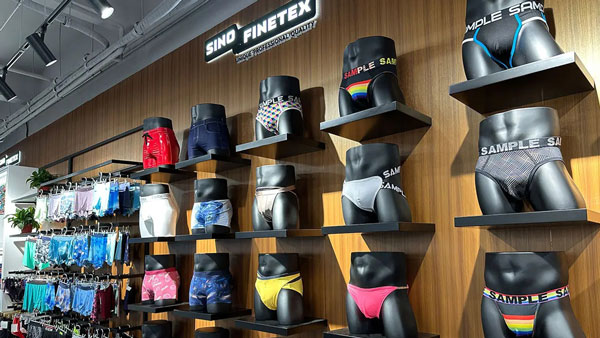
Lab Dips and Strike-Offs for Underwear: Approval Steps That Prevent Delays
A lab dip approves a dyed textile shade; a strike-off approves printed artwork on the intended substrate. They…
Read more →
Color MOQ Planning: How to Share Fabric Across Multiple Underwear Styles
Color MOQ planning works best when a brand treats dyed fabric as a shared material platform rather than…
Read more →
Underwear Fabric Utilization: How Marker Efficiency Changes Unit Cost
Fabric utilization converts a fabric quotation into a garment cost. The calculation must account for pattern area, fabric…
Read more →
Open Costing for Men’s Underwear: Reading Fabric, Trim, Labor and Overhead Lines
An open-cost sheet is useful only when every line is tied to a measurable specification, a purchasing unit…
Read more →Global Apparel Sourcing Outlook 2026: Cotton, Freight and Supply-Chain Risk
A data-led 2026 apparel sourcing outlook on cotton balances, freight volatility, supplier diversification, lead time, compliance and practical…
Read more →Request a sample & pricing information
Send us your tech pack, target price or a reference sample — we reply with a quotation, a realistic lead time and a fabric recommendation within one working day.
- Free sampling plan & cost breakdown
- MOQ from 300 pcs per style
- Reply within 1 working day