
Wholesale Boxer Briefs: What a Volume Buyer Should Demand Before Paying
Wholesale boxer briefs are a repeat-purchase product, so consistency matters more than price. What to demand on fabric continuity, size curves, QC and restock terms.
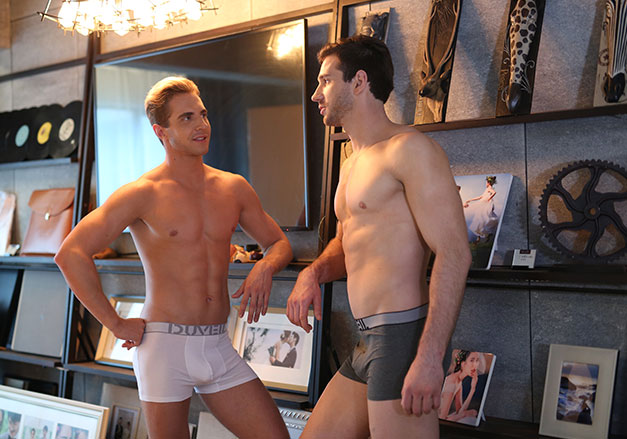
Boxer briefs are a repeat-purchase product, so the second shipment matters more than the first. A wholesale buyer who negotiates only on unit price ends up with a batch that behaves differently from the last one — a band with slightly less recovery, a shade that does not quite match, a size that measures two centimetres out — and those differences cost more in returns and replacement than the price difference ever saved.
Why does consistency matter more than price?
Customers compare this shipment with the last.
In a repeat product, quality is judged relatively: a garment that is slightly worse than the previous order reads as a decline, even when it is objectively acceptable.
That is what makes wholesale boxer briefs a specification problem rather than a purchasing problem. Price differences of a few percent are recoverable through the size curve and the packaging; a batch that fits differently is not, because it produces returns and reviews that affect every subsequent order. The specification sheet is therefore the most valuable document in the relationship: it records what was approved, so each production run can be measured against a standard rather than against a memory of the last delivery. Buyers who maintain one rarely have to renegotiate after a bad batch, because the comparison is documentary rather than anecdotal, and it shortens onboarding when a new line or supplier has to be briefed.
| Specification item | Recorded how | Checked when |
|---|---|---|
| Fabric composition and weight | Supplier, lot and test values | Each incoming fabric lot |
| Waistband construction and supplier | Name, width and elasticity | Before each run |
| Measurement chart | Tolerances by size | Per size set |
| Colour reference | Approved standard retained | Per dye lot |
| Packaging | Format, carton dimensions, weight | At packing |
How do you specify the product so batch two matches batch one?
By naming the components and keeping the approved sample.
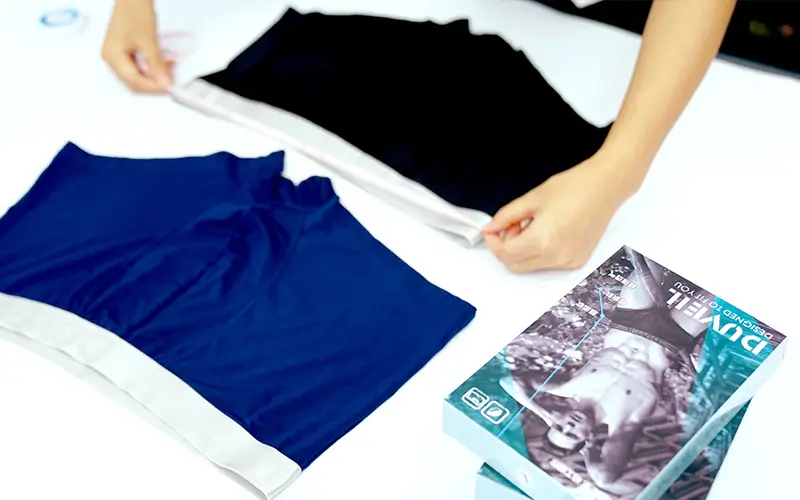
A specification that works names the fabric and its weight, the waistband construction and supplier, the measurement chart with tolerances, the colour standard and the packing format.
Each of those has a specific failure mode if left undefined. Fabric that is described only as a blend can arrive at a different weight; a band described only by width can arrive from a different supplier with less recovery; a chart without tolerances invites drift; a colour approved by photograph will not match a physical standard. The discipline is to write the specification once, get it confirmed, and then measure each delivery against it rather than re-approving the product from scratch. Where a supplier changes a component, the change should be proposed in writing with a photograph before it is made, not reported afterwards. Keeping a retained sample from the approved run makes that comparison possible without relying on anyone’s memory of how the last batch felt.
How should the size curve and colour depth be set?
Weight the middle sizes and keep colourways few.
Most boxer brief ranges sell the middle sizes several times faster than the extremes, and every additional colourway creates a separate dye lot with its own minimum.
The two decisions interact. Spreading a fixed quantity across more colours reduces the depth available per size, so the curve becomes flatter and the middle sizes sell out earlier. Buyers who instead keep the colour count small and the size curve weighted usually achieve better sell-through on the same spend, and they can add a colour on the reorder once the first has proven itself. Ask the factory what curve it sees from comparable buyers, then compare it with your own sell-through and adjust rather than accepting either blindly.
What should be demanded on dye-lot continuity?
A written dye plan, confirmed per order.
A reorder can consume more than one dye lot, and a shade difference becomes visible when garments from different lots sit together on a shelf or in a photograph.
Ask how the fabric will be planned across the order, whether the full quantity can be dyed in one lot, and what the tolerance is if it cannot. Where several lots are unavoidable, ask for them to be allocated across different styles or colourways rather than split within a single style, so no customer receives two shades of the same product. Confirm weight and hand-feel against the approved standard as well as shade, because a lot that passes on colour can still change how the garment wears. These are ordinary questions for a mill-led supply chain, and the answers belong in the order file rather than in a conversation.
What inspection plan suits repeated orders?
One that stays the same each time.
A repeat order benefits from a consistent plan: incoming fabric and elastic inspection, in-process checks at the sewing stage and a final inspection at a stated acceptance level.
Consistency matters because a buyer who inspects differently each time cannot tell whether a quality change came from the factory or from the sampling. Agree the plan once, apply it to every run, and record the results so trends become visible — a rising defect rate on one component is a signal to act before it becomes a return problem. Where the order value justifies it, third-party inspection before shipment provides an independent record, and that record is what you rely on if a dispute arises. Finetex Global’s underwear programmes are documented as raw fabric inspection, in-process checks and a final AQL or full inspection on request.
Which packaging format should a wholesale buyer choose?
The one that matches how the product is sold.
Bulk packing suits distributors and repackers, polybag packing suits fulfilment and marketplaces, and retail-ready packing suits shelves and direct-to-consumer presentation.
Each format carries its own minimum and cost, and the choice affects labour as well as presentation: bulk garments have to be bagged and labelled somewhere, and doing that in a warehouse is usually more expensive per unit than doing it in the factory. Ask for the carton dimensions and weight with the quotation, because they decide how many units fit a pallet and what the freight costs per garment. Where a product sells through more than one channel, packing part of the order for retail and the balance in bulk is a reasonable compromise, and it is easier to manage when the split is planned before packing rather than after.
How do pricing tiers actually work?
They follow component minimums, not generosity.
Price bands correspond to fabric lots, dye lots, waistband minimums and line changeover, which is why the same style can be quoted at several prices without anyone changing their margin.
The useful question is what has to change to reach the next band. Often the answer is not a larger total quantity but a simpler specification: one colour instead of three, a stocked fabric instead of a developed one, a standard band instead of a jacquard band. Those are decisions a buyer can make deliberately, and knowing them in advance turns a price negotiation into a specification conversation. Where a supplier cannot explain what unlocks a better tier, the tier structure is probably arbitrary, which is itself useful information.
How should payment and reorder credit be structured?
Milestones on the first order, terms on the reorder.
A first order usually runs on a deposit with the balance against documents, while a proven reorder is where payment terms and credit can reasonably be discussed.
The logic is that a supplier extends better terms when the relationship has a track record, so the first order is not the moment to ask for credit and the third is. Payment instruments are agreed per order; Finetex Global, for example, names PayPal, T/T and L/C among its payment methods. Keep each milestone tied to something you have received — an approved sample, an inspection report, a set of shipping documents — so a delay in one stage does not automatically trigger the next payment and the approvals stay meaningful. Review the terms after the second cycle, because a supplier that has seen two clean orders is usually in a position to offer something better than the arrangement you started with.
When does factory-direct beat a distributor?
When you need a product rather than availability.
A distributor is the rational choice for immediate stock, unbranded resale or testing a category; a factory is the right choice when the product needs your specification, your branding or a repeatable next season.
The decision usually comes down to what you are buying. If you are buying availability, a distributor earns its margin. If you are buying a product — your fabric, your waistband, your measurement chart — a distributor cannot supply it, because the specification is not theirs to set. Many buyers run both, using case lots to fill gaps and a factory programme for the range that carries the brand, and applying the same size logic to each so the selling data remains comparable.
FAQ
Where can I bulk buy boxer briefs for resale?
From a closeout or wholesale distributor for immediate stock, or from a factory producing to your specification at volume. Distributors supply finished product in case quantities; factories supply your fabric, waistband and measurement chart. If you intend to reorder the same product, confirm that the components will still be available next season.
How do I keep quality consistent across boxer brief reorders?
Write the specification down and keep the approved sample. Name the fabric and weight, the waistband construction and supplier, the measurement chart with tolerances, the colour standard and the packing format. Then apply the same inspection plan to every run, so a change in results reflects the product rather than the sampling.
What is the difference between wholesale and private label boxer briefs?
Wholesale describes a channel: buying finished goods in quantity for resale. Private label describes ownership: the product is made with your branding, often to your specification. You can buy wholesale with no branding at all, and private label at wholesale quantities. Only private label gives you a product a competitor cannot simply buy.
How many boxer briefs should a first wholesale order contain?
The quantity is set by the component minimums rather than by a rule of thumb: fabric lot, dye lot, waistband and changeover. Ask which part of your specification sets the threshold and what would change it, then weight the size curve toward the middle sizes, which typically carry most of the volume.
Next step for your team: send the Finetex Global team your specification or reference product, and ask for the component-based price tiers, the dye-lot plan, the inspection plan and the reorder position on the fabric and waistband.
Sources: 16 CFR Part 303 textile labelling; 19 CFR Part 134 country of origin marking; U.S. Customs and Border Protection; USITC Harmonized Tariff Schedule; OEKO-TEX STANDARD 100; ISO 9001 quality management.
More factory-floor notes for brand owners

Sample Revision Limits: How to Control Underwear Development Cost and Calendar
A sample revision limit should control scope, not block necessary correction. The buyer and factory need to distinguish…
Read more →
Lab Dips and Strike-Offs for Underwear: Approval Steps That Prevent Delays
A lab dip approves a dyed textile shade; a strike-off approves printed artwork on the intended substrate. They…
Read more →
Color MOQ Planning: How to Share Fabric Across Multiple Underwear Styles
Color MOQ planning works best when a brand treats dyed fabric as a shared material platform rather than…
Read more →
Underwear Fabric Utilization: How Marker Efficiency Changes Unit Cost
Fabric utilization converts a fabric quotation into a garment cost. The calculation must account for pattern area, fabric…
Read more →
Open Costing for Men’s Underwear: Reading Fabric, Trim, Labor and Overhead Lines
An open-cost sheet is useful only when every line is tied to a measurable specification, a purchasing unit…
Read more →Global Apparel Sourcing Outlook 2026: Cotton, Freight and Supply-Chain Risk
A data-led 2026 apparel sourcing outlook on cotton balances, freight volatility, supplier diversification, lead time, compliance and practical…
Read more →Request a sample & pricing information
Send us your tech pack, target price or a reference sample — we reply with a quotation, a realistic lead time and a fabric recommendation within one working day.
- Free sampling plan & cost breakdown
- MOQ from 300 pcs per style
- Reply within 1 working day