
Boxer Briefs Factory Selection: A Buyer’s Checklist for E-Commerce Brands
Vetting a boxer briefs factory for an e-commerce brand means running it through a pass-or-fail scorecard: fit and grading, waistband recovery, fabric spec, compliance, channel packaging,…
Vetting a boxer briefs factory for an e-commerce brand means running it through a pass-or-fail scorecard: fit and grading, waistband recovery, fabric spec, compliance, channel packaging, change control, and like-for-like quotes. A factory that passes the scorecard earns the right to a sample order; the rest of the process is confirmation. This checklist covers the scorecard and what to verify at each gate, with the MOQ and order math handled in the underwear MOQ guide.
Why Boxer Briefs Need a Category-Specific Factory Test
A factory can be excellent at cut-and-sew basics and still be the wrong partner for boxer briefs. The category is next-to-skin, washed constantly, and bought online without a fitting room, so three things decide the product: the waistband must recover, the grade must be even across sizes, and the packaging must survive a marketplace warehouse. Those three demands are not generic apparel questions; they are boxer-briefs questions, and the factory’s answers reveal its category experience.
The scorecard in this article is the screening tool. It is deliberately binary: a factory either passes a check or it does not. That keeps the shortlist decision honest and prevents a low price from papering over a failing fit.
The e-commerce context sharpens the stakes. A boxer briefs listing lives or dies on fit notes, size charts, and reviews, because the customer cannot try the product on. A fit problem shows up as returns in the first month; a waistband problem shows up in the reviews in the second month; a packaging problem shows up as an FBA rejection before the product ever lists. The factory test is not a formality. It is the cheapest insurance against the three most expensive failures in the category.
Build a Pass-or-Fail Factory Scorecard
A sourcing manager’s view on scorecards
A sourcing manager who has vetted apparel factories for marketplace brands treats a pass-or-fail scorecard as the one tool that survives contact with reality. In their experience, the fuzzy 1-3 scale lets a low price drag a failing fit into the shortlist, while a binary pass-or-fail forces the uncomfortable conversation early, before the deposit. Their rule of thumb: if a factory fails two checks, the sample round will not save it, because samples confirm strengths rather than create them.
Score every shortlisted factory on the same seven checks. Use pass or fail, not a fuzzy 1-3 scale, so the comparison is unambiguous.
| Check | Pass means | Fail signal |
|---|---|---|
| Fit and grading | Size set measures on spec with even grade | One size fits, others drift |
| Waistband recovery | Band returns after wear and wash | Band bags or twists |
| Fabric spec | Blend, weight, and care data provided | “Premium fabric” with no numbers |
| Compliance | Fiber, care, origin, and test docs available | Docs missing or vague |
| Channel packaging | FBA/listing packaging confirmed against current rules | “We handle it” without specifics |
| Change control | Clear response to a realistic change request | Confirms everything, surprises later |
| Like-for-like quote | Quote matches one identical spec | Quote assumes different inputs |
Two or more failures should end the conversation. The scorecard is the filter; the sample is the proof.
Run the scorecard in the same order for every factory and keep the evidence in one file: the size set measurements, the wash results, the fabric spec sheets, the compliance documents, and the quote. When the shortlist decision is made, the file becomes the reference for the bulk order, and later it becomes the evidence if a batch drifts. A buyer who documents the screening phase can prove what was approved; one who does not is negotiating from memory.
Test Fit, Grading, Leg Openings, and Waistband Recovery
Request a size set, not a single sample. Measure each size at the waist, hip, rise, and leg opening, and compare the grade between sizes. A factory with disciplined pattern work produces even grading across the run; one that only masters a middle size often shows its limits at the edges of the range, exactly where your returns will come from.
Wash the samples the way your customer will, then re-measure. Watch for waistband twist, shrinkage that changes the fit, and leg openings that lose their grip. According to Finetex’s published boxer briefs program details, its fit and grading covers fully customizable sizing with ergonomic patterns, so a category-focused factory can describe its fit engineering rather than improvising around it.
The leg opening and the rise deserve separate attention in the measurement record. A leg opening that is too tight rolls up and drives returns; one that is too loose rides and irritates. The rise decides how the garment sits through the day. Record both across the size set, not just on the middle size, because the grade between sizes is where the fit story is won or lost.
Lock the Fabric and Waistband Specification
The spec is the contract. Ask for the blend percentages, the fabric weight, and the stretch recovery behavior in writing, and lock them with the approved sample.
The waistband deserves its own question. According to Finetex’s published boxer briefs program details, its branding options include woven waistbands, heat-transfer labels, and printed logos, and its finishes include odor control, moisture management, and anti-bacterial coating. Use those as reference questions for any factory: can it name its band constructions and finishes, and can it show the documentation behind them? The ones that can are worth a sample; the ones that only repeat the words are not.
The fabric spec should include the blend percentages, the weight, and the care behavior, and it should be attached to the approved sample. Stretch recovery is the practical test: after a day of wear and a wash cycle, does the waistband return to its original length? The elastic content and the band construction decide this, and they are the difference between a boxer brief that holds its shape and one that the customer discards after a month.
Verify Compliance and Sales-Channel Packaging
Compliance for a boxer briefs import covers fiber content, care instructions, and country of origin, and the factory should be able to produce the label content you specify. Ask for the test reports behind any performance claims and verify certificates against the issuing body’s directory rather than accepting a filename.
Packaging is a channel question, not a factory promise. Amazon’s prep requirements change, so confirm the current polybag, barcode, and case-packing rules against Seller Central before you finalize the spec, and ask the factory whether it can execute that exact spec. Get the case dimensions and weights in writing for your inbound plan.
The compliance file should also include the label proof before bulk, not after. Approve the fiber content, the care instructions, the origin, and the brand label as part of the sample approval, because changing a label after production means re-labeling the whole batch or risking an import rejection at the destination.
Test Change Control and Communication
Every order has a mid-process change: a fabric substitution, a fit adjustment, or a label revision. Make one realistic change to your brief and watch how the factory responds. A partner that restates the impact on price, timeline, and the affected sizes is demonstrating change control; one that confirms cheerfully and goes silent is a risk you do not want at bulk.
The response speed matters too. Ask a question that needs a real answer, such as whether a specified fabric is available in your target colors, and note how long the reply takes and whether it is specific. The reorder phase runs on this same behavior.
A realistic change example: tell the factory the target color for a fabric has shifted to a slightly different shade, and ask what that means for the fabric availability, the sample timing, and the price. A factory with mature change control answers all three parts; a weak one responds to the color and ignores the rest. The test is not about manufacturing a problem, it is about measuring how the partner handles the ordinary friction of an order.
Compare Like-for-Like Samples and Quotes
Keep the top two or three factories and request quotes on one identical specification: same fabric, same sizes, same packaging, same quantity. Ask explicitly what sampling, testing, packaging, and freight costs are included, and compare landed cost rather than unit price.
For the MOQ part of the quote, use the underwear MOQ guide to convert the structure into an order, confirm the minimum per design, color, and fabric combination with mixed sizes, then hand the calculation to the underwear MOQ guide rather than re-deriving it here. The scorecard decides who enters the quote stage; the MOQ guide decides what the order actually looks like.
What to Include in Your Sample Request
The sample request is the final test of the brief. Send the style, the size range, the fabric direction, the target colors, the packaging requirements, and the launch date, and ask the factory to confirm its sampling window in writing. Finetex’s men’s underwear manufacturing page describes the boxer briefs, trunks, briefs, and jockstraps it produces for private label programs, and its contact page accepts sample and pricing requests. Prepare the quantity, target market, and launch date before you write, because the factory can answer faster with that context.
The sample request should also name what you will test. State that you will measure the size set, wash it, and check the waistband recovery, so the factory knows the sample will be judged on the category’s real failure points. The request itself is part of the scorecard: a factory that questions or improves your test plan is showing the product thinking you want at bulk.
Frequently Asked Questions
What should I check first when choosing a boxer briefs factory?
Fit and grading. Request a size set, measure every size against your spec, and wash-test the samples before you compare quotes. Fit failures are the most expensive problem in the category.
Why does the waistband deserve a separate check?
The waistband is the first thing a customer touches and the first thing that fails. Ask how the band is constructed, how the elastic is joined, and how recovery behaves after washing.
Does the factory need to guarantee Amazon compliance?
No. Amazon’s prep rules change, so confirm the current requirements in Seller Central and ask the factory whether it can execute that exact spec. Treat packaging as a confirmed spec, not a promise.
How do I compare quotes fairly?
Request quotes on one identical specification and compare landed cost, including sampling, testing, packaging, and freight. Ask what is included explicitly.
What should go into my first sample request?
Style, size range, fabric direction, target colors, packaging requirements, and launch date. A complete brief produces a factory that can ask the right questions.
Where should I learn how MOQ changes my order?
The underwear MOQ guide walks through the design, color, fabric, and size minimums with a worked example, so you can convert the factory’s MOQ into a real order structure.
Sources
- Finetex Global — Men’s Underwear Manufacturing
- Finetex Global — Custom Boxer Briefs Factory
- Finetex Global — Contact Us
- Finetex Global — Quality Control
- U.S. Federal Trade Commission — Textile Labeling Rules
- OEKO-TEX — Standard 100
This page is part of our choosing an underwear manufacturer, which covers the decisions before and after it.
More factory-floor notes for brand owners

Sample Revision Limits: How to Control Underwear Development Cost and Calendar
A sample revision limit should control scope, not block necessary correction. The buyer and factory need to distinguish…
Read more →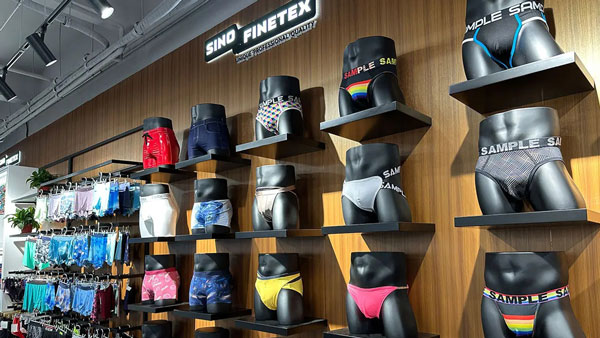
Lab Dips and Strike-Offs for Underwear: Approval Steps That Prevent Delays
A lab dip approves a dyed textile shade; a strike-off approves printed artwork on the intended substrate. They…
Read more →
Color MOQ Planning: How to Share Fabric Across Multiple Underwear Styles
Color MOQ planning works best when a brand treats dyed fabric as a shared material platform rather than…
Read more →
Underwear Fabric Utilization: How Marker Efficiency Changes Unit Cost
Fabric utilization converts a fabric quotation into a garment cost. The calculation must account for pattern area, fabric…
Read more →
Open Costing for Men’s Underwear: Reading Fabric, Trim, Labor and Overhead Lines
An open-cost sheet is useful only when every line is tied to a measurable specification, a purchasing unit…
Read more →Global Apparel Sourcing Outlook 2026: Cotton, Freight and Supply-Chain Risk
A data-led 2026 apparel sourcing outlook on cotton balances, freight volatility, supplier diversification, lead time, compliance and practical…
Read more →Request a sample & pricing information
Send us your tech pack, target price or a reference sample — we reply with a quotation, a realistic lead time and a fabric recommendation within one working day.
- Free sampling plan & cost breakdown
- MOQ from 300 pcs per style
- Reply within 1 working day