
Underwear Manufacturer or Trading Company? How to Tell the Difference
You can tell an underwear factory from a trading company by checking four pieces of evidence: the business license and scope, a live video of the…
You can tell an underwear factory from a trading company by checking four pieces of evidence: the business license and scope, a live video of the floor, the structure of the quote, and the behavior of the samples. According to Finetex’s published program details, it operates as a Shenzhen-based OEM and ODM manufacturer with its own production covering the underwear line, which makes its registration and factory floor the kind of evidence a buyer can verify. The difference matters because the factory question decides who controls quality, communication, and your launch date.
Why the Factory Question Matters More in Underwear
Underwear is a category where the factory question is not academic. The garment is next-to-skin, the fit depends on elastic components that must be consistent across the run, and the customer judges the product after dozens of washes. A trading company can send you photos of a real factory and still quote and ship from somewhere else, which changes who controls the quality checks and who answers when a batch drifts.
The risk is not that every middleman is dishonest. It is that the relationship changes: with a factory you can walk the floor, review the machines, and audit the process; with a trading company you are one layer removed from all of it. For a category with underwear’s fit and wash requirements, that layer is where defects hide.
Registration and Business Scope: The First Check
A compliance specialist’s view on registration checks
A compliance specialist who verifies suppliers for import programs treats the registration check as the foundation of every other check. In their experience, a mismatched name or credit code between the contract and the license is the single most reliable early warning, because legitimate factories keep their documents aligned. Their standard sequence is simple: verify the license in the official system, compare the name on the invoice and the contract, and then move to the floor. If the paper does not align, nothing else about the supplier is worth trusting.
The business license is the first evidence, and it should be checked, not filed. In China, registration can be verified through the official enterprise credit information system, where you can look up the company by name or by its unified social credit code. Cross-check the legal name, the credit code, and the registered address against the name on the contract, the invoice, and the website.
The business scope is the second part of the check. The scope should include production categories such as garment manufacturing, apparel manufacturing, or knitwear production; a company registered only for trade or import-export is a signal that you may be dealing with a trading entity. The registered address deserves the same cross-check: a license address in a residential building or a shared office is a weak match for a factory floor, and the discrepancy should be explained before the conversation continues. Inconsistent names or credit codes across documents are a common warning that the company presenting itself as the factory may not be the entity you are contracting with.
Video Checks That Reveal Real Production
A live video call inside the factory is the strongest remote evidence. Ask to see the cutting room, the sewing lines, the elastic and waistband station, and the warehouse, and ask the person on camera to show the machines running rather than the showroom.
| Check | What to ask to see | Why it matters |
|---|---|---|
| Cutting | The fabric spread and the cutting table | Real production, not a photo set |
| Sewing | Active sewing lines and operators | Confirms scale and workflow |
| Elastic station | Waistband assembly and tension checks | The category’s critical step |
| Warehouse | Current stock and packing area | Confirms logistics and volume |
Ask specific questions while the camera is live: how many sewing lines are running today, where yesterday’s output is packed, and which machines handle the waistbands. Specific answers to specific questions are hard to fake, and the pause before an answer is often more informative than the answer itself.
The video check also reveals the difference between a showroom and a factory. A factory can show you machines mid-run, operators at their stations, and stock in the warehouse; a trading company can only show you the same polished shots from a camera angle. If the camera cannot reach the production floor, treat that as a red flag rather than a scheduling excuse.
Quote Structure as Evidence
The quote is a document you can compare across candidates, and its structure reveals the business model. A factory quote usually breaks out the garment, the development, the packaging, and the freight as separate lines, and the factory can answer questions about each one. A trading company quote is often a single number with a thin explanation, because the trader does not control the underlying costs.
Ask the same pricing questions of every candidate: what the unit price includes, how the minimum is structured per design, color, and size, and what happens to the price when the fabric or the trim changes. A factory answers these questions with its own cost structure; a trader answers with the factory’s price plus its margin, and the margin is where the transparency ends. The quote comparison should also include the landed cost, because a trader’s lower unit price can disappear inside higher freight or coordination fees. According to Finetex’s current underwear page, its full-customization MOQ is 1,000-3,000 pieces per design with mixed sizes, with flexibility depending on the fabric, color, and style, so a factory can explain its MOQ structure in those terms. A candidate that cannot explain its own structure is either a trader or a factory with weak cost control.
Sample Consistency and Lead-Time Behavior
Samples are evidence, and the behavior around them is evidence too. Order a sample under realistic conditions, measure it, wash it, and compare it with the specification, then request a second round and watch how the factory responds. Factories with mature development processes respond with specific corrections; trading companies often promise vaguely or blame the mill.
The lead-time behavior tells the same story. Ask when the sample will ship and when bulk can start, and compare the promise with the behavior. According to Finetex’s published program details, sampling generally runs about 5-7 days and bulk production 15-45 days after deposit, so a factory can commit to concrete windows and confirm them in writing.
Trading Companies Aren’t Always Wrong: When They Make Sense
There are legitimate reasons to work with a trading company. A trader with strong relationships can consolidate small orders across several factories, handle inspection coordination, and manage logistics for a buyer who cannot visit China. For a very small first order or a multi-category order, a good trader can be a practical entry point.
The difference is transparency. A trader should tell you that it is a trader, name the factories it works with, and explain how quality is controlled at each one. The problem is not the middleman; it is the middleman who pretends to be the factory, because that is when the buyer loses control of the evidence.
Verify Before You Deposit
The deposit is the point of no return, and the verification should be complete before it. Run the full checklist: the registration and scope verified through the official system, a live video tour of the floor, a quote structure that explains the costs, a sample that matches the spec, and a lead-time commitment in writing. The order file should hold every piece of evidence in one place, because the deposit conversation is the last moment you have full leverage.
If the supplier resists any part of the checklist, name the risk and ask for the reason in writing. A factory with nothing to hide can provide documents and a video call within days; one that stalls on the evidence is asking you to pay for trust you have not earned.
Finetex’s men’s underwear manufacturing page describes the boxer briefs, trunks, briefs, and jockstraps it produces for private label programs, and its contact page accepts sample and pricing requests. If a candidate cannot produce the same kind of evidence, the deposit is a bet, not a purchase.
Frequently Asked Questions
How do I check if a Chinese underwear supplier is really a factory?
Verify the business license and scope through the official enterprise credit information system, take a live video tour of the floor, and compare the quote structure and sample behavior. A real factory can produce all four pieces of evidence.
What should the business scope include?
Production categories such as garment manufacturing, apparel manufacturing, or knitwear production. A scope limited to trade or import-export is a signal that you may be dealing with a trading entity.
Are trading companies always a bad choice?
No. A transparent trader can consolidate small orders and manage logistics, but it should say it is a trader, name its factories, and explain its quality control. The problem is the middleman who pretends to be the factory.
What is Finetex’s MOQ for custom underwear?
According to Finetex’s current underwear page, the full-customization MOQ is 1,000-3,000 pieces per design with mixed sizes, with flexibility depending on the fabric, color, and style.
How long does underwear sampling take?
According to Finetex’s published program details, sampling generally runs about 5-7 days and bulk production 15-45 days after deposit, with freight windows confirmed per order.
What should I do before the deposit?
Complete the verification checklist: registration, live video tour, quote structure, sample match, and written lead-time commitment. The deposit is the point of no return.
Sources
- Finetex Global — Men’s Underwear Manufacturing
- Finetex Global — About Us
- Finetex Global — Contact Us
- National Enterprise Credit Information Publicity System
It sits inside the wider choosing an underwear manufacturer, where the rest of the sequence is set out.
More factory-floor notes for brand owners

Sample Revision Limits: How to Control Underwear Development Cost and Calendar
A sample revision limit should control scope, not block necessary correction. The buyer and factory need to distinguish…
Read more →
Lab Dips and Strike-Offs for Underwear: Approval Steps That Prevent Delays
A lab dip approves a dyed textile shade; a strike-off approves printed artwork on the intended substrate. They…
Read more →
Color MOQ Planning: How to Share Fabric Across Multiple Underwear Styles
Color MOQ planning works best when a brand treats dyed fabric as a shared material platform rather than…
Read more →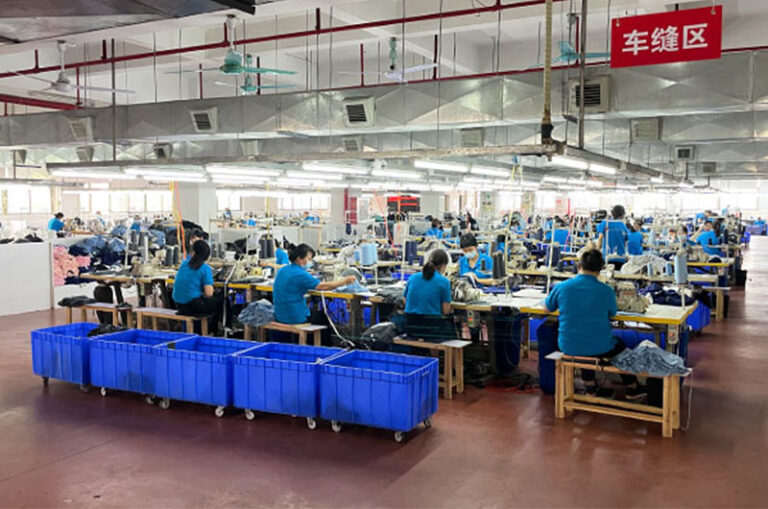
Underwear Fabric Utilization: How Marker Efficiency Changes Unit Cost
Fabric utilization converts a fabric quotation into a garment cost. The calculation must account for pattern area, fabric…
Read more →
Open Costing for Men’s Underwear: Reading Fabric, Trim, Labor and Overhead Lines
An open-cost sheet is useful only when every line is tied to a measurable specification, a purchasing unit…
Read more →Global Apparel Sourcing Outlook 2026: Cotton, Freight and Supply-Chain Risk
A data-led 2026 apparel sourcing outlook on cotton balances, freight volatility, supplier diversification, lead time, compliance and practical…
Read more →Request a sample & pricing information
Send us your tech pack, target price or a reference sample — we reply with a quotation, a realistic lead time and a fabric recommendation within one working day.
- Free sampling plan & cost breakdown
- MOQ from 300 pcs per style
- Reply within 1 working day