
Why does a screen-printed logo feel stiff on underwear?
Why a screen-printed logo feels stiff on underwear: ink type, film thickness, print size, stretch mismatch and curing, and how to choose softer inks, smaller designs…
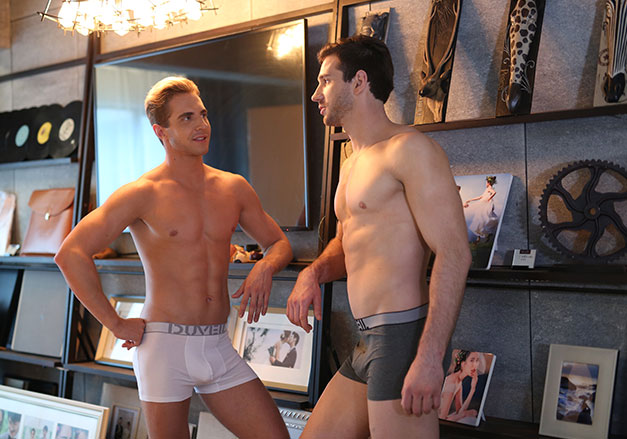
Part of Waistbands, Labels, Printing & Packaging in Finetex Talk — buyer questions answered by the Finetex editorial team.
A brand put a screen-printed logo on the back waist of its boxer briefs. Customers say the print feels stiff and slightly sticky against the skin, and some prints crack at the edges after stretching. The team wants a softer result.
Short answer: Screen-print stiffness usually comes from the ink type and how much of it sits on the fabric. Plastisol inks form a thick, flexible plastic film on top of the fabric, which feels heavier and can feel warm or tacky against skin, especially in large solid areas. Water-based and discharge inks soak into or replace the fabric colour, giving a much softer hand, but they work best on high-cotton fabrics and can look less opaque on dark colours. Thick ink deposits, extra white underbase layers and large solid shapes all increase stiffness. If the ink stretches less than the fabric, it cracks. Use a soft-hand or stretch ink suited to the fabric, reduce ink film and solid area, cure properly, and test on the stretched garment.
Causes of stiffness
- Plastisol or high-solid inks with a thick film.
- Heavy white underbase on dark fabric.
- Large solid design areas.
- Additives that increase opacity but reduce softness.
- Over-curing that hardens the film.
Causes of cracking
- Ink less stretchy than the elastane fabric.
- Under-curing, leaving weak film.
- Placement across a high-stretch area or seam.
Softer options
- Water-based or discharge inks on cotton-rich fabric.
- Soft-hand or stretch additives in plastisol.
- Halftones or open designs instead of solid areas.
- Smaller logos or relocation to a low-stretch area.
- Heat transfers designed for stretch fabric, as an alternative.
Testing
- Stretch the printed area to the fabric's working elongation; a method such as ASTM D4964 gives fabric stretch data for reference.
- Wash and dry printed samples with an ISO 6330 procedure that matches the care label, then stretch and inspect.
- Check hand feel against an approved sample with the same people each time.
Skin contact
Prints on underwear sit close to the skin. If you use OEKO-TEX STANDARD 100 or similar certification, confirm that the inks and printed article are covered.
A worked example
For a back-waist logo on dark boxer briefs, a common improvement is to move from a solid plastisol print with full underbase to a smaller, open design with a soft-hand ink and a thinner deposit, or to a water-based discharge print if the fabric is cotton-rich. Sample both, wash five times and compare hand feel and cracking.
Placement matters
The back waist just below the waistband is a common logo position because it stretches less than the seat, but it still moves when the garment is pulled on. A logo on the waistband elastic itself, as jacquard or a printed band, avoids ink on the body fabric altogether. On the leg hem, prints meet the most stretch and rubbing, so softness and crack resistance matter most there.
Limits
Ink performance varies by supplier and fabric. Test combinations rather than relying on ink type alone.
Facts, recommendations and uncertainty
Established: thick plastisol films, heavy underbase and large solid areas cause stiffness; low ink stretch causes cracking. Recommendation: use softer inks and open designs, cure correctly and test stretched and washed prints. Uncertain: the best ink for a specific fabric until sampled.
Sources and further reading
- ASTM D4964 — Tension and elongation of elastic fabrics
- ISO 6330:2021 — Domestic washing and drying procedures for textile testing
- OEKO-TEX® STANDARD 100
Standards and regulations are referenced by their published scope. Test parameters, cycles and pass levels should be agreed with your laboratory for the specific product; legal requirements should be confirmed for each destination market.
Three more perspectives
Ask the factory which ink system it uses for underwear and request samples in two ink types on your fabric. Include hand feel and crack resistance after a set number of washes in the specification. Ask whether printing is done in-house or by a subcontractor, and how curing temperature is checked. Confirm any certification covers the ink used. Ask for the ink supplier's technical sheet, including recommended curing temperature and time, so you can check it against production.
In product development, design the logo for the fabric: open shapes, halftones or a smaller size where the fabric stretches. Test placement so the print avoids the most stretched zones. Compare plastisol with soft-hand and water-based options on the same fabric, and approve the print by both look and touch after washing. Test the logo on the smallest and largest sizes, because the same artwork covers a larger share of a small garment and may feel stiffer there.
In quality control, check ink deposit, edge sharpness and curing on sampled pieces. Stretch a few printed areas and look for cracks. Wash pieces per lot and check hand feel and cracking against the approved sample. Track faults by print table or dryer, because inconsistent curing often comes from one piece of equipment. Check dryer temperature with a test strip or probe at the start of each shift, and keep the record with the lot inspection report.
Related products
Related articles
← More in Waistbands, Labels, Printing & Packaging · All Talk topics · Ask us about your programme
More factory-floor notes for brand owners
Why did my reorder price go up?
Why an apparel reorder price can go up: fabric and trim costs, smaller quantities, specification changes, labour and…
Read more →
How do I read an underwear quotation line by line?
How to read an underwear quotation line by line: fabric, elastic and trims, labour, packaging, testing, overheads and…
Read more →
How do peak seasons affect apparel factory capacity?
How peak seasons and holidays affect apparel factory capacity and lead times, why fabric and shipping are also…
Read more →
Should I split one style across two factories?
Whether to split one apparel style across two factories: the benefits for capacity and risk, the risks for…
Read more →
What are the biggest risks on a small brand’s first order?
The biggest risks on a small brand's first apparel order, from unclear specifications and sample approval to payment,…
Read more →
What changes should a factory notify before production?
Which changes a factory should notify the buyer about before production, such as fabric, dye, trims, subcontracting or…
Read more →Request a sample & pricing information
Send us your tech pack, target price or a reference sample — we reply with a quotation, a realistic lead time and a fabric recommendation within one working day.
- Free sampling plan & cost breakdown
- MOQ from 300 pcs per style
- Reply within 1 working day