
How do peak seasons affect apparel factory capacity?
How peak seasons and holidays affect apparel factory capacity and lead times, why fabric and shipping are also affected, and how buyers can plan orders, approvals…
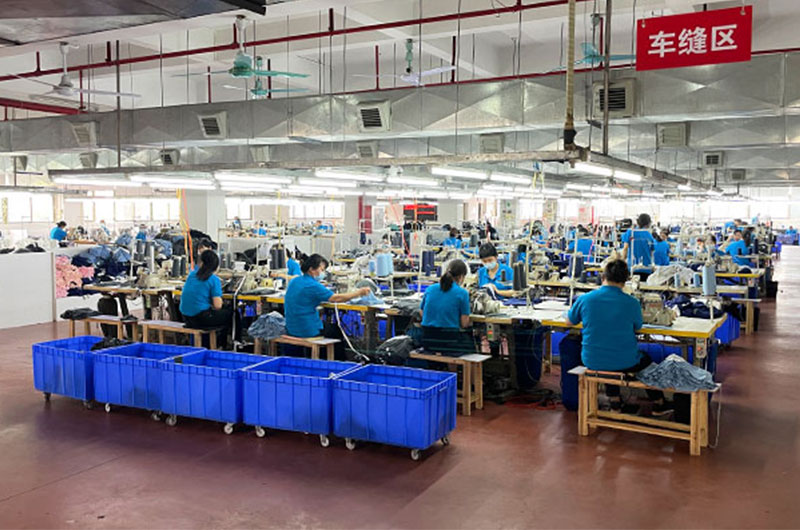
Part of Sampling, Orders, Quality & Shipping in Finetex Talk — buyer questions answered by the Finetex editorial team.
A brand places a reorder of underwear a few weeks before a major holiday period and is surprised that the factory quotes a longer lead time than for its previous order.
Short answer: Factory capacity is shared between many customers, so lead times change with demand across the year. Before major holidays and in peak seasons for retail, many brands place orders at the same time, so sewing lines, fabric mills, dye houses and trims suppliers are busier. In China, the Lunar New Year holiday is a well-known example: many factories close for a period, workers travel home, and production can take time to return to normal afterwards. Shipping capacity and port operations can also be under pressure in busy periods. All of this means a lead time quoted in a quiet month may not apply in a busy one. Plan for this in three ways. First, plan orders earlier: share forecasts with the factory and place orders before peak periods, so fabric and capacity can be booked. Second, approve samples, materials and artwork quickly, since late approvals push orders into busier weeks. Third, book shipping early, and confirm the Incoterms rule and responsibilities. Under FOB, ICC Academy guidance notes that if the buyer fails to give timely notice of the vessel, or the vessel arrives late or closes for cargo early, the buyer bears the resulting risks and costs, even if the goods are not yet loaded. Under FCA, the buyer's carrier must collect on time. Ask the factory each season for its holiday dates and any capacity limits, and build those into your plan.
What changes in peak periods
- Factory lines are fully booked.
- Fabric and trim lead times extend.
- Holiday closures pause production.
- Shipping capacity is tight.
How to plan
- Share forecasts early.
- Place orders before peaks.
- Approve quickly.
- Book shipping early.
A worked example
As an illustration, a brand could ask its factory for holiday dates in the next six months, and place its reorder so fabric is ready and production is finished before the closure.
After holidays
Expect a slow restart and check the schedule again when the factory reopens.
Fabric and trims
Fabric mills, dye houses and trims suppliers also have peak periods and holidays. If fabric for your order is not booked early, production may be delayed even when sewing capacity is available. Ask the factory when fabric must be ordered to meet your date.
Limits
Capacity depends on factory, region and year. Use current information from your factory and forwarder rather than general rules.
Facts, recommendations and uncertainty
Established: under FOB, the buyer bears risks and costs if it fails to give timely vessel notice or the vessel is late, according to ICC Academy guidance. Recommendation: share forecasts, order early, approve quickly and book shipping early in peak periods. Uncertain: capacity in any given season.
Sources and further reading
Standards and regulations are referenced by their published scope. Test parameters, cycles and pass levels should be agreed with your laboratory for the specific product; legal requirements should be confirmed for each destination market.
Three more perspectives
Ask the factory for its holiday calendar and peak periods each year. Share a rolling forecast. Place orders for key items before busy periods. Book shipping early with your forwarder. Agree shipment windows rather than single dates where possible. Discuss whether part shipments are acceptable if capacity is tight. Confirm the Incoterms rule and who books freight for each shipment.
Finalise designs and approvals before peak periods. Avoid changes that need new materials at busy times. Keep core styles unchanged to simplify planning. Keep core styles and colours stable before peak periods, so fabric can be planned in advance. Hold design changes for quieter months. Approve packaging and labels early. Use existing approved materials for urgent reorders.
Book inspection early in peak periods. Check whether production was rushed before holidays. Pay attention to quality after restart. Ask for an inline inspection when production is rushed before holidays, as quality risks can rise. Check the first production after a holiday restart, since new or returning workers may need time to settle. Keep inspection bookings flexible around holidays. Review defect rates by season.
Related products
← More in Sampling, Orders, Quality & Shipping · All Talk topics · Ask us about your programme
More factory-floor notes for brand owners

Why did my reorder price go up?
Why an apparel reorder price can go up: fabric and trim costs, smaller quantities, specification changes, labour and…
Read more →
How do I read an underwear quotation line by line?
How to read an underwear quotation line by line: fabric, elastic and trims, labour, packaging, testing, overheads and…
Read more →
Should I split one style across two factories?
Whether to split one apparel style across two factories: the benefits for capacity and risk, the risks for…
Read more →
What are the biggest risks on a small brand’s first order?
The biggest risks on a small brand's first apparel order, from unclear specifications and sample approval to payment,…
Read more →
What changes should a factory notify before production?
Which changes a factory should notify the buyer about before production, such as fabric, dye, trims, subcontracting or…
Read more →
What is a sealed or golden sample and why keep one?
What a sealed or golden sample is in apparel production, why buyers and factories keep one, how to…
Read more →Request a sample & pricing information
Send us your tech pack, target price or a reference sample — we reply with a quotation, a realistic lead time and a fabric recommendation within one working day.
- Free sampling plan & cost breakdown
- MOQ from 300 pcs per style
- Reply within 1 working day