
Grading Rules for Knit Tops: Where Size Sets Fail
How knit-top grade rules work for chest, length and shoulder, why 2XL often fails first, and how to validate a size set before bulk production.
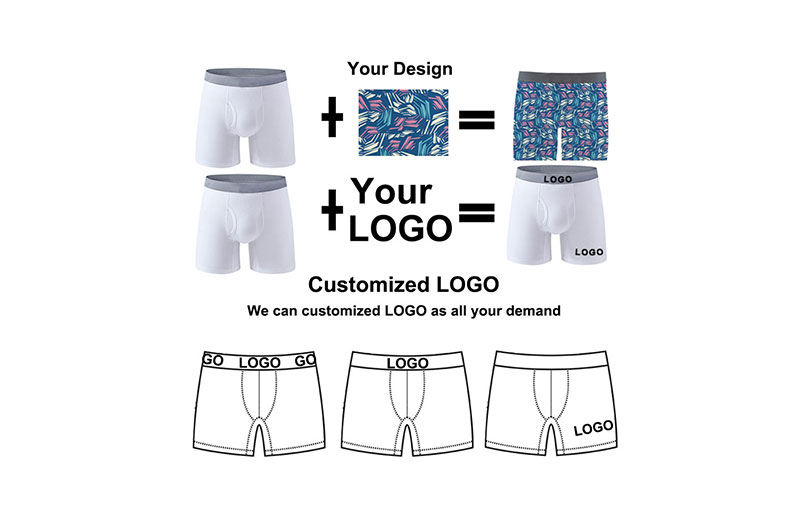
Answer first: A grade rule is the planned change in each measurement as you move from one size to the next. On knit tops, the rule is usually written from a sample size (often a medium) and then applied to the chest, body length, shoulder or across-shoulder, sleeve length and opening, neck drop and hem width. Size sets fail when those increments are copied from a woven shirt, applied evenly to every point, or extended into 2XL and beyond without a new trial. This article is about that logic, and about how to validate a set before bulk. It complements our guide to the 12 garment measurement points buyers argue about on knit tops. A later article in this plan will cover big-and-tall blocks separately; do not treat a standard 2XL grade as a big-and-tall pattern.
The increments below are a clearly labelled illustration of how a rule is written, not a Finetex size chart and not a standard you must adopt. Fabric, shrinkage and the fit you approved on the sample size all change the right number. Use our T-shirt fit and fabric guide alongside this method, and put the locked rule in the tech pack you send through apparel design.
Grade logic: start from a sample size, not from a spreadsheet average
Grading is not the same as pattern making. The block and the fit are decided on a sample size. Grading then steps that pattern out, point by point, so that a small and a large keep the same silhouette rather than becoming a different garment. If the sample size itself is wrong — too short, too tight across the shoulder, a neck that sits high — grading will copy the fault into every size.
Write the rule in this order:
- Lock the measurement points. Use the same point definitions in the tech pack, the size set and the inspection form. The companion article on the 12 points exists because “chest” and “body length” are measured in more than one way.
- Lock the sample-size numbers after a washed measurement if the fabric shrinks, not only after sewing.
- State the increment for each point, size by size, rather than a single “grade all around by 5 cm.” Chest, shoulder and length do not have to move by the same amount, and the step from XL to 2XL does not have to equal the step from M to L.
- State the tolerance you will inspect to, so a grader and a QC inspector are not using different ideas of “close enough.”
Knit fabric complicates the arithmetic. A jersey top stretches; a fleece pullover stretches less; a rib collar recovers differently from a cut-and-sewn hem. A grade that looks correct on paper can still feel tight in the upper chest or loose at the hem once the fabric moves. That is why the size set is a wear and wash test, not only a tape-measure test.
Increments: where even steps are useful, and where they are not
Many knit-top programmes use a regular step through the middle of the range and then look again at the ends. The table below shows an illustrative rule for a five-size jersey top, written from a medium. Every number is an example for arithmetic and discussion. It is not a Finetex chart, not a population survey and not a recommendation for your brand.
| Point (illustrative only) | S | M (sample) | L | XL | 2XL | Step used in this illustration |
|---|---|---|---|---|---|---|
| Chest, garment measured flat, times two | 96 cm | 102 cm | 108 cm | 114 cm | 122 cm | 6 cm through XL; 8 cm into 2XL |
| Body length from high-point shoulder | 68 cm | 70 cm | 72 cm | 74 cm | 76 cm | 2 cm each step |
| Shoulder or across-shoulder | 42 cm | 44 cm | 46 cm | 48 cm | 51 cm | 2 cm through XL; 3 cm into 2XL |
| Sleeve length | 20 cm | 21 cm | 22 cm | 23 cm | 24.5 cm | 1 cm through XL; 1.5 cm into 2XL |
Three ideas sit in that illustration:
- Chest often carries a larger step than length. A top that grows 6 cm in chest and only 2 cm in length keeps a similar crop on the body. A top that grows equally in both can start to look long and loose, or short and wide, depending on the starting balance.
- Shoulder has to keep up with chest, but not always at the same rate. If chest grows and the shoulder stays almost still, the armhole and the sleeve pitch change, and the top will pull. If the shoulder grows too fast, the sleeve sits off the shoulder and the neckline drops.
- The last step is allowed to change. The illustration widens the chest and shoulder step into 2XL on purpose. An even 6 cm step that worked from S to XL may not give enough room in the upper chest and armhole at 2XL, or it may give too much length if you also kept a 2 cm length step without checking the wearer’s proportions.
If you work in inches, write the rule in inches and inspect in inches. Do not mix units on the size-set sheet. And do not import a woven-shirt grade: a woven chest step and a woven shoulder slope will not automatically sit well on a jersey.
Why 2XL fails first
When a size set comes back with a problem, the first size to show it is often 2XL (and, on some women’s or unisex lines, the smallest size). The reasons are structural, not mysterious.
- The sample size is far away. A rule that was only wear-tested on a medium has been stepped four times by the time it reaches 2XL. Small errors in shoulder slope, armhole depth or neck width accumulate.
- Body proportions do not scale evenly. A larger chest does not come with a proportionally longer torso or a proportionally wider shoulder on every wearer. A straight arithmetic grade can produce a 2XL that is wide enough in the chest and still tight in the upper arm, or long enough in the body and still short in the sleeve.
- Knit recovery changes with width. A wider jersey panel can sag at the hem or grow at the neck after wash, even when the medium held its shape. The fabric you approved at M has to be tested at the largest cut, not assumed.
- Armhole and sleeve pitch show up in movement. A 2XL wearer raising their arms will tell you more than a hanging measurement. If the armhole is too high or the shoulder too narrow, the side seam will ride.
- Tolerance consumes a larger share of a small step. If length only grows 2 cm per size, a 1 cm measurement error is half a size. At the end of the range, that error is the difference between “slightly long” and “wrong.”
None of this means 2XL cannot be graded from the same block. It means 2XL (and the smallest size) must be sewn, washed and worn, not only plotted. If you later need a true big-and-tall or extended range, plan a dedicated block rather than adding 3XL and 4XL as further even steps from a failed 2XL. That extended-range work is flagged here so it is not improvised on the cutting table.
How to validate a size set before bulk
Use the size set as a decision, not as a formality. A practical sequence:
- Measure the sample size after the agreed wash, on the points in the tech pack, and only then cut the set.
- Sew at least the smallest, the sample size and the largest, even if you also cut the sizes in between. If budget allows, sew every size in the range you will sell.
- Measure all sewn sizes, before and after wash, on the same points, on a signed sheet. Compare to the rule, not to memory.
- Fit on bodies or forms that actually represent the ends of the range, not only on the sample-size model. Watch arm lift, neck sit, hem balance and shoulder seam placement.
- Check shrinkage and recovery at the largest size, especially at the neck, hem and chest width.
- Lock the rule in the tech pack and in the inspection form. The final AQL inspection will not catch a systematic grade error if the inspector is only looking for sewing defects.
- Do not change one size in isolation during bulk. If 2XL needs more shoulder, decide whether that is a rule change for 2XL only or a sign that XL should be revisited too.
Finetex’s published sampling calendar is a development sample in 5–7 working days after artwork and fabric are confirmed, and a full size set in 10–12 working days. Use the size set for this validation, then approve a pre-production sample in the sample size before bulk. Bulk remains 15–45 days from deposit and approved pre-production sample. Quality gates — incoming fabric, in-line at 30% and 70%, final AQL 2.5, and a shipment check — will confirm that production matches the approved set; they will not invent a grade rule that was never tested.
Keep a short change log on the grade rule itself: who approved it, after which wash, on which fabric lot. If the mill later substitutes a fabric with a different shrinkage, the rule has to be re-validated, even if the centimetre steps look unchanged. A rule without a fabric identity is only half a rule.
If a top is part of a set (for example a lounge top with a pant), grade and fit the two pieces as a pair, as discussed in the loungewear article in this series. A 2XL top that fits is still a failed set if the matching pant does not.
What is fact, what is advice and what is uncertain
Fact: Finetex sampling and bulk lead times and quality gates are as published. The measurement-point problem is the subject of our already published knit-top measurement article. The increment table in this article is illustrative only.
Advice: lock points and the sample size first, allow the last step to change, and sew, wash and wear the ends of the range before bulk.
Uncertain: the “right” step for chest or shoulder is specific to your block, your fabric and your customer. No population study and no claimed standard chart is offered here.
Related reading
- Garment Measurement Points for Knit Tops: The 12 Numbers Buyers Argue About
- Men’s Polo Shirt Manufacturing: Pique, Interlock and Collar Construction
Frequently asked questions
What is a grade rule on a knit top?
It is the planned change in each measurement as you move from one size to the next, written from a locked sample size. It is not a substitute for a good pattern, and it is not only a chest increment.
Why does 2XL often fail when M and L look fine?
Because the sample was usually tested at M, body proportions do not scale evenly, and knit recovery can change on a wider panel. 2XL needs its own sewn, washed and worn check.
Can I use the same step from S through 2XL?
You can write it that way, but you still have to validate the ends. Many programmes keep an even step through the middle and change the last step after a fit. The table above is only an illustration of that idea.
How many sizes should I sew in a size set?
At least the smallest, the sample size and the largest you will sell. Sewing every size is better if the range or the fabric is new to you. Finetex quotes a full size set at 10–12 working days after artwork and fabric are confirmed.
When should I start a new block instead of grading further?
When the next size up or down would need a different proportion — a different shoulder, a different length-to-chest relationship, or a different armhole — rather than another increment. Extended and big-and-tall ranges usually need that new block.
Sources
- Finetex: garment measurement points for knit tops
- Finetex: T-shirt fit and fabric guide
- Finetex: apparel design
Lock a grade rule on a washed size set
Send us the measurement chart, the fabric and the size range you want to sell. We will sample the set, measure it after wash, and confirm the rule before bulk.
Request a quote or start on our apparel design page.
More factory-floor notes for brand owners
Selling Underwear in Germany: Textilkennzeichnung, LUCID and Packaging Law
German textile labelling, LUCID registration and packaging law for underwear brands after the PPWR and VerpackDG took effect…
Read more →
GSM to Ounce Converter and Fabric Weight Chart
Convert fabric weight between gsm and oz/yd² with the exact factor (1 oz/yd² = 33.906 g/m²), a T-shirt…
Read more →
First-Output Check: The In-Line Inspection That Saves Bulk
What to check on the first garments off each line: measurements, seams, labels and print against the approved…
Read more →
A Fit Session Protocol for Knit Tops: 12 Wearers, 5 Measurements
A recommended fit session protocol for knit tops: recruit 12 wearers, take five measurements, run a movement checklist,…
Read more →
Corporate Uniform Programs: Tendering, Sizing and Reorders
How to run a corporate uniform program with a factory: tender documents, sizing a workforce, producing many sizes…
Read more →
Muscle Fit and Athletic Fit T-Shirts: Pattern Changes That Matter
How muscle fit and athletic fit T-shirts differ from a classic block: chest-to-waist drop, sleeve cap and bicep,…
Read more →Request a sample & pricing information
Send us your tech pack, target price or a reference sample — we reply with a quotation, a realistic lead time and a fabric recommendation within one working day.
- Free sampling plan & cost breakdown
- MOQ from 300 pcs per style
- Reply within 1 working day