
Sampling Cost Recovery: What Factories Build Into the Quote
What an apparel sample fee covers, which costs are credited against bulk and which are not, and the three lines every sampling quotation should state.
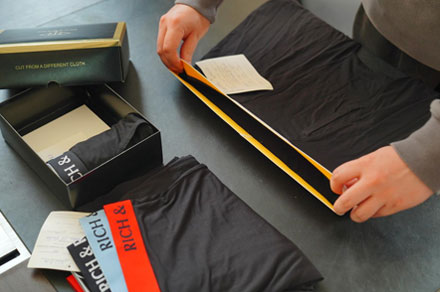
Answer first: A sample fee pays for real work that happens before any bulk order exists: pattern making, sample fabric and trims, sewing time on a sampling line, and any set-up for custom materials. Factories recover that cost in one of three ways — charge it and keep it, charge it and credit it against the first bulk order, or hide it in the unit price. The honest version is the second, written down. Couriers, third-party lab tests and custom tooling such as printing screens are usually outside any credit, and extra rounds caused by design changes are commonly charged. To avoid a dispute, the quotation should state three things in plain words: what the sample charge covers, what is credited and on what condition, and what is never credited.
Finetex’s published position is that pattern development and sampling are charged at cost and credited against the bulk order, and that if the programme does not go ahead, the sample and pattern cost stands; the apparel design page adds that development is not recovered through a hidden margin in the unit price. Two fit revisions are included, according to the company FAQ. This article explains the cost structure behind those terms. It does not publish sample prices: every amount is a labelled variable, because the real figures depend on the style, fabric and number of rounds. It builds on our apparel cost breakdown and on the Finetex Talk answer Will my sample cost be refunded when I place an order?.
What a sample fee is made of
Sampling uses the same inputs as bulk, but without the volume that spreads them. Per piece, a sample costs far more to make than a bulk garment, because it is cut and sewn one piece at a time and its fabric is bought in small cuts rather than by the roll. The components:
| Component | What it pays for | Usually credited against bulk? |
|---|---|---|
| Pattern making and grading | Building the block, adjusting it after fit, grading the size set | Often, if the order reaches the agreed quantity |
| Sample fabric and trims | Fabric bought in small cuts, elastic, labels, thread | Often, as part of the sample charge |
| Sample sewing | Operator time on a sampling line, outside bulk flow | Often, as part of the sample charge |
| Custom set-ups | Jacquard waistband set-up, knitting set-up for custom fabric, printing screens, embroidery files | Often not; spent whether or not bulk follows |
| Third-party lab tests | Shrinkage, colour fastness and other tests run by a lab | Usually not; charged at the lab’s cost |
| Courier | Sending samples to the buyer | Usually not; paid to a third party |
The Talk answer linked above sets out this split and notes that practice differs between factories. Finetex runs a separate sampling department with its own operators and machines, as described on the capabilities page, which is why development time is a real cost rather than a gap in a bulk line.
A cost formula with variables only
To compare quotations, write the sample charge as a formula rather than a single number:
Sample charge = P + (F × R) + S × R + U
- P = pattern and grading work for the style (one-off).
- F = fabric and trims per sample round.
- S = sewing time per sample round.
- R = number of rounds the brand requests.
- U = custom set-ups and tooling (one-off, often non-creditable).
Then add, separately: L = lab tests requested, and C = courier per shipment. Those two are third-party costs.
The formula shows where money is actually spent. If R rises from two to four because comments arrive in pieces, the fabric and sewing parts double while pattern work also grows. That is why the cheapest way to sample is to consolidate comments, not to negotiate a lower fee. Our design page describes collecting comments in one table per round for that reason.
How credit rules work
“Credited against bulk” means the factory deducts some or all of the sample charge from the bulk invoice once an order is placed. A credit rule has four parts, and all four need to be written down:
- Which components are creditable. Pattern and sample sewing are commonly creditable; couriers, lab tests and custom tooling commonly are not.
- The qualifying order. Usually a first order that reaches the stated MOQ for that style. Finetex’s published MOQ is 300–1,000 pieces per style: 300 on stock fabric, and around 1,000 per colour for a custom knit or dye lot.
- The time limit. How long after approval the order must be placed for the credit to apply.
- Where the credit appears. As a line on the proforma invoice for the bulk order, so both sides apply the same terms when the deposit is paid.
A worked illustration, without prices
Suppose a brand develops one style over R = 3 rounds. Under a rule that credits pattern and sewing but not tooling, labs or couriers:
Creditable amount = P + S × 3
Non-creditable amount = U + L + C
Fabric and trims (F × 3) are credited or not depending on what was agreed. If the brand places a qualifying order within the time limit, the creditable amount is deducted from the bulk invoice. If it does not, the sample charge stands. No percentages or prices are implied by this illustration; it only shows which bucket each cost falls into.
The three lines every sampling quotation should state
A sampling quotation is complete when it answers these three lines in writing. The wording below is an example a buyer can ask for, not legal drafting:
- “Sample charge covers:” pattern and grading, sample fabric and trims, sample sewing for the stated number of rounds, and any listed set-ups.
- “Credited against bulk:” which of those items, the qualifying quantity per style and colour, and the time limit for placing the order.
- “Not credited:” couriers, third-party lab tests, custom tooling, and rounds beyond the included number caused by design changes.
Add two practical lines: the payment method for samples (Finetex publishes PayPal for samples, and T/T 30% deposit with 70% against the copy of the bill of lading for bulk) and the expected timing (a development sample in 5–7 working days after artwork and fabric are confirmed, and a full size set in 10–12 working days).
Where disputes come from
Most sample-cost disputes are not about the amount; they are about an assumption that was never written down.
- “We thought samples were free.” A sampling plan offered without charge is different from a sample offered without charge. Ask which one you are getting.
- Extra rounds. Rounds caused by the brand changing the design are commonly charged; rounds needed to correct a factory error commonly are not. Write down how each case is treated, and keep photos and measurements of any factory error.
- Credit missing from the invoice. If an agreed credit is not on the proforma, send the written terms and the sample payment references and ask for a corrected proforma before paying the deposit. If nothing was agreed in writing, treat the credit as a negotiation.
- Split orders. Clarify whether the credit applies only to the first order, or can be split across colours or later orders.
- Currency. If samples were paid in a different currency from the order, agree the exchange basis for the credit.
Fact, advice and uncertainty
Fact: Finetex states that pattern development and sampling are charged at cost and credited against the bulk order, that the cost stands if the programme does not go ahead, and that two fit revisions are included. Sample and bulk lead times, MOQ and payment terms are as published on Finetex pages.
Advice: ask for the three lines in writing before development, keep sample payments referenced, and make sure the credit appears on the proforma invoice.
Uncertain: the actual sample charge for your style. It depends on pattern complexity, fabric, custom set-ups and the number of rounds, which is why this article uses variables rather than prices.
Related reading
- Apparel Cost Breakdown: Fabric, CMT, Trims, Packing and Overhead
- Volume Tiering: How Price Breaks Work at 500, 3,000 and 10,000 Pieces
- Payment Terms That Protect a Small Buyer: T/T, LC and Escrow
- Backward Costing: Target FOB from Your Retail Price
Frequently asked questions
Why do factories charge for samples at all?
Because pattern work, small-cut fabric and sampling-line sewing are real costs incurred before any order exists. A factory that charges nothing usually recovers the cost somewhere else, often in the unit price.
Will my sample cost be credited if I place an order?
It depends on what was agreed. Finetex’s published terms credit pattern development and sampling against the bulk order; the cost stands if the programme does not proceed. Couriers, lab tests and custom tooling are commonly outside any credit.
How many sample rounds are included?
Finetex’s FAQ states that two fit revisions are included. Additional rounds caused by design changes are commonly charged, so consolidate comments before each round.
What should the sampling quotation say?
What the charge covers, what is credited and on what condition (quantity and time limit), and what is never credited. Ask for the credit to appear as a line on the bulk proforma invoice.
Can you give a typical sample price?
Not responsibly in a general article. The charge depends on the style, fabric, custom set-ups and rounds. Send a tech pack and you will receive a sampling plan and cost breakdown for that style.
Sources
- Finetex: Apparel design and development
- Finetex Talk: Will my sample cost be refunded when I place an order?
- Finetex: Frequently asked questions
- Finetex: Manufacturing capabilities
Get a sampling plan with the credit written in
Send us your tech pack or a reference sample. You will receive a sampling plan and a cost breakdown that states what the sample charge covers, what is credited against bulk, and what is not.
Request a quote or start from our apparel design and underwear manufacturing pages.
More factory-floor notes for brand owners
Selling Underwear in Germany: Textilkennzeichnung, LUCID and Packaging Law
German textile labelling, LUCID registration and packaging law for underwear brands after the PPWR and VerpackDG took effect…
Read more →
GSM to Ounce Converter and Fabric Weight Chart
Convert fabric weight between gsm and oz/yd² with the exact factor (1 oz/yd² = 33.906 g/m²), a T-shirt…
Read more →
First-Output Check: The In-Line Inspection That Saves Bulk
What to check on the first garments off each line: measurements, seams, labels and print against the approved…
Read more →
A Fit Session Protocol for Knit Tops: 12 Wearers, 5 Measurements
A recommended fit session protocol for knit tops: recruit 12 wearers, take five measurements, run a movement checklist,…
Read more →
Corporate Uniform Programs: Tendering, Sizing and Reorders
How to run a corporate uniform program with a factory: tender documents, sizing a workforce, producing many sizes…
Read more →
Muscle Fit and Athletic Fit T-Shirts: Pattern Changes That Matter
How muscle fit and athletic fit T-shirts differ from a classic block: chest-to-waist drop, sleeve cap and bicep,…
Read more →Request a sample & pricing information
Send us your tech pack, target price or a reference sample — we reply with a quotation, a realistic lead time and a fabric recommendation within one working day.
- Free sampling plan & cost breakdown
- MOQ from 300 pcs per style
- Reply within 1 working day