
Men’s Sleep Shorts: Woven vs Knit for Sleepwear
Woven or knit men's sleep shorts: how fabric, waistband, shrinkage and gift-set packing differ, and what to specify before you sample a sleepwear range.
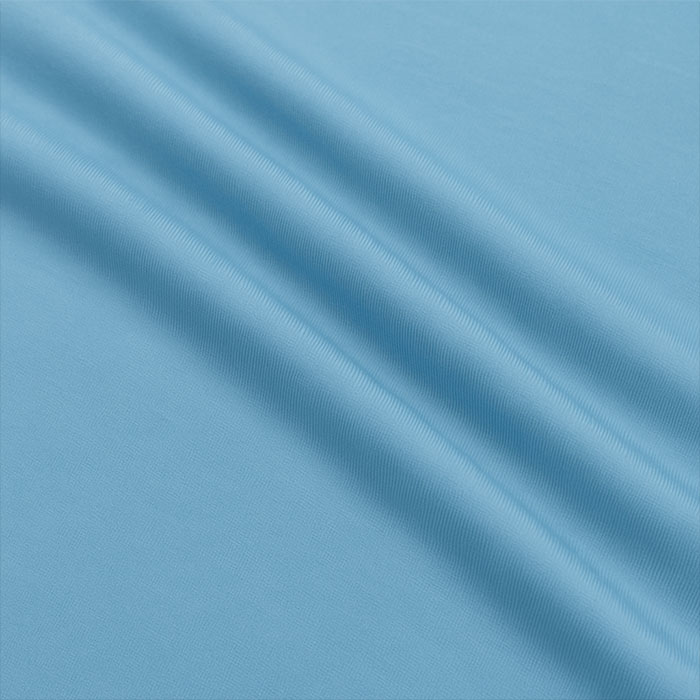
Answer first: Woven and knit sleep shorts are different products that happen to share a name. A woven short — poplin, lawn, flannel — is cut from flat, stable fabric, feels crisp and cool, needs ease built into the pattern because the fabric does not stretch, and usually has a fly or a fuller cut. A knit short — jersey, modal, bamboo viscose, light French terry — drapes, stretches and moves with the body, which makes it softer for sleep but more sensitive to shrinkage, waistband grip and fabric recovery. Choose woven for a classic, tailored-looking sleep short or a gift set built around a print; choose knit for comfort-led loungewear that doubles as daywear at home. Whichever you choose, the decisions that make or break the product are the same three: waistband construction, residual shrinkage measured per component, and how the short is packed when sold alone or in a set.
This guide is written from a men’s knitwear factory’s point of view. Finetex’s pajama and loungewear page publishes a knit sleepwear range — cotton jersey, cotton/modal, micro modal, bamboo viscose, cotton/elastane, brushed cotton, French terry and jacquard knits — with matched sets cut from a single dye lot, piping, contrast trims and drawcords. Woven sleepwear is not part of that published fabric list, so if your range needs a woven short, ask at quotation stage how it would be supplied rather than assuming. This article updates our wider men’s loungewear manufacturing guide.
Woven vs knit: what actually changes
The comparison below is about construction behaviour, not about which is better. A range can include both, but they are separate patterns and often separate production lines.
| Decision | Woven sleep short | Knit sleep short |
|---|---|---|
| Typical fabrics | Poplin, lawn, flannel or brushed woven | Cotton jersey, cotton/modal, micro modal, bamboo viscose, light French terry |
| Hand and drape | Crisp, cool, holds shape | Soft, fluid, follows the body |
| Stretch | Little or none unless the fabric has elastane | Stretch from the knit structure; more with elastane |
| Pattern ease | Must be built in: seat, thigh and leg opening need room | Less ease needed; too much makes a short look shapeless |
| Seams | Flat-bed sewing; seam slippage risk on fine fabrics | Overlock and coverstitch; seams must stretch with the fabric |
| Shrinkage risk | Cotton wovens can shrink in length and width | Cellulose knits can shrink and twist; recovery matters |
| Wovens hold a crisp print well | Prints are possible; registration on stretch fabric needs care | |
| Best fit for | Classic pajama shorts, printed gift sets | Comfort sleepwear, lounge shorts, sets with a knit top |
Our Finetex blog article on woven boxer shorts explains why woven and knit lower-body garments are made on different equipment and should be quoted separately. The same logic applies to sleep shorts.
Fabric weight as a decision
For knit sleepwear, the published Finetex weights are a useful starting range: cotton jersey 160–200 gsm, cotton/modal 170–210 gsm, micro modal 150–200 gsm, bamboo viscose 160–210 gsm and French terry 240–320 gsm. A lighter knit feels cool but can cling and show the waistband through the fabric; a heavier knit feels substantial but may be warm for summer sleep. Specify weight together with stretch and the wash condition the short must survive, then approve a hand-feel sample of the finished fabric.
Waistbands: the part customers notice first
A sleep short is worn lying down, so a waistband that digs in, rolls or loses grip is the most common complaint. The waistband options:
- Covered elastic with drawcord. Elastic enclosed in a fabric casing, with a drawcord through buttonholes or eyelets. The cord lets the wearer adjust without relying only on elastic tension.
- Exposed or branded elastic. A jacquard or printed elastic band, as on underwear. It looks premium and carries the brand, but it sits directly on the skin and must be soft and comfortable lying down.
- Self-fabric waistband with elastic inside. Common on knit shorts; comfortable but needs the elastic stitched in channels so it does not twist.
- Elastic back, flat front. A tailored-looking option used on some woven styles.
Three specification points matter on any of them:
- Elastic tension and width. Specify them, test them on a sample that has been washed, and check the waistband does not roll when the wearer sits or lies on their side.
- Drawcord security. Secure the cord at centre back, so it cannot be pulled out, and choose tipped or knotted ends. Our Talk answer on drawcords and eyelets for lounge shorts covers the details, including the nickel-release restriction for metal parts sold in the EU.
- Buttonholes versus metal eyelets. Many soft sleep shorts use reinforced buttonholes instead of metal eyelets, which are lighter and avoid rust or staining.
Shrinkage: measure each piece, not just the set
Sleepwear is judged in bed and in the laundry. Cotton wovens can shrink in length and width; cellulose knits such as cotton, modal and bamboo viscose can shrink and may twist at the side seam after washing. A short that loses length after the first wash looks like a different size.
Finetex’s pajama page puts the set problem plainly: in a set, a top that shrinks 4% and a bottom that shrinks 7% no longer match. Both pieces are cut from the same lot, washed together in testing, and residual shrinkage is measured per component rather than per garment. That applies directly to a sleep short sold with a T-shirt or a long-sleeve top.
A practical sequence before bulk:
- Agree a wash method and the shrinkage tolerance with the lab or with the factory, in writing.
- Test the bulk fabric before cutting. Finetex’s published practice is to test shrinkage, colour fastness, pilling and weight on the bulk fabric lot and to send failing lots back before cutting.
- Wash the sewn sample and measure waist, hip, rise, inseam and leg opening against the specification.
- For sets, wash top and short together and confirm they still match in colour and proportion.
Hand feel is also a finishing decision. The pajama page notes that a knit heavily dosed with softener can feel superb on first wear and pill within a month, and that the finish is specified and tested against pilling and wash-abrasion standards.
Gift sets: why the short is often the anchor
Sleep shorts are frequently sold as part of a gift set — a short with a matching top, a two-pack of shorts, or a short with a T-shirt in a box. Sets change the specification:
- Single dye lot. Matched pieces should be cut from one dye lot, which Finetex lists as standard for matched sets.
- Matching shrinkage. Covered above; a set that no longer matches after the first wash is a failed gift.
- Size logic. Decide whether the set is sold in one size per box or as a top and short in independent sizes. A single size per box is simpler to pack but forces a compromise on customers whose top and bottom sizes differ.
- Season. Woven prints and flannels follow the selling season; plan the print calendar early so fabric is ready for the gifting window.
Packaging: sold alone versus sold as a set
A sleep short sold on its own can be folded into a polybag with a header or a belly band. A set needs a pack that keeps two or more pieces together and presents them. Finetex’s private packaging page lists polybags and headers, multipack assembly, retail boxes, hangtags, care and fibre composition labels, carton configuration and Amazon FNSKU preparation, and states that a packing sample is approved before the bulk run.
Decide early:
- Retail or e-commerce. Retail packing prioritises shelf presentation; e-commerce packing prioritises protection and a fixed label position.
- Box or bag. A box presents a gift set better; a bag is lighter and cheaper to ship.
- Labelling on every piece. Each piece of a set needs its own care and fibre label; the packaging alone is not enough.
- Packing sample. Approve the packed set, not just the garments, so fold, insert and label positions are fixed before bulk.
A note on children: children’s sleepwear carries specific flammability and labelling rules in several markets and is outside the scope of this men’s guide. Finetex’s pajama page states that it produces children’s sleepwear only where the buyer takes written responsibility for the applicable flammability and labelling standard.
What is fact, what is advice and what is uncertain
Fact: Finetex publishes a knit sleepwear fabric range with weights, matched sets from a single dye lot, per-component shrinkage testing, packing services and a 300–1,000 piece MOQ per style, with sampling in 5–7 working days and bulk in 15–45 days from deposit and approved pre-production sample. Woven sleepwear is not part of the published fabric list.
Advice: pick woven or knit for the product you are actually selling, specify waistband tension and drawcord security, test shrinkage per component, and approve a packed set before bulk.
Uncertain: which construction your customers prefer. That depends on climate, price point and channel, and it is worth testing with a small first order rather than assuming.
Related reading
- Men’s Loungewear Manufacturing: The Category Beyond Underwear
- Joggers and Sweatpants: Fabric, Fit and Trims
Frequently asked questions
Are woven or knit sleep shorts better?
Neither is better in general. Woven shorts are crisp and cool and suit printed, classic styles; knit shorts are soft and stretchy and suit comfort-led loungewear. Choose for the customer and the season.
Does Finetex make woven sleep shorts?
Finetex’s published sleepwear fabrics are knits. If your range needs a woven short, ask at quotation stage how it would be supplied.
What is the minimum order for sleep shorts?
Finetex’s published MOQ is 300–1,000 pieces per style, mixed sizes: 300 on stock fabric, and around 1,000 per colour for a custom knit or dye lot.
How do I stop a sleep short shrinking after the first wash?
Agree a wash method and tolerance, test the bulk fabric before cutting, then wash and measure the sewn sample. For sets, test top and short together, because each piece can shrink differently.
How should a sleep short gift set be packed?
Decide between a box and a bag, label every piece individually, and approve a packing sample before bulk so the fold, inserts and label positions are fixed.
Sources
- Finetex: Pajama and loungewear manufacturer
- Finetex: Private packaging and retail-ready packing
- Finetex: Boxer shorts manufacturing, woven construction
- Finetex Talk: Drawcords and eyelets on lounge shorts
Sample a sleep short in your fabric
Tell us the fabric, the waistband you want, and whether the short sells alone or in a set. We will sample it, wash and measure it, and quote the packing format with the garment.
Request a quote or start from our pajama and loungewear and boxer briefs pages.
More factory-floor notes for brand owners
Selling Underwear in Germany: Textilkennzeichnung, LUCID and Packaging Law
German textile labelling, LUCID registration and packaging law for underwear brands after the PPWR and VerpackDG took effect…
Read more →
GSM to Ounce Converter and Fabric Weight Chart
Convert fabric weight between gsm and oz/yd² with the exact factor (1 oz/yd² = 33.906 g/m²), a T-shirt…
Read more →
First-Output Check: The In-Line Inspection That Saves Bulk
What to check on the first garments off each line: measurements, seams, labels and print against the approved…
Read more →
A Fit Session Protocol for Knit Tops: 12 Wearers, 5 Measurements
A recommended fit session protocol for knit tops: recruit 12 wearers, take five measurements, run a movement checklist,…
Read more →
Corporate Uniform Programs: Tendering, Sizing and Reorders
How to run a corporate uniform program with a factory: tender documents, sizing a workforce, producing many sizes…
Read more →
Muscle Fit and Athletic Fit T-Shirts: Pattern Changes That Matter
How muscle fit and athletic fit T-shirts differ from a classic block: chest-to-waist drop, sleeve cap and bicep,…
Read more →Request a sample & pricing information
Send us your tech pack, target price or a reference sample — we reply with a quotation, a realistic lead time and a fabric recommendation within one working day.
- Free sampling plan & cost breakdown
- MOQ from 300 pcs per style
- Reply within 1 working day