
Raglan and Baseball Tees: Construction and Decoration
How raglan and baseball T-shirts are built: raglan seams, collar attachment, print placement across seams, two-colour shade control and colour bleed tests.
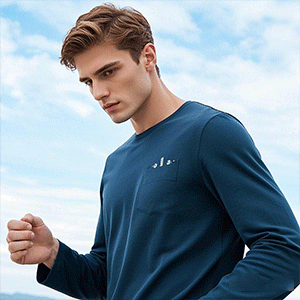
Answer first: A raglan T-shirt replaces the set-in shoulder seam with two diagonal seams per sleeve, running from the underarm to the neckline, so the sleeve forms the shoulder. A baseball tee is a raglan with contrast sleeves, usually three-quarter length, and a contrast or matching collar. The construction changes three things a buyer must specify. Pattern and fit: the shoulder is shaped by the sleeve, so the raglan seam length and angle control fit across sizes. Decoration: front and back prints sit between two diagonal seams, and large or high prints can run into them; printing across a seam is possible but rarely perfectly aligned. Colour: two fabric colours mean two dye lots to match, possible differences in shrinkage between colours, and a risk that a dark sleeve bleeds onto a light body in washing. Test both colours together, set print placement against the seams on the graded pattern, and approve a sample in each colourway.
Care labelling references below are from the US Care Labeling Rule, read on 17 November 2026.
How a raglan is constructed
The four raglan seams
A set-in T-shirt has a horizontal shoulder seam and a curved armhole. A raglan has none of these: each sleeve is joined to the front and the back by a diagonal seam, giving four raglan seams in total. The neckline is formed partly by the top of the sleeves and partly by the front and back body.
| Feature | Set-in T-shirt | Raglan T-shirt |
|---|---|---|
| Shoulder | Body panel, shoulder seam | Formed by the sleeve |
| Armhole | Curved seam round the arm | Diagonal seams, underarm to neck |
| Neckline | Front and back body | Front body, back body and two sleeve heads |
| Fit across shoulder | Set by shoulder width | Set by raglan seam angle and length |
| Typical look | Classic, structured | Sporty, relaxed shoulder |
Sewing sequence
A common sequence is: join sleeves to front and back along the raglan seams, attach the collar, then close the side and underarm seams in one pass and hem. Seams are typically overlocked, sometimes with a coverstitch or twin-needle topstitch along the raglan line. Stitch and seam types are catalogued in ASTM D6193, the standard practice for stitches and seams; naming the stitch type and seam type per operation in the tech pack removes guesswork.
The collar is the hardest operation
The collar crosses four seams on the neckline. Each seam crossing adds bulk, and if the rib is attached under uneven tension the neckline twists or ripples. Ask for:
- Seam allowances pressed or overlocked in a consistent direction at the neckline.
- A specified rib width, composition and attachment ratio.
- A taped or covered back neck if the style needs a clean finish.
Our article on neckline stability explains rib, tape and interlining choices.
Fit and grading
The raglan seam is both a fit line and a style line. Two specifications matter beyond the standard points of measure:
- Raglan seam length, from neck point to underarm, by size.
- Sleeve opening and bicep, because the sleeve also carries the shoulder.
When grading, the raglan seam must grow in a controlled way; if only the chest is graded, larger sizes can feel tight at the shoulder. Measure across the back from raglan seam to raglan seam at a fixed distance below the neck if you need a shoulder-width equivalent. Our guide to grading rules for knit tops covers grade increments.
Print placement and seams
Where prints go wrong
On a raglan the printable area of the front is narrower at the top, because the raglan seams cut diagonally across where a set-in shoulder would be. Three common problems:
- Print runs into the seam. A large front print placed high meets the raglan seams; the screen or film bridges the seam bump and the ink cracks or misses.
- Print over seams on finished garments. Printing after sewing is possible, but seam ridges affect contact and alignment across the seam is rarely exact.
- Different sizes, same artwork. If the artwork stays the same size and the position is fixed from the collar, small sizes can bring the print closer to the seams than on the approved sample.
How to set placement
- Mark the print area on the graded pattern for each size, keeping a clear margin from the raglan seams.
- Decide whether to print cut panels before sewing, which avoids seams but needs accurate panel registration, or print finished garments, which allows exact placement on the garment.
- Specify placement from a fixed reference, such as centre front and a set distance below the neckline seam.
- Approve a strike-off on the bulk fabric in both colourways. Finetex’s T-shirt manufacturing page notes that strike-offs are made on the actual bulk fabric, because the same ink can behave differently on different knits.
Sleeve decoration
Raglan sleeves offer a long, uninterrupted panel for sleeve prints or embroidery running down from the neckline. Keep embroidery off the raglan seam itself, where the stitch density and seam bulk can cause puckering; our article on embroidered T-shirts explains backing and stitch choices. Our T-shirt printing and decoration guide compares methods.
Two-colour control
Shade matching between two lots
A baseball tee typically uses a white or heather body with coloured sleeves. Each colour is a separate dye lot, often a separate fabric order. Control points:
- Approve lab dips for both colours against your standard.
- Keep the body and sleeves of each garment from consistent lots; do not mix dye lots of the sleeve colour within one bundle. Finetex’s quality control page lists shade bundling at cutting for this reason.
- Check the collar rib separately; rib is often knitted and dyed separately and can drift from the sleeve colour. Our article on T-shirt body and rib colour consistency explains why.
Shrinkage differences
Two colours of the same fabric can shrink differently, because dyeing and finishing differ. If the sleeve fabric shrinks more than the body, the raglan seam can twist or pucker after washing. Test dimensional change for both colours with the same method, such as ISO 5077, and compare the results before cutting.
Colour bleed and the care label
The biggest two-colour risk is a dark sleeve bleeding onto a white body in the wash. Test colourfastness to washing on the dark colour, ideally on a composite sample with the light fabric, before bulk.
For the US market, the FTC’s Care Labeling Rule (16 CFR Part 423) requires a warning if any part of the prescribed washing procedure would harm the product or others washed with it; its own example is that a shirt that is not colourfast should be labelled “Wash with like colors” or “Wash separately”. The rule also requires a reasonable basis for care instructions, such as reliable test evidence. A warning label is not a substitute for colourfastness, but it must reflect what the test shows. Our article on care label requirements in the US and EU compares the rules.
Development checklist
| Step | What to approve | Notes |
|---|---|---|
| Pattern | Raglan seam length, angle and grading | Check the fit at shoulder in the size set |
| Fabric | Body and sleeve fabric, both colours | Same base fabric where possible |
| Lab dips | Both colours plus rib | Approve under one light source |
| Tests | Shrinkage of both colours; colourfastness of the dark colour | Before cutting |
| Strike-off | Print on bulk fabric, both colourways | Placement marked from the neckline |
| Sample | One sample per colourway in a middle size | Review collar crossing and print margin |
| Size set | Full size set in the lead colourway | Check print placement on smallest and largest sizes |
Finetex’s published timings are 5–7 working days for a development sample and 10–12 working days for a full size set, with MOQ from 300 pieces per style on stock fabric, as listed on our T-shirt manufacturing page. Two-colour styles depend on both fabrics being available, so confirm colour availability before booking the sample.
Fact, advice and uncertainty
Fact: under the US Care Labeling Rule, a garment that would harm other items in the wash needs a warning, and care instructions need a reasonable basis. A raglan has four diagonal sleeve seams that also form the shoulder and part of the neckline.
Advice: mark print areas on the graded pattern with a margin from the raglan seams, approve strike-offs on bulk fabric in both colourways, and test shrinkage and colour bleed on both colours before cutting.
Uncertain: how well a given dark dye will hold on your fabric; colourfastness depends on fibre, dye class and finishing, so rely on test results for the actual fabric.
Related reading
- Henley T-Shirts: Placket Construction and Demand
- Muscle Fit and Athletic Fit T-Shirts: Pattern Changes That Matter
- Men’s Polo Shirt Manufacturing: Pique, Interlock and Collar Construction
- Big & Tall Men’s Basics: Grading, Stretch and Sizing Gaps
Frequently asked questions
What is the difference between a raglan and a baseball tee?
A raglan is any T-shirt with diagonal sleeve seams running to the neckline. A baseball tee is a raglan with contrast, usually three-quarter-length, sleeves.
Can you print across a raglan seam?
It is possible on finished garments, but seam ridges affect ink contact and alignment is rarely exact. Most designs keep a margin from the seams.
Why does my raglan seam twist after washing?
The sleeve and body fabrics may shrink differently, especially in two-colour styles, or the seam may have been sewn under uneven tension. Test shrinkage for both colours before cutting.
Do two-colour T-shirts need a special care label?
In the US, if the dark colour can bleed onto the light colour or other items, the Care Labeling Rule requires a warning such as “Wash with like colors” or “Wash separately”.
Sources
- eCFR: 16 CFR Part 423, Care Labeling of Textile Wearing Apparel
- ASTM D6193: Standard Practice for Stitches and Seams
- ISO 5077:2007 preview: Determination of dimensional change in washing and drying
Sample a raglan in both colourways
Send your design, colours and print artwork. We will mark print placement on the graded pattern, test both fabric colours for shrinkage and bleed, and sample the style in each colourway.
Order a sample or see our T-shirt manufacturing service.
More factory-floor notes for brand owners
Importing Apparel into Japan: JIS Care Symbols and Quality Labelling
Japan's Household Goods Quality Labeling Act for apparel: fibre composition terms, JIS L 0001:2024 care symbols, labeller details…
Read more →
Apparel Manufacturing Glossary: 120 Terms
120 garment manufacturing terms in English and Chinese with one-line explanations, grouped in 12 topics, for buyers working…
Read more →
Subcontracting: How to Know If Your Order Is Outsourced
Six signs your apparel order has been subcontracted, the contract clauses that control it, and how to check…
Read more →
Tolerance Stack-Up: Right Measurements, Wrong Fit
Why garment measurements can pass tolerance while the fit is still small: how shrinkage, cutting and sewing deviations…
Read more →
Gym, Studio and Team Kit: Low-Volume Custom Orders
How gyms, studios and teams can order custom kit in small runs: one blank body, names and numbers,…
Read more →
The Cost of Poor Quality: Rework, Chargebacks and Air Freight
Calculate the full cost of a 2% defect incident in an apparel order: rework, re-inspection, air freight, chargebacks…
Read more →Request a sample & pricing information
Send us your tech pack, target price or a reference sample — we reply with a quotation, a realistic lead time and a fabric recommendation within one working day.
- Free sampling plan & cost breakdown
- MOQ from 300 pcs per style
- Reply within 1 working day