
Gym, Studio and Team Kit: Low-Volume Custom Orders
How gyms, studios and teams can order custom kit in small runs: one blank body, names and numbers, embroidered crests, reorders, lead times and labels.
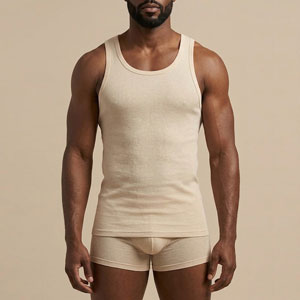
Answer first: Gym, studio and team kit is a small-order, high-repeat business: a club may need 50 to 300 pieces per drop, in many sizes, with names or numbers on some pieces and a crest on all of them, and then needs the same garment again a few months later. The way to make that work is to separate the blank from the decoration. Produce one or two core bodies (a T-shirt and a tank, for example) in your colours, in a quantity that meets the factory’s minimum, and apply names, numbers and short-run artwork per drop, close to the customer. Embroider or print the permanent crest at the factory; add variable data such as names and numbers locally or in a second step. Lock the specification after the first order so reorders match. Be clear about minimums: Finetex’s published MOQ is 300 pieces per style on stock fabric, mixed sizes, so a 50-piece order on its own is better served by a local decorator, while a club or group of studios that pools volume on a shared blank can reach factory minimums.
US labelling references below were read on 17 November 2026. Finetex facts are as published on finetexglobal.com.
The 50–300 piece reality
Small kit orders have three features that drive the approach:
| Feature | Consequence | Response |
|---|---|---|
| Many sizes, few pieces per size | Size curve matters more than total quantity | Pool sizes across drops; hold a small stock of slow sizes |
| Personalised pieces | Each piece may be unique | Keep personalisation out of factory bulk; apply it per order |
| Repeat demand | New members and replacements every few months | One locked blank specification, reordered as stock |
| Short notice | Events and seasons set dates | Hold blanks in stock; decoration is the only lead time |
For a single gym needing 60 T-shirts for a launch, a factory run is usually not the right tool. For a franchise, a league, a group of studios or a club with steady membership, a factory-made blank programme gives consistent quality and better unit cost, and local decoration keeps the flexibility.
Factory minimums
Finetex’s T-shirt manufacturing page states an MOQ of 300–1,000 pieces per style, mixed sizes: styles on stock fabric can start from 300 pieces, while a fully custom knit or dye lot usually starts at 1,000 pieces per colour. Our tank top page also lists 300 pieces per style. Our article on MOQ per colour and size explains how minimums are calculated.
Choosing the blank
Bodies that suit gym and team use
From Finetex’s published fabric ranges:
| Body | Fabric options listed by Finetex | Good for |
|---|---|---|
| Training T-shirt | Polyester performance 130–170 gsm with wicking and anti-odour finishes; cotton/polyester 150–200 gsm | Classes, running, team training |
| Everyday club T-shirt | Combed cotton jersey 150–180 gsm | Merch, members, events |
| Tank top | Performance knits 130–170 gsm; cotton/elastane 170–210 gsm; 2×2 rib 200–240 gsm | Gym floor, studio, layering |
Our article on performance base layers explains wicking and stretch specifications, and muscle fit and athletic fit T-shirts covers the fitted blocks many gyms prefer.
Keep the range narrow
Every extra body, colour or fabric is another minimum. Most clubs do well with:
- one T-shirt body in two colours,
- one tank in one or two colours,
- one fleece or hoodie for winter, ordered once a year.
Sizing for mixed groups
Club members range more widely in size than a retail customer base, and kit is often worn by both men and women. Before the first order, collect sizes from members rather than guessing a curve, and measure a few volunteers against the size chart of the chosen body. If you need a unisex fit and a fitted women’s cut, treat them as two styles with their own minimums, or choose one unisex body that most members accept. Our guide to big and tall basics explains how to extend a size range without distorting the fit.
Numbers and names
Variable print is the part that makes kit personal, and the part that should stay flexible.
Methods
| Method | Suits | Watch for |
|---|---|---|
| Heat-transfer vinyl or film | Names and numbers, one piece at a time | Adhesion on stretch and performance fabrics; test after washing |
| DTF transfers | Multi-colour names, small logos | Hand-feel on light fabrics; wash durability |
| Screen print | Same number on many pieces, or team-wide artwork | Setup per colour makes one-offs expensive |
| Sublimation | Polyester performance fabrics, light colours | Not suitable for cotton or dark polyester |
Finetex lists screen print, DTG, DTF, sublimation, discharge, puff and embroidery as available methods. For variable data, however, a decorator close to the club can turn names and numbers round in days, which a factory overseas cannot match. Our article on choosing a printing method for small batches compares the options in more detail.
Numbering rules
If kit is for a league or competition, check the organiser’s rules for number size, position and contrast before you design. Put the rules in the decoration specification so every reorder follows them.
Crests and permanent branding
The crest is the same on every piece, so it belongs in the factory run.
- Embroidery suits crests on cotton and heavier knits. On light performance fabrics, use a suitable backing and keep stitch counts moderate to avoid puckering; our article on embroidered T-shirts explains the trade-offs.
- Screen print or transfer suits crests on lightweight or stretch fabrics.
- Woven or printed neck labels with the club name turn a plain blank into branded kit; see our page on custom clothing labels.
Approve the crest on a strike-off or embroidery sample on the bulk fabric, not on a different swatch.
Reorders
Kit programmes live on reorders. Three rules keep them consistent:
- Lock the specification: fabric, colour standard, fit block, label and crest artwork, with a sealed sample. Our article on reorder planning for core colours explains how to keep colour stable between dye lots.
- Reorder by size curve, not by total. Track which sizes run out and reorder those, rather than repeating the first order’s mix.
- Plan the cycle. Blanks are reordered on the factory’s lead time; decoration is added on demand.
Lead times
Finetex’s published timings are 5–7 working days for a development sample after artwork and fabric are confirmed, 10–12 working days for a size set, and 15–45 days for bulk from deposit and approved pre-production sample. Typical transit is 18–35 days by sea and 9–13 days by air, according to our FAQ. For a club, that means blanks for a spring season should be ordered in winter; names and numbers can then be added a week before the event.
Labels if you sell the kit
If the club or gym sells kit to members in the United States, the garments are consumer textile products and need the standard labels:
- Fibre content, identity and origin. Under 16 CFR 303.16, required label information includes the generic fibre names and percentages by weight, the name or FTC registered identification number of the manufacturer or a person marketing or handling the product, and the country where it was processed or manufactured.
- Care instructions. The Care Labeling Rule (16 CFR Part 423) requires a permanent care label and a reasonable basis for the instructions. If a decoration method needs special care, such as no tumble drying for some transfers, the label must reflect it.
- Flammability. The Standard for the Flammability of Clothing Textiles (16 CFR Part 1610) applies to clothing textiles. It exempts from testing for guaranties plain surface fabrics of 2.6 oz/yd² or more, and fabrics made entirely of certain fibres, including polyester and nylon. Check whether your lightest performance fabric falls under an exemption.
Other countries have their own labelling rules; our articles on UK and Canadian requirements cover two common markets.
A practical programme structure
- Season planning: agree the bodies, colours and total quantity across all locations or teams.
- Factory order: blanks with crest and neck label, packed by size, meeting the MOQ per style.
- Local decoration: names, numbers and event artwork applied per order.
- Stock control: a small buffer of each size, reordered by size curve.
- Annual review: retire slow colours and add one new item if the data supports it.
Our article on corporate uniform programmes applies a similar structure to larger staff uniform orders.
Fact, advice and uncertainty
Fact: Finetex’s published minimum is 300 pieces per style on stock fabric, mixed sizes. US labelling for consumer textile products is set by 16 CFR Part 303 (fibre, identity, origin) and 16 CFR Part 423 (care), with flammability under 16 CFR Part 1610.
Advice: pool volume on one or two blank bodies, keep personalisation local, and lock the specification after the first order.
Uncertain: how well a given transfer or print survives on a specific performance fabric; test decoration on the bulk fabric through several washes before committing a season’s kit.
Related reading
- Corporate Uniform Programs: Tendering, Sizing and Reorders
- Shopify DTC Apparel Launch: The First 500 Units
- Subscription Underwear: Packaging, Replenishment and Unit Cost
- Performance Base Layers: Fabric Specs for Running and Training
Frequently asked questions
Can a factory make 50 custom gym T-shirts?
Most factories have higher minimums. Finetex’s published MOQ is 300 pieces per style on stock fabric with mixed sizes, so a 50-piece order is usually better placed with a local decorator.
How do teams get names and numbers on factory-made kit?
Order the blank with the crest from the factory, then add names and numbers locally with heat transfer, DTF or screen print, depending on quantity.
What fabric is best for gym T-shirts?
Performance knits with wicking finishes suit training; cotton jersey suits everyday club merch. Choose by use, and test the decoration on the chosen fabric.
Do I need labels if we sell kit to members?
In the US, yes. Consumer textile products need fibre content, identity and origin labelling and a permanent care label.
Sources
- eCFR: 16 CFR Part 303, Rules under the Textile Fiber Products Identification Act
- eCFR: 16 CFR Part 423, Care Labeling of Textile Wearing Apparel
- eCFR: 16 CFR Part 1610, Standard for the Flammability of Clothing Textiles
Build a blank programme for your club
Tell us your bodies, colours, sizes and how many locations or teams will share them. We will quote the blanks with crest and labels at our minimums and send a sample before you commit.
Order a sample or see our T-shirt and tank top manufacturing pages.
More factory-floor notes for brand owners
Importing Apparel into Japan: JIS Care Symbols and Quality Labelling
Japan's Household Goods Quality Labeling Act for apparel: fibre composition terms, JIS L 0001:2024 care symbols, labeller details…
Read more →
Apparel Manufacturing Glossary: 120 Terms
120 garment manufacturing terms in English and Chinese with one-line explanations, grouped in 12 topics, for buyers working…
Read more →
Subcontracting: How to Know If Your Order Is Outsourced
Six signs your apparel order has been subcontracted, the contract clauses that control it, and how to check…
Read more →
Tolerance Stack-Up: Right Measurements, Wrong Fit
Why garment measurements can pass tolerance while the fit is still small: how shrinkage, cutting and sewing deviations…
Read more →
Raglan and Baseball Tees: Construction and Decoration
How raglan and baseball T-shirts are built: raglan seams, collar attachment, print placement across seams, two-colour shade control…
Read more →
The Cost of Poor Quality: Rework, Chargebacks and Air Freight
Calculate the full cost of a 2% defect incident in an apparel order: rework, re-inspection, air freight, chargebacks…
Read more →Request a sample & pricing information
Send us your tech pack, target price or a reference sample — we reply with a quotation, a realistic lead time and a fabric recommendation within one working day.
- Free sampling plan & cost breakdown
- MOQ from 300 pcs per style
- Reply within 1 working day