
Apparel Manufacturing Glossary: 120 Terms
120 garment manufacturing terms in English and Chinese with one-line explanations, grouped in 12 topics, for buyers working with factories in China.
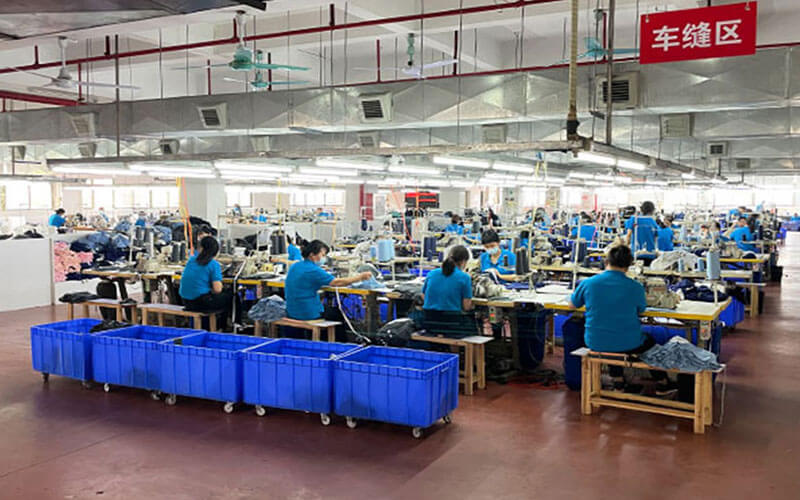
Answer first: This is a bilingual quick reference: 120 garment manufacturing terms in English and Chinese (中文), each with a one-line explanation, grouped into 12 topics of 10 terms. It is written for buyers whose first language is not English and for English-speaking buyers who work with Chinese factories, where the same item may be called a “care label” in the tech pack and 洗水唛 on the factory floor. Use it to check that both sides mean the same thing before you approve a sample or sign an order. For longer explanations of the 80 most important terms, with sources and related guides, see our full apparel manufacturing glossary; this page is the short, bilingual companion.
The Chinese terms are those commonly used in Chinese garment factories; several items have regional variants, which we note where they matter. Regulatory definitions (rules of origin, care labelling, sampling and shrinkage tests) were checked against official texts on 17 November 2026.
How to use this list
- Check the term, then the number. Many disputes are not about quality but about which measurement, sample or price term was meant.
- Put both languages in the tech pack for the terms that matter most to your order, such as tolerance, dye lot and AQL.
- Copy the tables into a spreadsheet if you want an offline version; each row is one term.
1. Business and ordering (业务与下单)
| English | 中文 | One-line explanation |
|---|---|---|
| OEM | 代工生产(按客户设计) | The factory produces to your design, pattern and specification; the design is yours. |
| ODM | 原创设计制造 | You select a design the factory has developed and adapt colour, fabric or branding. |
| Private label | 贴牌 | An existing garment made under your own labels, tags and packaging. |
| CMT (cut, make, trim) | 来料加工(裁剪、缝制、整理) | The factory charges for cutting, sewing and finishing; you supply the fabric and often the trims. |
| MOQ (minimum order quantity) | 最小起订量 | The smallest quantity a factory accepts, usually per style, per colour or per fabric. |
| RFQ (request for quotation) | 询价单 | Your request for a price, stating style, fabric, quantity, destination and delivery terms. |
| PO (purchase order) | 采购订单 | The buyer’s formal order listing styles, quantities, prices and delivery dates. |
| PI (proforma invoice) | 形式发票 | The seller’s preliminary invoice that confirms the order terms and requests the deposit. |
| Tech pack | 工艺单(技术资料包) | The document set of sketches, measurements, materials and construction needed to sample and produce. |
| Lead time | 交期(生产周期) | Time from order confirmation, deposit or sample approval to goods ready to ship. |
2. Development and sampling (开发与打样)
| English | 中文 | One-line explanation |
|---|---|---|
| Proto sample | 初样(开发样) | The first sample, made to check design and construction, often not in the final fabric. |
| Fit sample | 试身样(版型样) | A sample worn on a fit model or measured to correct the pattern. |
| Salesman sample | 销售样 | Samples made before bulk for photography, showrooms or selling to retailers. |
| Size set | 齐码样 | One sample in every size, made to check the grading before bulk. |
| PP sample (pre-production) | 产前样 | A sample in the bulk fabric and trims; its approval releases cutting. |
| TOP sample (top of production) | 大货首批样 | Garments taken from the first bulk output to confirm production matches the PP sample. |
| Shipping sample | 船样 | Garments from finished bulk, sent to the buyer before or with the shipment. |
| Lab dip | 打色样(色样) | A small dyed swatch submitted to match your colour standard before the fabric is dyed. |
| Strike-off | 印花打样 | A print test on the actual fabric, approved before bulk printing. |
| Sealed sample | 封样 | An approved sample, signed and dated, kept unaltered as the reference for bulk. |
3. Fit and measurement (版型与尺寸)
| English | 中文 | One-line explanation |
|---|---|---|
| Pattern | 纸样(版) | The set of shaped pieces, paper or digital, from which fabric panels are cut. |
| Block | 基础版(原型) | A proven base pattern from which new styles are developed. |
| Grading | 放码 | Scaling the base-size pattern up and down to produce the other sizes. |
| Grade rule | 档差 | The amount a measurement changes from one size to the next. |
| POM (point of measure) | 尺寸测量部位 | A defined place and method for taking one measurement, such as chest 2 cm below armhole. |
| Tolerance | 公差 | The permitted deviation from the specified measurement, plus or minus. |
| Size chart (spec sheet) | 尺寸表 | The table of finished garment measurements by size, with tolerances. |
| Half chest | 半胸围(胸宽) | Chest measured flat across the garment from side seam to side seam. |
| HPS (high point shoulder) | 肩颈点 | The point where shoulder seam meets neckline, used as the starting point for body length. |
| Ease | 放松量 | The difference between body measurement and garment measurement that gives comfort and style. |
Our article on tolerance stack-up explains why every measurement can pass while the fit is still wrong.
4. Fibres and yarn (纤维与纱线)
| English | 中文 | One-line explanation |
|---|---|---|
| Combed cotton | 精梳棉 | Cotton combed to remove short fibres, giving a smoother, stronger yarn. |
| Carded cotton | 普梳棉 | Cotton carded but not combed; cheaper, with more short fibres and hairiness. |
| Ring-spun yarn | 环锭纺纱 | Yarn twisted on a ring frame; soft and strong, the standard for quality T-shirts. |
| Open-end (rotor) yarn | 气流纺纱 | Yarn spun by a rotor; faster and cheaper, with a rougher hand. |
| Compact yarn | 紧密纺纱 | Ring-spun yarn with fibres condensed before twisting, reducing hairiness and pilling. |
| Yarn count (Ne) | 纱支(英支) | English cotton count; a higher number means a finer yarn. |
| Denier / dtex | 旦尼尔 / 分特 | Mass in grams of 9,000 m (denier) or 10,000 m (dtex) of filament or yarn. |
| Elastane (spandex) | 氨纶 | A highly elastic synthetic fibre, added in small percentages for stretch and recovery. |
| Modal | 莫代尔 | A regenerated cellulose fibre known for softness and drape. |
| Lyocell | 莱赛尔 | A regenerated cellulose fibre made by a solvent-spinning process; TENCEL™ is a brand of lyocell. |
5. Knit fabrics (针织面料)
| English | 中文 | One-line explanation |
|---|---|---|
| Single jersey | 单面汗布(平纹) | The basic single-knit T-shirt fabric, smooth on the face and looped on the back. |
| Rib (1×1, 2×2) | 罗纹 | A double-knit with vertical ribs and high stretch, used for collars, cuffs and tanks. |
| Interlock | 棉毛布(双面布) | A double-knit fabric smooth on both sides, more stable than jersey. |
| Piqué | 珠地布 | A textured knit with a honeycomb surface, typical for polo shirts. |
| French terry | 毛圈布 | A knit with flat face and loops on the back, used for sweatshirts and lounge. |
| Fleece | 抓绒(起绒布) | A knit whose back loops are brushed to a soft, warm pile. |
| Slub jersey | 竹节布 | Jersey knitted from yarn with deliberate thick and thin places, for texture. |
| GSM | 克重 | Fabric weight in grams per square metre. |
| Fabric width | 门幅 | Usable width of the fabric, either open width or tubular. |
| Spirality (torque) | 扭度(扭曲) | Twisting of a knit garment after washing, pulling side seams round the body. |
6. Dyeing and finishing (染整)
| English | 中文 | One-line explanation |
|---|---|---|
| Dye lot | 缸号 | Fabric dyed in one batch; colour can differ slightly between lots. |
| Shade variation | 缸差 | Colour difference between dye lots, controlled by shade bands and bundling. |
| Reactive dye | 活性染料 | The main dye class for cotton, bonding chemically to the fibre. |
| Garment dyeing | 成衣染色 | Dyeing sewn garments rather than fabric, for a washed look and flexible colour. |
| Yarn-dyed | 色织 | Fabric knitted or woven from yarn dyed before construction, as in stripes. |
| Heather (melange) | 麻灰(花灰) | A mottled colour made by blending differently coloured or dyed fibres before spinning. |
| Enzyme wash | 酵素洗 | A finishing wash with enzymes that softens cotton and reduces surface fuzz. |
| Softener | 柔软剂(硅油) | A finishing chemical, often silicone-based, that improves hand-feel. |
| Compacting | 预缩 | A finishing step that compresses knit fabric lengthwise to reduce later shrinkage. |
| Brushing / peaching | 磨毛 | Abrading the fabric surface to raise fibres for a soft, warm or suede-like hand. |
7. Cutting and sewing (裁剪与缝制)
| English | 中文 | One-line explanation |
|---|---|---|
| Marker | 唛架(排料图) | The layout of pattern pieces on the fabric for cutting. |
| Marker efficiency | 排料利用率 | The share of fabric area used by the pattern pieces, the rest being waste. |
| Spreading | 拉布 | Laying fabric in plies on the cutting table before cutting. |
| Lockstitch | 平车线迹(301) | A two-thread stitch from a standard sewing machine, stitch type 301. |
| Overlock | 包缝(拷边) | An edge-finishing stitch that sews and covers the raw edge, standard for knit seams. |
| Coverstitch | 绷缝(坎车) | A stitch with parallel needle lines on top and a looper cover below, used for hems. |
| Flatlock | 扁平缝(四针六线) | A flat, butted seam, common on activewear and underwear for comfort. |
| SPI (stitches per inch) | 针距(每英寸针数) | Stitch density; too low weakens the seam, too high can damage knit fabric. |
| Bartack | 打枣(套结) | A dense reinforcing stitch at stress points such as pocket corners. |
| SMV (standard minute value) | 标准工时 | The standard time to complete an operation or garment, used to plan line output. |
Stitch and seam types are classified in standards such as ASTM D6193; naming them in the tech pack avoids ambiguity.
8. Printing and decoration (印花与装饰)
| English | 中文 | One-line explanation |
|---|---|---|
| Screen printing | 丝网印花 | Ink pushed through a mesh screen, one screen per colour; economical for larger runs. |
| Plastisol ink | 塑胶油墨 | A PVC-based ink that sits on the fabric surface and gives bright, opaque colour. |
| Water-based ink | 水浆 | An ink that penetrates the fabric for a softer hand. |
| Discharge print | 拔染印花 | A print that removes dye from the fabric and replaces it with colour, very soft on cotton. |
| DTG (direct to garment) | 数码直喷 | Digital inkjet printing directly on the garment; suits small runs and detailed artwork. |
| DTF (direct to film) | 数码烫画 | Artwork printed on film and heat-pressed onto the garment. |
| Sublimation | 热升华 | Dye transferred into polyester by heat; works on light polyester fabrics only. |
| Heat transfer | 烫画(热转印) | A pre-made transfer applied with a heat press, used for names, numbers and labels. |
| Embroidery | 刺绣 | Stitched decoration, usually with a stabilising backing on knit fabrics. |
| Puff print | 发泡印花 | Ink with a foaming agent that rises when cured, giving a raised effect. |
9. Trims, labels and packing (辅料、标签与包装)
| English | 中文 | One-line explanation |
|---|---|---|
| Trims | 辅料 | All components other than the main fabric: labels, thread, elastic, zips, buttons, tags. |
| Main label | 主唛 | The brand label, usually at the neck. |
| Care label | 洗水唛 | The permanent label with care instructions and often fibre content and origin. |
| Size label | 尺码唛 | A small label or print showing the size. |
| Hangtag | 吊牌 | A removable tag attached for retail information, price or barcode. |
| Polybag | 胶袋(PE 袋) | The plastic bag that protects an individual garment, often with a warning print. |
| Carton marks | 箱唛 | Shipping marks printed on cartons: buyer, PO, style, quantity, carton number. |
| Assortment (ratio pack) | 配码装箱 | Packing several sizes or colours in a fixed ratio in one carton. |
| Packing list | 装箱单 | The document listing the contents, quantities and weights of every carton. |
| Barcode (UPC/EAN) | 条码 | A machine-readable product code on hangtag or polybag, issued by the brand. |
Under the US Care Labeling Rule, 16 CFR Part 423, a care label means a permanent label that will not separate from the product and remains legible during its useful life.
10. Quality and testing (质量与测试)
| English | 中文 | One-line explanation |
|---|---|---|
| AQL (acceptance quality limit) | 接收质量限 | The quality level used to index a sampling plan; ISO 2859-1 calls it the worst tolerable process average. |
| In-line inspection (DUPRO) | 中期验货 | Inspection during production, while most of the run can still be corrected. |
| Final inspection (PSI) | 尾期验货 | Random inspection of finished, mostly packed goods before shipment. |
| Critical / major / minor defect | 致命 / 严重 / 轻微缺陷 | The three defect classes; each has its own acceptance number in the sampling plan. |
| Shrinkage (dimensional change) | 缩水率 | Change in size after washing, tested for example to ISO 5077 and expressed to the nearest 0.5%. |
| Colourfastness | 色牢度 | Resistance of colour to washing, light, rubbing or perspiration. |
| Crocking | 摩擦色牢度 | Colour rubbing off onto another surface, tested dry and wet. |
| Pilling | 起球 | Small balls of fibre forming on the fabric surface through wear. |
| Retained sample | 留样 | Garments kept from each approved specification or shipment for later comparison. |
| Chargeback | 扣款 | A deduction by a customer for defects, late delivery or non-compliance. |
11. Costing, payment and shipping (成本、付款与物流)
| English | 中文 | One-line explanation |
|---|---|---|
| FOB (Free On Board) | 离岸价 | The seller delivers the goods on board the vessel at the named port; the buyer pays freight onward. |
| EXW (Ex Works) | 工厂交货 | The seller makes goods available at its premises; the buyer handles export and transport. |
| DDP (Delivered Duty Paid) | 完税后交货 | The seller delivers to the destination with import duty paid. |
| Landed cost | 落地成本 | The total cost per unit at your warehouse: price, freight, insurance, duty, fees. |
| T/T (telegraphic transfer) | 电汇 | Payment by bank transfer, often a deposit before production and balance before or after shipment. |
| L/C (letter of credit) | 信用证 | A bank undertaking to pay the seller when stated documents are presented. |
| Deposit / balance | 定金 / 尾款 | The advance payment that starts production and the remainder paid later. |
| Bill of lading (B/L) | 提单 | The carrier’s document for sea cargo, serving as receipt and title document. |
| CBM (cubic metre) | 立方数 | Shipment volume, used to price sea freight and plan containers. |
| Chargeable weight | 计费重量 | The greater of actual and volumetric weight, used to price air freight. |
12. Compliance and certifications (合规与认证)
| English | 中文 | One-line explanation |
|---|---|---|
| HS / HTS code | 海关编码(HS 编码) | The tariff classification number that sets the duty rate and statistics for a product. |
| Country of origin | 原产国 | The country a product is legally deemed to come from, under the importing country’s rules. |
| Wholly assembled | 完全组装 | US origin term: all components combined into the finished good in a single country (19 CFR 102.21). |
| Fibre content label | 成分标签 | The label stating generic fibre names and percentages. |
| GOTS | 全球有机纺织品标准 | A certification for textiles made with organic fibres, covering processing and chemicals. |
| GRS | 全球回收标准 | A certification for recycled content with chain of custody and processing requirements. |
| OEKO-TEX STANDARD 100 | OEKO-TEX 标准 100 | A certification that a textile article has been tested for harmful substances. |
| Transaction certificate (TC) | 交易证书 | A document that certified goods passed from one certified party to the next. |
| amfori BSCI | amfori BSCI 社会责任审核 | A social compliance audit programme covering labour conditions in factories. |
| UFLPA | 维吾尔强迫劳动预防法 | US law under which goods made wholly or partly in Xinjiang are presumed barred from import. |
For the certificates in this list, see our comparisons of GOTS and OCS and OEKO-TEX and bluesign.
Pairs that are often confused
Some terms look similar in one language and cause expensive misunderstandings:
| Pair | The difference | Why it matters |
|---|---|---|
| PP sample vs TOP sample | PP is made before cutting; TOP is taken from the first bulk output | Approving TOP instead of PP means bulk is already cut |
| Lab dip vs strike-off | A lab dip checks dyed colour; a strike-off checks a print | A colour can be right while the print on it is wrong |
| Shrinkage vs spirality | Shrinkage changes size; spirality twists the garment | Each has a different cause and test |
| Half chest vs full chest | Flat width across the garment vs circumference | A 2× difference in the number if not stated |
| FOB vs EXW | FOB includes export clearance and loading at port; EXW does not | Changes who pays local charges and handles export |
| Dye lot vs shade band | A dye lot is one batch; a shade band shows the accepted colour range | Bundling by lot prevents mixed shades in one garment |
| Main label vs care label | Brand identity vs permanent care information | Care labels have legal content and durability requirements |
When a term from this list appears in an email or a sample comment, add the Chinese term in brackets. It takes seconds and avoids a second sample round.
Fact, advice and uncertainty
Fact: the regulatory terms above follow their official texts: wholly assembled from 19 CFR 102.21, care label from 16 CFR Part 423, AQL from ISO 2859-1 and dimensional change from ISO 5077.
Advice: agree key terms in both languages in the tech pack, especially for samples, tolerances and dye lots.
Uncertain: factory slang varies by region; terms such as 坎车 and 唛架 are common in southern China and may differ elsewhere. When in doubt, ask the factory to confirm the meaning with a photo or sketch.
Related reading
- Tech Pack Template: The 14 Pages a Factory Needs
- GSM to Ounce Converter and Fabric Weight Chart
- MOQ Calculator: What 500 Pieces Really Costs per Style
- Landed Cost Calculator: FOB to Door in Six Inputs
Frequently asked questions
What is the Chinese term for a care label?
In garment factories it is commonly called 洗水唛. The brand label is 主唛 and the carton mark is 箱唛.
What is the difference between a PP sample and a TOP sample?
A PP sample (产前样) is made in bulk fabric before cutting and approves production. A TOP sample (大货首批样) is taken from the first bulk output to confirm production matches it.
What does 缸号 mean?
Dye lot: fabric dyed in one batch. Colour can vary slightly between dye lots, called 缸差.
Is there a longer version of this glossary?
Yes. Our full apparel manufacturing glossary explains 80 key terms in more depth, with sources and related guides.
Sources
- eCFR: 19 CFR 102.21, Textile and apparel products (rules of origin)
- eCFR: 16 CFR Part 423, Care Labeling of Textile Wearing Apparel
- ISO 2859-1:1999 preview (iTeh): sampling schemes indexed by AQL
- ISO 5077:2007 preview: Determination of dimensional change in washing and drying
Use the terms, then send the tech pack
Send us your tech pack in English, Chinese or both. We will confirm the key specifications in both languages before sampling, so nothing is lost in translation.
Request a quote, browse all guides or read our clothing factory sourcing guide.
More factory-floor notes for brand owners
Importing Apparel into Japan: JIS Care Symbols and Quality Labelling
Japan's Household Goods Quality Labeling Act for apparel: fibre composition terms, JIS L 0001:2024 care symbols, labeller details…
Read more →
Subcontracting: How to Know If Your Order Is Outsourced
Six signs your apparel order has been subcontracted, the contract clauses that control it, and how to check…
Read more →
Tolerance Stack-Up: Right Measurements, Wrong Fit
Why garment measurements can pass tolerance while the fit is still small: how shrinkage, cutting and sewing deviations…
Read more →
Gym, Studio and Team Kit: Low-Volume Custom Orders
How gyms, studios and teams can order custom kit in small runs: one blank body, names and numbers,…
Read more →
Raglan and Baseball Tees: Construction and Decoration
How raglan and baseball T-shirts are built: raglan seams, collar attachment, print placement across seams, two-colour shade control…
Read more →
The Cost of Poor Quality: Rework, Chargebacks and Air Freight
Calculate the full cost of a 2% defect incident in an apparel order: rework, re-inspection, air freight, chargebacks…
Read more →Request a sample & pricing information
Send us your tech pack, target price or a reference sample — we reply with a quotation, a realistic lead time and a fabric recommendation within one working day.
- Free sampling plan & cost breakdown
- MOQ from 300 pcs per style
- Reply within 1 working day