
Product Liability for Apparel Brands: Contracts, Insurance and Recalls
Who carries liability when clothing is defective: US CPSC reporting and certificates, the new EU Product Liability Directive, insurance and five supply clauses.
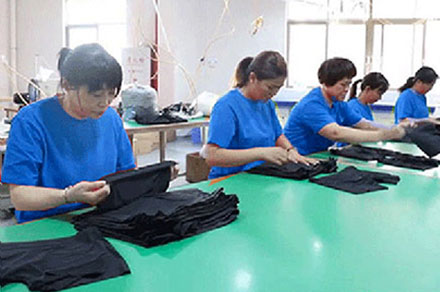
Answer first: When a garment injures someone or breaks a safety rule, the brand that imports and sells it is usually the first party regulators and claimants look to, not the overseas factory. In the United States, the importer is the party that must certify products subject to CPSC rules, and manufacturers (including importers), distributors and retailers must report to the CPSC within 24 hours once they have information that reasonably supports a reportable defect or non-compliance. In the EU, the new Product Liability Directive (EU) 2024/2853 applies to products placed on the market after 8 December 2026 and makes the importer, authorised representative or fulfilment service provider liable when the manufacturer is outside the EU. A supply contract cannot move that legal exposure off the brand, but it can decide who pays and who provides the evidence. That is why five clauses (specification and compliance, testing and records, indemnity and insurance, recall cooperation and cost, and notification) matter more than the unit price on a purchase order.
The regulations below were read on 20 November 2026. This article explains how the rules work for knit apparel; it is not legal advice. Ask a product liability lawyer to review your supply agreement and an insurance broker to review your cover.
Who is responsible for what
United States
The CPSC’s reporting rule, 16 CFR Part 1115, applies to every manufacturer (including an importer), distributor and retailer of a consumer product. Section 1115.14 says a firm must report “immediately, that is, within 24 hours” after obtaining information that reasonably supports the conclusion that its product fails to comply with an applicable rule, contains a defect that could create a substantial product hazard, or creates an unreasonable risk of serious injury or death. A firm may investigate first, but that investigation should not exceed 10 days unless a longer period can be shown to be reasonable.
For clothing, the relevant rules include:
- Flammability: 16 CFR Part 1610, the standard for the flammability of clothing textiles. Plain-surface fabrics are Class 1 (normal flammability) when the burn time is 3.5 seconds or more. Plain-surface fabrics of 2.6 oz per square yard or more, regardless of fibre, are exempt from testing to support a guaranty, which covers most T-shirt jersey and fleece; lighter or raised-surface fabrics may not be.
- Children’s drawstrings: 16 CFR Part 1120 lists children’s upper outerwear in sizes 2T to 16 with drawstrings that do not conform to ASTM F1816-97 as a substantial product hazard. If you sell youth hoodies, this is the clause most likely to trigger a recall.
- Certificates: under 16 CFR Part 1110, for a finished product made outside the United States that must be certified, the importer is the finished product certifier, and the certificate must accompany each finished product shipment. The rule, revised in January 2025, also provides for electronic filing of certificates with CBP; check the current filing requirement for your entries with your broker.
The care labelling rule and textile fibre labelling rules are not safety rules, but a wrong care instruction is a common route to damaged-goods claims, so treat labels as part of the same compliance file.
European Union
The European Commission’s product liability page summarises the new directive. Member States must transpose it by 9 December 2026, and it applies to products placed on the market after 8 December 2026; the 1985 directive continues to apply to products placed on the market before that date. When the manufacturer is established outside the EU, the importer or the authorised representative can be held liable and, in their absence, the fulfilment service provider. Online platforms can be held liable when they act as one of those economic operators.
Product liability sits alongside the safety rules. For EU labelling, traceability and the “responsible person”, see our guide to EU GPSR for apparel.
Responsibility map
| Issue | Who the law looks to first | What the factory can contribute |
|---|---|---|
| CPSC certificate for a regulated product | US importer (often the brand) | Test reports, fabric weights and construction data |
| Report to CPSC of a possible hazard | Manufacturer (incl. importer), distributor, retailer | Prompt notice, lot data, root-cause analysis |
| EU claim by an injured consumer (new PLD) | EU importer, authorised representative or fulfilment provider if the maker is outside the EU | Documentation; contractual indemnity |
| Retailer chargeback for a defect | The vendor (brand) under the vendor agreement | Inspection records, retained samples |
Insurance: what to ask your broker
We do not sell or arrange insurance, and policy terms vary by insurer and market, so treat this as a question list, not advice on cover:
- Product liability cover: does it apply to products sourced from overseas, and in which territories (US, EU, UK, online sales worldwide)?
- Vendor endorsement: does a retailer require to be named on your policy, and with what limit?
- Product recall or contamination cover: is recall cost (notification, logistics, destruction, replacement) covered at all? Many general liability policies treat it separately.
- Supplier’s cover: can the factory provide its own product liability certificate, and does it respond to claims in your markets? A policy that only responds in the factory’s home country may not help you.
- Claims process: who controls the defence, and does the insurer need notice of supplier problems before a claim exists?
Retailers usually set their own minimum requirements in the vendor agreement. Our article on retail vendor compliance covers the operational side.
Recalls: what actually costs money
A recall is a logistics project with a legal deadline. CPSC rules describe the remedies it may seek, starting with a corrective action plan, which Section 1115.20 defines as a document signed by the firm setting out the remedial action it will voluntarily undertake. The cost lines are predictable even if the amounts are not:
| Cost line | Usually triggered by | Can the contract allocate it? |
|---|---|---|
| Investigation and testing | Complaint or failed audit | Yes |
| Notification (customers, retailers, regulator) | Reportable issue | Yes, for cost; not for duty to report |
| Return logistics and destruction | Recall or stop-sale | Yes |
| Replacement product | Recall remedy | Yes |
| Retailer chargebacks and penalties | Vendor agreement | Partly |
| Lost sales and brand damage | Any public recall | Rarely |
Our article on the cost of poor quality breaks down the smaller, more common version of the same problem: rework, chargebacks and air freight.
Five clauses to put in a supply agreement
These are the subjects a lawyer will usually want covered. The wording must fit your jurisdiction and governing law.
1. Specification and compliance warranty
The supplier warrants that goods conform to the approved specification (tech pack, approved pre-production sample, fabric and trim specifications) and to the laws of the named destination markets that the buyer has listed in writing. The clause should name those markets and the standards that apply (for example 16 CFR 1610, the drawstring rule for youth upper outerwear, or a retailer’s restricted substances list). An open-ended “all applicable laws” warranty sounds strong but is hard to enforce and easy to dispute.
2. Testing, records and traceability
State which tests are required, by which laboratory, at what stage (fabric, pre-production, bulk) and who pays. Require the supplier to keep production records by lot (fabric roll and dye lot, cutting date, line, inspection reports) for a defined period, so a recall can be limited to the affected lots rather than everything you ever bought. On our side, we keep retained samples for every approved specification and supply measurement, inspection and test reports with each shipment, as set out on our quality control page.
3. Indemnity and insurance
Who pays if a third party claims for injury or a regulator orders corrective action because of a manufacturing defect? An indemnity usually covers losses caused by the supplier’s breach of the specification or the compliance warranty, and excludes defects caused by the buyer’s own design, artwork or materials. Tie it to evidence of insurance, state any cap explicitly, and say how the cap relates to the order value.
4. Recall cooperation and cost allocation
Agree in advance on the supplier’s duties if a recall or stop-sale is needed: timelines to provide lot data and root-cause findings, help with replacement production, and how the listed cost lines are split when the cause is the supplier’s, the buyer’s or shared. Make clear that the brand decides when to report to a regulator; the contract cannot delay a legal reporting duty.
5. Notification and change control
Require the supplier to notify you before changing a fabric mill, dye house, trim supplier or production site, and immediately if it learns of a failed test, complaint or defect that could affect shipped goods. Unannounced substitution is the most common way a compliant product becomes non-compliant. Our article on subcontracting explains how to check where an order is actually being made.
Where knit basics are low-risk, and where they are not
For adult T-shirts, underwear and fleece in ordinary fabrics, the documented risk is mostly about labelling, fibre content and quality, not injury. The exposure rises with:
- Children’s products, where drawstrings, small parts and children’s product certification apply.
- Lightweight or brushed and raised-surface fabrics, which do not automatically fall within the 2.6 oz per square yard testing exemption.
- Chemical restrictions, such as PFAS rules in several US states and the EU, covered in our PFAS restrictions guide.
- Marketplace sales into the EU, where a fulfilment service provider can become the liable operator if there is no importer or authorised representative.
Fact, advice and uncertainty
Fact: US firms must report potential substantial product hazards to the CPSC within 24 hours of having reportable information; the importer certifies imported products subject to CPSC rules; children’s upper outerwear in sizes 2T–16 with non-conforming drawstrings is a substantial product hazard. The new EU Product Liability Directive applies to products placed on the market after 8 December 2026 and makes the importer, authorised representative or fulfilment service provider liable where the manufacturer is outside the EU.
Advice: name the destination markets and standards in the contract, require lot-level records and change notification, align indemnity with insurance, and agree recall cooperation before you need it. Have a lawyer draft or review the clauses.
Uncertain: how each EU Member State’s transposing law and courts will apply the new directive, and whether your insurance responds to recalls of sourced goods. Both depend on documents we have not seen.
Related reading
- Retail Vendor Compliance: Chargebacks, ASN and EDI for Apparel
- Forced-Labor Screening: Audit Trails That Survive Customs
- EU GPSR for Apparel: Label, Listing and Responsible Person Requirements
- The Cost of Poor Quality: Rework, Chargebacks and Air Freight
Frequently asked questions
Is the factory or the brand liable for a defective garment?
Regulators and claimants usually look first to the importer and seller in the destination market. A supply contract can make the factory pay for defects it caused, but it does not remove the brand’s legal duties.
How quickly must a US brand report a safety issue to the CPSC?
Under 16 CFR 1115.14, immediately, meaning within 24 hours of obtaining information that reasonably supports a reportable conclusion. An investigation to evaluate the information should not normally exceed 10 days.
Do adult T-shirts need flammability testing?
16 CFR Part 1610 applies to clothing textiles, but plain-surface fabrics of 2.6 oz per square yard or more are exempt from testing to support a guaranty. Lighter or raised-surface fabrics should be checked with your laboratory.
When does the new EU Product Liability Directive apply?
To products placed on the market after 8 December 2026, according to the European Commission. Products placed on the market before that date remain under the 1985 directive.
Will the factory’s insurance cover my recall?
Possibly not. Ask for the policy certificate and check with your broker whether it responds to claims in your markets and whether recall costs are included.
Sources
- eCFR: 16 CFR Part 1115, Substantial product hazard reports
- eCFR: 16 CFR Part 1110, Certificates of compliance
- eCFR: 16 CFR Part 1610, Standard for the flammability of clothing textiles
- eCFR: 16 CFR Part 1120, Substantial product hazard list (children’s upper outerwear drawstrings)
- eCFR: 16 CFR Part 423, Care labeling of textile wearing apparel
- European Commission: Liability for defective products
Put compliance evidence into the order file
Tell us your destination markets, any retailer standards and the tests you need. We will confirm what our inspection and test reports cover, which third-party laboratory tests to schedule and at what stage, before the order is placed.
Request a quote or see our quality control gates.
More factory-floor notes for brand owners

Naturally Dyed Underwear: What Should Buyers Test Before Bulk?
Plan naturally dyed underwear testing for wash and rub fastness, shade variation, and reorder approval. Match color and…
Read more →
Hidden Pockets in Boxer Briefs: Where Should They Sit?
Choose hidden pockets in boxer briefs by testing placement, access, load, and movement in comparable samples before approving…
Read more →
Silk Underwear Sourcing: What Can a Buyer Approve from a Sample?
Use a silk underwear sourcing checklist to verify fiber composition, compare stretch and seams, and approve care and…
Read more →
Adaptive Men’s Underwear: How Do You Test Side Openings?
Test side openings in adaptive men's underwear with seated and one-handed dressing checks, closure placement reviews, and a…
Read more →Microfiber Underwear Fabric: What Should Buyers Specify?
Specify microfiber underwear fabric by verified fiber content, knit structure, stretch, and wash performance. Use a sample checklist…
Read more →Skin-Tone Underwear Color Matching: How Do You Approve a Range?
Plan skin-tone underwear color matching with physical swatches, stretch checks, and a repeatable shade approval record for production…
Read more →Request a sample & pricing information
Send us your tech pack, target price or a reference sample — we reply with a quotation, a realistic lead time and a fabric recommendation within one working day.
- Free sampling plan & cost breakdown
- MOQ from 300 pcs per style
- Reply within 1 working day