
Boxer Briefs Ride Up Under Work Pants: A Fit Test
Check why boxer briefs ride up under work pants with a paired wear test that separates trouser drag from thigh fit, leg opening, and waistband movement.
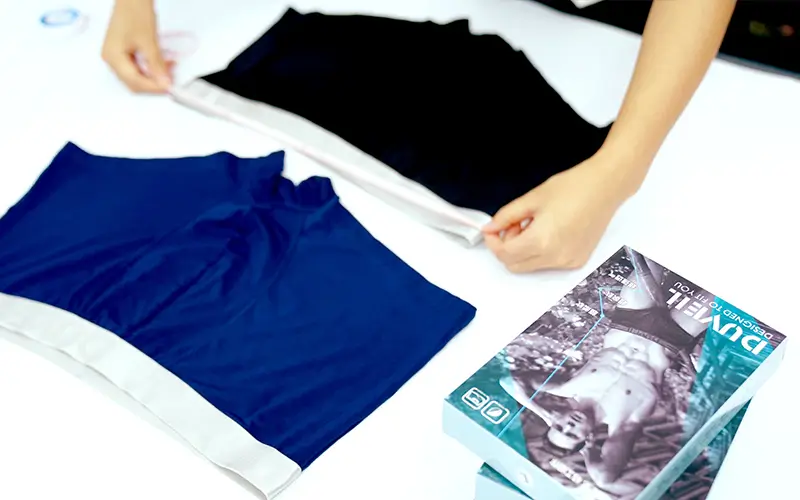
Use a paired fit test to find out why boxer briefs ride up under work pants and decide which garment to change first. A wearer who had switched to longer boxer briefs still found them creeping up on long, sweaty walks. They were considering a larger size because of their thighs, even though the waist already fitted. Start by testing the same pair with and without the trousers you normally wear. That lets you see whether the underwear leg moves on its own or first moves when the two garments rub or catch.
Last updated: November 28, 2026
Find the first movement before you change size
Put on the briefs and let the legs settle without pulling them down farther than you would normally wear them. Note where the hems sit on the front and inside of each thigh. Use a body landmark you can find again, such as the top of the knee, and make a simple note of the position. Check whether the waistband starts out level. Walk, take a few steps upstairs if that is part of your normal routine, and sit and stand again. Note where the first movement occurs and whether the hem settles back on its own.
Reset the briefs and repeat those movements in your usual work trousers. Check that the underwear leg still starts in the same place after you pull the trousers on. If the hem has already moved, record that separately. If it moves only after sitting or stepping up, note the movement that triggers it. Keep the same briefs and use the same route and movements. A change in the result gives you a practical clue about the garment combination. It does not establish a friction measurement or a safety rating for either garment.
A folded hem and an intact hem that has slid upward are different observations. Note which you see before you readjust the garment. That detail helps a fitter choose between examining a binding that curls and investigating tension higher in the leg.

Why the thigh matters even when the waist fits
According to ISO 8559-1:2017, body measurements for clothing use defined anthropometric landmarks. Keep the wearer’s thigh measurement separate from the relaxed width of the garment opening. Measure the thigh where the proposed hem lands. Moving to a longer inseam can put that opening on a different part of the leg, so measuring at the old hem position can mislead the pattern team. Send the two locations with the sample notes.
According to ASTM D4964-96R20, a textile lab can measure the tension and elongation of elastic fabrics. That can help compare bindings if equivalent garments feel different at the edge. A bench result leaves the seat, gusset and interaction with the trousers to a wear trial. The site’s boxer brief ride-up guide explains the construction factors to check when the leg also moves without trousers.
How we would set up a comparable sample
In our boxer briefs production range, we grade from a locked base pattern and offer more than one inseam and seam construction. In development, we work to an agreed specification and keep an approved physical garment as a reference. For this problem, start with the waistband the wearer already accepts. Ask for a comparison piece with one change, such as a different opening on the same inseam. Keep the pouch and rise fixed. Take the same notes before and after the change.
If the outer trousers seem to be moving the hem, run the trial with a second everyday trouser cut as well. Use the same briefs first, so the original result remains interpretable. If the issue appears only on long, sweaty shifts, an indoor test can help you narrow the choices. Check the shortlisted pair under normal wear before approving it. Keep required protective or uniform layers in place and follow workplace rules throughout.

Buyer concerns: What should we change without losing the fit at the waist?
- The opening leaves pressure marks. Check the location on the wearer and the binding tension. Try an opening adjustment while holding the waistband and inseam steady.
- The inner leg climbs and the waistband drops at the back. Inspect seat and gusset movement. A trial piece with more room where the fabric pulls gives a clearer answer than changing all the measurements at once.
- The briefs hold in place until the wash. Retain an unwashed piece. According to ISO 6330:2021, a complete textile care test combines washing and drying. Agree on the sequence, record which dimensions changed, and repeat the wear check. Use our boxer brief inseam guide for the landmark and finished-length comparison.
Questions about boxer brief ride-up under trousers
Is some movement normal?
A brief may shift during a step or when you sit. Record whether it settles again or stays bunched until you pull it down. The second result is the one a pattern or layering change should address.
Will a longer leg always stay down?
A longer leg moves the opening to another part of the thigh. Check its position and tension there before choosing a length. Two inseams can behave alike if both bind on the wearer or catch on the trousers.
Which size should I test if the waist already fits?
Keep a pair with the accepted waist as the control. If you try the next size, check whether the waist slips or the rise changes. For a custom order, ask for a leg-opening trial on the accepted waist size.
Request matched boxer brief samples
If you’re developing a workday boxer brief, send the reference pair, your usual trousers or their fabric and fit description, and a note of when and where the hem moves. Request a fit sample comparison with the waistband held constant.
More factory-floor notes for brand owners
Hoodie Mockup vs. First Sample: What to Fix
Compare a hoodie mockup with the first physical sample and turn differences in the hem, hood, and print…
Read more →
How to Compare Low MOQ Clothing Quotes
Compare low MOQ clothing quotes on the same garment, sample costs, size split, reorder conditions, and delivery point…
Read more →
Naturally Dyed Underwear: What Should Buyers Test Before Bulk?
Plan naturally dyed underwear testing for wash and rub fastness, shade variation, and reorder approval. Match color and…
Read more →Hidden Pockets in Boxer Briefs: Where Should They Sit?
Choose hidden pockets in boxer briefs by testing placement, access, load, and movement in comparable samples before approving…
Read more →
Silk Underwear Sourcing: What Can a Buyer Approve from a Sample?
Use a silk underwear sourcing checklist to verify fiber composition, compare stretch and seams, and approve care and…
Read more →
Adaptive Men’s Underwear: How Do You Test Side Openings?
Test side openings in adaptive men's underwear with seated and one-handed dressing checks, closure placement reviews, and a…
Read more →Request a sample & pricing information
Send us your tech pack, target price or a reference sample — we reply with a quotation, a realistic lead time and a fabric recommendation within one working day.
- Free sampling plan & cost breakdown
- MOQ from 300 pcs per style
- Reply within 1 working day