
China vs Vietnam for Apparel Manufacturing: Duty, Lead Time and Minimums
China or Vietnam for knit apparel? A side-by-side on US duty layers (checked 11 Nov 2026), fabric supply, lead time, minimums and when each makes sense.
Answer first: As of 11 November 2026, US imports of apparel from both China and Vietnam carry the same new 12.5% Section 301 forced-labour tariff on top of normal duty. China additionally carries the older Section 301 duty on many knit apparel subheadings. Vietnam can lower duty for the US and, under the EU agreement, sometimes for the EU, while China usually wins on fabric supply, development speed and small minimums.
“Should we move production to Vietnam?” is one of the most common questions apparel brands ask. The honest answer depends on three things: what the duty difference is for your exact product, whether the Vietnamese factory can get the right fabric without long import lead times, and whether your order volume fits its minimums. This comparison uses official US duty data checked on 11 November 2026 and qualitative differences between the two supply chains. It does not quote Vietnamese factory prices, because we do not have a like-for-like Vietnamese quotation to publish, and any number we invented would mislead you.
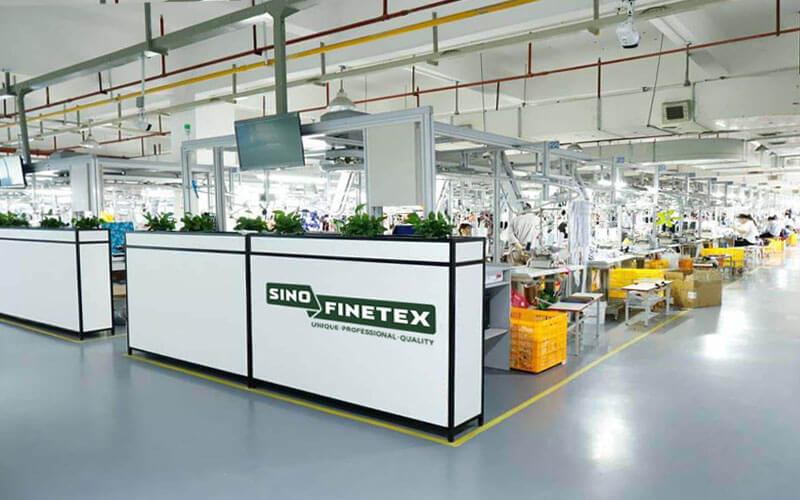
Finetex manufactures in Shenzhen, China, so we are not neutral. Where the facts favour Vietnam, we say so.
The US duty layers, side by side
US import duty on apparel is built in layers. The table summarises the layers that differ or overlap between China and Vietnam for a typical knit garment of HTS chapter 61.
| Duty layer | China | Vietnam |
|---|---|---|
| Normal (MFN) duty | Same HTS column 1 rate | Same HTS column 1 rate |
| Section 301 China tariffs (2018–2019 actions) | Applies to subheadings on the USITC list; many chapter 61 knit subheadings are listed under heading 9903.88.15 | Not applicable |
| Section 301 forced-labour tariff (from 24 July 2026) | 12.5% on products of China, with Annex exemptions | 12.5% on products of Vietnam, with Annex exemptions |
| Other trade actions | Check HTS chapter 99 at time of entry | Check HTS chapter 99 at time of entry |
Two points stand out. First, the forced-labour Section 301 action announced by USTR on 28 July 2026 applies to products of both countries at the same 12.5% rate, so it does not change the comparison. Second, the long-standing China-specific Section 301 duty is the main structural difference. The USITC “China Tariffs” reference list, last updated 28 July 2026, lists many knit apparel subheadings in headings 6107, 6108, 6109 and 6110 under heading 9903.88.15. Whether your product is affected depends on its exact 8-digit subheading.
Check date and caution: these layers were checked on 11 November 2026. US trade measures have changed often since 2025 and can change again before your goods arrive. Confirm the classification and the full rate stack for your product with a licensed customs broker before you compare quotes. Our guide to Section 301 tariffs on Chinese apparel and our apparel import duties basics for online sellers explain how to do this.
Country of origin: where the garment is assembled
Moving the sewing to Vietnam does not automatically make a garment Vietnamese for US customs. Under 19 CFR 102.21, for most cut-and-sew apparel the country of origin is generally where the garment is wholly assembled. Goods knit to shape follow different rules based on where the knitting happens. Fabric origin alone does not decide the garment’s origin, but cutting Chinese fabric in Vietnam and sending panels back to China for sewing would not create Vietnamese origin.
The practical consequence: if you buy from Vietnam to change the duty, the garment must genuinely be made there, and you need documents that show it. Transshipment, meaning relabelling Chinese goods as Vietnamese, is illegal and is an enforcement priority for US Customs.
Forced-labour rules also apply regardless of country. The Uyghur Forced Labor Prevention Act presumption covers goods made wholly or partly in Xinjiang, which includes cotton used in fabric sewn elsewhere. A Vietnamese garment made from Chinese cotton fabric may need the same supply chain documentation as a Chinese one.
The EU and UK picture is different
For EU buyers the comparison is not about Section 301 at all. The EU–Vietnam Free Trade Agreement entered into force on 1 August 2020 and phases out EU duties on many products from Vietnam, but preferential duty for garments depends on meeting the agreement’s rules of origin. Those rules are demanding for clothing, and garments sewn in Vietnam from fabric imported from China may not qualify. Ask your EU customs adviser to check the product-specific rule before you assume a saving. Chinese apparel generally pays the standard EU third-country duty.
Worked example: the same boxer brief from both countries
Take one product: a men’s knit boxer brief. Its US classification depends on fibre content. A cotton boxer brief would usually fall under subheading 6107.11.00 and a synthetic one under 6107.12.00; both subheadings appear on the USITC China Section 301 list. Your broker must confirm the classification for your actual fabric.
For each country, the duty calculation on the customs value follows the same pattern:
| Step | China | Vietnam |
|---|---|---|
| Customs value | FOB price of the China order | FOB price of the Vietnam order |
| MFN duty | HTS rate for the subheading | Same HTS rate |
| China Section 301 (9903.88.15) | Added if the subheading is listed and no exclusion applies | Not added |
| Forced-labour Section 301 | 12.5% | 12.5% |
| Other chapter 99 measures | Check on the entry date | Check on the entry date |
Then compare the totals, not the FOB prices alone. The China order starts with an extra duty layer; the Vietnam order may carry extra fabric lead time, freight on imported fabric, or a higher minimum. For a boxer brief, the critical inputs are the waistband elastic and the knit fabric. If the Vietnamese factory imports both from China, the schedule must include their production and transit time, and the forced-labour documentation must cover the cotton.
What this example cannot tell you is the FOB price in each country, because that depends on the factory, the fabric and the quantity. Get two real quotes on one tech pack. Our underwear manufacturing service page lists the boxer brief constructions we quote from Shenzhen.
Fabric and trim supply
This is where the two countries differ most in practice, and where most delays come from.
| Factor | China | Vietnam |
|---|---|---|
| Fabric knitting and dyeing | Very deep local base, including specialist knits | Growing, but many factories still import fabric |
| Trims, elastic, labels and packaging | Widely available locally | Often imported, adding lead time |
| Development samples on new fabric | Fast where mills are nearby | Slower if fabric must be imported |
| Repeat orders on stock fabric | Fast | Fast once fabric is in place |
These are qualitative observations, not measured averages. The size of the gap depends on the factory. A Vietnamese factory with its own fabric programme can perform very differently from one that imports every metre.
At Finetex, fabric knitting, dyeing, cutting, sewing, printing, embroidery, labels, hangtags and retail packaging are all within our own supply chain in China, so one purchase order covers the finished product. That is a real advantage for small programmes with custom colours, but it does not change the duty layers above.
Lead time and shipping
Lead time is driven more by fabric and approvals than by sewing. Finetex publishes these lead times: 5–7 working days for a development sample, 10–12 working days for a size set, and 15–45 days for bulk depending on quantity, fabric and trims. Typical sea transit from Shenzhen or Yantian is 18–22 days to the US West Coast and 22–28 days to the US East Coast.
A Vietnamese factory may quote similar sewing times, but if fabric is imported, add the fabric’s production and transit time. For a first order with custom fabric, ask any supplier, in either country, for a schedule with dates for lab dips, fabric delivery, sample approval and bulk start. Our article on realistic clothing production lead times from China lists what to ask for.
Both countries also have a long Lunar New Year holiday. In Vietnam it is called Tết and falls at roughly the same time as Chinese New Year, so moving countries does not remove the early-year disruption. See our Chinese New Year 2027 production calendar.
Minimum order quantities
Minimums depend on the factory and the fabric more than the country. Large Vietnamese factories that serve big retailers often set high minimums per style and colour. Smaller factories exist in both countries.
Finetex’s published MOQ is 300–1,000 pieces per style, mixed sizes: 300 pieces on stock fabric, and around 1,000 pieces per colour for a fully custom knit or dye lot, because that is the mill’s minimum. If a Vietnamese supplier quotes a low minimum on custom fabric, ask where the fabric comes from and who carries the mill minimum. Our guide to MOQ in China clothing manufacturing explains how minimums are built.
How to compare two real quotes
To compare China and Vietnam fairly, ask both suppliers to quote the same specification on the same terms:
- The same tech pack, fabric weight and composition, trims and packaging.
- The same Incoterm, ideally FOB at the named port.
- The same quantity per style and colour.
- A dated production schedule, including fabric.
- The HTS subheading each supplier expects, which your broker then checks.
Then build the landed cost for each: FOB price, freight, insurance, each duty layer that applies, broker and port fees, and the cost of a delay. A lower FOB price can be cancelled out by a longer fabric lead time, and a duty saving can be cancelled out by a missed season.
Questions to ask any new supplier, in either country
Before you move a programme, ask each candidate factory the same questions and get the answers in writing:
- Where is the fabric knitted and dyed, and what is its lead time to the cutting table?
- Where do the elastic, labels and packaging come from?
- What is the minimum per style and per colour on custom fabric, and who sets it?
- Which social audit and chemical certificates can you share, and are they current?
- Can you provide cotton origin documents to support a forced-labour review?
- What were the dates of your last two holiday shutdowns, and when did output return to normal?
- Who is the contact for quality issues, and what inspection reports come with each shipment?
A supplier that answers these clearly is easier to work with whichever country it is in. Vague answers to questions 1 and 5 are the most common warning signs.
A decision guide by order profile
These are recommendations based on the factors above, not rules.
| Your situation | Usually better fit | Why |
|---|---|---|
| First collection, 300–1,000 pieces per style, custom colours | China | Local fabric and trims, faster development, lower custom minimums |
| Many styles in small quantities | China | Easier to source varied fabrics and trims in one place |
| Large repeat programme of a few basic styles to the US | Compare both | The China-specific Section 301 duty may outweigh other costs at volume |
| EU buyer whose product meets EVFTA origin rules | Compare both | Possible EU preferential duty for Vietnamese origin |
| Product needs specialist fabric | Depends on where the fabric is made | Sewing next to the mill reduces risk |
| Strict deadline for a launch | Wherever fabric is already available | Fabric is the usual critical path |
Some brands split production: development and smaller custom styles in China, high-volume basics wherever the landed cost is lowest. That can work, but it doubles supplier management and quality control.
What is fact, what is advice and what is uncertain
Fact: the 12.5% forced-labour Section 301 rate for China and Vietnam, effective 24 July 2026, from the USTR notice in the Federal Register of 28 July 2026; the China Section 301 list from the USITC reference dated 28 July 2026; origin rules from 19 CFR 102.21; the EVFTA entry into force on 1 August 2020; Finetex lead times, transit times and MOQs from Finetex’s published pages.
Advice: the comparison method and decision guide.
Uncertain: future US tariff changes, individual factory performance in either country, and whether a given product qualifies for EU preference. Always confirm classification and duty with a licensed customs broker.
Related reading
- Section 301 Tariffs on Chinese Apparel: HS Codes, Rates and Mitigation
- De Minimis Reform: What It Means for Small Apparel Importers
- Chinese New Year Production Calendar: 2027 Cut-Off Dates
Frequently asked questions
Is apparel from Vietnam cheaper to import into the US than apparel from China?
Often in duty terms, because the older China-specific Section 301 tariff covers many knit apparel subheadings. Both countries now carry the same 12.5% forced-labour Section 301 tariff. Whether the total is cheaper depends on the FOB price, fabric and freight for your product.
Does sewing Chinese fabric in Vietnam make the garment Vietnamese?
For most cut-and-sew apparel, US origin is generally where the garment is wholly assembled. A garment genuinely assembled in Vietnam from Chinese fabric is usually Vietnamese origin, but forced-labour rules on the cotton still apply. Confirm with a customs broker.
Are lead times longer in Vietnam?
Not necessarily for sewing. They are often longer when fabric or trims have to be imported, which is common for custom fabrics. Ask for a dated schedule that includes fabric.
Are minimum order quantities lower in China?
Minimums depend more on the factory and the fabric. China’s deeper local fabric base often makes smaller custom minimums easier. Finetex starts at 300 pieces per style on stock fabric.
Does Vietnam avoid the Lunar New Year shutdown?
No. Vietnam’s Tết holiday falls around the same time as Chinese New Year, so both countries have a production break early in the year.
Sources
- USTR notice of Section 301 forced-labour actions, Federal Register, 28 July 2026
- USITC: China Tariffs reference list (Section 301), last updated 28 July 2026
- 19 CFR 102.21: Textile and apparel products rules of origin (eCFR)
- European Commission: EU–Vietnam Free Trade Agreement
Compare us on a real specification
Send the tech pack and quantity you are pricing in Vietnam. We will quote the same specification FOB Shenzhen with a dated schedule, so you and your customs broker can compare landed costs line by line.
Request a quote or read our clothing factory sourcing guide.
More factory-floor notes for brand owners
Selling Underwear in Germany: Textilkennzeichnung, LUCID and Packaging Law
German textile labelling, LUCID registration and packaging law for underwear brands after the PPWR and VerpackDG took effect…
Read more →
GSM to Ounce Converter and Fabric Weight Chart
Convert fabric weight between gsm and oz/yd² with the exact factor (1 oz/yd² = 33.906 g/m²), a T-shirt…
Read more →
First-Output Check: The In-Line Inspection That Saves Bulk
What to check on the first garments off each line: measurements, seams, labels and print against the approved…
Read more →
A Fit Session Protocol for Knit Tops: 12 Wearers, 5 Measurements
A recommended fit session protocol for knit tops: recruit 12 wearers, take five measurements, run a movement checklist,…
Read more →
Corporate Uniform Programs: Tendering, Sizing and Reorders
How to run a corporate uniform program with a factory: tender documents, sizing a workforce, producing many sizes…
Read more →
Muscle Fit and Athletic Fit T-Shirts: Pattern Changes That Matter
How muscle fit and athletic fit T-shirts differ from a classic block: chest-to-waist drop, sleeve cap and bicep,…
Read more →Request a sample & pricing information
Send us your tech pack, target price or a reference sample — we reply with a quotation, a realistic lead time and a fabric recommendation within one working day.
- Free sampling plan & cost breakdown
- MOQ from 300 pcs per style
- Reply within 1 working day