
Importing Apparel into Canada: Bilingual Labelling, Duty and CBSA Paperwork
Bilingual fibre labels, CBSA accounting and Canadian duty for apparel imports, and four differences from US rules. Checked 14 November 2026.
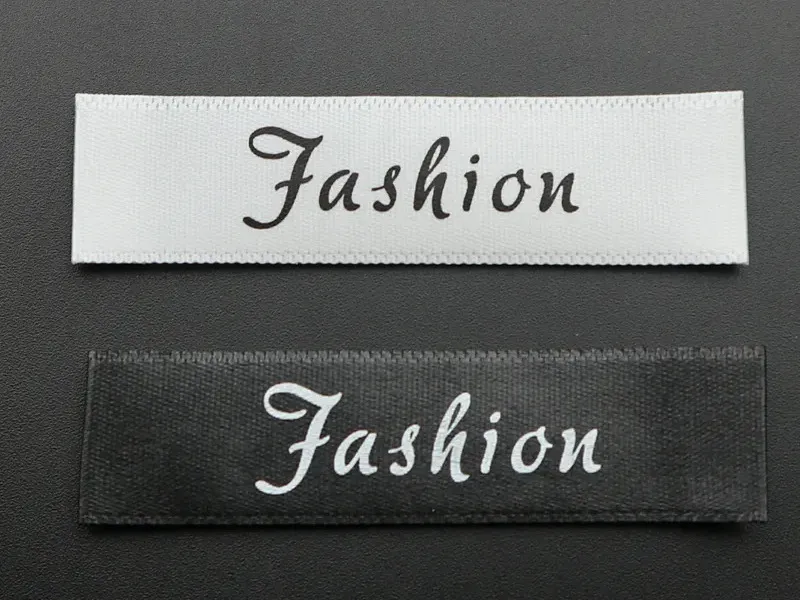
Answer first: Apparel sold to Canadian consumers must carry a disclosure label that shows fibre content, and the fibre-content information must appear in both English and French, except in the narrow case of a one-language retail area. The label must also identify the dealer by name and postal address, or by a CA identification number. Country of origin is required on the textile label only when a representation is made that the article, or a fabric or fibre in it, is imported; the Canada Border Services Agency (CBSA) may still require origin marking under its own rules. Duty is payable under the Canadian Customs Tariff. This article explains those labelling rules, the CBSA paperwork a commercial importer should expect, and four differences from the United States. It does not publish duty rates. Have a licensed Canadian customs broker classify the goods and confirm the duty before you price the order.
The statutes, guidance and CBSA memoranda cited below were fetched on 14 November 2026. In the Justice Laws consolidations we read, the Textile Labelling Act was current to 19 October 2026; the Regulations were current to the same date and last amended on 17 June 2019. This is general information, not legal advice.
Bilingual fibre labels, dealer identity and origin
The Textile Labelling Act prohibits a dealer from selling, importing into Canada or advertising prescribed consumer textile articles unless they are labelled with fibre content and dealer identification in accordance with the Act and the Textile Labelling and Advertising Regulations (C.R.C., c. 1551). The Competition Bureau enforces those rules and publishes a guide and a shorter requirements page.
A disclosure label must show:
- Fibre content, using the generic name of each fibre present in an amount of 5 percent or more of the total mass, and the amount as a percentage of total mass, with sectional disclosure where the regulations require it (for example, a body and sleeves of different compositions).
- Dealer identity: the name and postal address of the dealer, or a CA identification number, as the Bureau’s pages describe. A remnant has a limited exception.
- Country of origin on the textile label only where there is a representation that the article, or any fabric or fibre in it, is imported, unless that origin already appears on another label applied to the article.
Subsection 11(3) of the Regulations requires the fibre-content information to be shown in both English and French. Subsection 11(4) creates a limited exception where the article is or will be sold to the public in an area where only one official language is used continuously for consumer purchases, and the fibre information is shown in that language. The Bureau’s nutshell guide is direct: the generic fibre name and any information relating to fibre content must be bilingual — including terms such as reclaimed/récupéré, or component words such as sleeves/manches. Dealer identification and country of origin, when required, do not have to be bilingual. The Bureau and the guide both note that Quebec has additional French-language requirements; those sit with the Office québécois de la langue française, and this article does not summarise them.
| Label element | Bilingual? | Notes from the official sources above |
|---|---|---|
| Fibre names, percentages and fibre-related terms | Yes, subject to the one-language-area exception | Must be clear, legible and in type of equal size and prominence |
| Dealer name and postal address, or CA number | Not required to be bilingual | Required on the disclosure label, with a remnant exception |
| Country of origin on the textile label | Not required to be bilingual | Required only when a representation of importation is made |
| Care instructions | Not mandated; if used, must not be false or misleading | Written care may be in English or French; Quebec has additional rules |
| Size codes | Not prescribed by the Act or Regulations | If a size dimension is stated (for example a waist measurement), it must be accurate |
Care labelling is a voluntary programme in Canada. The Bureau’s guide states that care information in words or in symbols is not mandatory, but if it is provided it must not be false or misleading and must accurately reflect an appropriate method of care. The National Standard CAN/CGSB-86.1-2003, Care Labelling of Textiles, is available from the Canadian General Standards Board; adoption is a business decision because the programme is voluntary.
Sizing is also not a statutory conversion system. The guide states that manufacturers are not required to conform to specific size dimensions or size codes; those are left to the dealer. If a size dimension is identified, section 5 of the Act requires that it be accurate. There is no official bilingual “US to Canadian size” table in these sources, and none is invented here. Put your own measurement chart on the size set, and make any printed dimension true.
Shirts and similar outer garments are examples of articles that require a permanent disclosure label, able to remain legible through at least ten cleanings. Undergarments, lingerie, sleepwear and swimwear are examples of articles eligible for a non-permanent label, such as a hang tag. Many T-shirts will fall on the permanent-label side; confirm the schedule that applies to your article in the Regulations or the Bureau’s appendices, rather than assuming.
Section 8 of the Regulations allows a dealer to import incompletely or improperly labelled articles and complete the labelling in Canada, provided a Competition Bureau officer is notified at or before importation of the nature and quantity, the date and port of entry, and the address where relabelling will be completed, and is then given a chance to inspect before resale. That is a regulated path, not a silent fix at the warehouse.
CBSA paperwork and the commodity information for textiles
Labelling and customs entry are separate jobs. The importer, owner or broker presents the release and accounting documents for a commercial shipment. Memorandum D17-1-1, which we read on 14 November 2026, still describes those documents, and it carried a notice dated 21 October 2024 that the page was under review because the CBSA Assessment and Revenue Management system (CARM) is now the official system of record. Do not treat an older paper form name as the whole of the current filing method. Use a licensed customs broker who works in the current CBSA process, including CARM.
Invoices must meet CBSA invoice requirements (the memorandum points to D1-4-1 and to D17-1-4 for release). For textiles, Memorandum D10-17-15 adds commodity information needed to classify the goods in the Customs Tariff. Officers may ask for it during classification review if it is missing, and CBSA may review classification in a post-audit verification within four years after the date of entry. The memorandum encourages importers to keep representative samples. For all textile commodities it asks, among other points, for:
- The nature of the product.
- The full trade name, specification numbers and style.
- Fibre content as a percentage by weight of each fibre, using generic terms (examples given include cotton, nylon, polyester, viscose rayon).
- The number of metres or units, and for sets the quantity of each article; width where metres are used.
- Total net weight, excluding packaging.
That list is a classification file, not a substitute for the bilingual consumer label. An invoice and packing list that already carry generic fibre percentages, style numbers and net weights will make both jobs easier. Our shipping page lists the export documents Finetex routinely prepares and the transit ranges by destination. Those transit times are not a customs clearance time.
Some textile articles may also need an import permit from Global Affairs Canada, as the Bureau’s guide notes. Whether your goods do is a question for the broker and for the current export-and-import-control rules, not for a factory quotation.
Duty: use the Customs Tariff, not a guessed rate
Customs duties are imposed under the Customs Tariff (S.C. 1997, c. 36). The Justice Laws consolidation we read was current to 19 October 2026 and last amended on 1 September 2026. CBSA publishes the working tariff files on its Customs Tariff 2026 page. When we fetched that page, the current amendment series included T2026-2, with an effective date of 1 September 2026, and the page itself was marked as modified on 16 September 2026. Treatments differ by origin and by any applicable preferential tariff.
This article does not quote a duty rate for any garment. Rates and tariff treatments change, and classification depends on knit versus woven, fibre, garment type and sometimes use. A licensed Canadian customs broker should classify the goods against the current tariff and confirm the duty and taxes before you lock a landed cost. CBSA also publishes an advance-ruling route; the broker can say whether that is useful on a first programme.
Four differences from United States rules
Buyers who already import into the United States often copy a US label and a US entry process into a Canadian purchase order. That is how bilingual and paperwork errors start. Four differences, checked against the Canadian official sources above and against our earlier US underwear import guide, are:
- Fibre content must be bilingual in Canada, with only a narrow one-language-area exception. The US textile-label framework described in our US guide does not impose that official-language pair. A US English-only fibre label is not, by itself, a Canadian disclosure label.
- Care labelling is voluntary in Canada (and must be accurate if used). The US care-label rule discussed in the US guide is a different, mandatory regime. Do not assume a US care label is required, or is sufficient, for Canada; decide the care text as a Canadian labelling choice, and watch Quebec’s separate language rules.
- Dealer identity is a Canadian name and postal address, or a CA number, not a US RN. You can be the dealer of record on the Canadian label even when the garment is sewn in China; the factory’s name is not automatically the dealer identity the Act requires.
- Entry, accounting and duty follow CBSA and the Canadian Customs Tariff, including the current CARM environment, not CBP and the HTS. Classification, tariff treatment and rates have to be confirmed for Canada on their own. Origin marking for CBSA purposes may also apply even when the Textile Labelling Act does not require origin on the consumer label.
Canada also does not prescribe a statutory size code or a US-to-Canada conversion. If you print a size or a body measurement, it must be accurate. Build the size set to your own chart. T-shirts for a Canadian programme follow the route on our T-shirt manufacturing page. Put the bilingual fibre wording, the dealer identity and the care decision into the tech pack before sampling, so the size set is labelled as the bulk will be.
What is fact, what is advice and what is uncertain
Fact (checked 14 November 2026): The bilingual fibre rule, dealer-identity options, the limited origin-on-label rule, voluntary care labelling, the absence of prescribed size codes, the section 8 relabelling path, and the permanent versus non-permanent examples come from the Textile Labelling Act, the Regulations, and Competition Bureau guidance, in the consolidations and pages cited, current to the dates those official sites stated. CBSA D17-1-1 describes commercial documentation and notes that CARM is now the official system of record. D10-17-15 lists textile commodity data for classification. The Customs Tariff and CBSA’s 2026 tariff files are the official duty instruments; no rate is published in this article.
Advice: the four-difference list, the recommendation to use a licensed customs broker, and the instruction to put bilingual wording in the tech pack before sampling are our practical reading for apparel importers.
Uncertain: duty rates, tariff treatments, CARM screen-level filing steps, import-permit coverage, Quebec French-language details, and any post-check-date amendment of the Act or Regulations must be confirmed on the live shipment. Recheck the official pages and take broker advice before you print labels or book the goods.
This article is general information and is not legal advice.
Related reading
- Importing Men’s Underwear into the US: Duty, Labels and Customs Entry
- Importing T-Shirts into the UK: Post-Brexit Rules, UKCA and Textile Labelling
- HTS Classification for Underwear, T-Shirts and Hoodies
- Section 301 Tariffs on Chinese Apparel: HS Codes, Rates and Mitigation
Frequently asked questions
Must a T-shirt sold in Canada have fibre content in English and French?
Yes, as a rule. The Regulations require fibre-content information in both official languages, except where the article is or will be sold in an area where only one official language is used continuously for consumer purchases and the information is shown in that language. Dealer identity and origin, when required, need not be bilingual.
Is a care label mandatory in Canada?
No. Care information is voluntary. If you include it, it must not be false or misleading and must accurately reflect an appropriate method of care. Quebec has additional French-language requirements that this article does not summarise.
What duty will I pay on a cotton T-shirt from China?
This article does not quote a rate. Classification and duty depend on the current Canadian Customs Tariff and on the origin and tariff treatment of the goods. Ask a licensed Canadian customs broker to classify the style and confirm the duty before you price the order.
Can I import unlabelled garments and sew the labels in Canada?
The Regulations allow a dealer to import incompletely or improperly labelled articles and complete labelling in Canada if a Competition Bureau officer is notified at or before importation and is later given an opportunity to inspect before resale. Follow that procedure; do not treat it as an informal warehouse step. CBSA entry and duty still apply.
Sources
- Textile Labelling Act (Justice Laws)
- Textile Labelling and Advertising Regulations, C.R.C., c. 1551 (Justice Laws)
- Competition Bureau: Textile labelling requirements
- Competition Bureau: Labelling textile requirements in a nutshell
- Competition Bureau: Guide to the Textile Labelling and Advertising Regulations
- CBSA: Memorandum D17-1-1, Documentation Requirements for Commercial Shipments
- CBSA: Memorandum D10-17-15, Information Requirements for Textiles and Textile Products
- CBSA: Customs Tariff 2026
- Customs Tariff, S.C. 1997, c. 36 (Justice Laws)
Plan a Canada-bound style before you print labels
Tell us the garment type, the fibre composition and whether you will be the Canadian dealer of record. We will sample the bilingual fibre wording and the dealer identity on the label, and support the invoice and packing data your broker will need.
Request a quote or start from our T-shirt manufacturing and shipping pages.
More factory-floor notes for brand owners
Selling Underwear in Germany: Textilkennzeichnung, LUCID and Packaging Law
German textile labelling, LUCID registration and packaging law for underwear brands after the PPWR and VerpackDG took effect…
Read more →
GSM to Ounce Converter and Fabric Weight Chart
Convert fabric weight between gsm and oz/yd² with the exact factor (1 oz/yd² = 33.906 g/m²), a T-shirt…
Read more →
First-Output Check: The In-Line Inspection That Saves Bulk
What to check on the first garments off each line: measurements, seams, labels and print against the approved…
Read more →
A Fit Session Protocol for Knit Tops: 12 Wearers, 5 Measurements
A recommended fit session protocol for knit tops: recruit 12 wearers, take five measurements, run a movement checklist,…
Read more →
Corporate Uniform Programs: Tendering, Sizing and Reorders
How to run a corporate uniform program with a factory: tender documents, sizing a workforce, producing many sizes…
Read more →
Muscle Fit and Athletic Fit T-Shirts: Pattern Changes That Matter
How muscle fit and athletic fit T-shirts differ from a classic block: chest-to-waist drop, sleeve cap and bicep,…
Read more →Request a sample & pricing information
Send us your tech pack, target price or a reference sample — we reply with a quotation, a realistic lead time and a fabric recommendation within one working day.
- Free sampling plan & cost breakdown
- MOQ from 300 pcs per style
- Reply within 1 working day