
China vs India for Knitwear: Vertical Integration and Quality Variance
Why India's cotton-spinning base and China's dye-and-trim network create different knitwear quality variance, measured with AQL and shade methods.
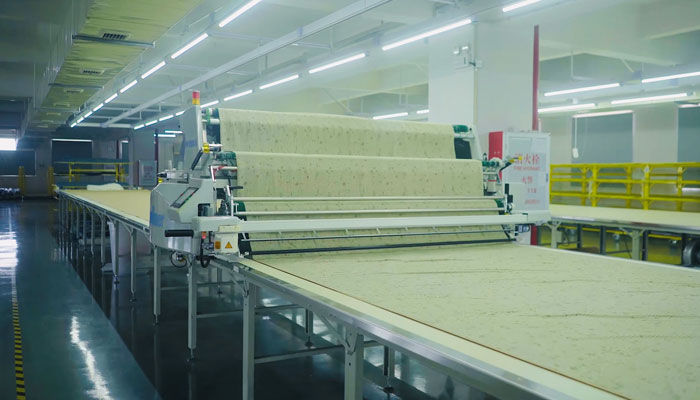
Answer first: India and China can both produce cotton and cotton-blend knitwear, but they are not interchangeable on integration. India’s strength, in qualitative terms, is a large cotton-growing and spinning base that can sit close to knitting. China’s strength is a dense dyeing, finishing and trim network around the garment factory, so a colour, a neck rib, a button or a label is usually easier to complete in one industrial cluster. Quality variance — shade movement between rolls, mixed dye lots in one garment, and sewing defects that only appear at final audit — comes from those different gaps, not from a national “defect rate.” This article explains where to look, using acceptance sampling and colour-measurement methods as frameworks. It does not publish China-versus-India defect percentages, prices, lead times or colour-difference statistics, because no such comparative figures were taken from official sources in this writing.
The comparison is a sourcing discussion, not a country ranking. It sits beside our earlier guides to China versus Vietnam, China versus Bangladesh and China’s apparel cost structure. Company facts about Finetex are only those already published: we are a China-based manufacturer, with the minimums, sampling times, quality gates and lead times stated on our live pages. We do not operate an Indian factory, and we do not invent capacity or audit results for one.
Cotton and spinning: where an Indian mill can be closer to the fibre
For cotton jersey, the first quality variable is the yarn, and the first commercial variable is whether the garment factory is buying yarn, buying greige fabric, or buying a dyed-and-finished ready quality. A spinning-to-knit integration, which many buyers associate with large Indian mill groups, can shorten the number of hand-offs between the bale, the yarn and the knit fabric. Fewer hand-offs can make it easier to keep a yarn lot together and to answer, later, where the cotton came from. That is a structural observation, not a measured advantage, and it will not be true of every Indian factory, just as it is not unknown in China.
What it does not automatically give you is a finished garment in a confirmed shade, with matching rib, sewing thread, labels and packing. Those steps happen after the yarn. If your programme is a basic heather or a stock-white jersey, a mill that controls spinning and knitting can be a good fit. If your programme is a custom colour with a contrast neck, a printed chest, and retailer packing, the question moves downstream, to dyeing and trims.
China remains a full cotton-knit route as well. Yarn and fabric are widely available, and many garment factories buy dyed quality from mills or traders rather than spinning it themselves. The difference worth testing on a given order is not “does this country grow cotton?” but “who, by legal name and lot number, is spinning, knitting and dyeing the fabric I am about to cut?” That is the same discipline as a fibre-claim or a traceability file, described in our fabric selection and UFLPA cotton document guides.
Dyeing, finishing and trims: where a Chinese cluster is usually tighter
Once the fabric has to be dyed, finished, matched to a rib and sewn with specified findings, the surrounding trade matters as much as the spinning mill. A typical knit programme needs, besides the body fabric, a neck rib or collar, sewing thread, labels, sometimes elastane-containing cuffs, buttons or snaps on a Henley or a placket, and packing materials that match a retailer manual. In a dense Chinese apparel cluster, those suppliers are often within a short industrial radius of the sewing unit. That does not make every Chinese dye-house excellent. It does mean that a shade correction, a replacement tape, or a relabel is usually a local process rather than a new import into the factory.
A factory that is strong in spinning and knitting but thinner in local dyeing or trim supply can still make a good garment. The variance risk is time and matching: a body fabric dyed in one place, a rib dyed in another, and a thread or label bought later, with no single person holding the shade band. That risk exists in every country. It is simply more visible when the supply network is less tightly clustered. We do not have official statistics that measure “trim density” or average shade variance in India versus China, so none are stated here.
For a buyer, the practical test is a bill of materials review before the deposit:
- Is the body fabric, the rib and the thread specified as one colour standard, with a retained shade band?
- Are the labels, hangtags and packing items sourced, or only “to be confirmed”?
- If a process is subcontracted (dyeing, printing, embroidery), is the site named, and is it in the same quality and social file as the sewing unit?
Those questions belong in the clothing factory sourcing file, regardless of country.
Where quality variance actually shows up
Variance is not a national character. It is a measurable difference between what you approved and what arrived, and it usually sits in one of three places: the fabric lot, the shade, or the sewing. Two official method families are useful because they show *where* the difference is, not because they produce a China-versus-India score.
Acceptance sampling, including AQL. Finetex’s published final audit is an AQL 2.5 inspection against the approved specification: measurement, workmanship, labelling, packing and colour, with a report that includes defect classification, sample size and a pass or fail. AQL, in this use, follows the logic of ISO 2859-1 (sampling procedures for inspection by attributes) and equivalent buyer manuals: you inspect a sample, classify defects, and accept or reject the lot against an agreed acceptance quality limit. We do not reprint the ISO tables here, and we do not invent a comparative defect rate for Indian versus Chinese knitwear. What the method is for, in this discussion, is diagnosis. A lot that fails on workmanship points you to an operation (a broken stitch, an open seam, a twisted leg). A lot that fails on measurement points you to the pattern, the shrinkage, or the grading. A lot that fails on colour points you upstream, to dyeing and finishing, not to the sewing operator. If you only record a pass or fail, you lose that information. If you record the defect by operation and by colourway, as our quality page describes, you can see whether the variance is a line problem or a mill problem.
Colour-difference and colour-fastness methods. Shade continuity is how a navy jersey from two dye lots, or from the beginning and the end of a roll, is judged. Official method families used for this work include the ISO 105 series (colour fastness and related colour assessment) and AATCC methods and evaluation procedures for colour change, staining and instrumented or visual shade comparison. This article does not attach a numeric colour-difference limit, a grey-scale grade or a country average to any of those methods. The point of naming them is narrower: they let you separate a dye-lot miss (two rolls that never matched) from a finishing or wash change (a garment that matched at approval and moved after laundry), and from a packing error (two lots mixed in one carton or one garment). Incoming fabric inspection, as published on our quality page, already checks weight, shade continuity, shrinkage and visual defects on a portion of the lot, with failed lots returned before cutting. That gate is where shade variance should be caught, whether the mill is in India, in China or elsewhere.
| Source of variance | What you will see | Which framework shows it | What usually fixes it |
|---|---|---|---|
| Yarn or fabric lot mixing | Streaks, mixed hand, or a fibre-content miss | Composition testing and lot-level fabric records | Keep lots separate; issue fabric by roll number |
| Dye-lot or finishing miss | Left and right panels, or body and rib, do not match | Visual or instrumented shade comparison against the approved band; colour-fastness methods in the ISO 105 / AATCC families for change after wash | Approve a shade band; inspect incoming fabric; do not mix lots in one garment |
| Sewing and assembly | Broken stitches, twisted legs, measurement drift | Final AQL audit, plus in-line checks at 30 percent and 70 percent | Correct the operation; do not only re-inspect at the end |
| Trim or label mismatch | Wrong size sticker, missing care label, off-shade thread | Packing and labelling audit against the specification | Confirm trims in house before cutting, as a WIP item, not after sewing |
The table is country-agnostic on purpose. A vertically integrated Indian mill can still mix two dye lots in a rush. A well-clustered Chinese factory can still skip an incoming shade check. The integration story only tells you where the weak hand-off is *likely* to be, so you know which record to ask for first.
Delivery, stated without invented times
Finetex’s published bulk window, for production in our China operation, is 15–45 days from deposit and an approved pre-production sample, depending on quantity, fabric availability and trim lead times. Sampling is 5–7 working days for a development sample and 10–12 working days for a size set. We do not publish, and do not invent, a parallel lead-time range for Indian knitwear, or a transit comparison from Indian ports. Those figures have to come from the factory and the forwarder on the live order.
What can be said, qualitatively, is that the calendar often slips on fabric and trims, not on sewing minutes. A custom dye lot, a delayed rib, or a label that is still being printed will move an ex-factory date in any country. A tighter local dye-and-trim network can make those recoveries faster; a longer supply line can make them slower. That is a reason to put trim arrival on a weekly WIP report, as described in our planning work, and to confirm fabric availability in writing before the deposit — not a reason to assign a number of days to “India” or “China” as a whole.
Duty, preference programmes and origin rules also differ by destination market and by country of manufacture. They should be confirmed with a licensed customs broker. This article does not quote tariff rates for either origin.
How to choose, in practice
Choose the origin that matches the part of the chain your style actually depends on, then audit that part.
- If the programme is cotton-heavy, basic, and you need a short yarn-to-fabric chain or a particular cotton story, assess the specific mill’s spinning and knitting integration, its lot records, and its dye-house, wherever it sits.
- If the programme is colour-intensive, trim-heavy, or needs frequent shade and packing corrections, assess the sewing unit’s local dye, rib, trim and packing network, and the incoming-fabric and final-audit discipline, wherever it sits.
- In both cases, write an AQL plan, a shade-band rule and a lot-trace rule into the order, and do not treat a country name as a substitute for those rules.
Finetex can quote and produce knitwear in China against that kind of file, on the minimums and quality gates already published. If you are comparing an Indian mill on the same style, use the same measurement, shade and AQL rules on both samples. That is the only comparison that does not invent a national average.
What is fact, what is advice and what is uncertain
Fact: Finetex’s published quality gates include incoming fabric inspection (weight, shade continuity, shrinkage and visual defects on 10 percent of the lot), in-line checks at 30 percent and 70 percent, a final AQL 2.5 audit and a shipment check. Published sampling times, minimums (300–1,000 pieces per style, mixed sizes) and bulk lead time are as stated on the live pages cited above. ISO 2859-1 and the ISO 105 and AATCC colour-method families are named here as measurement frameworks only. No official China-versus-India defect, price, lead-time or colour-difference statistic was fetched or used.
Advice: the integration contrast, the variance table and the selection rules are our practical reading. They are qualitative.
Uncertain: any given mill or factory may not match the national pattern described above. Official trade or quality statistics, if you need them, should be taken from a current official publication for the year and product you care about, not from this article.
Related reading
- China vs Vietnam for Apparel Manufacturing: Duty, Lead Time and Minimums
- China vs Bangladesh: When the Lowest FOB Is the Wrong Number
- Is China Still Competitive for Apparel in 2027? A Cost-Structure Breakdown
- Chinese New Year Production Calendar: 2027 Cut-Off Dates
Frequently asked questions
Is Indian knitwear lower quality than Chinese knitwear, or the reverse?
Neither statement is supported here. This article does not publish a comparative defect rate. Quality variance usually comes from a loose yarn or dye lot, a shade miss, or a sewing operation, and those can be measured with lot records, colour methods and an AQL audit in either origin.
When would I look at India first for a cotton knit programme?
When the style depends on a short spinning-to-knitting chain or on a particular cotton yarn story, and you have checked that the same mill (or a named dye-house) can also hold your shade and trims. Do not assume every Indian factory is vertically integrated, and do not skip the incoming-fabric and final-audit plan.
When does a Chinese cluster tend to be the better fit?
When the style is colour- or trim-intensive and you need a local dye, rib, thread and packing network around the sewing unit. That is a structural reason, not a guarantee, and it still requires a shade band and an AQL plan.
What should I demand in the order file in either country?
A named fabric source and dye-house, lot-level fabric records, a retained shade band, an AQL 2.5 (or your buyer’s) final audit with defects classified by type, and confirmation that trims are in house before cutting.
Sources
- Finetex: Quality control, including incoming fabric and AQL 2.5
- Finetex: Clothing factory sourcing guide
- Finetex: Apparel fabric selection guide
- Finetex: China vs Vietnam for apparel manufacturing
Compare a knit style against a written quality file
Send the fabric quality, the colour count and the trims you need. We will quote the China production route against an incoming-fabric check, a shade band and a final AQL 2.5 audit, so you can compare any other origin on the same rules.
Request a quote or start from our clothing factory sourcing guide.
More factory-floor notes for brand owners
Selling Underwear in Germany: Textilkennzeichnung, LUCID and Packaging Law
German textile labelling, LUCID registration and packaging law for underwear brands after the PPWR and VerpackDG took effect…
Read more →
GSM to Ounce Converter and Fabric Weight Chart
Convert fabric weight between gsm and oz/yd² with the exact factor (1 oz/yd² = 33.906 g/m²), a T-shirt…
Read more →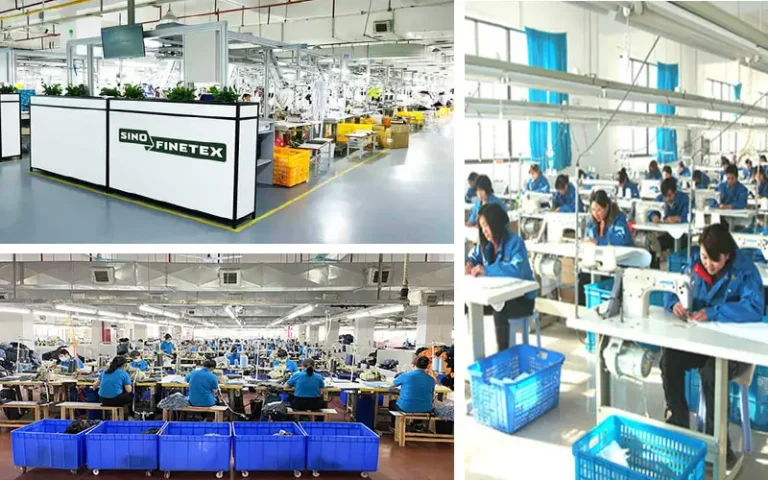
First-Output Check: The In-Line Inspection That Saves Bulk
What to check on the first garments off each line: measurements, seams, labels and print against the approved…
Read more →
A Fit Session Protocol for Knit Tops: 12 Wearers, 5 Measurements
A recommended fit session protocol for knit tops: recruit 12 wearers, take five measurements, run a movement checklist,…
Read more →
Corporate Uniform Programs: Tendering, Sizing and Reorders
How to run a corporate uniform program with a factory: tender documents, sizing a workforce, producing many sizes…
Read more →
Muscle Fit and Athletic Fit T-Shirts: Pattern Changes That Matter
How muscle fit and athletic fit T-shirts differ from a classic block: chest-to-waist drop, sleeve cap and bicep,…
Read more →Request a sample & pricing information
Send us your tech pack, target price or a reference sample — we reply with a quotation, a realistic lead time and a fabric recommendation within one working day.
- Free sampling plan & cost breakdown
- MOQ from 300 pcs per style
- Reply within 1 working day