
Subscription Underwear: Packaging, Replenishment and Unit Cost
How a subscription underwear brand plans replenishment, single-unit packaging and size reorders, and how factory MOQs map onto monthly shipments.
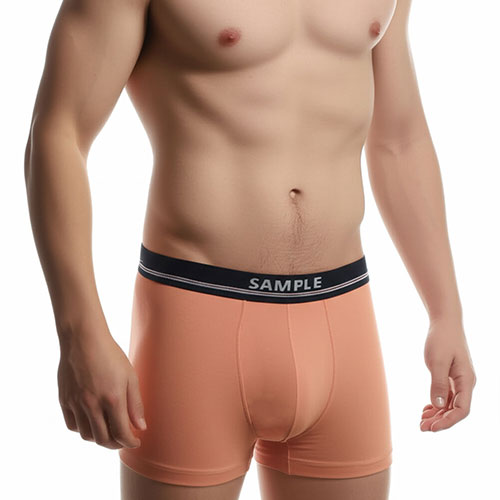
Answer first: A subscription underwear business is a replenishment business first and a fashion business second. The customer receives a pair, or a small pack, every month or quarter, so the brand needs a small number of core styles that never go out of stock, a size curve that follows actual repeat orders, and a pack that ships safely through the post at a low cost per unit. The factory side is about matching production lots to that steady outflow: order in lots that meet the minimums, hold enough stock to cover the reorder lead time, and keep packaging simple enough that one pack works for every month. The unit cost that matters is not the ex-factory price alone but the landed, packed, per-shipment cost, including the share of packaging, fulfilment and postage that each monthly delivery carries.
This article is a planning framework. It does not quote prices, and every cost is written as a variable. It draws on Finetex’s published production terms: on the boxer briefs page, an MOQ of 300 pieces per style on stock fabric and 1,000 pieces per colour for a custom knit, patterns graded once and locked so reorders are cut from the same block, and repeat orders in 15–20 days because reorders skip development. It complements our guide to a Shopify DTC apparel launch and our article on volume tiering and price breaks.
The subscription model: what it changes upstream
A one-off DTC launch buys a batch, sells through, and decides whether to reorder. A subscription commits to shipping every active subscriber on a schedule. That changes four things upstream:
- Forecastability. Active subscribers × units per shipment gives a monthly outflow that is easier to forecast than one-off sales. The forecast is only as good as the churn and new-subscriber assumptions behind it.
- Style discipline. Every additional style or colour multiplies the stock positions you must keep in every size. Most subscription ranges work best with a few core styles and occasional limited colours.
- Fit consistency. A subscriber who receives a pair that fits differently from last month’s is likely to cancel. Locked patterns and repeatable fabric matter more than novelty.
- Packaging per unit. Each delivery carries its own pack, insert and postage. On a single pair, those costs can be a large share of the total.
Single-unit packaging
Retail underwear is usually sold in multipacks on a shelf. Subscription underwear is often a single pair, or a two- or three-pair pack, posted to a home. The pack has to protect the garment, present the brand when opened, fit a letterbox or postal size band where possible, and be cheap enough to repeat every month.
| Pack option | Strengths | Watch-outs |
|---|---|---|
| Printed polybag with header | Light, low cost, fast to pack | Less premium on opening; check suffocation warnings where required |
| Paper sleeve or belly band inside a mailer | Plastic reduction, simple branding | Needs an outer mailer; check moisture protection |
| Small rigid or folding box | Strong unboxing, good for gifts | More volume and weight, higher postage |
| Postal mailer with garment folded inside | One component, ships direct | Fold and insert positions must be fixed on a packing sample |
Finetex’s private packaging page lists printed or plain polybags with suffocation warnings and header cards, multipack assembly, labels and hangtags, barcode labelling, carton configuration and fulfilment prep, and states that a packing sample is approved before the bulk run. For a subscription, pack the garment so it can go straight into the mailer at your fulfilment centre without repacking. Our Talk article on eco-friendly underwear packaging covers material choices.
Two packaging decisions save money over a year of shipments: use one pack size for every month’s delivery, and keep any monthly variation — a printed card, a limited colour — inside a standard pack rather than changing the pack itself.
Replenishment: matching production lots to monthly outflow
The core planning question is how much to order, and when, so the brand never runs out while not tying up cash in a year of stock.
A replenishment formula with variables
- D = monthly demand in units for one style, colour and size (from active subscribers × units per shipment × that size’s share).
- T = replenishment lead time in months: reorder production time plus transit plus receiving.
- B = safety buffer in months, chosen by the brand.
- Reorder point = D × (T + B).
- Order quantity per lot = at least the factory minimum for the style or colour, and enough to cover the months until the next planned lot.
Finetex’s published repeat-order time on an approved block is 15–20 days, plus transit; sea freight is quoted at 18–35 days and air at 9–13 days on the shipping page, depending on destination. Use those published figures as inputs to T, then confirm the actual schedule for your order in writing.
Minimums versus monthly volume
Factory minimums apply per style, and for custom fabric per colour; a monthly subscription ships per size. That mismatch is the main constraint for a young subscription brand.
- A 300-piece stock-fabric lot is spread across every size in the curve. If a small size only accounts for a small share of subscribers, it receives few units per lot, so plan its reorder carefully.
- A custom colour requires the custom-knit minimum per colour, so limited colours suit a brand whose subscriber base can absorb that quantity.
- Holding greige fabric or stock elastic for core colours can shorten reorders. Finetex’s Talk answer on what drives production lead time notes that buyers can agree this in advance with a forecast.
The capabilities page states that Finetex keeps roughly 20% of line time for new programmes and reorders, which is what lets a reorder move forward when demand runs ahead of plan.
Size reorders: let repeat data set the curve
At launch, a subscription brand sizes its first lot from a guess or from general market data. After a few cycles it has something better: which sizes subscribers choose, which sizes they exchange, and which sizes churn.
- Track exchanges by size. A size that is frequently exchanged up or down is a fit problem, not a demand signal. Fix the block or the size chart before reordering more of it.
- Rebuild the curve from active subscribers, not from total historical orders, so cancelled subscribers do not distort the mix.
- Keep the block locked. Reorders cut from the same graded pattern keep fit stable between shipments, which the boxer briefs page describes as standard practice.
- Change one thing at a time. If a fabric upgrade and a size-chart change arrive in the same reorder, you will not know which one moved retention.
Our article on underwear size runs for e-commerce covers size-curve building in more detail.
Unit cost per shipment
The number that decides whether a subscription is profitable is the cost of each delivery, not the ex-factory price of a pair. A simple model, with variables only:
Cost per delivery = (G × N) + K + I + F + S
- G = landed cost per garment (ex-factory price plus freight, duty and fees allocated per unit).
- N = garments per delivery.
- K = pack cost per delivery (bag, sleeve, box or mailer).
- I = inserts per delivery (cards, stickers).
- F = fulfilment handling per delivery.
- S = postage per delivery.
Two observations follow from the formula without any assumed prices. First, K + I + F + S is paid per delivery regardless of N, so a two- or three-pair delivery spreads those costs over more garments than a single pair. Second, improving G through a larger lot only helps if the extra stock sells before it ages; for a steady subscription, a predictable lot size is often worth more than the lowest unit price. Our landed cost calculator helps build G.
What is fact, what is advice and what is uncertain
Fact: Finetex publishes an MOQ of 300 pieces per style on stock fabric and 1,000 per colour for a custom knit on the boxer briefs page, locked patterns for reorders, repeat orders in 15–20 days, transit times on the shipping page, packing services and roughly 20% of line time held for new programmes and reorders.
Advice: keep the core range small, use one pack size, set reorder points from demand, lead time and a buffer, and rebuild the size curve from active subscribers.
Uncertain: churn, postage and fulfilment costs, and subscriber size mix are specific to your market and channel. Subscription billing and cancellation are regulated differently by market; take local legal advice on the consumer terms.
Related reading
- TikTok Shop Apparel: Compliance, Packaging and Returns
- Shopify DTC Apparel Launch: The First 500 Units
- Selling Wholesale to Retailers: Line Sheets and Vendor Setup
- Volume Tiering: How Price Breaks Work at 500, 3,000 and 10,000 Pieces
Frequently asked questions
What MOQ applies to subscription underwear?
The same minimums as any order. Finetex’s boxer briefs page publishes 300 pieces per style on stock fabric and 1,000 per colour for a custom knit, mixed sizes. The challenge is spreading that across a size curve.
How fast can a subscription brand reorder?
Finetex publishes repeat orders in 15–20 days on an approved block, plus transit. Use that with your shipping method to set the reorder point, and confirm each schedule in writing.
Should each month’s delivery have different packaging?
Usually not. One standard pack keeps cost and packing errors down; put monthly variation inside the pack, for example a printed card.
How do I decide which sizes to reorder?
Use active subscribers’ sizes and exchange data. A size that is often exchanged indicates a fit problem to fix, not more demand.
Is a single pair per delivery viable?
It can be, but packaging, fulfilment and postage are charged per delivery. Model cost per delivery with your own figures before choosing between one, two or three pairs.
Sources
- Finetex: Boxer briefs factory
- Finetex: Private packaging and retail-ready packing
- Finetex: Shipping solutions
- Finetex: Manufacturing capabilities
Plan your first subscription lot
Tell us your core styles, expected monthly volume and the pack you want to ship. We will quote the lot size, confirm reorder lead times and sample the packed unit before bulk.
Request a quote or start from our boxer briefs and private packaging pages.
More factory-floor notes for brand owners
Selling Underwear in Germany: Textilkennzeichnung, LUCID and Packaging Law
German textile labelling, LUCID registration and packaging law for underwear brands after the PPWR and VerpackDG took effect…
Read more →
GSM to Ounce Converter and Fabric Weight Chart
Convert fabric weight between gsm and oz/yd² with the exact factor (1 oz/yd² = 33.906 g/m²), a T-shirt…
Read more →
First-Output Check: The In-Line Inspection That Saves Bulk
What to check on the first garments off each line: measurements, seams, labels and print against the approved…
Read more →
A Fit Session Protocol for Knit Tops: 12 Wearers, 5 Measurements
A recommended fit session protocol for knit tops: recruit 12 wearers, take five measurements, run a movement checklist,…
Read more →
Corporate Uniform Programs: Tendering, Sizing and Reorders
How to run a corporate uniform program with a factory: tender documents, sizing a workforce, producing many sizes…
Read more →
Muscle Fit and Athletic Fit T-Shirts: Pattern Changes That Matter
How muscle fit and athletic fit T-shirts differ from a classic block: chest-to-waist drop, sleeve cap and bicep,…
Read more →Request a sample & pricing information
Send us your tech pack, target price or a reference sample — we reply with a quotation, a realistic lead time and a fabric recommendation within one working day.
- Free sampling plan & cost breakdown
- MOQ from 300 pcs per style
- Reply within 1 working day