
Negotiating Price Without Breaking the Factory
The five levers that lower an apparel quote (fabric, trims, packaging, payment, lead time), the one not to squeeze, and how long-term terms work.
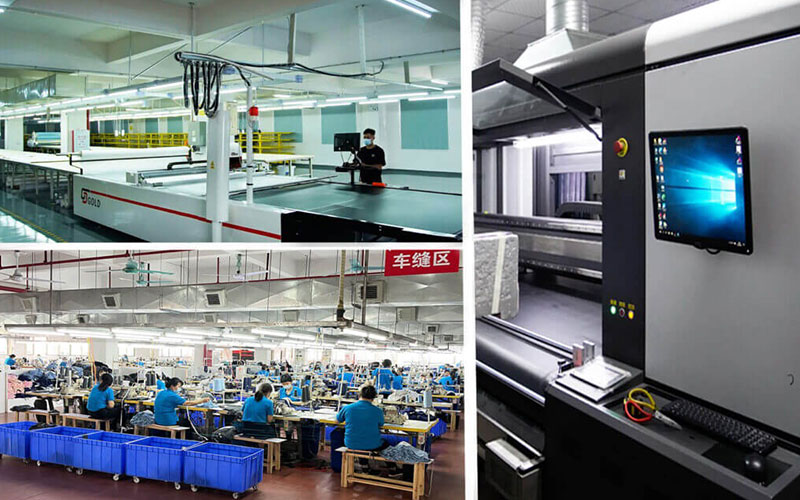
Answer first: The way to lower an apparel quote without damaging the order is to change what is being made or how it is bought, not to ask for the same thing for less. Five variables move the price legitimately: fabric, trims, packaging, payment terms and lead time. One line should not be squeezed: the labour (CMT) line, because the OECD’s garment guidance identifies price pressure and rushed or changed orders as drivers of low wages and excessive overtime. Ask for an itemised quote, trade one variable for another in writing, and use volume, forecasts and repeat orders as your strongest lever.
This guide is written from the factory side of the table. Our quotes show fabric, labour, trims and packing as separate lines, which is what makes the conversation below possible.
Start with an itemised quote
A single unit price is impossible to negotiate sensibly, because you cannot see what you are trading. Ask every factory for the same breakdown:
| Line | What it covers | Typical question to ask |
|---|---|---|
| Fabric | Fibre, weight in gsm, knit, dye, finish, consumption per piece | What changes if we use a stock fabric or another weight? |
| Labour (CMT) | Cutting, sewing, finishing, in-line QC | Which operations take the most time? |
| Trims | Labels, elastic, thread, drawcords, buttons, prints | Which trims set the minimum? |
| Packaging | Polybag, hangtag, box, carton, inserts | What does each packaging element add per piece? |
| Overheads and margin | Factory costs and profit | Fixed per order or per piece? |
Our FAQ makes a point worth repeating: a lower quote is usually a lighter fabric, a shorter length, a lower-grade elastic, or a packing format that leaves out something you assumed was included. Comparing quotes on the same specification is the first negotiation, and it is often the one that saves the most. Our article on the apparel cost breakdown explains each line in detail.
The five variables you can negotiate
1. Fabric
Fabric is normally the largest line, and the most negotiable through specification rather than pressure.
- Stock versus custom. On our published terms, styles on stock fabric can start from 300 pieces per style; a fully custom knit or dye lot usually starts at 1,000 pieces per colour. Moving a colour to stock fabric can lower both the price and the minimum.
- Weight. Price follows weight. Sampling the same block at two weights lets you compare hand and price together.
- Colours. Each custom colour carries its own dye lot. Fewer colours at higher depth usually cost less than many colours at low depth.
2. Trims
Trims are small per piece but carry their own minimums. Custom woven labels, printed elastic with a logo and branded drawcords all add setup quantities. Standard elastic with a printed neck label, for example, can bring the trim line and the lead time down. Our article on volume tiering shows how component minimums create price breaks.
3. Packaging
Retail packaging is easy to over-specify. A printed box, tissue, sticker, hangtag and polybag on a three-pack can add more per piece than a sewing operation. Ask for each element priced separately and decide which ones your channel actually needs; marketplace warehouses, wholesale buyers and DTC unboxing all ask for different things. If you supply packaging yourself for US imports, remember that CBP treats packing costs incurred by the buyer and the apportioned value of buyer-supplied materials (assists) as additions to the transaction value under 19 CFR 152.103, so the duty saving is smaller than it looks.
4. Payment terms
Payment terms change the factory’s financing cost, so they have a price. Our standard terms are T/T with a 30% deposit and 70% against the copy of the bill of lading, L/C at sight, and PayPal for samples. After a documented trading history, typically three completed orders without dispute, we can offer staged credit terms agreed in writing. A buyer asking for longer terms on a first order is asking the factory to finance the order; a buyer offering a faster balance payment has something to trade.
5. Lead time
A realistic date costs less than a rushed one. Rush orders mean overtime, split shifts or air freight, and they disrupt other customers’ lines. Booking production earlier, confirming fabric sooner and accepting a later delivery window are all things a factory can price. Our published bulk lead time is 15–45 days from deposit and approved pre-production sample, and we confirm the schedule in writing before the deposit.
The one line not to squeeze
The labour line pays the people who sew the garment. The OECD Due Diligence Guidance for Responsible Supply Chains in the Garment and Footwear Sector states that purchasing practices have been shown to contribute to harms such as excessive and forced overtime and low wages in some cases, most notably when orders are changed, cancelled, placed late or rushed, or when lead times are set shorter than feasible. It adds that a buyer’s price negotiations may contribute to cost-cutting and therefore to labour, human rights or environmental impacts.
The guidance recommends that buyers:
- develop pricing models that account for the cost of wages, benefits and investments in decent work, reflected in FOB prices alongside quantities, materials and skills;
- set final order placement dates and share purchasing plans with suppliers;
- track indicators such as the percentage of orders placed late or changed after placement;
- when an order is changed or placed late, mitigate by paying for rushed delivery, changing the delivery date or using prequalified subcontractors.
A factory that accepts a price below its labour cost does not absorb the loss. It recovers it somewhere: lighter fabric, skipped inspection, unauthorised subcontracting or unpaid overtime. Our article on subcontracting covers the warning signs. If a quote looks too good, ask which line moved.
Fair exchanges
Good negotiation trades a cost reduction for something the factory values.
| You ask for | You can offer |
|---|---|
| A lower unit price | A higher quantity per style, fewer colours, or a stock fabric |
| A lower minimum | Stock fabric and standard trims |
| Faster delivery | Earlier fabric approval, a confirmed PP sample date, or paying for overtime or air freight |
| Longer payment terms | A track record, a larger order, or an L/C |
| Price stability | A forecast and committed reorders |
| A rush mid-season | A firm date, no further changes, and the extra cost written down |
What does not work: asking for a cut after the sample is approved, changing the specification after cutting without accepting the cost, or telling every factory another one quoted lower without comparing specifications. Our cost of poor quality article shows how quickly a cheaper order can become more expensive.
Prepare before you ask
Most negotiations go better when the buyer arrives with numbers rather than a percentage. Before the price conversation:
- Know your target FOB. Work back from the retail price and margin you need; our article on backward costing shows the method.
- Rank the specification. Decide which features are non-negotiable (fit, fabric hand, the print) and which you would trade (packaging, label type, colour count).
- Bring a realistic quantity and date. A firm quantity and a delivery window give the factory something to plan against.
- Compare like with like. Line up every quote on the same fabric weight, trims and packing before deciding one factory is cheaper.
Long-term agreements
The biggest savings come from repeat business, not from the first order.
- Locked block and specification. Once a block and specification are approved, a reorder does not need full development. On our hoodie programmes, for example, we publish that a reorder on a locked block runs two to three weeks faster than the original.
- Price validity. Our quotations are held for 90 days. After that, or if the raw cotton or polyester index moves more than 5%, we re-quote the fabric component and show the change rather than reopening the whole price.
- Forecasts. Sharing a rolling forecast lets the factory book fabric and line time ahead. That is worth more to the factory than a one-off discount request.
- Credit terms. Staged terms become available after a documented history.
Write the agreed levers into the purchase order: specification, price per line, quantity, packing, dates and payment terms in one document.
Fact, advice and uncertainty
Fact: our published terms are an MOQ of 300–1,000 pieces per style (300 on stock fabric, usually 1,000 per colour for custom knits or dye lots), T/T 30/70 or L/C at sight, quotes held for 90 days unless the cotton or polyester index moves more than 5%, and staged credit after a documented history; the OECD guidance and 19 CFR 152.103 were read on 21 November 2026.
Advice: negotiate the specification, quantity, payment and dates; keep the labour line intact; and trade one concession for another in writing.
Uncertain: raw material prices, currency and freight move during a season, so a negotiated price is only as stable as its validity period.
Related reading
- Apparel Cost Breakdown: Fabric, CMT, Trims, Packing and Overhead
- Volume Tiering: How Price Breaks Work at 500, 3,000 and 10,000 Pieces
- Payment Terms That Protect a Small Buyer: T/T, LC and Escrow
- Sampling Cost Recovery: What Factories Build Into the Quote
- The Cost of Poor Quality: Rework, Chargebacks and Air Freight
Frequently asked questions
How do I negotiate a lower price with a clothing factory?
Ask for an itemised quote, then change specification or terms: stock fabric instead of custom, fewer colours, simpler trims and packaging, a larger quantity per style, or faster payment. Trade each request for something the factory values.
What should I never ask a garment factory to cut?
The labour line. The OECD garment guidance links price pressure and rushed or changed orders to low wages and excessive overtime. A factory forced below cost usually recovers it in fabric, inspection or hidden subcontracting.
Do factories give discounts for repeat orders?
Repeat orders on a locked specification cost less to produce, need less development and run faster. Forecasts, committed reorders and a clean payment record are the levers that bring longer-term pricing and credit terms.
Is it worth supplying my own packaging to reduce the price?
Sometimes, but check customs. Under 19 CFR 152.103 the packing costs incurred by the buyer and the apportioned value of buyer-supplied materials are added to the US transaction value, so they still attract duty.
Sources
- OECD Due Diligence Guidance for Responsible Supply Chains in the Garment and Footwear Sector (PDF)
- eCFR: 19 CFR 152.103, Transaction value
Get a quote you can actually negotiate
Send your tech pack, target quantity and target price. We will reply with fabric, labour, trims and packing priced separately, plus the options that move the price, so you can decide what to change.
Request a quote or read our clothing factory sourcing guide.
More factory-floor notes for brand owners

Naturally Dyed Underwear: What Should Buyers Test Before Bulk?
Plan naturally dyed underwear testing for wash and rub fastness, shade variation, and reorder approval. Match color and…
Read more →
Hidden Pockets in Boxer Briefs: Where Should They Sit?
Choose hidden pockets in boxer briefs by testing placement, access, load, and movement in comparable samples before approving…
Read more →
Silk Underwear Sourcing: What Can a Buyer Approve from a Sample?
Use a silk underwear sourcing checklist to verify fiber composition, compare stretch and seams, and approve care and…
Read more →
Adaptive Men’s Underwear: How Do You Test Side Openings?
Test side openings in adaptive men's underwear with seated and one-handed dressing checks, closure placement reviews, and a…
Read more →Microfiber Underwear Fabric: What Should Buyers Specify?
Specify microfiber underwear fabric by verified fiber content, knit structure, stretch, and wash performance. Use a sample checklist…
Read more →Skin-Tone Underwear Color Matching: How Do You Approve a Range?
Plan skin-tone underwear color matching with physical swatches, stretch checks, and a repeatable shade approval record for production…
Read more →Request a sample & pricing information
Send us your tech pack, target price or a reference sample — we reply with a quotation, a realistic lead time and a fabric recommendation within one working day.
- Free sampling plan & cost breakdown
- MOQ from 300 pcs per style
- Reply within 1 working day