
Custom Trunks: A Style and Ordering Guide for Underwear Brands
Custom trunks sit between boxer briefs and briefs in the underwear spectrum, and the ordering decision starts with that middle position: the shorter leg, the modern…
Custom trunks sit between boxer briefs and briefs in the underwear spectrum, and the ordering decision starts with that middle position: the shorter leg, the modern silhouette, and the waistband that carries the fit. According to Finetex’s published underwear program details, its line covers trunks, boxer briefs, briefs, and jockstraps with OEM and ODM support, so a brand can add trunks to an existing program without changing factories. This guide walks the trunks order from the positioning to the structure, the fabric, the sampling, and the line strategy.
Where Trunks Sit in the Underwear Spectrum
Trunks occupy the middle of the underwear spectrum: less leg than the boxer brief, more coverage than the brief, and a silhouette that reads as modern. The position is the product story, and the story targets the customer who wants the boxer brief’s support without its coverage.
The middle position has a commercial implication. Trunks are not the volume product in most markets, but they are the differentiator, and the brand should order them as a test rather than as a second foundation. The order quantity follows the position: smaller than the boxer brief, larger than the novelty.
The commercial position also sets the pricing. A trunks SKU can carry a slight premium over the boxer brief when the silhouette and the fabric justify it, but the premium should be tested against the channel’s price range before the order. The differentiator price and the volume price belong on the same margin table, so the line’s economics are reviewed as one system rather than style by style.
The positioning also sets the fit language. The trunks customer buys the silhouette, so the fit notes should describe the leg length and the waistband behavior, not the coverage story of the boxer brief. The listing language that matches the position converts better than the language borrowed from another cut.
Construction Differences That Matter
The construction of the trunks differs from the boxer brief in three places: the leg length, the leg opening, and the waistband’s share of the fit. With less leg fabric, the waistband and the leg opening carry more of the hold, and the grading changes.
| Construction point | Trunks | Why it matters |
|---|---|---|
| Leg length | Short, modern | The silhouette is the product |
| Leg opening | Tighter finish | Carries the hold with less fabric |
| Waistband | Primary fit driver | Must recover and stay put |
The pattern should be built for the trunks cut, not adapted from the boxer brief. A pattern that shortens the boxer brief leg changes the rise, the opening, and the grading, and the factory should confirm the trunks pattern in the sample rather than assume the adaptation.
The sample review should check the three construction points against the brief: the leg length at each size, the opening finish, and the waistband behavior. A trunks sample that measures like a shortened boxer brief is a pattern failure, not a fit adjustment, and the correction belongs to the pattern stage rather than the bulk stage.
The fabric behavior also changes with the shorter leg. The same fabric that works for the boxer brief can feel different on the trunks, where the waistband and the opening dominate, and the sample is where the difference is judged. The swatch comparison alone is not enough for the trunks cut; the finished garment sample is the evidence that matters.
Fabrics and Fits for the Trunks Customer
The trunks customer is buying a look with a fit, and the fabric should support both. A modal or cotton-modal blend gives the soft hand feel the modern customer expects; a performance blend adds the sweat story for the active segment; a cotton blend keeps the cost in line for the value tier.
The fit profile should be named in the brief: regular for the mainstream customer, slim for the fashion-forward, and relaxed for the comfort segment. The profile changes the size chart and the grading, and the fit notes should match the profile rather than a generic chart.
The fabric and the fit should be tested together. A fabric that feels premium in the swatch and bags at the waistband fails the trunks customer, and the wear test is the only way to catch it.
The wear test should cover the movement the trunks customer actually makes, from sitting to training, and the testers should span the size range. The feedback should name the specific element that failed, because a trunks correction that is vague produces a second sample with the same problem.
Ordering Trunks: Sampling and Bulk
The trunks order follows the same gates as the rest of the line: the development sample, the revision, and the pre-production sample. The trunks-specific check is the wear test under movement, because the shorter leg and the opening are judged in motion, not on the hanger.
The size set should be ordered for the trunks cut, because the grading differs from the boxer brief. Measure the set, wash it, and record the numbers in the trunks approval file, separate from the other cuts.
The order structure follows the underwear MOQ framework. According to Finetex’s current underwear page, the full-customization MOQ is 1,000-3,000 pieces per design with mixed sizes, so the trunks test order should be planned inside that structure, with the size distribution following the trunks customer’s curve.
Adding Trunks to an Existing Line
Adding trunks to an existing line is a line decision, not a style addition. The trunks should share the fabric family and the branding system so the factory runs one setup, and the line should keep the boxer brief as the volume foundation.
The introduction should be staged: a test quantity in the proven fabric and one color, a sell-through threshold that decides the reorder, and a second color only after the first proves. The staged introduction protects the line from the two failures that kill new styles: the overorder and the under-test, and it turns the trunks introduction into a measured bet rather than a gamble. The staging also protects the cash, because the first test order is smaller and the reorder is funded by the evidence.
The line’s size chart and fit notes should be updated as one system. The trunks get their own chart and their own fit language, but the line’s consistency comes from the shared fabric and branding, not from a shared chart.
Trunks Checklist for the Brief
Before the brief, run the checklist: the positioning and the fit profile named, the pattern confirmed for the trunks cut, the fabric and the weight specified, the size set requested, the MOQ structure confirmed, and the staging plan written. The checklist turns the trunks idea into an order.
A product manager’s view on adding trunks
A product manager who builds underwear ranges for online brands describes trunks as the perfect second SKU for a boxer brief brand: modern enough to differentiate, close enough to reuse the supply chain. In their experience, the brands that fail with trunks order them like a second foundation instead of a test, and the dead stock follows. Their standard advice is to stage the introduction, share the fabric family, and let the sell-through data promote the trunks.
Finetex’s men’s underwear manufacturing page covers the trunks, boxer briefs, briefs, and jockstraps available for private label programs, and its contact page accepts sample and pricing requests. Bring the positioning and the test quantity, and the factory can sample the trunks cut and confirm the MOQ structure. The trunks order is a test dressed as a style, and the sample round is where the test becomes a plan. The plan names the threshold, the staging, and the reorder, so the trunks SKU earns its place in the line with evidence rather than enthusiasm.
Frequently Asked Questions
What is the difference between trunks and boxer briefs?
Trunks have a shorter leg and a more modern silhouette, and the waistband and the leg opening carry more of the fit. The pattern and the grading differ, so the chart should not be shared, and the fit notes should describe the trunks silhouette for its own customer.
Which customer buys trunks?
The customer who wants the boxer brief’s support without its coverage, often a fashion-forward or younger segment. Trunks are the differentiator, not the volume product, and the fit notes should describe the silhouette for that customer.
What fabric should trunks use?
The fabric that supports the look and the fit: modal or cotton-modal for softness, performance blends for the active story, and cotton for the value tier. Test the fabric and the fit together, and judge the waistband behavior in the wear test.
What is the MOQ for custom trunks?
According to Finetex’s current underwear page, the full-customization MOQ is 1,000-3,000 pieces per design with mixed sizes. Plan the trunks test inside that structure, with the size distribution following the trunks customer’s curve.
How do I add trunks to my line?
Stage the introduction: a test quantity in the proven fabric and one color, a sell-through threshold, and a second color only after the first proves. Share the fabric family and the branding system, keep the boxer brief as the volume foundation, and let the data promote the trunks.
What should the trunks brief include?
The positioning, the fit profile, the pattern confirmation, the fabric and weight, the size set, the MOQ structure, and the staging plan. A complete brief produces a trunks sample the brand can judge.
Sources
This page is part of our underwear fit and fabric specifications, which covers the decisions before and after it.
More factory-floor notes for brand owners

Sample Revision Limits: How to Control Underwear Development Cost and Calendar
A sample revision limit should control scope, not block necessary correction. The buyer and factory need to distinguish…
Read more →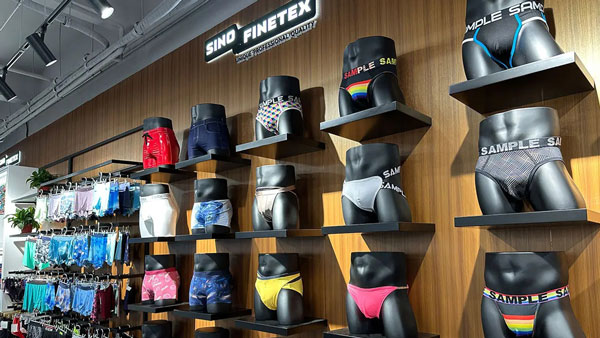
Lab Dips and Strike-Offs for Underwear: Approval Steps That Prevent Delays
A lab dip approves a dyed textile shade; a strike-off approves printed artwork on the intended substrate. They…
Read more →
Color MOQ Planning: How to Share Fabric Across Multiple Underwear Styles
Color MOQ planning works best when a brand treats dyed fabric as a shared material platform rather than…
Read more →
Underwear Fabric Utilization: How Marker Efficiency Changes Unit Cost
Fabric utilization converts a fabric quotation into a garment cost. The calculation must account for pattern area, fabric…
Read more →
Open Costing for Men’s Underwear: Reading Fabric, Trim, Labor and Overhead Lines
An open-cost sheet is useful only when every line is tied to a measurable specification, a purchasing unit…
Read more →Global Apparel Sourcing Outlook 2026: Cotton, Freight and Supply-Chain Risk
A data-led 2026 apparel sourcing outlook on cotton balances, freight volatility, supplier diversification, lead time, compliance and practical…
Read more →Request a sample & pricing information
Send us your tech pack, target price or a reference sample — we reply with a quotation, a realistic lead time and a fabric recommendation within one working day.
- Free sampling plan & cost breakdown
- MOQ from 300 pcs per style
- Reply within 1 working day