
Why do all-over printed underwear colours fade?
Why all-over printed underwear fades: unfixed dye, pigment binder wear, hot washing, rubbing and light, and how to test colour fastness, set care labels and specify…
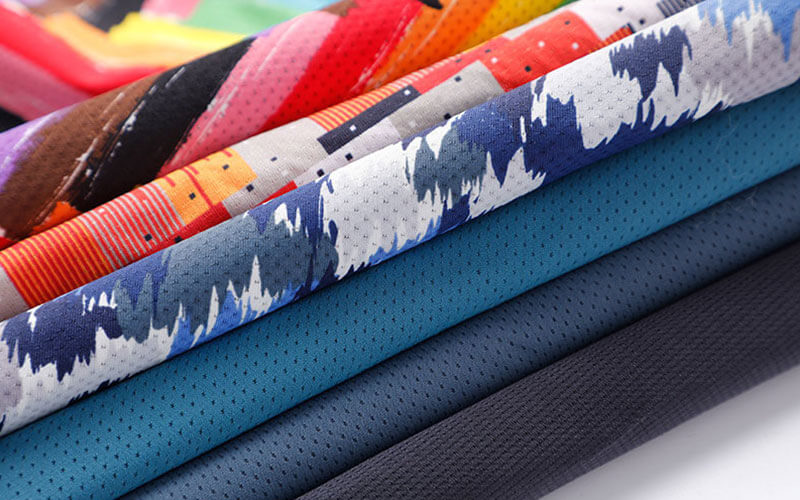
Part of Waistbands, Labels, Printing & Packaging in Finetex Talk — buyer questions answered by the Finetex editorial team.
A brand's all-over printed cotton boxer briefs look dull after ten washes, and some customers say the print has faded more on the seat and waistband area. The team wants to know why and how to prevent it in the next order.
Short answer: Print fading usually comes from one of four causes: dye that was not fully fixed or washed off after printing, pigment binder wearing away so pigment particles leave the fabric, washing and drying conditions harsher than the print can take, or rubbing in high-wear areas. Reactive-printed cotton depends on correct steaming and washing-off; if unfixed dye remains, the first washes remove it and the colour drops. Pigment prints sit on the surface in a binder, so they wear faster where fabric rubs, such as the seat and inner thigh. Bleach, optical brighteners in detergents, high temperatures and tumble drying all speed fading. Test colour fastness to washing with ISO 105-C06 and assess change with the ISO 105-A02 grey scale, set care instructions that match the results, and confirm the printing process with the mill.
Common causes
- Incomplete fixation or wash-off after reactive printing.
- Pigment binder not fully cured or too little binder.
- Hot washing, chlorine bleach or harsh detergents.
- Abrasion in high-wear zones.
- Light exposure when drying outdoors.
How to diagnose
- Compare faded and new pieces against the approved standard on a grey scale.
- Check whether fading is even (washing) or local (rubbing).
- Ask the mill which process, ink type and fixation settings were used for the lot.
- Wash retained samples from the same lot under the care label conditions.
Testing
- Colour fastness to washing with ISO 105-C06, choosing the test condition closest to the care label.
- Assess change in colour with the ISO 105-A02 grey scale.
- Repeat washing with an ISO 6330 procedure for several cycles to see cumulative fading.
Care labels
In the US, the Care Labeling Rule requires care labels to give a regular care method that will not harm the product, and to warn against parts of the usual procedure that would. If the print fades with hot water, the label should say so, for example by giving a lower temperature.
A worked example
If ten washes at 40 °C cause clear fading, but a lab test at that condition shows acceptable change, the problem may be detergent, tumble drying or how customers actually wash. Ask a few customers how they wash, then repeat the test with a common household detergent and drying. If the test also fails, the print process or ink choice needs to change before the next order.
Dark and bright colours
Deep navy, black, red and bright fashion shades usually need the most dye or pigment, so they are most likely to show loss. Ask the mill whether the darkest colourways need an extra wash-off or a fixing step, and test them first.
Limits
Real washing conditions vary widely. Lab tests predict performance but do not cover every household.
Facts, recommendations and uncertainty
Established: fading comes from incomplete fixation, binder wear, harsh laundering and rubbing. Recommendation: test washing fastness and grey-scale change, and match care labels to results. Uncertain: how consumers actually wash, which can exceed test conditions.
Sources and further reading
- ISO 105-C06:2010 — Colour fastness to domestic and commercial laundering
- ISO 105-A02:1993 — Grey scale for assessing change in colour
- ISO 6330:2021 — Domestic washing and drying procedures for textile testing
- U.S. FTC — Care Labeling Rule (16 CFR Part 423)
Standards and regulations are referenced by their published scope. Test parameters, cycles and pass levels should be agreed with your laboratory for the specific product; legal requirements should be confirmed for each destination market.
Three more perspectives
Ask the factory and print mill for colour fastness to washing results for each printed fabric lot, with the test condition stated. Include minimum grey-scale ratings in the purchase specification. If fading complaints arise, request retained fabric from the lot for retesting. Agree in advance what happens if bulk fails the agreed rating, including who pays for reprinting or replacement goods. Ask whether the mill changed dye or ink supplier between the approved sample and bulk, since that is a common cause of a sudden drop.
In product development, choose a printing process that suits the fibre and the wear the garment will see. Test multiple washes, not one, and include tumble drying if the care label allows it. Check fading in high-rub zones by rubbing tests as well. Set the care label from the test results, and keep the tested fabric as a reference for later lots. Include a test with a common household detergent that contains optical brighteners, because these can change the look of bright prints.
In quality control, compare printed fabric with the approved standard under consistent light before cutting. Wash a few pieces from each lot under care label conditions and grade change against the grey scale. Record results by print lot so a drift in fixation shows early. Keep washed reference pieces alongside the unwashed standard for comparison. Grade the seat area separately from flat panels so rubbing loss and washing loss are not mixed in the record, and share any drift with the print mill quickly.
Related products
Related articles
← More in Waistbands, Labels, Printing & Packaging · All Talk topics · Ask us about your programme
More factory-floor notes for brand owners

What should I check on a novelty hoodie such as an eye-mask hood?
What to check on a novelty hoodie such as an eye-mask hood: hood structure and lining, visibility and…
Read more →How should I size a unisex hoodie?
How to size a unisex hoodie: choosing a base block, body measurement ranges, ease, sleeve and body length,…
Read more →What care instructions should a hoodie carry?
What care instructions a hoodie should carry: the elements of a complete washing instruction, warnings for prints and…
Read more →
How do I match colour across hoodie and jogger sets?
How to match colour across hoodie and jogger sets: same fabric lot, rib and trims, dyeing method, shade…
Read more →How many colourways can I order at hoodie MOQ?
How many colourways a hoodie order can include at MOQ: how factories set minimums per style, colour and…
Read more →Why does a dark hoodie stain other clothes?
Why dark hoodies stain other clothes: dye bleeding in washing, rubbing transfer, perspiration, unfixed dye and pigment, and…
Read more →Request a sample & pricing information
Send us your tech pack, target price or a reference sample — we reply with a quotation, a realistic lead time and a fabric recommendation within one working day.
- Free sampling plan & cost breakdown
- MOQ from 300 pcs per style
- Reply within 1 working day