
How do I match logo elastic colours to the underwear body?
How to match logo waistband elastic colours to the underwear body fabric: why elastic and fabric dye differently, how to set colour standards, approve lab dips…
Part of Waistbands, Labels, Printing & Packaging in Finetex Talk — buyer questions answered by the Finetex editorial team.
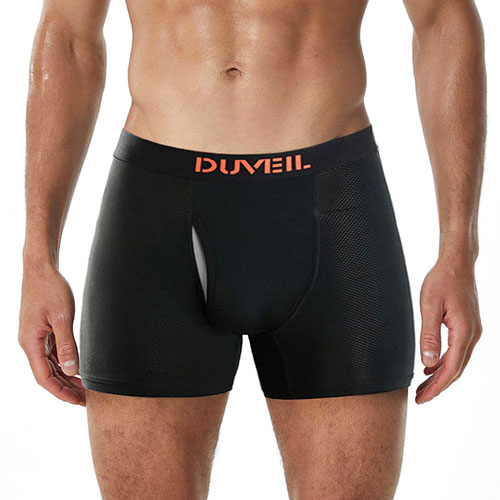
A brand's navy boxer briefs arrive with a waistband that looks slightly purple next to the body fabric. The team wants to know why the elastic and body do not match and how to control this on the next order.
Short answer: Waistband elastic and body fabric are usually made by different suppliers, from different fibres, and dyed in different processes. A typical elastic contains polyester or nylon with elastane, while the body may be cotton or modal, and these fibres take dye differently and can look different under different light sources. So an exact match is often not possible, and the goal is an agreed, consistent relationship between the two. Set one physical colour standard, ask both suppliers to submit lab dips or samples against it, approve them side by side under the same light, and check shade again on bulk elastic before cutting and sewing. Colour difference can be measured with ISO 105-J03 and assessed visually with the grey scale in ISO 105-A02.
Why colours differ
- Different fibres need different dye types.
- Elastic yarns and body fabric have different textures, which change how colour looks.
- Metamerism: two colours can match in daylight and differ under shop or home lighting.
- Dye lots vary for both elastic and fabric.
Setting the standard
- Choose one physical master standard, such as a fabric swatch or colour reference.
- Give the same standard to the fabric mill and the elastic supplier.
- Agree which light sources will be used for approval.
Approving lab dips
- Ask for lab dips from the elastic supplier against the standard.
- Compare the elastic dip with the approved body fabric, not only with the standard.
- Check under the agreed light sources.
- Record the approved dip with its reference.
Bulk control
- Check incoming elastic shade against the approved dip before production.
- Compare with the actual body fabric lot being used.
- Set an agreed tolerance, measured or visual.
Logo colours
For jacquard or printed logos, approve each logo colour as well. Check colour fastness with ISO 105-C06 so logo colours do not bleed onto the elastic ground or body.
Contrast as an option
If matching is difficult, a deliberate contrast waistband, such as black or white, avoids the problem.
A worked example
A brand's navy body fabric and navy jacquard waistband look matched in the office but different under shop lighting. The fabric is cotton dyed with reactive dyes and the elastic yarn is polyester dyed with disperse dyes, so they can react differently to light sources. Assessing lab dips under the agreed primary light and a secondary light, such as D65 and shop LED, identifies this metamerism before bulk.
Limits
An exact match across fibres is not always possible. Agree what is acceptable before bulk.
Facts, recommendations and uncertainty
Established: elastic and body fabric differ in fibre and dyeing, so exact matches are hard. Recommendation: use one standard, approve lab dips side by side under agreed light, and check bulk. Uncertain: how close a match your fibres allow.
Sources and further reading
- ISO 105-J03:2009 — Calculation of colour differences
- ISO 105-A02:1993 — Grey scale for assessing change in colour
- ISO 105-C06:2010 — Colour fastness to domestic and commercial laundering
Standards and regulations are referenced by their published scope. Test parameters, cycles and pass levels should be agreed with your laboratory for the specific product; legal requirements should be confirmed for each destination market.
Three more perspectives
Ask the factory who supplies the elastic and the fabric, and make sure both receive the same colour standard. Include the colour approval process and tolerance in the purchase specification. Ask the factory to send bulk elastic and fabric cuttings for approval before cutting starts, and agree what happens if bulk falls outside tolerance, such as re-dyeing or replacement. Ask for the dye lot numbers of elastic and fabric on each shipment.
In product development, approve the elastic lab dip next to the approved body fabric, not separately. Check under daylight and store lighting. If metamerism is a problem, ask the elastic supplier whether a different dye recipe can reduce it. Consider contrast waistbands for colours that are hard to match, such as some navy and grey shades. Photograph approved combinations under each light source for reference, so later lots can be compared quickly.
In inspection, compare waistband and body colour on finished garments under the agreed light, and check for shade differences between pieces in the same lot. Separate lots by fabric and elastic dye lot where possible. Keep approved colour references in a dark, dry place, because light can change them over time. Replace colour standards on a regular schedule, and record any lot that was accepted with a known slight difference.
Related products
Related articles
- Garment-Dyed T-Shirts: What the Process Changes in Colour, Shrinkage and Lead Time
- Custom Trunks Supply: Choosing a Supplier for a Short-Run, High-Colour Programme
- T-Shirt Color Matching: Avoiding Shade Variation Across Batches
- Custom Logo T-Shirts at Production Volume: Matching the Method to the Artwork
← More in Waistbands, Labels, Printing & Packaging · All Talk topics · Ask us about your programme
More factory-floor notes for brand owners

What should I check on a novelty hoodie such as an eye-mask hood?
What to check on a novelty hoodie such as an eye-mask hood: hood structure and lining, visibility and…
Read more →How should I size a unisex hoodie?
How to size a unisex hoodie: choosing a base block, body measurement ranges, ease, sleeve and body length,…
Read more →What care instructions should a hoodie carry?
What care instructions a hoodie should carry: the elements of a complete washing instruction, warnings for prints and…
Read more →
How do I match colour across hoodie and jogger sets?
How to match colour across hoodie and jogger sets: same fabric lot, rib and trims, dyeing method, shade…
Read more →How many colourways can I order at hoodie MOQ?
How many colourways a hoodie order can include at MOQ: how factories set minimums per style, colour and…
Read more →Why does a dark hoodie stain other clothes?
Why dark hoodies stain other clothes: dye bleeding in washing, rubbing transfer, perspiration, unfixed dye and pigment, and…
Read more →Request a sample & pricing information
Send us your tech pack, target price or a reference sample — we reply with a quotation, a realistic lead time and a fabric recommendation within one working day.
- Free sampling plan & cost breakdown
- MOQ from 300 pcs per style
- Reply within 1 working day