
How are major and minor defects classified in apparel?
How major, minor and critical defects are classified in apparel inspection: what each class usually covers, how ISO 2859-1 links classes to AQLs, and why buyer…
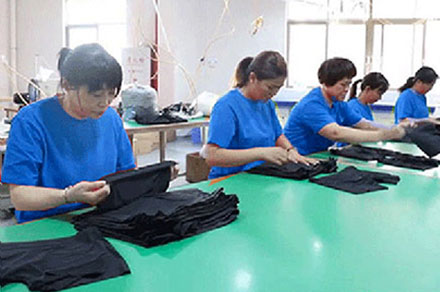
Part of Sampling, Orders, Quality & Shipping in Finetex Talk — buyer questions answered by the Finetex editorial team.
A brand and its factory disagree about an inspection: the inspector counted uneven stitching on the waistband as a major defect, the factory says it is minor, and the result changes from fail to pass depending on who is right.
Short answer: Defect classes are not fixed by a single universal list; they are agreed between buyer and supplier, which is why disputes like this happen. ISO 2859-1 describes classifying nonconformities into agreed classes according to their importance, with the class of highest concern given a very small AQL and the next class a larger one. In apparel, three classes are common. Critical defects are those that could make the product unsafe or break legal requirements, such as a broken needle left in the garment, sharp parts, or missing required labels, and many buyers accept none. Major defects are those likely to cause a return or make the product unsaleable or noticeably less usable, such as a seam opening, a hole, a clear shade difference within a garment, a wrong size label or a measurement well outside tolerance. Minor defects are departures from the standard that are unlikely to cause a return, such as a short loose thread or a small, slight irregularity in a hidden area. Position and visibility matter: the same stitching irregularity can be minor inside a seam and major on the front waistband. The practical answer is a written defect list per product, with examples, locations and the class of each defect, agreed before production and given to the inspector.
Common classes
- Critical: safety or legal issues.
- Major: likely return or reduced usability.
- Minor: small departures unlikely to cause a return.
What affects the class
- Location and visibility.
- Size or severity of the defect.
- Effect on function, such as stretch or closure.
- Legal requirements in the market.
Building a defect list
- Typical defects for the product.
- Class for each, by location.
- Photos or physical examples.
- AQL for each class.
A worked example
As an illustration, a brand could define uneven stitching on the visible front waistband as major, the same issue on an inside seam allowance as minor, and any needle or metal fragment as critical, then add photos of each to the inspection instructions.
Borderline cases
Keep physical or photo examples of borderline defects, approved by both sides. They help inspectors judge consistently across orders.
Linking classes to decisions
Agree what happens when each class is found: a critical defect may stop shipment until the cause is found and the lot is sorted, while major and minor defects are counted against their AQLs. Writing this down avoids arguments when an inspection result is close to the limit.
Limits
Classification involves judgement. A clear list reduces, but does not remove, differences between inspectors.
Facts, recommendations and uncertainty
Established: defect classes are agreed between buyer and supplier, with the most serious class given the smallest AQL. Recommendation: agree a written defect list with locations and examples before production. Uncertain: how individual inspectors will judge borderline cases.
Sources and further reading
Standards and regulations are referenced by their published scope. Test parameters, cycles and pass levels should be agreed with your laboratory for the specific product; legal requirements should be confirmed for each destination market.
Three more perspectives
Include the defect list and AQLs in the purchase order or quality agreement, so the classification is part of the contract. Share the same list with the factory and the inspection provider. Agree a process for disputed classifications, such as a joint review of photos. Update the list after each order if new defect types appear.
Mark which areas of the garment are most visible to customers, such as the front waistband, so defects there can be classed more strictly. Consider how the product is sold; packaged underwear shows certain areas first. Review returns data to see which defects customers actually notice. Check whether design features, such as delicate trims, create defects that should be addressed at development rather than at inspection.
Train the inspector on the defect list before the first inspection and provide examples. Record defects with photos, class and location in every report. Check that critical defects, such as needle fragments, have their own controls, for example metal detection where used, rather than relying only on sampling inspection. Review disputed classifications with photos after each order and add the agreed outcome to the list.
Related products
← More in Sampling, Orders, Quality & Shipping · All Talk topics · Ask us about your programme
More factory-floor notes for brand owners

Why did my reorder price go up?
Why an apparel reorder price can go up: fabric and trim costs, smaller quantities, specification changes, labour and…
Read more →
How do I read an underwear quotation line by line?
How to read an underwear quotation line by line: fabric, elastic and trims, labour, packaging, testing, overheads and…
Read more →
How do peak seasons affect apparel factory capacity?
How peak seasons and holidays affect apparel factory capacity and lead times, why fabric and shipping are also…
Read more →
Should I split one style across two factories?
Whether to split one apparel style across two factories: the benefits for capacity and risk, the risks for…
Read more →
What are the biggest risks on a small brand’s first order?
The biggest risks on a small brand's first apparel order, from unclear specifications and sample approval to payment,…
Read more →
What changes should a factory notify before production?
Which changes a factory should notify the buyer about before production, such as fabric, dye, trims, subcontracting or…
Read more →Request a sample & pricing information
Send us your tech pack, target price or a reference sample — we reply with a quotation, a realistic lead time and a fabric recommendation within one working day.
- Free sampling plan & cost breakdown
- MOQ from 300 pcs per style
- Reply within 1 working day