
Does modal shrink less than cotton in underwear?
Whether modal underwear shrinks less than cotton, what actually controls dimensional change in both, and how to specify and test shrinkage.
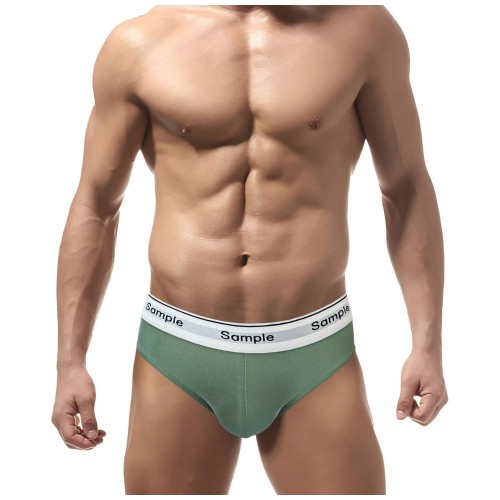
Part of Underwear Fabrics & Comfort in Finetex Talk — buyer questions answered by the Finetex editorial team.
A buyer is moving part of a cotton brief range to modal, partly because customers complained about shrinkage. The team wants to know whether modal will solve the problem or whether shrinkage is mainly a finishing issue.
Short answer: Modal can be more dimensionally stable than cotton in many fabrics, but the fibre name alone does not guarantee it. Shrinkage in knitted underwear depends mostly on how the fabric was knitted, relaxed, heat-set and finished, and on how the garment is washed and dried. A well-finished cotton can shrink less than a poorly finished modal, so set a shrinkage limit for the finished fabric and test it rather than relying on fibre reputation.
What drives shrinkage in knits
Knitted fabrics are stretched lengthwise during knitting and finishing. When they are wetted and tumbled, the loops relax back towards their natural shape, so the fabric gets shorter and sometimes wider. Cellulose fibres, both cotton and modal, also swell when wet, which contributes to change. Finishing steps such as relaxation, compacting and, for elastane blends, heat-setting reduce this residual shrinkage before the fabric is cut.
How modal compares
Modal is a regenerated cellulose fibre engineered to have higher wet strength than standard viscose, and fabrics made from it are often described as stable and soft after washing. In practice the comparison depends on the specific fabrics. Lighter, more open modal jerseys can still shrink or grow if not finished properly, and modal blends combine the behaviour of both fibres.
How to specify and test
- State a maximum dimensional change in length and width for the finished fabric and for the garment.
- Test with ISO 5077 using a washing and drying procedure from ISO 6330 agreed with the lab.
- Test after more than one cycle if your complaints appear after several washes.
- Test garments as well as fabric, because sewing and elastic can change behaviour.
When moving from cotton to modal
Keep the pattern only if dimensional change and stretch are similar. Modal is often more fluid and can stretch differently, so run a fit sample after washing. Update the care label based on your own tests.
A worked example
Suppose a cotton jersey brief shows 6% length shrinkage after three washes and a modal jersey from the same mill shows 3%. That does not mean modal always shrinks less. Ask both mills for their finishing route, such as compacting or heat setting, and repeat the test on bulk lots. Set the limit in the specification, for example within 5% in length and width, and approve the pattern on washed fabric.
Limits
Tumble drying at high temperature increases shrinkage in most cellulose fabrics. If complaints mention dryers, care advice may matter as much as the fabric.
Facts, recommendations and uncertainty
Established: shrinkage in knits depends mostly on finishing and wash conditions. Recommendation: set a dimensional change limit and test washed garments for both fabrics. Uncertain: whether your specific modal fabric outperforms your cotton until tested.
Sources and further reading
- ISO 5077:2007 — Determination of dimensional change in washing and drying
- ISO 6330:2021 — Domestic washing and drying procedures for textile testing
- Lenzing — TENCEL™ Modal with Micro technology
Standards and regulations are referenced by their published scope. Test parameters, cycles and pass levels should be agreed with your laboratory for the specific product; legal requirements should be confirmed for each destination market.
Three more perspectives
Ask each mill to state the dimensional change it guarantees for the finished fabric and the test method used, and put the limit in the purchase specification. Ask how the fabric is finished: compacting, relaxation and heat-setting all affect the result. A lower price sometimes reflects a shorter finishing route, which only shows up as shrinkage after the customer's first wash.
Before transferring the cotton pattern to modal, wash both fabrics and compare dimensional change and stretch. If modal is more stable, you may be able to remove some of the shrinkage allowance that was built into the cotton pattern; if it grows rather than shrinks, the leg and waist may need adjusting. Treat the move as a new fabric approval, not a simple substitution.
Test dimensional change on each fabric lot before cutting and on finished garments from the first production run. Record length and width changes against the lot number. When complaints mention shrinkage, compare retained garments washed by the label's instructions with the customer's description, and check whether the complaint came from tumble drying at high heat.
Related products
Related articles
- Cotton Undershirt Supply: Combing, Count and What Actually Stops Shrinkage
- Which Fabric Is Best for Men's Underwear: Cotton, Modal, Bamboo or Nylon: A Manufacturer's Comparison
- How Can I Wash and Care for Modal Underwear to Extend Its Life: A Manufacturer's Walkthrough
- Modal Underwear Manufacturing: Micro Modal, Modal Air and Choosing a Softness Tier
- Organic Cotton Underwear: Building the Chain of Custody Before You Write the Claim
- Cotton Underwear Manufacturing: Choosing the Cotton That Decides Comfort and Reorder Rate
- Garment-Dyed T-Shirts: What the Process Changes in Colour, Shrinkage and Lead Time
- Who are the top cotton underwear manufacturers: How to Read the Lists (and What They Leave Out)
- Why is modal popular for summer pajamas and underwear: The Manufacturing Reality Behind It
- Why is your 100 cotton underwear actually failing you: The Manufacturing Reality Behind It
← More in Underwear Fabrics & Comfort · All Talk topics · Ask us about your programme
More factory-floor notes for brand owners

What should I check on a novelty hoodie such as an eye-mask hood?
What to check on a novelty hoodie such as an eye-mask hood: hood structure and lining, visibility and…
Read more →How should I size a unisex hoodie?
How to size a unisex hoodie: choosing a base block, body measurement ranges, ease, sleeve and body length,…
Read more →What care instructions should a hoodie carry?
What care instructions a hoodie should carry: the elements of a complete washing instruction, warnings for prints and…
Read more →
How do I match colour across hoodie and jogger sets?
How to match colour across hoodie and jogger sets: same fabric lot, rib and trims, dyeing method, shade…
Read more →How many colourways can I order at hoodie MOQ?
How many colourways a hoodie order can include at MOQ: how factories set minimums per style, colour and…
Read more →Why does a dark hoodie stain other clothes?
Why dark hoodies stain other clothes: dye bleeding in washing, rubbing transfer, perspiration, unfixed dye and pigment, and…
Read more →Request a sample & pricing information
Send us your tech pack, target price or a reference sample — we reply with a quotation, a realistic lead time and a fabric recommendation within one working day.
- Free sampling plan & cost breakdown
- MOQ from 300 pcs per style
- Reply within 1 working day